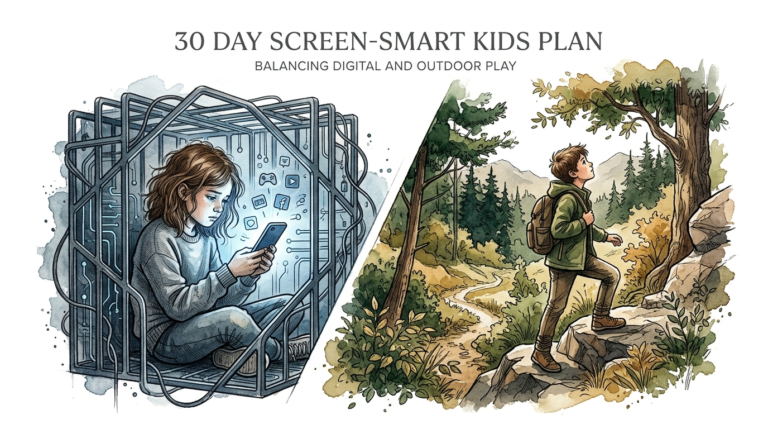
reduce screen time poster for kids
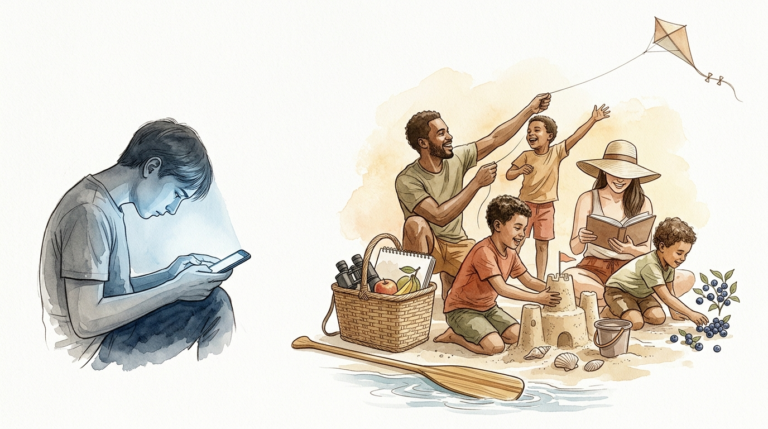
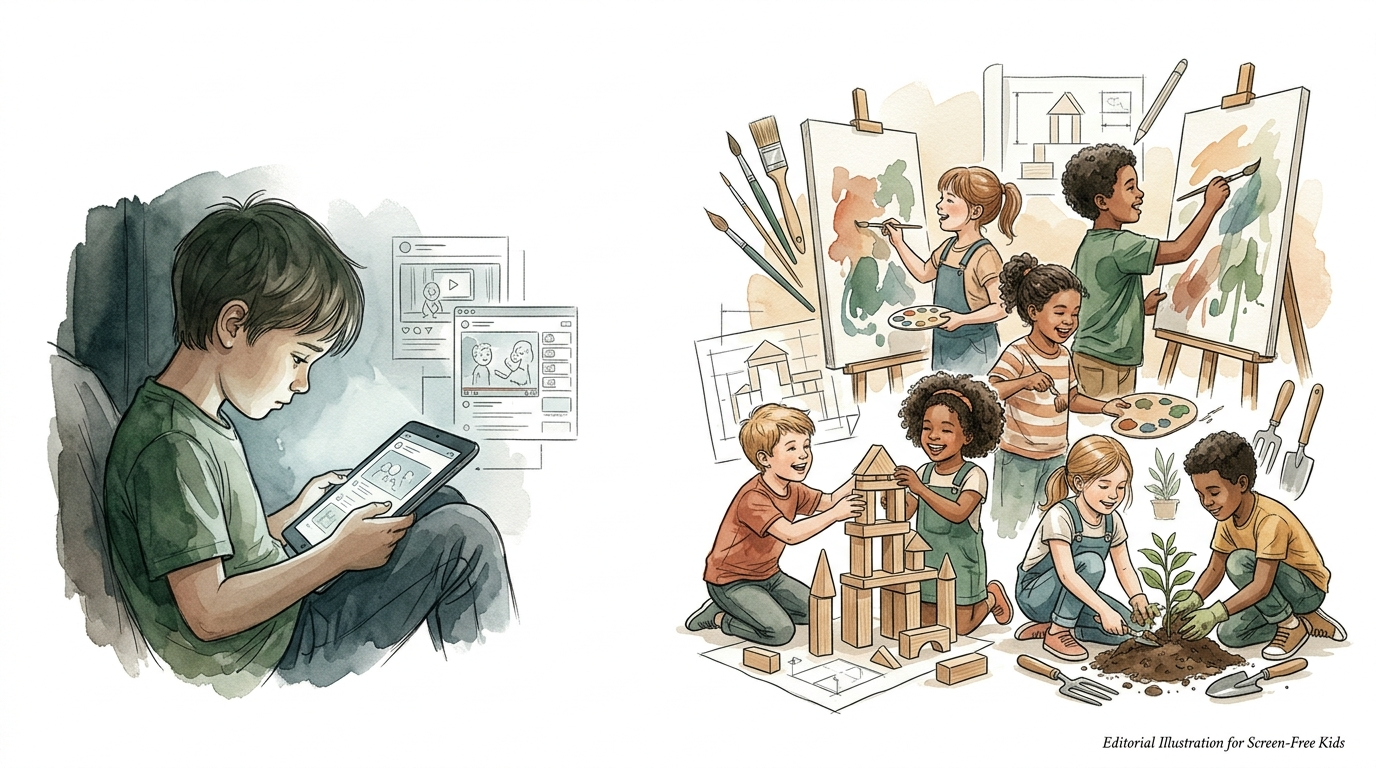
They don’t want to watch life; they want to live it with you. Reducing screen time isn’t about taking things away—it’s about giving them a role. Move them from the couch to the kitchen, the garden, or the workshop.
The modern home has become a theater where children are the audience. We hand over tablets to buy five minutes of peace, but we often pay for it later with tantrums and brain fog. It is time to flip the script and turn your home back into a laboratory of experience.
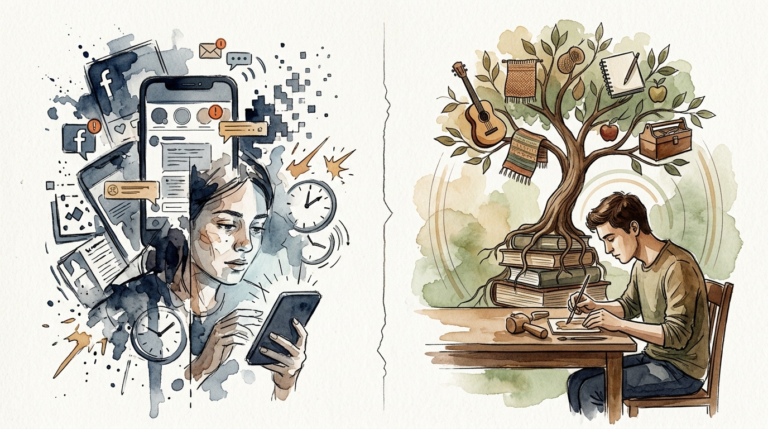
This guide explores how a simple visual tool can break the “dopamine loop” and foster a Producer Mindset. You are not just a parent setting a timer; you are a mentor building a capable human being.
reduce screen time poster for kids
A reduce screen time poster for kids is a high-visibility, physical anchor designed to redirect a child’s attention from passive consumption to active creation. It is more than just a list of “don’ts” or a “no-phones” sign. It serves as a “Boredom Menu” that provides a concrete path forward when the screens go dark.
In a world of flickering pixels, a physical poster is static and reliable. It exists in the real world, reminding the brain that there are options beyond the glass. These posters are most effective when placed in “transition zones”—the kitchen fridge, the playroom door, or the device charging station.
They work by short-circuiting the “dopamine loop.” When a child turns off a device, their brain often experiences a sudden drop in stimulation, leading to irritability or a sense of being “lost.” The poster acts as a circuit breaker, offering immediate, low-friction alternatives like “Build a fort,” “Sketch a comic,” or “Help with the garden.”
How to Design an Effective Screen-Free Dashboard
Building a poster that actually works requires more than a piece of paper and a marker. You need to create a system that invites participation rather than just demanding obedience.
Step 1: The Boredom Menu
Start by brainstorming a list of activities that require zero digital input. Categorize them by energy level. “High Energy” might include riding a bike or a living room obstacle course. “Low Energy” could be reading a book or listening to an audiobook. This ensures that no matter how tired or hyper the child is, there is a valid option on the menu.
Step 2: Gamify the System
Move away from “time limits” and toward “energy tokens.” Instead of saying “You have 30 minutes,” give them physical tickets or tokens. They can “earn” these tokens by completing “Producer” tasks—like weeding a garden bed or helping prep dinner. This shifts the burden of responsibility. They aren’t waiting for you to give them permission; they are earning their own digital currency.
Step 3: Visual Clarity
Use icons and bright colors for younger children. Research shows that visual graphics promote better coordination and cognitive integration than verbal instructions alone. If a child can see a picture of a whisk or a trowel, they can visualize the activity before they even begin.
The Benefits of Moving Toward Active Participation
The shift from a Passive Consumer to an Active Participant has measurable impacts on a child’s brain and body. When children move their bodies and use their hands, they engage in sensory-motor integration that screens simply cannot replicate.
- Neurological Growth: Active engagement, like building with blocks or mixing dough, strengthens neural connections in the motor and visual centers of the brain.
- Reduced Mental Health Risks: Studies from 2024 and 2025 indicate that 4+ hours of non-school screen time is consistently linked to higher rates of anxiety and depression.
- Language Development: For younger children, every hour of screen time often replaces 1:1 conversation. Moving them to the kitchen or garden increases “back-and-forth” talk, which is the primary driver of language skills.
- Physical Health: More time spent outdoors reduces the risk of myopia (nearsightedness) and improves vitamin D levels and bone strength.
Challenges and Common Pitfalls
The biggest mistake parents make is using the poster as a weapon of “No.” If the poster is only referenced during a conflict, the child will associate it with punishment.
Another frequent error is “The Nagging Trap.” When we verbally nag a child to “get off the iPad,” their brain often shuts down or enters a defensive state. The poster should speak for you. Instead of a long lecture, you simply point to the “Boredom Menu” and ask, “Which one are you choosing next?”
Finally, watch out for the “Hypocrisy Gap.” If you are scrolling through social media while telling your child to go play outside, the system will fail. The poster must apply to the whole household. If “Dinner is a Screen-Free Zone” on the poster, it means your phone stays in the other room too.
Limitations: When the Poster Isn’t Enough
A poster is a tool, not a magic wand. It may not work during long travel days, like 10-hour flights or cross-country drives, where physical activity is restricted. In these cases, focus on moving from “Passive Tech” (watching YouTube) to “Active Tech” (using an app to learn a new language or create digital art).
Environmental limitations also play a role. If you live in an area with limited green space, the “Garden” section of your poster might be smaller. You may need to lean more heavily on indoor workshop tasks or local community centers. Creditability in parenting comes from acknowledging that some days are harder than others and that perfection is not the goal—balance is.
Static Rules vs. Dynamic Systems
| Feature | Static Rules (Old Way) | Dynamic Systems (Poster Way) |
|---|---|---|
| Responsibility | Parent is the “Police” | Child is the “Manager” |
| Outcome | Compliance via fear or bribes | Independence and skill-building |
| Engagement | Passive (waiting for time) | Active (seeking roles) |
| Maintenance | High (constant arguments) | Low (the poster is the law) |
Practical Tips: Room-by-Room Roles
To make your “reduce screen time poster for kids” effective, you need to provide real, tangible roles. Don’t just tell them to “help”; give them a job title.
The Kitchen (The Fuel Lab)
Toddlers can be “Master Mixers,” stirring batter or washing vegetables in a sink of water. Elementary-aged kids can be “Prep Chefs,” responsible for snapping green beans or tearing lettuce. When a child helps cook the meal, they are far more likely to eat it, reducing “picky eater” friction while keeping screens off.
The Garden (The Life Lab)
The garden is the ultimate “Active Participant” classroom. Give each child a small patch of dirt that is “theirs.” They decide what to plant, they manage the “Watering Schedule” (which can be a sub-poster), and they are responsible for the harvest. This builds a sense of ownership that a video game about farming can never provide.
The Workshop (The Maker Lab)
Even a small corner with cardboard, tape, and safety scissors can be a “Workshop.” Challenge them to build a “Tablet Jail” where all devices go at 6:00 PM. Giving them a role as the “Household Engineer” encourages them to look for problems in the house that they can fix with their own two hands.
Advanced Considerations: The Parent as Lead
If you want to take this to the next level, you must become the Lead Producer. Children internalize the mannerisms of their parents. If they see you constantly using tools, reading physical books, or engaging in hobbies, they will view those as “high-value” activities.
Consider setting up a “Family Creator Hour.” For 60 minutes, the whole family works on separate “Producer” projects. One parent might be mending a shirt, another might be writing in a journal, and the child is building a Lego castle. This normalizes a life where entertainment is something you make, not something you buy.
Scenario: The Saturday Morning Reset
Imagine a typical Saturday morning. In many homes, the kids wake up and immediately reach for a remote. They sit in a trance for three hours until a parent, frustrated by the mess and the noise, yells for them to turn it off. A fight ensues.
Now, imagine a home with a reduce screen time poster for kids. The child wakes up and sees the poster on the fridge. It says: “Saturday Producers earn 30 mins of game time by: 1. Clearing the breakfast table, 2. Watering the porch plants, 3. Reading for 20 minutes.”
The child doesn’t ask you for the iPad. They start clearing the table. They are looking for ways to earn their “energy tokens.” By 10:00 AM, they have worked with their hands, read a book, and contributed to the household. When they finally do use the screen, they do so with a sense of accomplishment rather than a sense of entitlement.
Final Thoughts
The goal of a screen-free lifestyle isn’t to live in the 1800s. It is to ensure that the physical world remains the primary source of a child’s development. A reduce screen time poster for kids is simply the map that helps them find their way back to reality.
By moving your children from the couch to the kitchen, garden, or workshop, you are giving them the greatest gift a modern parent can provide: agency. You are teaching them that they have the power to change their environment, create something from nothing, and live a life that is wide, deep, and real.
Start small. Design your poster tonight. Pick three roles for the kitchen. Tomorrow, don’t just take the screen away—hand them a role instead. Watch as they stop watching life and start living it with you.
Sources
1 growinghealthykids.co.uk | 2 mobicip.com | 3 healthprofessionalsforsaferscreens.org | 4 screensdownfamilyup.com | 5 screensdownfamilyup.com | 6 vegogarden.com | 7 ourtinythinks.com | 8 screensdownfamilyup.com | 9 ccrcca.org | 10 graduateprogram.org