summer checklist for kids screen time
Vague rules lead to power struggles. Systems lead to success. Stop the daily ‘Can I have my iPad?’ battle. Use a precision checklist that empowers kids to earn their rewards through contribution and growth.
Summertime often feels like a free-for-all where routines go to die. Without a clear plan, the transition from structured school days to wide-open summer mornings can trigger a digital landslide. You likely know the cycle: the sun comes up, and within minutes, the requests for tablets, consoles, and streaming services begin. It creates a constant friction point that drains your energy before you’ve even had your first cup of coffee.
Shifting from being a “gatekeeper” to a “facilitator” changes the entire household dynamic. When you implement a structured system, you move away from arbitrary “no” responses and toward a predictable framework. Your kids stop seeing you as the obstacle to their fun and start seeing their own actions as the key to unlocking their downtime. This isn’t just about managing minutes on a screen; it is about teaching kids that contribution and self-care are the foundation of a balanced life.
Implementing a precision system like The Summer System ensures that cognitive development, physical health, and household responsibility remain front and center. It prevents the “brain drain” often associated with long breaks and helps children develop executive function skills that will serve them long after the school bells ring again in the fall.
summer checklist for kids screen time
A summer checklist for kids screen time is a visual and functional contract between parents and children. It defines a set of non-negotiable tasks that must be completed before any recreational digital use is permitted. In real-world terms, it acts as a “speed bump” for the brain, ensuring that high-dopamine activities like gaming do not displace essential developmental needs like movement, reading, and social interaction.
This system exists because the human brain—especially a developing one—is naturally wired to seek the path of least resistance. Screens offer immediate gratification with minimal effort. A checklist reintroduces the concept of “delayed gratification,” which research shows is a critical predictor of future success. By requiring a child to read for thirty minutes or clean their room before turning on a console, you are training their brain to prioritize long-term rewards over short-term impulses.
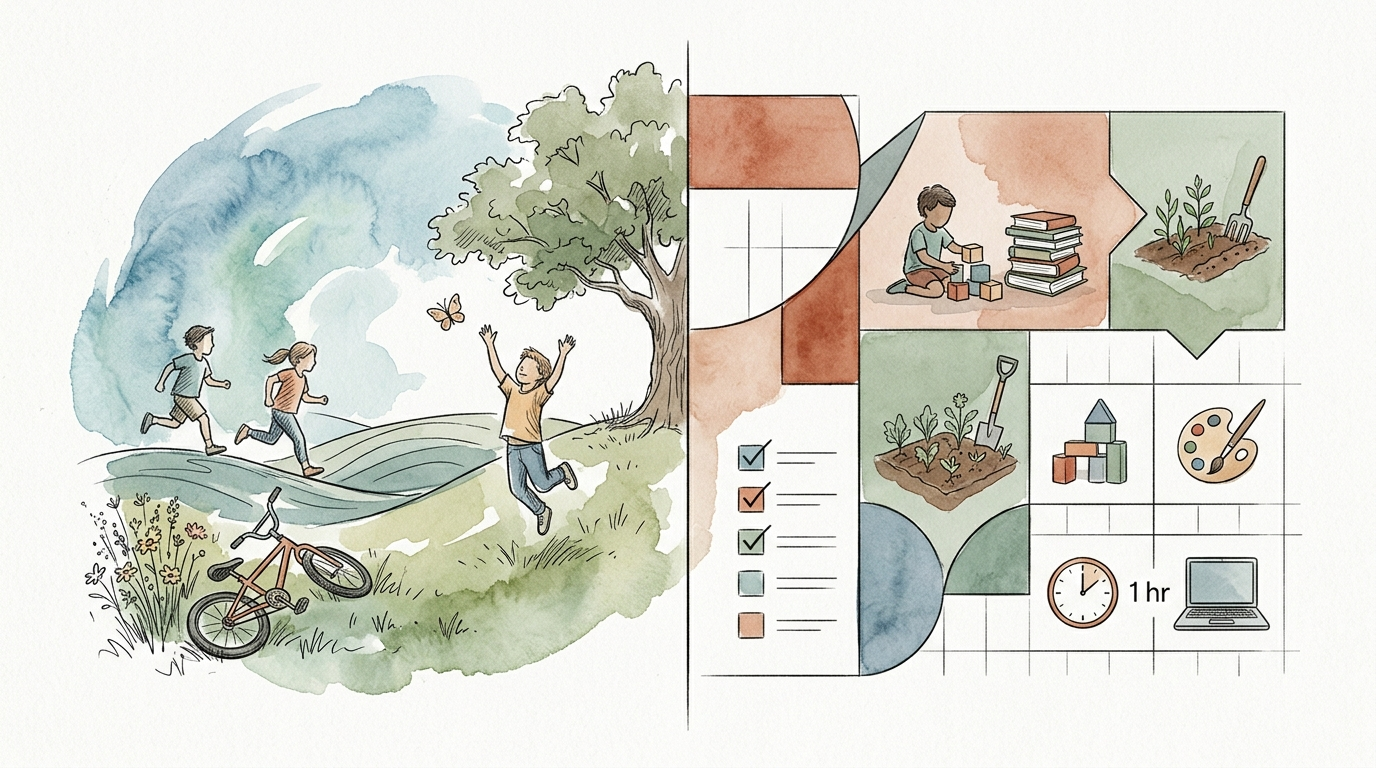
Think of the checklist as a biological balance sheet. On one side, you have activities that “fill the tank,” such as playing outside, completing chores, or practicing a hobby. On the other side, you have screen time, which “drains the tank” if not managed. The checklist ensures the tank is never empty. It is used in millions of homes to provide structure in an otherwise unstructured environment, giving kids a sense of accomplishment and parents a much-needed break from the “nagging” cycle.
How to Build Your Precision Summer System
Creating a checklist that actually works requires more than just a list of chores. You need a balanced approach that covers four essential categories of growth. If the list is too heavy on chores, kids will rebel. If it is too light, the system loses its impact. Follow these steps to build a robust framework.
Step 1: Categorize the “Must-Dos”
Break your checklist into logical groups so kids understand the “why” behind each task. A well-rounded list usually includes the following categories:
- Physical Vitality: This includes outdoor play, exercise, or sports. The goal is to get the heart rate up and the body moving for at least sixty minutes.
- Mental Sharpness: This covers reading, math workbooks, puzzles, or learning a new skill. It prevents the “summer slide” and keeps the brain engaged in active learning.
- Household Contribution: These are chores that help the family unit, such as emptying the dishwasher, folding laundry, or tidying a common area.
- Personal Care: Basic hygiene often slips in the summer. Include making the bed, brushing teeth, and getting dressed in “real clothes” (not pajamas).
Step 2: Set the “When and Then” Rule
The core principle of this system is “When you do X, then you get Y.” Clearly state that screens are only accessible once every item on the checklist is checked off. Do not allow “pre-loading” of screen time with the promise of doing chores later. Experience shows that once the brain is in a high-dopamine screen state, the motivation to complete chores drops to zero.
Step 3: Define the Reward Parameters
Decide if completing the checklist grants a fixed amount of time (e.g., two hours of gaming) or if it simply opens the window for screen use until a certain time (e.g., screens are allowed from 3:00 PM to 5:00 PM). For older children, you might consider an “earn-as-you-go” model where specific chores earn specific blocks of time. This introduces basic economic principles into their daily routine.
Benefits of a Structured Checklist
The primary advantage of this approach is the total elimination of daily negotiations. When the rules are written on the fridge, you no longer have to make a “judgment call” every afternoon. The checklist is the authority. This reduces parental burnout and minimizes the “begging” that often leads to conflict.
Another major benefit is the development of executive function. Using a checklist requires a child to plan their day, organize their tasks, and monitor their own progress. These are high-level cognitive skills that involve the prefrontal cortex. When a child looks at their list and decides to “knock out” their reading early so they can play Minecraft later, they are practicing self-regulation and strategic thinking.
Physical health also sees a massive boost. Since movement is a prerequisite for screens, kids naturally spend more time being active. This leads to better sleep patterns, as they are physically tired by the end of the day rather than just mentally overstimulated from blue light exposure. Furthermore, household contributions foster a sense of belonging and responsibility, teaching kids that they are valuable members of a team, not just consumers of entertainment.
Challenges and Common Mistakes
Inconsistency is the number one killer of any summer system. If you enforce the checklist on Monday but let it slide on Tuesday because you are busy, the child learns that the rules are negotiable. Persistence is the key. They will test the boundaries, and your job is to remain the calm, consistent enforcer of the system you built together.
Another mistake is making the checklist too difficult or too long. If a seven-year-old has fifteen tasks to complete, they will likely feel overwhelmed and give up before they start. Keep the requirements age-appropriate. For younger children, use icons or pictures instead of just text so they can navigate the list independently. The goal is success, not frustration.
Parents often fail to model the behavior they expect. If you are asking your child to stay off their iPad until their chores are done while you are scrolling through social media on the couch, the “unfairness” of the rule will cause resentment. While adults have different responsibilities, showing that you also have a “list” to complete before your own downtime helps build mutual respect for the system.
Limitations of the Checklist Method
The system may not work perfectly during travel or on “special event” days. Trying to enforce a rigid chore list while at a grandparent’s house or on a beach vacation can cause unnecessary stress. It is okay to have “System Off” days, provided you clearly communicate that these are exceptions, not the new norm. Flexibility during high-stress times actually preserves the integrity of the system for when you return to your normal routine.
Very young children—those under the age of four—may struggle with the cause-and-effect nature of a long checklist. Their working memory is still developing, and they might forget the reward by the time they reach the third task. For this age group, a “micro-checklist” of just one or two items is usually more effective than a full-day schedule.
Additionally, the checklist does not address the quality of screen time. You could have a perfect system for earning time, but if the child spends that time on age-inappropriate content or toxic social media environments, the system has failed in its broader goal of digital wellness. The checklist handles the “when,” but you still need a plan for the “what.”
Standard Approach vs. Precision Summer System
| Feature | Standard: “Go Play Outside” | Precision: The Summer System |
|---|---|---|
| Enforcement | Reactive and verbal nagging. | Proactive and visual checklist. |
| Child’s Role | Passive (waiting for permission). | Active (earning their time). |
| Decision Maker | Parent’s mood/energy level. | Pre-defined system criteria. |
| Cognitive Load | High stress for the parent. | Low stress; automated routine. |
| Outcome | Power struggles and resentment. | Autonomy and habit formation. |
Practical Tips for Immediate Success
Start by laminating your checklist. This simple step makes the list feel official and allows kids to use dry-erase markers to “check off” their wins. There is a psychological satisfaction in physically marking a task as complete that a verbal confirmation simply cannot match. Place the list in a high-traffic area, like the refrigerator or the back of the front door, so it remains top-of-mind.
Involve your children in the creation process. Ask them, “What chores do you think are fair for a ten-year-old?” or “What book do you want to tackle for your reading time?” When kids feel they have a voice in the rules, they are far more likely to follow them. This “buy-in” phase is critical for long-term adherence.
Use “Screen-Free Zones” in conjunction with the checklist. For instance, the dining table and bedrooms should be off-limits for devices regardless of whether the checklist is done. This prevents screen time from encroaching on social connection and sleep hygiene. Pairing a checklist with clear physical boundaries creates a comprehensive digital wellness strategy for the entire house.
Advanced Considerations for Neurodivergent Kids
For children with ADHD or autism, the standard checklist might need “scaffolding” to be effective. These children often struggle with transitions and task initiation. Instead of a long list, try a “First/Then” board. Focus on one task at a time. “First we do the dishes, then we check it off. Now, first we read for ten minutes, then we check it off.” This prevents the “wall of awful” feeling that can come with a long list of demands.
Visual timers can also be a game-changer. Seeing the “red” disappear on a physical timer helps kids understand exactly how much longer they need to focus on a non-screen task. It provides a concrete end-point for their effort, which reduces anxiety. For these practitioners, the checklist isn’t just a rule-setter; it is an external executive function tool that helps them navigate their day with less internal chaos.
Scaling the system for teenagers requires a shift toward “Negotiated Autonomy.” Teens likely won’t respond well to a list that includes “brush your teeth.” Instead, focus on higher-level outcomes like maintaining a summer job, completing a fitness goal, or contributing to a significant weekly chore like lawn mowing. Treat them like junior partners in the household rather than subjects of a regime.
Example Scenarios: The System in Action
Imagine it is Tuesday morning at 10:00 AM. In a Standard Household, the child is already on their third hour of YouTube because the parent was caught up in emails. When the parent finally says, “That’s enough, go outside,” a fight ensues because the child was in the middle of a video and feels the “attack” is arbitrary.
In a System-Based Household, the child wakes up and knows the routine. They make their bed, eat breakfast, and spend thirty minutes reading their favorite graphic novel. They head outside to jump on the trampoline for an hour. Around 1:00 PM, they approach the parent and show the completed checklist. The parent simply says, “Great work on that reading today. You’ve earned your two hours. Have fun.” There is no conflict, no nagging, and the child feels a sense of earned pride.
Even on a day where the child is “bored,” the checklist provides a menu of options. If they say, “I’m bored and I’ve finished my list,” you can introduce “Bonus Tasks.” These are harder chores or creative projects that can earn extra minutes or even small financial rewards. This teaches them that boredom is a gateway to opportunity, not a reason to reach for a screen immediately.
Final Thoughts
Transitioning to a precision summer checklist is the most effective way to reclaim your peace and sanity during the break. By setting clear expectations and removing yourself as the “arbitrary gatekeeper,” you empower your children to manage their own time and responsibilities. This shift fosters independence and significantly reduces the daily friction that often plagues summer months.
Success with this system does not require perfection from the start. It requires a commitment to the process and a willingness to adjust the list as you learn what works for your family’s unique rhythm. Start small, remain consistent, and watch as the daily “can I have my iPad?” battle transforms into a productive, structured, and much more enjoyable summer for everyone.
The lessons your kids learn through this system—discipline, contribution, and the value of hard work—will stay with them long after their screens are turned off for the night. You are not just managing their devices; you are raising capable, self-regulated human beings. Now is the perfect time to grab a marker, sit down with your kids, and design a system that works for you.
Sources
1 timily.app | 2 homestoriesatoz.com | 3 scrolletics.app | 4 junglejumparoo.com | 5 gozen.com | 6 thecraftybcompany.com | 7 theottoolbox.com | 8 alphamom.com | 9 thesavvysparrow.com | 10 tanagerplace.org | 11 stayfitmom.com | 12 esmed.org | 13 critusa.org | 14 abcpediatrictherapy.com