screen free activities at home
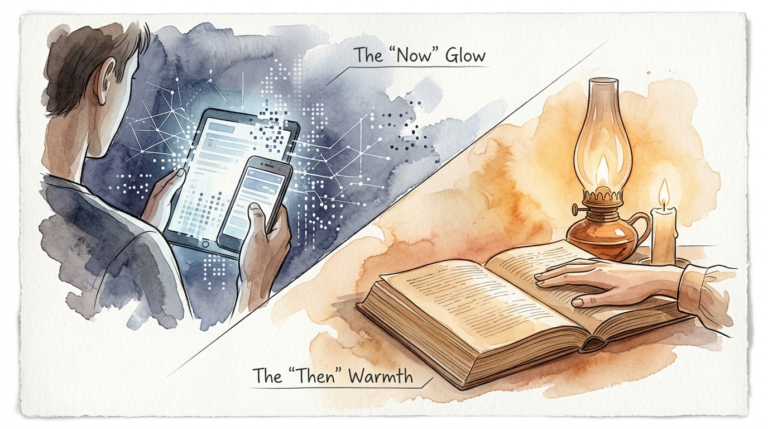
Swap the temporary high for a legacy of creativity. Screens provide instant, temporary entertainment. These at-home activities build skills and memories that last long after the power is off. Which will your child remember in 10 years?
Most parents find themselves in a daily battle with the glowing rectangle. It starts with a five-minute video and ends with an hour-long meltdown when the Wi-Fi goes off. You want to break the cycle, but the living room feels empty without the hum of the TV. You are not alone in this feeling.
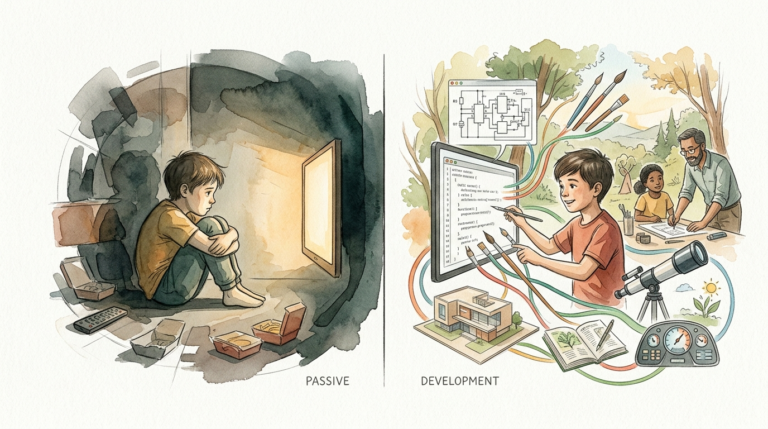
Every child possesses an innate drive to explore, build, and dismantle the world around them. This natural curiosity is the engine of development. When we replace that drive with a pre-packaged digital experience, the engine idles. Reclaiming that time is about more than just “no more iPads.” It is about opening a door to a different kind of growth.
Real-world play offers something a tablet cannot. It provides tactile resistance, spatial awareness, and the chance to fail in three dimensions. These experiences form the bedrock of critical thinking and emotional resilience. This guide will help you transform your home from a digital hub into a workshop for the imagination.
screen free activities at home
Screen-free activities are intentional engagements that do not rely on digital devices for entertainment or education. They focus on hands-on play, physical movement, and social interaction. These activities exist to reconnect children with their physical environment and their own internal creative resources.
At its core, this concept is about active engagement versus passive consumption. In the real world, a child doesn’t just watch a ball roll; they feel its weight, observe the friction of the carpet, and adjust their throw. This constant feedback loop is where true learning happens. It is used in Montessori classrooms, Waldorf schools, and by parents who want to foster independent thinkers.
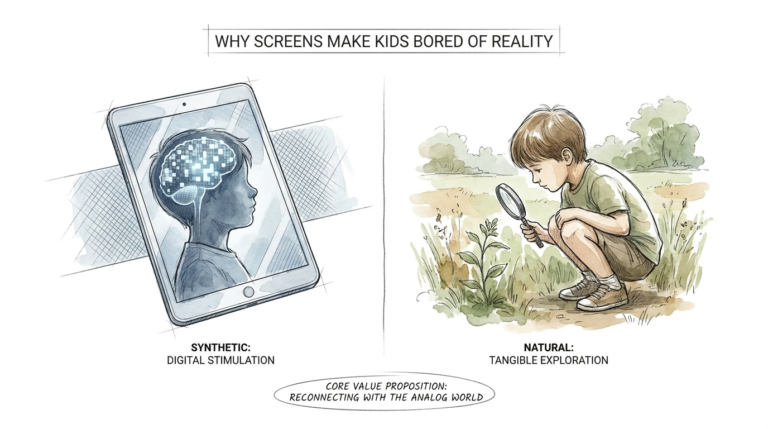
Think of it like a sandbox. A digital sandbox has limited buttons and pre-programmed results. A real sandbox has infinite possibilities, different textures when wet, and the physical satisfaction of building a tower. One provides a quick thrill, while the other builds a foundation of spatial reasoning and sensory integration.
Real-world activities are used everywhere from rainy-day living rooms to backyard exploration. They include simple tasks like sorting laundry or complex projects like building a cardboard city. The goal is to move the child from being a spectator to being a protagonist in their own life.
How to Transition Away from the Glow
Transitioning from high-stimulation screens to low-stimulation play requires a strategy. You cannot simply pull the plug and expect a child to start painting a masterpiece. The brain needs a “cooling down” period to adjust from the rapid-fire dopamine of a screen to the slower pace of real life.
The “Soothing Sequence” is an effective technique for this transition. Start with a high-energy physical activity to burn off the restless energy often left behind by screen time. A quick game of tag or a “heavy work” task like moving cushions works well. Physical movement helps reset the nervous system and prepares the mind for focus.
Follow the physical reset with a rhythmic hands-on task. Activities like playdough, coloring, or sorting small objects provide repetitive sensory input. This helps the child’s attention span settle. It acts as a bridge between the chaos of a digital world and the quiet of independent play.
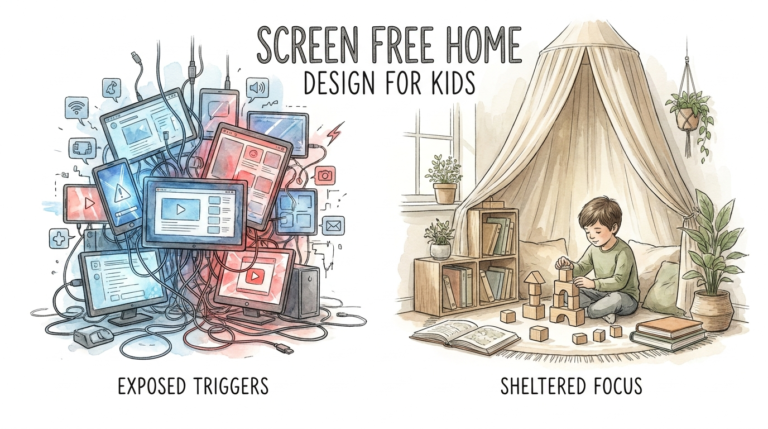
Set up “Invitations to Play” throughout the house. An invitation is simply a collection of materials left out in an attractive way. A few blocks on a tray, a magnifying glass next to some leaves, or a set of markers on a fresh sheet of paper can spark interest without a word from you. This allows the child to “discover” the activity on their own terms.
Establish clear physical boundaries and routines. Use a timer to signal the end of necessary screen time, and have a designated “landing spot” for devices. When the environment is predictable, the child feels safer exploring it without the constant pull of the digital world.
The Benefits of Unplugged Play
Cognitive development is one of the primary winners when screens go dark. Without an app to tell them the answer, children must practice problem-solving and critical thinking. They learn to hypothesize: “What happens if I put the big block on top of the small one?” The answer comes from gravity, not a sound effect.
Language skills flourish during screen-free time. Research shows that digital media often reduces the quality and quantity of parent-child interaction. Real-world play encourages “serve and return” conversation. As you build a fort together, you use complex vocabulary and nuanced social cues that a screen cannot replicate.
Physical health improves almost immediately. Most at-home screen-free activities involve fine or gross motor skills. Whether it is threading pasta onto a string or crawling through an indoor obstacle course, the child is moving. This builds coordination, strength, and spatial awareness while reducing sedentary behavior.
Emotional regulation is a long-term benefit that pays dividends for years. Boredom is often the gateway to creativity. When a child learns to navigate the discomfort of “nothing to do,” they develop the ability to self-soothe and entertain themselves. This builds a sense of agency and independence that is vital for mental health.
Social skills are sharpened through shared activities. Board games, pretend play, and collaborative building require negotiation, turn-taking, and empathy. You cannot “swipe away” a sibling who disagrees with you. You have to talk it out, which is a foundational life skill.
Common Mistakes to Avoid
Expecting instant success is the most frequent pitfall for parents. The brain’s reward system is highly tuned to digital stimulation. When that is removed, there is often a period of withdrawal marked by whining or lethargy. Many parents give up during this phase, thinking their child “just doesn’t like” toys.
Over-structuring the time is another common error. If every minute is filled with a parent-led craft, the child never learns how to initiate play. The goal is to provide the materials and the environment, then step back. Allow for “messy” play and “boring” moments, as these are where the best ideas are born.
Ignoring your own screen habits can undermine your efforts. Children are expert observers. If you are telling them to play with blocks while you scroll through social media, the message is lost. Modeling the behavior you want to see is the most powerful tool in your arsenal.
Focusing on the “perfect” setup can delay the start. You do not need expensive wooden toys or a dedicated playroom. Most of the best activities involve household items like cardboard boxes, masking tape, and kitchen spoons. Complexity is often the enemy of engagement.
Failing to plan for transitions leads to power struggles. Dropping a “five more minutes” warning isn’t always enough for a child immersed in a game. Use visual timers or specific transition rituals to make the shift feel like a natural part of the day rather than a sudden punishment.
Limitations and Realistic Constraints
Parental exhaustion is a real factor that cannot be ignored. Setting up an elaborate sensory bin or supervising a baking project takes energy that a tired parent may not have. It is okay to acknowledge that screens are a tool for survival sometimes. The goal is balance, not perfection.
Living space can limit certain types of play. An indoor obstacle course is difficult in a small apartment. In these cases, focus on vertical play, such as taping paper to a wall for drawing, or compact sensory activities like a small bin of rice on the kitchen floor.
Illness often makes screen-free time a challenge. A sick child needs rest, and screens provide a low-energy distraction. While blue light can interfere with the sleep needed for recovery, forcing a sick child into “active play” isn’t always productive. Use low-stimulation options like audiobooks or “gentle kits” with stickers and soft toys.
Weather can restrict outdoor options, putting more pressure on the indoor environment. If the backyard is off-limits, the house can quickly feel cramped. This is when rotating toys becomes essential to keep the indoor environment feeling fresh and engaging.
Passive Scrolling vs. Active Creating
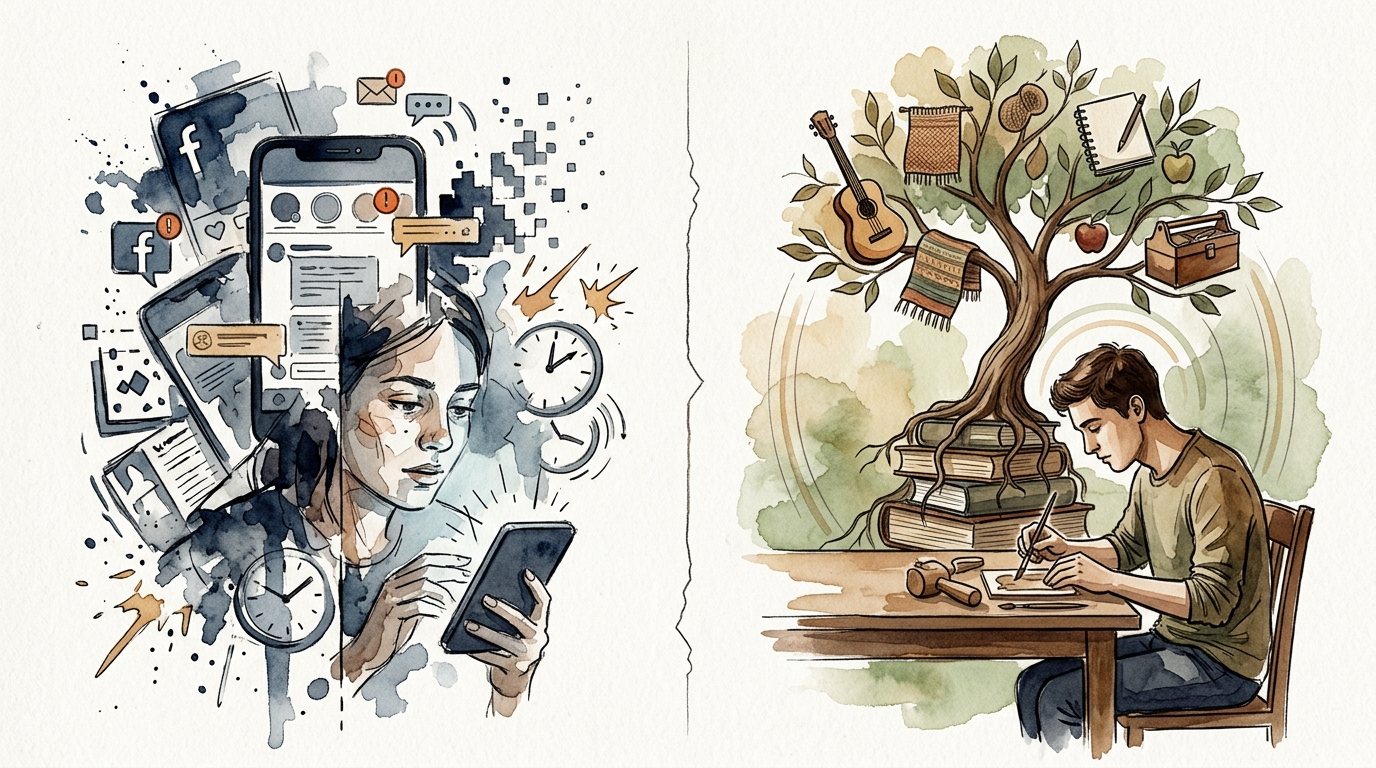
Understanding the difference between The 15-Minute Dopamine Hit and The Skill for a Lifetime is crucial for long-term success. One is a consumption model; the other is a production model. Most digital entertainment falls into the consumption category, where the child is a bystander.
| Feature | Digital Consumption | Real-World Creation |
|---|---|---|
| Brain State | Passive / Reactive | Active / Proactive |
| Skill Retention | Low (forgotten quickly) | High (built through repetition) |
| Frustration Tolerance | Low (apps are too easy) | High (physics provides resistance) |
| Social Impact | Isolating | Collaborative |
| Outcome | Temporary entertainment | Functional skill or memory |
Choosing real-world activities isn’t just about avoiding a screen; it’s about opting for a higher quality of engagement. A child who spends an hour figuring out how to build a stable bridge with LEGOs is developing spatial engineering skills. A child who watches a video of someone else building with LEGOs is merely watching a show.
Practical Tips and Best Practices
Implement a “Toy Rotation” system to keep interest high without buying new things. Divide your toys into three or four bins and keep only one out at a time. Every few weeks, swap the bins. To the child, the “old” toys feel new again, sparking a fresh wave of creative play.
Create “Quiet Kits” for times when you need the child to be still and focused. These are small, portable bags filled with low-mess items like reusable stickers, a small notebook, a few unique figurines, or a tangram puzzle. Save these specifically for restaurants, car rides, or when you are on an important phone call.
Use “Heavy Work” to ground an overstimulated child. Tasks that involve pushing, pulling, or carrying weight are incredibly calming for the nervous system. Ask your child to help “rearrange” the couch cushions, carry a basket of laundry, or push a “bus” (a laundry basket) full of stuffed animals across the room.
Keep a “Boredom Jar” filled with simple, one-sentence activity ideas written on scraps of paper. When the child says they are bored, they can pull one out. Ideas could include “Build a fort for a cat,” “Find five blue things in the kitchen,” or “Draw a monster that likes broccoli.”
Invest in “Open-Ended” materials. These are items that can be anything a child imagines. Blocks, silk scarves, cardboard boxes, and clay are far superior to toys that only have one function. The more the toy does, the less the child’s mind has to do.
Advanced Considerations for Serious Practitioners
Integrate STEM concepts into everyday play to deepen the learning experience. Use simple household items to demonstrate physics. A ramp made from a piece of cardboard and some toy cars can teach about gravity, friction, and incline angles. Ask leading questions like, “What happens if we make the ramp steeper?”
Focus on “Executive Function” through complex multi-step projects. For older children, activities like creating a neighborhood map, writing and performing a play, or planning a “backyard Olympics” require planning, organization, and memory. These are the “CEO skills” of the brain that screens often bypass.
Consider the sensory profile of your child when choosing activities. Some children are “sensory seekers” who need high-impact movement and loud play. Others are “sensory avoiders” who thrive on quiet, tactile tasks like watercolor painting or sorting beads. Tailoring the activity to their biological needs will increase engagement significantly.
Practice “Scaffolding” to build independence. If a child is struggling with a puzzle, do not do it for them. Instead, point to a specific color or suggest they find all the edge pieces first. You are providing the minimum amount of support needed for them to succeed on their own, which builds genuine confidence.
Examples of High-Impact Screen-Free Play
The “Washing Station” is a classic example of a simple activity with massive engagement. All you need is a large plastic bin filled with warm, soapy water, a few sponges, and a collection of “dirty” plastic toys (like dinosaurs or cars). Children will often scrub and dry these items for 30 minutes or more, entering a meditative state of focused play.
Another high-impact project is the “Cardboard Construction Zone.” Instead of throwing away delivery boxes, give them to your child along with a roll of masking tape and some markers. A large box can become a spaceship, a grocery store, or a secret tunnel. This encourages architectural thinking and imaginative storytelling on a large scale.
For a physical challenge, try the “Tape Roadway.” Use painter’s tape to create a series of roads, intersections, and parking spots across your floor. Add “bridge” elements using books or shoes. This transforms the entire room into a miniature world, encouraging the child to move their whole body as they navigate their cars through the town.
The “Rube Goldberg Simple Machine” is perfect for school-age children. Challenge them to find a way to pop a balloon or ring a bell using at least four different steps. They might use a rolling ball, a falling book, a sliding toy car, and a tipped-over domino. This project requires persistence, as it almost never works on the first try.
Final Thoughts
Reclaiming your home from the grip of digital devices is not about being “anti-tech.” It is about being “pro-development.” Screens are a part of our world, but they should not be the center of a child’s world. By providing space for real-world play, you are giving your child the tools to build a life filled with curiosity and capability.
Remember that the goal is progress, not perfection. There will be days when the TV is on more than you’d like, and that is okay. What matters is the consistent effort to offer alternatives that build skills and memories. Start small—choose one activity from this list and try it today. You might be surprised at how quickly the “I’m bored” turns into “Look what I made!”
The legacy of creativity you build today will last long after the devices are obsolete. Every block tower, every finger-painted mess, and every backyard adventure is a brick in the foundation of who your child will become. Swap the temporary high for something that lasts—start your screen-free journey now.
Sources
1 tinylandus.com | 2 kidkraft.com | 3 magicalkids.shop | 4 thewellnesssociety.org | 5 peacefulparenthappykids.com | 6 kidkraft.com | 7 springfreetrampoline.com | 8 darlingtonschool.org | 9 ourtinythinks.com | 10 substack.com | 11 substack.com | 12 substack.com | 13 mother.ly | 14 medlineplus.gov | 15 thechildunplugged.com | 16 myfirstbook.us | 17 inspirechildren.com | 18 edweek.org | 19 mayoclinic.org | 20 outschool.com