no screen time poster for kids
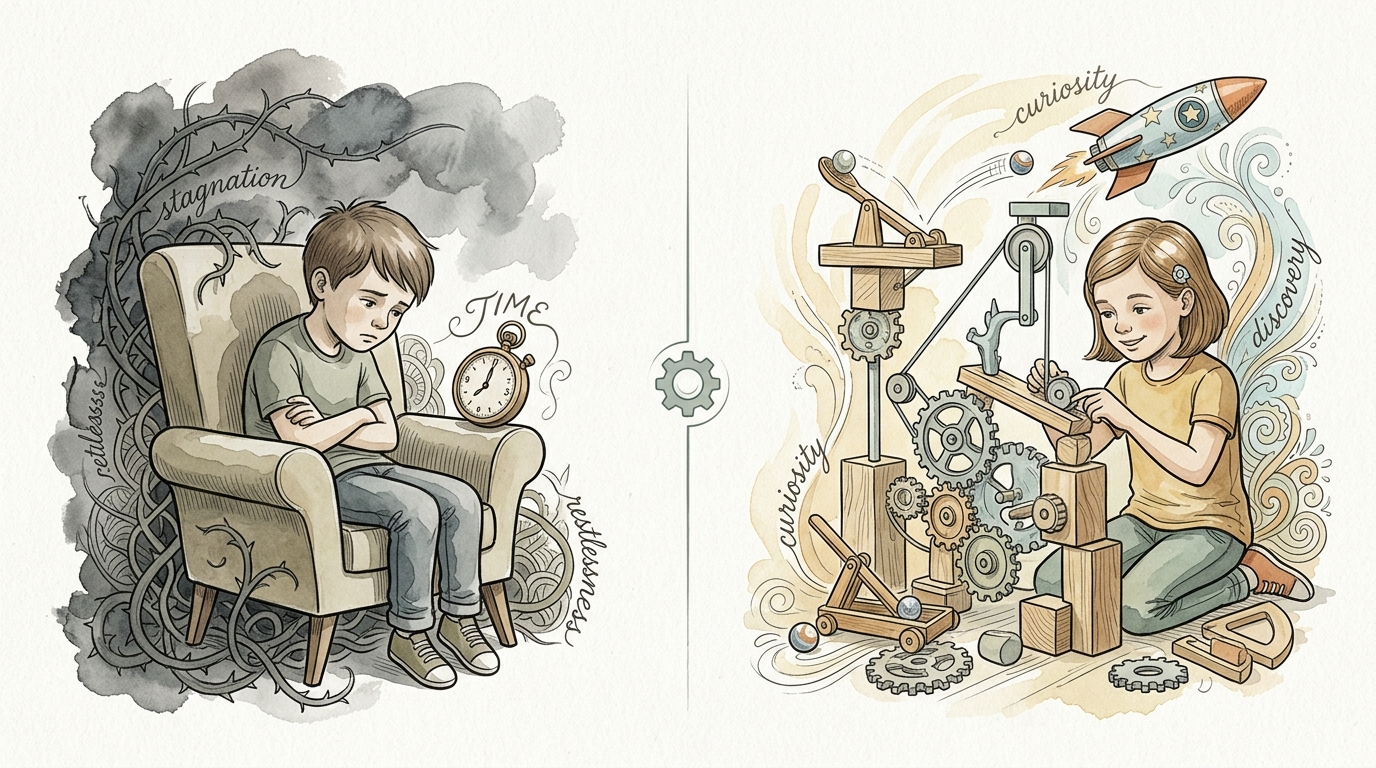
Boredom is the birthplace of genius. Stop killing it with a screen. We treat “I’m bored” like a problem to be solved with an iPad. But boredom is the friction that sparks the flame of creativity. Let the fire burn.
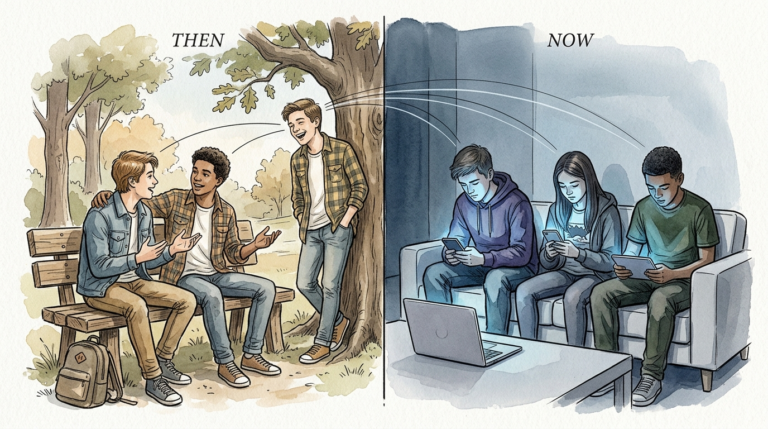
Screens are the modern pacifier. We hand them out at the first sign of restlessness. In doing so, we rob children of the chance to look inward. They stop wondering what they can build and start waiting for what they can watch. This shift from active creator to passive consumer happens in an instant.
Technology is not the enemy, but dependency is. When a child depends on a glowing rectangle for every ounce of entertainment, their internal engine stalls. They lose the ability to navigate a quiet room. They forget how to turn a cardboard box into a spaceship or a pile of laundry into a mountain peak.
This guide explores the power of the no screen time poster for kids. It is a simple tool with a profound purpose. It acts as a visual anchor and a psychological circuit breaker. It shifts the household dynamic from “Why can’t I watch a show?” to “What should I do next?”
no screen time poster for kids
A no screen time poster for kids is a physical, high-visibility document. It lives on the fridge, the playroom door, or near the charging station. It acts as a non-negotiable “referee” for the home. Instead of you being the “bad guy” who says no, the poster becomes the standard that governs the day.
These posters serve as a visual roadmap. They translate abstract household rules into concrete, actionable steps. Children often struggle with the “in-between” moments when a device is turned off. Their brains are searching for the next hit of dopamine. The poster provides a menu of alternatives to bridge that gap.
Think of it as an externalized prefrontal cortex. Children’s brains are still developing the ability to regulate impulses. When the screen goes black, they feel a sense of loss. The poster reminds them that the real world is still open for business. It lists activities that provide “slow dopamine”—the kind earned through effort, movement, and play.
Real-world application is simple. A child approaches you and says they are bored. You don’t have to scramble for ideas. You point to the wall. The child reads the “menu” and chooses an adventure. It removes the power struggle and replaces it with autonomy.
How to Implement a Screen-Free Visual System
Building a screen-free culture starts with the “No Screens Until…” checklist. This is the most popular form of the poster. It sets conditions that must be met before any digital media is consumed. It ensures that the “real world” comes first every single day.
Start by identifying the essential tasks. These usually include making the bed, finishing homework, and reading for at least 20 minutes. You might add “do one kind thing” or “play outside for 30 minutes.” The goal is to front-load the day with high-value activities.
Create a “Boredom Menu” section. This is a list of 10 to 20 activities your child actually enjoys. Do not just list chores. List messy play, building projects, and outdoor games. When the “I’m bored” complaint inevitably arrives, the menu is ready. It acts as an invitation to engage with the physical world.
Involve your children in the creation process. Let them pick the colors and the stickers. If they help write the rules, they are more likely to follow them. This turns the poster from a restrictive sign into a collaborative family contract. It gives them ownership over their time and their growth.
Use clear, punchy language. Avoid long paragraphs. Use icons or drawings for younger children who cannot yet read. The more visual the poster is, the more effective it will be. It should be a bright, welcoming reminder of all the things that are more fun than a tablet.
Benefits of a Screen-Free Visual Guide
The primary benefit is the development of executive function. When a child has to choose an activity and follow through, they are training their brain. They are learning to plan, organize, and solve problems. These are the building blocks of success in every area of life.
Creativity flourishes in the absence of easy entertainment. When the screen is off, the mind starts to wander. This “mind-wandering” state is where original ideas are born. A child might spend ten minutes staring at a wall before they suddenly decide to build an indoor obstacle course. That moment of transition is where the magic happens.
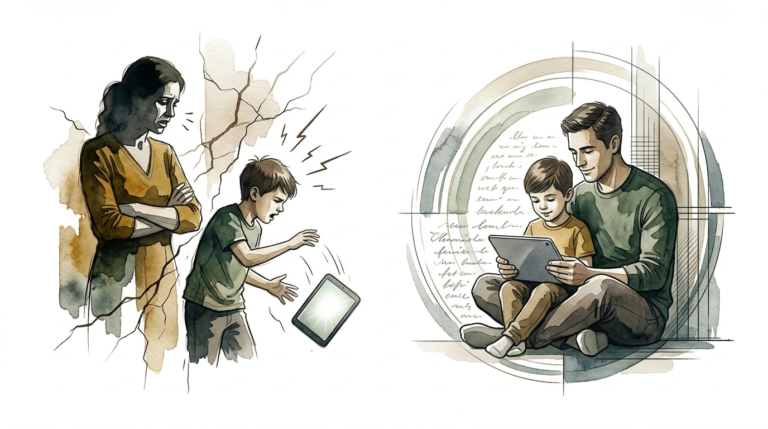
Emotional regulation improves significantly. Constant screen use creates a “dopamine loop” that makes transitions difficult. Turning off a screen often leads to a meltdown. A visual poster helps manage these transitions. It provides a clear path forward, reducing the anxiety that comes with an unstructured afternoon.
Physical health is an obvious winner. Most screen-free alternatives involve movement. Whether it’s a scavenger hunt in the backyard or a dance party in the living room, the body is active. This counteracts the sedentary lifestyle that digital consumption encourages.
Social skills are sharpened through real-world play. When children play with siblings or friends without a screen, they have to negotiate. They have to share, resolve conflicts, and communicate. These “ancestral hand-eye play” skills cannot be replicated by a multiplayer video game.
Challenges and Common Mistakes
Dopamine withdrawal is the biggest hurdle. When you first introduce the poster, expect resistance. Your child’s brain has been conditioned to expect instant gratification. When that is removed, they may become irritable, restless, or even aggressive. This is a physiological response, not necessarily bad behavior.
Consistency is where most parents fail. If the poster says “No Screens Until 4 PM,” but you give in at 2 PM because you’re tired, the system breaks. The poster loses its authority. You must treat the visual guide as the final word. If you aren’t consistent, your child will learn that the rules are negotiable if they push hard enough.
Parental hypocrisy is a silent killer of this system. If the poster bans screens at the dinner table, but you are checking your email during the meal, your child will notice. Children are expert observers. To make the “no screen time poster for kids” work, the adults must model the behavior they expect to see.
Overscheduling the alternatives is another common error. Sometimes parents fill the “Boredom Menu” with so many structured activities that the child never truly experiences boredom. Remember, boredom is the engine. Do not fear the quiet. Let them sit in the restlessness until their own imagination takes over.
Focusing only on chores can backfire. If the poster is just a list of work, the child will view it as a punishment. Ensure the poster is balanced with high-energy fun. It should look like an invitation to play, not a list of reasons to be miserable.
Limitations and Realistic Boundaries
A poster is a tool, not a cure-all. There are situations where screens are necessary or even beneficial. Educational requirements for school often involve digital platforms. Long car rides or flights might necessitate some digital entertainment. It is important to define these exceptions clearly.
Age differences play a huge role. A toddler needs a very different poster than a middle-schooler. While a toddler’s menu might include “play with blocks,” a preteen might need “learn a new song on the guitar.” You must evolve the system as your child grows, or it will quickly become irrelevant.
Social necessity is a modern reality. For older children, screens are often the primary way they stay connected with their peer group. Cutting them off entirely can lead to social isolation. The goal should be a “digital balance” rather than a “digital blackout.” Use the poster to manage the quantity and quality of use, not just to eliminate it.
Environmental constraints can limit the options on your menu. If you live in a small apartment or have no backyard access, some “active” suggestions may not be feasible. You have to tailor the poster to your specific living situation. A rainy day menu should look different than a summer afternoon menu.
Physical Posters vs. App Blockers
Many parents wonder if they should just use software to limit screen time. While app blockers are effective at “cutting the cord,” they don’t provide the “what’s next” solution. They are purely restrictive. A physical poster is constructive.
| Feature | Physical Poster | App Blockers/Software |
|---|---|---|
| Nature | Proactive/Educational | Reactive/Restrictive |
| Skill Built | Self-Regulation & Creativity | External Compliance |
| Engagement | High (visual and tactile) | Low (invisible) |
| Cost | Near Zero | Subscription Fees |
| Conflict Level | Lower (visual contract) | Higher (power struggle) |
Software is a great backup, but the poster is the primary teacher. It focuses on what the child can do, rather than just what they cannot do. This positive framing makes a massive difference in the child’s long-term relationship with technology.
Practical Tips for a Successful Poster
Placement is everything. Put the poster exactly where the screens live. If the tablets are in a specific drawer, tape the poster to that drawer. If the TV is the main attraction, put the “No Screens Until…” checklist right next to the remote. You want the visual reminder to hit them at the moment of temptation.
Rotate the activities. A “Boredom Menu” can get stale after a few weeks. Every Sunday, swap out three or four items. Introduce a new art supply or a different outdoor game. This keeps the curiosity alive and prevents the “I’ve done everything on the list” excuse.
Use a “Screen-Free Bin.” This is a physical box filled with the items mentioned on the poster. If the poster suggests “play with Play-doh” or “build a robot from recyclables,” ensure those materials are ready to go. Reducing the friction to start a new activity increases the success rate.
Celebrate the “Boredom Wins.” When you see your child transition from complaining about boredom to building an elaborate Lego city, acknowledge it. Tell them, “I love how you figured out something fun to do on your own.” Positive reinforcement cements the idea that they don’t need a screen to be happy.
Include a “Family Time” section. Screens are often used because everyone is doing their own thing. Add an item like “Play a board game with Mom” or “Help Dad cook dinner.” Connection is often the best antidote to digital consumption.
Advanced Considerations: The Neurobiology of Boredom
Serious practitioners of screen-free parenting should understand the Default Mode Network (DMN). This is a system in the brain that becomes active when we are not focused on the outside world. It is the “resting state” that allows for introspection, memory consolidation, and creative synthesis.
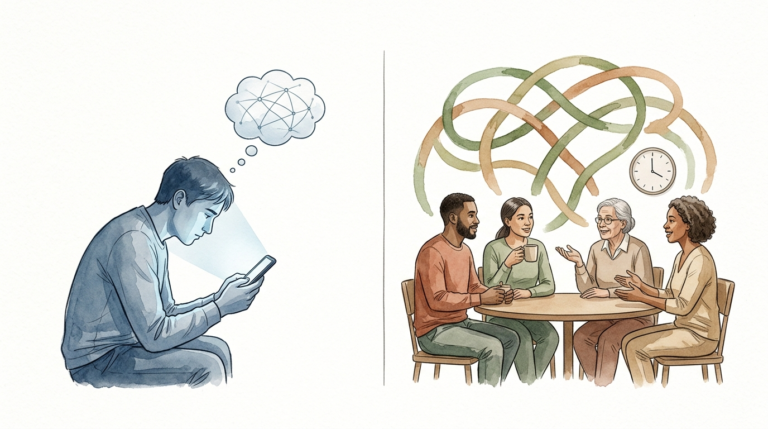
Screens keep us in the “Task-Positive Network.” We are reacting to stimuli, chasing notifications, and consuming data. This suppresses the DMN. When we allow a child to be bored, we are giving their DMN the chance to fire up. This is literally where the brain processes “Who am I?” and “What do I think?”
Technology is designed to exploit the dopamine system. Apps and games use “intermittent reinforcement” to keep users engaged. It is the same mechanism used in slot machines. A child’s brain is particularly vulnerable to this because their prefrontal cortex is not yet strong enough to override the craving for “one more video.”
The “no screen time poster for kids” is a tool for neuroplasticity. By forcing the brain to find its own stimulation, you are strengthening the neural pathways responsible for self-motivation. You are training them to be “Producers” rather than “Consumers.” This mindset shift is one of the greatest gifts you can give a child in the digital age.
Example Scenario: The Saturday Morning Shift
It is 7:00 AM on a Saturday. Your seven-year-old wakes up and immediately asks for the iPad. In a standard household, this starts a negotiation that usually ends with the parent giving in just to get another hour of sleep. In the “Poster Household,” the dynamic is different.
The child walks into the kitchen and sees the poster on the fridge. The first item on the “No Screens Until…” list is “Eat breakfast and clear your plate.” The second is “Read a book for 20 minutes.” The third is “Do a 10-minute movement challenge.”
The child knows the rules are non-negotiable. They eat, they read, and they do some jumping jacks. By the time they finish the list, it is 8:00 AM. Their brain has settled into a “real world” rhythm. Often, by the time the checklist is done, they have started a drawing or a building project and forgotten all about the iPad.
The poster didn’t just limit a device; it expanded their morning. It turned a potential power struggle into a series of productive habits. The parent gets their hour of peace, and the child gets a sense of accomplishment.
Final Thoughts
Boredom is not the enemy. It is the engine of a fulfilling life. When we fill every gap in a child’s schedule with a screen, we are effectively turning off their engine. A no screen time poster for kids is the manual they need to restart it. It provides the structure they crave and the freedom they need to discover themselves.
Start small. You don’t need a professional graphic designer to make this work. A piece of poster board and a few markers are all you need. Focus on clarity, consistency, and a sense of fun. The goal is to make the physical world look more attractive than the digital one.
Encourage your children to lean into the quiet. Remind them that the best ideas come when the screens are dark. As they grow, they will thank you for the grit, the creativity, and the self-control they developed during those “boring” afternoons. Let the fire burn.
Sources
1 screensdownfamilyup.com | 2 screensdownfamilyup.com | 3 screensdownfamilyup.com | 4 peacefulparenthappykids.com | 5 celebree.com | 6 kidsmentalhealthfoundation.org | 7 acsh.org | 8 yourmodernfamily.com | 9 healthline.com | 10 ekdali.com | 11 veryspecialtales.com | 12 spd.org.sg | 13 healthprofessionalsforsaferscreens.org | 14 msu.edu | 15 heartworkorg.com | 16 monarchassessment.com | 17 instituteofchildpsychology.com