screen time limits for teenagers
Is their device a trash can for their time, or the fuel for their future? The problem isn’t the screen—it’s what’s happening on it. We’re moving from ‘Waste’ (passive consumption) to ‘Fuel’ (creative production). Here is how to set limits that actually encourage growth. #TeenParenting #ScreenTime #DigitalWellness

Most parents feel like they are losing a war against an invisible enemy. You see your teenager hunched over a glowing rectangle for hours, and your gut instinct is to pull the plug. But in a world where school, social lives, and future careers are built on these devices, a total blackout is no longer a realistic strategy.

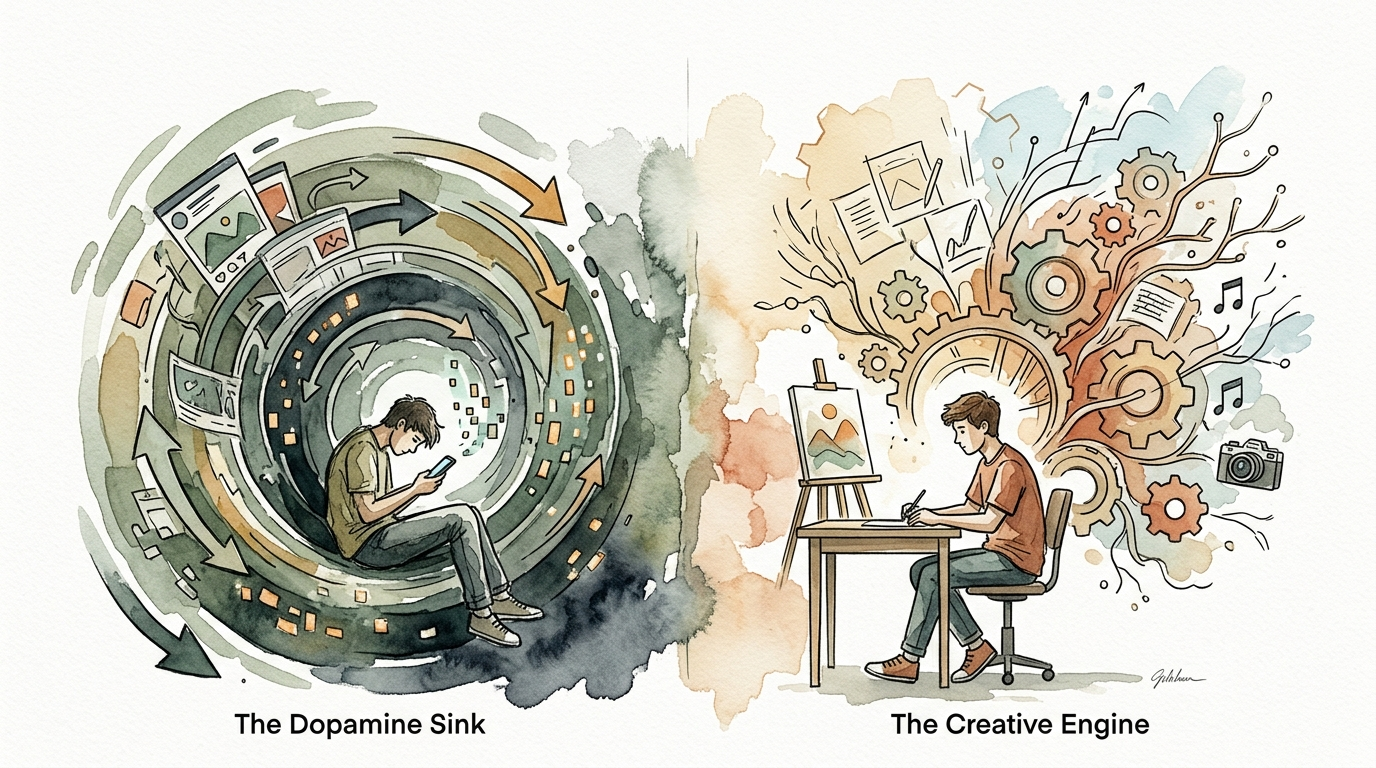
The goal has shifted. We are no longer just counting minutes; we are evaluating the quality of the “digital diet.” Transitioning from a “Dopamine Sink” to a “Creative Engine” is the secret to turning screen time from a liability into a superpower.
screen time limits for teenagers
Screen time limits for teenagers are the boundaries parents set to regulate how much time a young person spends on digital devices like smartphones, gaming consoles, and laptops. While these limits once focused solely on a total number of hours, modern digital wellness focuses on the type of activity occurring behind the glass.
Recent data indicates that the average teenager now spends between seven and nine hours a day on entertainment screens. This accounts for roughly 43% of their waking hours. These statistics often exclude time spent on school-required device use, meaning the digital footprint is even larger than we realize.
Effective limits exist to prevent “digital dissociation” and “brain rot”—slang terms that describe the cognitive fatigue and attention problems caused by overstimulation from low-effort content. These boundaries act as a safety net, ensuring that digital life does not cannibalize essential biological needs like sleep, physical activity, and face-to-face social connection.
Think of it like a nutritional label. Just as we distinguish between “empty calories” from soda and “fuel” from protein, we must distinguish between passive scrolling and active creation. Limits help teenagers develop the self-regulation they need to navigate a world engineered to keep them hooked.
How the Fuel vs. Waste Framework Works
Setting limits effectively requires a shift in how you categorize digital behavior. Most screen time falls into two distinct buckets: Waste and Fuel. Understanding the difference allows you to set “flexible limits” that reward growth while restricting stagnation.
The Waste Bucket (Passive Consumption)
Passive consumption includes activities like doomscrolling through TikTok, watching endless YouTube Shorts, or mindlessly browsing Instagram. These platforms use algorithmic feeds designed to trigger small dopamine hits every few seconds. This is the “Dopamine Sink.” It requires almost zero cognitive effort and leaves the brain feeling drained rather than rested.
The Fuel Bucket (Active Creation)
Active creation involves using the device as a tool. Examples include coding a new game in Roblox, editing a video for a school project, composing music, or participating in a live digital art class. These activities engage the prefrontal cortex—the part of the brain responsible for planning, focus, and executive function. This is the “Creative Engine.”
Implementing the System
Parents can implement this by setting a “Hard Limit” for Waste and an “Earned Extension” for Fuel. For example, a teen might have a two-hour limit on social media, but “unlimited” time for learning Python or editing photos. This teaches them that the device is a tool for production, not just a straw for consumption.
Benefits of Strategic Limits
Establishing clear, quality-based screen limits provides measurable advantages for a teenager’s developing brain and emotional stability. These benefits extend far beyond just “getting them off their phone.”
- Restoration of Neuroplasticity: The teenage brain is highly plastic. Reducing high-frequency dopamine triggers from short-form videos allows the brain to recover its ability to focus on long-form, complex tasks like reading or deep problem-solving.
- Improved Emotional Regulation: Research shows that excessive passive use is linked to increased anxiety and depression. Limits reduce “social comparison” triggers found on platforms like Instagram, leading to better self-image.
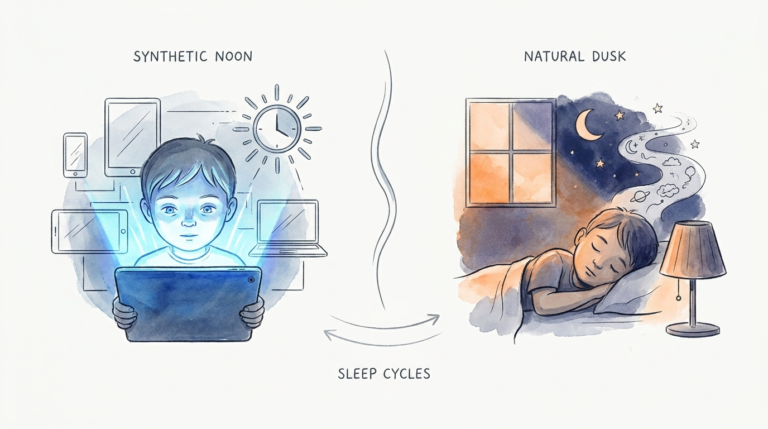
- Enhanced Sleep Quality: Implementing a “tech-free” hour before bed prevents blue light from suppressing melatonin. This helps teens get the 8-10 hours of sleep their bodies require for physical growth and memory consolidation.
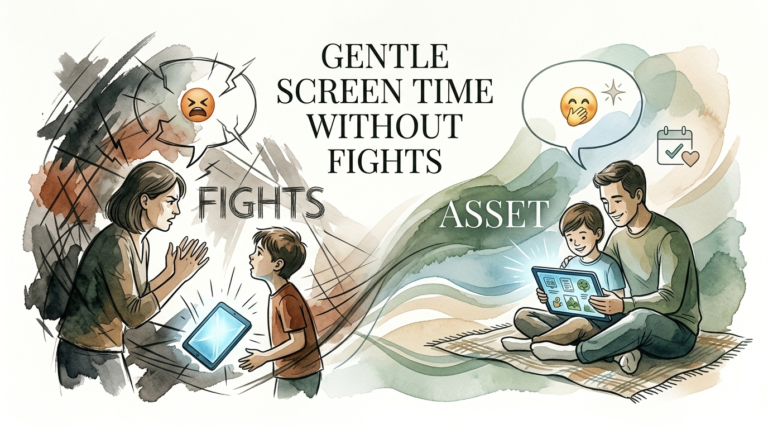
- Conflict Reduction: When limits are based on clear, pre-negotiated rules rather than parental whims, the daily “power struggle” often diminishes. Teens feel a sense of autonomy when they understand the “why” behind the rules.
Challenges and Common Mistakes
Setting screen time limits for teenagers is rarely a smooth process. Parents often fall into traps that actually increase a teen’s desire to “sneak” device time or rebel against the rules.
One of the biggest mistakes is being too restrictive without providing an alternative. If you take away the phone but don’t “fill the void” with other engaging activities, you are creating a vacuum of boredom that a teen will naturally try to fill with digital stimulation. Digital detoxes should be paired with “Green Time”—increased access to nature, sports, or family hobbies.
Another pitfall is inconsistent enforcement. If the rules only apply when you are stressed or angry, the teenager views the limits as a punishment rather than a lifestyle habit. This inconsistency breeds resentment and encourages them to hide their usage.
Failing to model the behavior is equally damaging. Parents who scroll through their own phones during dinner while telling their kids to “get off their devices” lose credibility immediately. Digital wellness must be a family-wide initiative to be successful.
Limitations of Strict Time Counts
Strictly counting minutes can sometimes backfire because it ignores the context of the usage. This is why the American Academy of Pediatrics moved away from hard hour-based limits in favor of a “Family Media Use Plan.”
A teenager who spends three hours video-calling a friend to study for a math test is having a vastly different experience than one who spends three hours scrolling through a “doomscrolling” feed. Treating these two activities as identical under a “three-hour limit” is counterproductive. It punishes social connection and academic collaboration.
Furthermore, technology is now so integrated into the social fabric of adolescence that total exclusion can lead to social isolation. In 2025 and 2026, many social interactions happen within digital environments like Discord or gaming servers. Cutting these off entirely can damage a teen’s social development and sense of belonging.
Comparison: Dopamine Sink vs. Creative Engine
To help visualize why quality matters more than quantity, consider the following comparison between the two main types of digital engagement.
| Feature | Dopamine Sink (Passive) | Creative Engine (Active) |
|---|---|---|
| Cognitive Effort | Very Low (Leads to fatigue) | High (Leads to skill growth) |
| Neurobiological Impact | Desensitizes dopamine receptors | Strengthens prefrontal cortex |
| Typical Platforms | TikTok, Reels, Shorts | Code.org, Procreate, Minecraft |
| Emotional Aftermath | FOMO, anxiety, “brain fog” | Sense of accomplishment, pride |
Practical Tips and Best Practices
Implementing a new digital lifestyle requires a clear, actionable plan. Start with a “Digital Peace Treaty” that both you and your teen sign. This makes the rules feel like a mutual agreement rather than a set of commands.
- Define Tech-Free Zones: Establish areas in the house where phones are never allowed. The dinner table and the bedroom are the most critical zones for fostering connection and ensuring sleep.
- Use Tech to Manage Tech: Leverage built-in tools like Apple Screen Time or Google Family Link. Set app-specific limits for “Waste” categories while keeping “Fuel” categories open.
- The “20-20-20” Rule: Encourage your teen to look at something 20 feet away for 20 seconds every 20 minutes to reduce digital eye strain.
- Promote Algorithmic Literacy: Talk to your teen about how algorithms work. Explain that the app is designed to keep them watching so it can sell more ads. When they understand they are being manipulated, they are more likely to push back.
- Schedule a Weekly Audit: Once a week, sit down and look at the screen time report together. Don’t use it as a weapon. Ask questions like, “How did you feel after those three hours on TikTok?” or “Which apps made you feel the best this week?”
Advanced Considerations: The Neurobiology of the Scroll
Serious practitioners of digital wellness need to understand the concept of “variable reward.” This is the same psychological principle that makes slot machines addictive. Algorithms serve a mix of content—some boring, some exciting—creating an unpredictable pattern that keeps the brain searching for the next “hit.”
The adolescent brain is particularly vulnerable because the reward-seeking centers (the nucleus accumbens) mature much earlier than the self-control centers (the frontal cortex). This creates a “biological mismatch” where the teen has a high-powered engine for desire but weak brakes for self-regulation. Understanding this allows parents to approach the issue with empathy rather than just frustration.
Optimization of the digital environment also involves “Curated Feeds.” Encourage your teen to unfollow accounts that trigger negativity and instead follow “educational creators” or artists. This effectively turns a passive platform into a source of inspiration, shifting it slightly toward the “Fuel” category.
Examples and Scenarios
Let’s look at how these limits work in a real-world setting. Consider two teenagers, Alex and Maya, who both spend four hours on their tablets on a Saturday.
Scenario A: The Passive Scroller (Alex)
Alex spends four hours scrolling through a short-form video feed. He watches over 300 different clips, ranging from 15 to 60 seconds each. By the end, his brain has been forced to switch contexts 300 times. He feels irritable, has a slight headache, and struggles to focus on his homework. This is 100% “Waste” time.
Scenario B: The Digital Creator (Maya)
Maya spends four hours on the same tablet. She uses two hours to watch a tutorial on 3D modeling and two hours practicing in a creative app. She experiences “flow”—a state of deep concentration. By the end, she has created a 3D model of a character. She feels energized and proud. This is 100% “Fuel” time.
Under a traditional “four-hour limit,” both Alex and Maya have hit their max. Under a “Fuel vs. Waste” framework, Alex would have been cut off at the two-hour mark to protect his mental health, while Maya might have been encouraged to continue her project. This distinction is what separates successful digital parenting from mere restriction.
Final Thoughts
Screen time limits for teenagers are no longer about just “saying no.” They are about teaching a new generation how to live in a world that is permanently connected. By shifting the focus from quantity to quality, you empower your teen to see their device as a tool for creation rather than a drain for their attention.
Start small. Identify one “Waste” activity to limit and one “Fuel” activity to encourage. As your teen begins to feel the benefits of a clearer mind and improved focus, they will start to self-regulate. Digital wellness is a marathon, not a sprint, and the goal is to raise an adult who can manage their own attention in a distracted world.
Encourage your teen to experiment with this framework. Ask them to track how they feel after different digital activities. When they realize that “creating” feels better than “consuming,” the battle over screen time is already half-won.
Sources
1 luriechildrens.org | 2 gabb.com | 3 hhs.gov | 4 explodingtopics.com | 5 eugenepeds.com | 6 lindnercenterofhope.org | 7 lindnercenterofhope.org | 8 affinitypsych.com | 9 thejacobsladdergroup.org | 10 manhattanpsychologygroup.com