Math Formula Memorization Vs Logic Skills
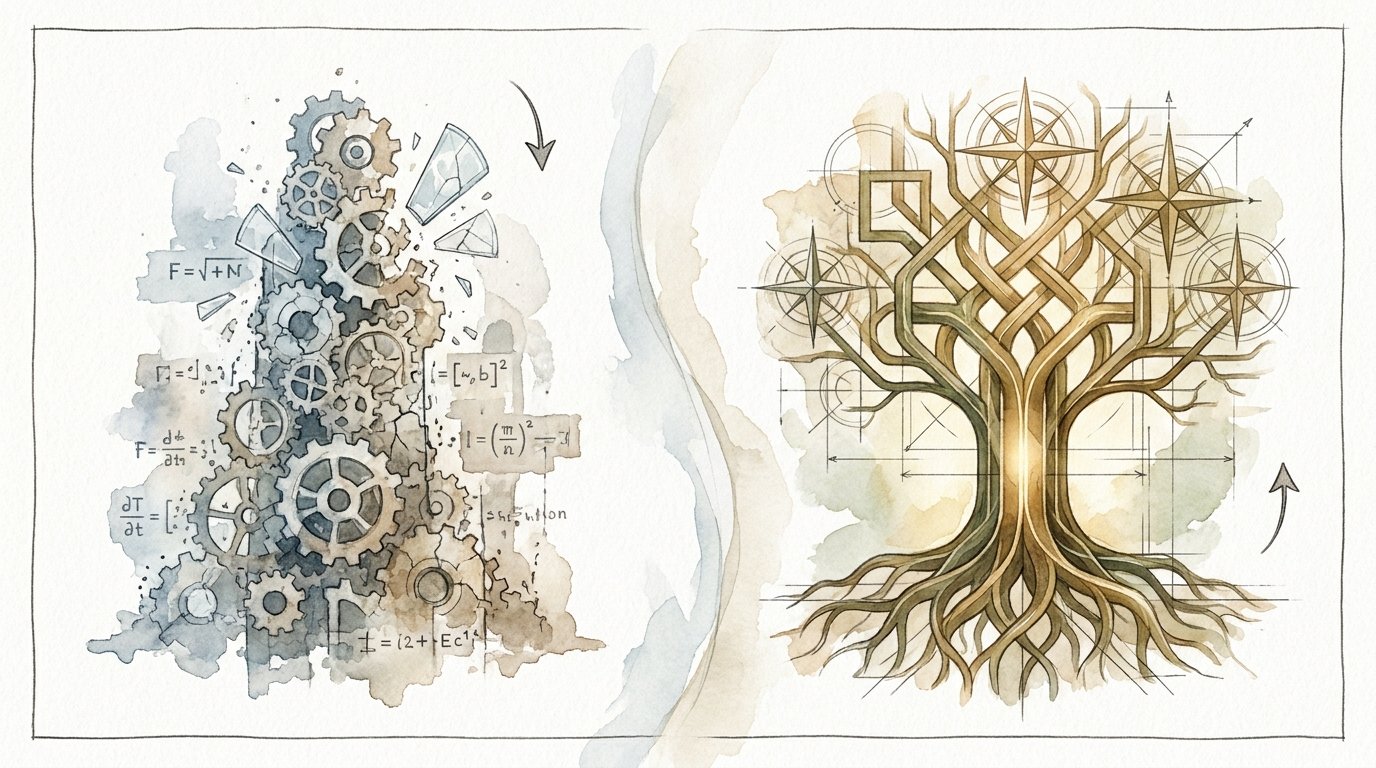
If they forget the formula, do they lose the skill? Build a mind that can reinvent the math from scratch. Most math worksheets teach a ‘recipe’—follow steps A, B, and C to get the answer. But if the child forgets step B, the whole system collapses. This is fragile knowledge. Cognitive activities focus on first-principles: understanding *why* the math works. A child who understands the ‘why’ can always recreate the ‘how,’ even under pressure.

Learning is often treated like a storage locker where we stack facts until they are full. But math isn’t just a collection of facts. It is a language of relationships. When we prioritize memorization over logic, we give children a map but no compass. If they wander off the designated path, they are lost. Logic skills provide the compass. They allow a student to look at a complex problem, break it down into its core components, and navigate toward a solution using reason rather than recall.
This approach changes the dynamic of the classroom and the home. Instead of asking “What is the answer?” we begin asking “How do you know that is true?” This shift moves the child from being a passive recipient of information to an active explorer of logical systems. It creates a foundation that doesn’t just survive the next test but supports a lifetime of critical thinking.
Math Formula Memorization Vs Logic Skills
Math formula memorization is the process of committing specific rules, equations, and procedures to memory through repetition. It is the “what” of mathematics. A student might learn that the area of a circle is Pi times the radius squared. They can recite it. They can plug numbers into it. However, if they don’t understand where that formula comes from, their knowledge is procedural. It exists in a vacuum.
Logic skills, on the other hand, represent the “why” behind the numbers. This involves understanding mathematical properties, spatial relationships, and the underlying structures that govern how numbers interact. In the real world, logic is what allows an architect to adjust a design when a specific material isn’t available or a programmer to debug a script that isn’t producing the expected output. Logic is the ability to derive the formula when the memory of it fails.
Rote memorization often creates an “illusion of mastery.” A child might ace a multiplication quiz by reciting tables but struggle to explain why four times five equals twenty. Research suggests that while memorization can help with short-term exam performance, it often fails to build the critical thinking skills required for unfamiliar or complex contexts. Logic skills are resilient. They allow a student to handle new situations independently because they recognize patterns and relationships rather than just matching a problem to a memorized template.
How First-Principles Thinking Reinvents Math
First-principles thinking is a problem-solving technique that requires breaking down a complex situation into its most basic, foundational truths. In mathematics, this means moving away from “rules” and toward “properties.” Instead of teaching a child to “carry the one” during addition, we teach them about place value and regrouping. When they understand that ten “ones” can be traded for one “ten,” the “rule” becomes a logical necessity.
To implement this, educators and parents can use a method called “scaffolding.” This involves starting with a concrete concept the child already understands and slowly adding layers of complexity. For example, if a child is learning multiplication, don’t start with a chart. Start with physical objects. Group three sets of two blocks. Ask them to count the total. Then, ask if there is a faster way to find the total than counting one by one. They might suggest adding two plus two plus two. Now, you have a bridge between addition and multiplication.
Actionable steps for first-principles learning:
- Deconstruct the Formula: Before using a formula, try to “discover” it. Use square tiles to find the area of a rectangle. Let the child realize that the area is simply the number of squares, and multiplying the length by the width is just a shortcut for counting them.
- Use Socratic Questioning: Instead of correcting a mistake immediately, ask “Does that answer make sense?” or “Can you show me how you got there?” This forces the brain to re-trace the logical steps.
- Connect to Visuals: Use number lines, pie charts, and geometric shapes. Visualizing a fraction as a slice of a pizza makes the concept of “half” or “quarter” much more intuitive than just seeing numbers on a page.
Common pitfalls in this process include moving too fast. Logic takes longer to build than a memory. It is tempting to jump to the formula because it produces the “right answer” faster. But speed in the beginning often leads to stagnation later. Allow the child the space to struggle and the time to think.
The Benefits of Logic-Based Learning
The primary benefit of logic-based learning is long-term retention. Information that is understood is much harder to forget than information that is simply stored. When a child understands the underlying principles of a subject, they create stronger neural pathways. These connections make the information part of their permanent knowledge base, allowing for reconstruction even years after the initial learning.
Another significant advantage is the reduction of math anxiety. Rote learners often feel high levels of stress because they know their knowledge is fragile. If they forget one step in a long division recipe, they feel they have failed. Logic-based learners feel more confident because they have a “safety net.” Even if they forget the exact procedure, they know they can use their logic to find a way through the problem.
Practical benefits of logic over rote recall:
- Adaptability: Logic-based learners can apply their knowledge to new and unfamiliar problems. They don’t need a “sample problem” to know how to start.
- Consistency: Research shows that concept-based learners tend to have more consistent performance across different types of assessments, rather than spikes and dips based on what they’ve recently drilled.
- Foundation for Advanced Math: Higher-level math like calculus and linear algebra are almost entirely logic-driven. Students who relied on memorization in elementary school often hit a “wall” in high school when the sheer volume of formulas becomes too great to manage.
Challenges and Common Mistakes to Avoid
One of the biggest challenges is the pressure of standardized testing. Many educational systems are designed to reward quick recall over deep understanding. This leads to “curriculum narrowing,” where teachers focus only on the shortcuts that get the right answer in the shortest time. Parents may also feel the urge to drill flashcards to see immediate “results” in grades.
Common mistakes include:
- Confusing Fluency with Understanding: Just because a child can answer “7 times 8 is 56” in one second doesn’t mean they understand the relationship between those numbers. Check for understanding by asking them to represent the problem in a different way.
- Neglecting Vocabulary: Sometimes logic is hindered simply because a child doesn’t understand the words being used. Terms like “product,” “quotient,” or “denominator” need to be linked to the logical actions they represent.
- Over-reliance on Mnemonics: Acronyms like PEMDAS (Order of Operations) can be helpful, but they often become a crutch. Students might follow the acronym blindly without understanding why multiplication and division are actually equal in priority.
To avoid these mistakes, focus on the process rather than the outcome. Praise the child for their reasoning strategy rather than just for getting the correct answer. This fosters a growth mindset, where the child views their brain as a tool that gets stronger with effort and logic.
Limitations: When Memorization Still Matters
It is important to maintain a balanced perspective. Memorization is not the “enemy.” In fact, it is a necessary component of mathematical fluency. Fluency is the ability to recall basic facts quickly, which frees up “working memory” for more complex tasks. If a student has to use logical reasoning to figure out 7 plus 5 every time it appears in a long-form word problem, their brain will be too exhausted to solve the actual goal of the problem.
Rote learning is ideal for:
- Basic Number Combinations: Knowing addition and multiplication facts by heart saves time and reduces cognitive load during multi-step equations.
- Standard Units: Memorizing that there are 12 inches in a foot or 60 seconds in a minute is more efficient than trying to derive a standard from scratch.
- Terminology: Learning the names of shapes and operations provides a common language for communication.
The key is timing. Conceptual understanding should almost always come *before* memorization. Once a child understands why a formula works, then—and only then—should they be encouraged to memorize it for efficiency. Memorization should be the final “polishing” of a skill, not the foundation of it.
Comparing Rote Learning and Resilient Logic
| Feature | Rote Memorization | Resilient Logic |
|---|---|---|
| Primary Goal | Fast recall of specific answers. | Understanding of relationships and principles. |
| Retention | Short-term; often lost after the exam. | Long-term; builds permanent neural pathways. |
| Adaptability | Low; struggles with “word problems” or new formats. | High; can solve problems they haven’t seen before. |
| Cognitive Load | High during recall (fear of forgetting). | Lower once concepts are internalized. |
| Real-World Use | Limited to routine calculations. | Essential for engineering, coding, and finance. |
Practical Tips for Building Logical Scaffolding
Parents and educators can start building logic-based skills immediately by integrating math into daily life. This removes the “abstraction” of math and makes it a tangible tool. For young children, this starts with play. For older students, it involves challenge and inquiry.
Actionable tips:
- Incorporate Math Talk: Use quantity words in everyday conversation. “Which is bigger, the apple or the grape?” “If I cut this orange in half, how many pieces do we have?” This builds number sense and spatial reasoning naturally.
- Play Board Games: Games like Chess, Sudoku, or even simple dice games require strategy and logical prediction. They teach children to think several steps ahead—a core component of mathematical logic.
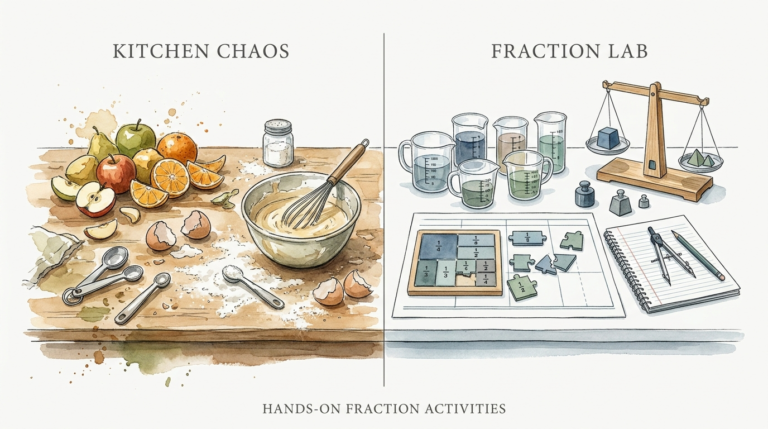
- Cooking and Baking: Measuring ingredients is a practical lesson in fractions, volume, and weight. Ask, “If we need to double this recipe, how much flour do we need?” This requires understanding the concept of doubling rather than just following a list.
- Grocery Store Math: Challenge children to estimate the total cost of three items or find which brand of cereal has a better price per ounce. This applies addition, division, and comparison in a high-stakes (and fun) environment.
- Tallying and Sorting: Use toys or natural objects like rocks and leaves. Ask the child to sort them by color, size, or shape. This builds the foundations of set theory and classification.
Consistency is key. You don’t need a dedicated “math hour” every day. Brief, meaningful moments of logical inquiry accumulate into significant learning opportunities over time. The goal is to make math feel like a natural part of the world rather than a separate, intimidating subject.
Advanced Considerations for Math Practitioners
For those looking to take logic skills to a deeper level, consider the role of “metacognition”—thinking about thinking. Encourage students to explain their thought process out loud. When a student can teach a concept to someone else, it demonstrates a high level of logical mastery. This “Feynman Technique” is one of the most effective ways to identify gaps in understanding.
Scaling logic to higher math:
- Pattern Recognition: In algebra, variables are just placeholders for patterns. Encourage students to look for the “rule” that connects a sequence of numbers. This makes functions and equations much more intuitive.
- Geometric Proofs: Instead of just memorizing theorems, try to prove them. Even a simple visual proof of the Pythagorean Theorem can be a “lightbulb” moment that transforms how a student views geometry.
- Computer Programming: Coding is essentially applied logic. Learning languages like Python or Scratch requires students to break complex goals into small, logical steps. This is the ultimate exercise in first-principles thinking.
Serious practitioners should also be aware of “ego-resiliency.” This is the ability to manage the frustration that comes with difficult problems. Logic-based math is hard work. It requires more mental energy than memorizing a formula. Building emotional resilience is just as important as building cognitive logic. Remind students that “struggle” is not a sign of failure; it is the feeling of the brain getting stronger.
Real-World Scenarios: Logic in Action
Consider a scenario where you are trying to tile a bathroom floor. A rote learner might search for a “formula for tiles.” If they find one that uses different units (like centimeters instead of inches), they might get stuck or produce a wildly incorrect answer. A logic-based learner looks at the floor and sees a grid. They measure the total area, measure the area of one tile, and realize they just need to see how many of “X” fit into “Y.” If there are odd-shaped corners, they use their spatial logic to realize they can cut tiles in half, effectively combining two halves to make a whole.
Another example is personal finance. Someone who memorized a “budgeting rule” (like the 50/30/20 rule) might struggle if they lose their job or have an unexpected medical expense. The rule no longer fits their reality. A logic-based thinker understands the relationship between fixed costs, variable costs, and savings. They can deconstruct their finances from first principles, identifying exactly where adjustments need to be made based on their specific situation. They aren’t just following a recipe; they are the chef.
In both cases, the ability to “reinvent the math” is what leads to success. The formula is a tool, but the logic is the hand that guides it. By focusing on the logic, we prepare children for a world where the problems are not always neatly defined and the answers aren’t in the back of the book.
Final Thoughts
The shift from memorization to logic is one of the most powerful changes you can make in a child’s education. It transforms math from a chore of recall into a toolkit for life. By building a mind that can reinvent the math from scratch, you provide a level of security that a simple formula never could. You are giving them the ability to think, to question, and to solve.
Encourage exploration, celebrate the struggle, and always ask “why.” The goal isn’t just to produce great mathematicians; it is to produce great thinkers. When a child understands the first principles of how the world works, they are no longer limited by what they can remember. They are limited only by what they can imagine.
Start small. Tomorrow, when your child asks for help with a math problem, don’t give them the formula. Ask them to draw it. Ask them to build it. Watch as they discover the logic for themselves. Once they find it, they will never truly lose it.
Sources
1 mindko.com | 2 thehumanprojectfoundation.org | 3 numericwiz.com | 4 noolandnumbers.com | 5 brighterfuturesindiana.org | 6 mathnasium.com | 7 timganmath.edu.sg | 8 mybrightwheel.com | 9 planetspark.in | 10 amourion.com | 11 engineeringedu.press | 12 montessoriacademy.com.au | 13 brookespublishing.com | 14 teachhub.com