how to limit screen time for teens
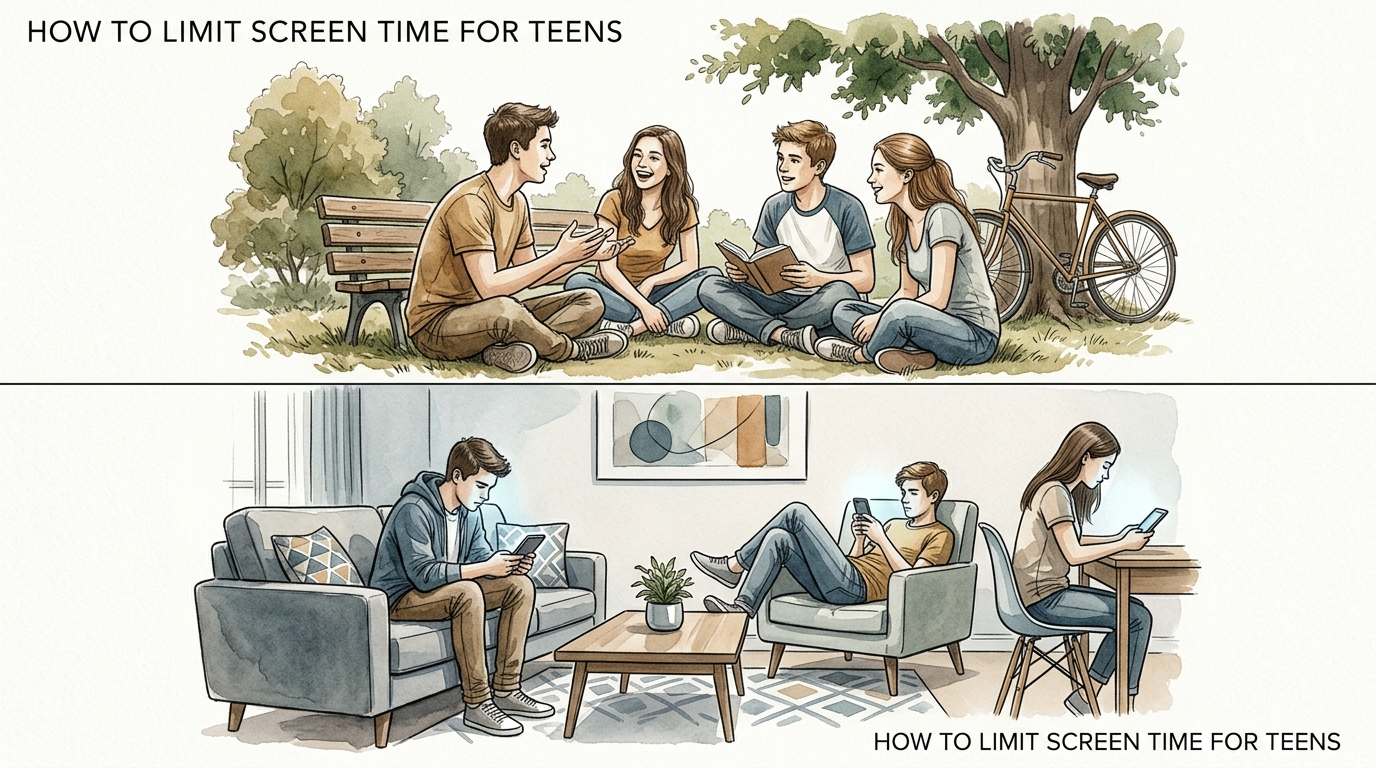
We traded the ‘hangout’ for the ‘scroll’—it’s time to take it back. We used to go out to find our friends. Now, they are in our pockets 24/7, yet adolescent loneliness is at an all-time high. Limiting screen time isn’t just about ‘less tech’—it’s about bringing back real-world connection. ? #TeenMentalHealth #DigitalWellness #ParentingTips
The modern smartphone is effectively the world’s smallest slot machine. For teenagers, whose brains are still developing the capacity for impulse control, these devices represent a constant pull toward high-dopamine, low-effort entertainment. Recent data from the CDC suggests that over 50% of teenagers now spend four or more hours daily on non-schoolwork screen time.
This digital immersion has fundamentally changed how adolescents interact with their environment. While technology offers incredible tools for learning and creativity, the sheer volume of consumption often displaces critical developmental pillars like deep sleep, physical movement, and face-to-face social nuance. Finding a balance is no longer a luxury; it is a necessity for mental and physical health.
Navigating this landscape requires more than just a “no phones” rule. It demands a strategic approach that addresses the psychological allure of the infinite scroll while fostering a teenager’s autonomy. Understanding why the screen is so hard to put down is the first step in helping a teen reclaim their time.
how to limit screen time for teens
Limiting screen time for teens involves creating a structured environment where digital use is intentional rather than impulsive. It is a process of setting boundaries that prioritize health, academic focus, and real-world social interaction over passive consumption. Unlike the rigid hourly limits used for younger children, teen-focused strategies often center on “quality of use” and “phone-free periods.”
The need for these limits arises from the way modern apps are designed. Features like “streaks” on Snapchat or the “For You” page on TikTok are engineered to exploit the brain’s reward system. For an adolescent, whose prefrontal cortex—the area responsible for logical decision-making—is still under construction, resisting these triggers is physiologically difficult.
In real-world situations, screen time management often looks like a “Digital Sabbath” or “Charging Stations” located outside the bedroom. These systems exist to break the “vicious circle” identified by the American Psychological Association, where emotional stress leads to more screen use, which in turn exacerbates the original stress.
Effective Strategies for Digital Regulation
Successfully managing a teen’s digital life requires a blend of technical barriers and open communication. Research from the World Health Organization suggests that problematic social media use is rising, making a proactive “family media plan” more relevant than ever. Here is how to implement a system that actually works.
1. Establish Phone-Free Zones and Times
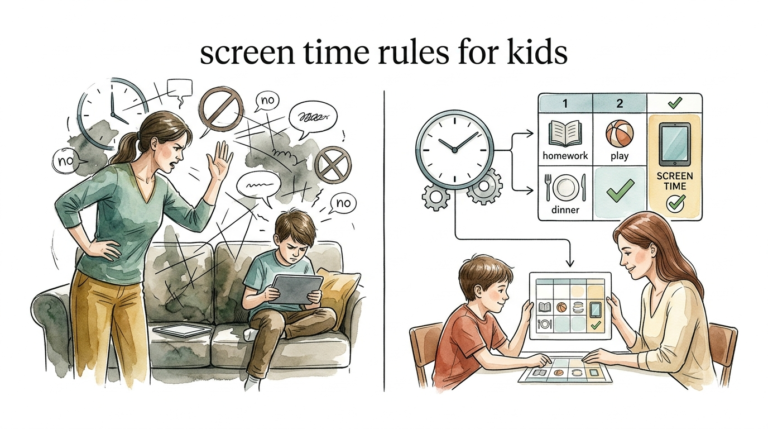
The most effective way to reduce screen time is to remove the option entirely during specific parts of the day. Mealtimes and the hour before sleep should be strictly device-free. Keeping phones out of the bedroom at night is the single most impactful change a family can make to improve teen sleep hygiene and mental clarity.
2. Use the “Negotiated Contract” Method
Teens value autonomy. Instead of imposing rules from above, sit down and negotiate a digital contract. Discuss the “why” behind the rules—such as the link between blue light and melatonin suppression. When a teen feels they have a say in the limits, they are far more likely to follow them without resentment.
3. Leverage Built-In Technical Tools
Apple’s “Screen Time” and Android’s “Digital Wellbeing” are powerful allies. These tools allow you to set “Downtime” (where most apps become inaccessible at a certain hour) and app-specific limits. Use these features as safety nets rather than surveillance tools, allowing the teen to monitor their own habits first.
4. Model Healthy Behavior
Parents cannot expect teens to put down their phones if the parents themselves are constantly checking emails or scrolling at the dinner table. Modeling a “digital sunset” shows the teen that the adults in the room also value presence over the screen.
Benefits of Reducing Digital Consumption
The advantages of limiting screen time are measurable across multiple domains of a teenager’s life. When the “noise” of the digital world is turned down, the brain has the space to engage in more complex, rewarding tasks. Some of the most immediate benefits include:
- Improved Sleep Quality: Reducing blue light exposure and late-night scrolling helps the brain produce melatonin naturally, leading to deeper, more restorative sleep.
- Enhanced Focus: Without the constant “ping” of notifications, the brain can enter a “flow state,” which is essential for academic success and creative hobbies.
- Better Emotional Regulation: Lowering screen time reduces exposure to “social comparison” and cyberbullying, leading to fewer symptoms of anxiety and depression.
- Physical Health Gains: Replacing sedentary screen time with movement helps prevent “Tech Neck” and long-term issues like myopia and sedentary-related weight gain.
By prioritizing real-life human interaction, teens also develop better “soft skills,” such as reading body language and navigating complex social dynamics that are often lost in text-based communication.
Challenges and Common Mistakes
One of the most frequent errors parents make is using screen time as a primary “bargaining chip” or punishment. While it seems effective in the short term, it often leads to “closet scrolling” or the teen viewing the phone as a forbidden fruit, which only increases its psychological value. This can damage the trust necessary for honest conversations about digital safety.
Another common pitfall is failing to provide alternatives. If a phone is taken away but the teen has no access to sports, clubs, or creative outlets, the resulting boredom will almost always lead back to the device. Boredom is a natural state, but for a generation used to constant stimulation, it can feel like an emergency that requires a digital fix.
Misunderstanding the social “cost” of being offline is also a hurdle. For today’s teens, being offline can feel like being socially invisible. Parents must recognize that some screen time is legitimately social and collaborative, and cutting it off entirely can lead to genuine social isolation.
Limitations of Strict Screen Controls
While limits are necessary, there are situations where a “hard cap” on hours is impractical or even detrimental. In the modern educational landscape, many school assignments require digital platforms. A strict two-hour limit may not account for a teen who needs three hours to complete a research project or participate in a study group via Discord.
Furthermore, technical controls are not foolproof. Many tech-savvy teens can find workarounds, such as using “Private Browsing” modes or resetting their phone’s clock to bypass Downtime settings. If the relationship between parent and teen is purely based on restriction, the teen will focus their energy on outsmarting the system rather than developing self-regulation.
Environmental factors also play a role. If a teen lives in an area with limited physical “third places”—like parks or community centers—the screen may be their only reliable way to connect with peers. In these cases, the limitation isn’t just the phone; it’s the lack of physical social infrastructure.
Comparison: Social Connection vs. Digital Isolation
It is helpful to distinguish between “active” and “passive” screen use when setting boundaries. Not all screen time is created equal. The following table illustrates the difference between activities that foster growth and those that contribute to isolation.
| Feature | Active Connection | Passive Isolation |
|---|---|---|
| Primary Activity | Video calls, collaborative gaming, digital art. | Infinite scrolling, autoplaying videos. |
| Brain Impact | Problem-solving and social engagement. | Dopamine-seeking and “zombie” state. |
| Emotional Outcome | Feeling “seen” or productive. | FOMO (Fear of Missing Out) and inadequacy. |
| Ideal Limit | Flexible, based on the specific project. | Strictly limited to prevent time-sinking. |
Focusing on reducing passive isolation while allowing space for active connection helps teens feel that their digital life is being refined rather than deleted.
Practical Tips and Best Practices
To implement a successful screen time reduction plan, consider these actionable steps that go beyond the basics. These are designed to help a teen build the “muscle memory” of being offline.
- Enable “Grayscale” Mode: Modern apps are colorful for a reason—the colors trigger the brain’s reward centers. Switching a phone to grayscale makes Instagram and TikTok significantly less appealing.
- Turn Off All Non-Human Notifications: Allow notifications for texts and calls from real people, but disable “likes,” “reminders,” and “news alerts” that are designed to pull you back into an app.
- The “One-In, One-Out” Rule: For every hour spent on a screen, the teen must spend an hour on a non-screen activity (reading, exercise, or a chore).
- Keep a “Device Basket”: Place a basket by the front door. Everyone—including guests and parents—drops their phone in upon entering for a “connected” evening.
Encourage your teen to be “cynical” about tech companies. When they realize that multi-billion dollar corporations are spending millions to keep them staring at a glass rectangle, their natural teenage rebellion can often be redirected toward reclaiming their own attention.
Advanced Considerations: Digital Flourishing
For parents and practitioners looking for deeper impact, the goal should shift from “Digital Detox” to “Digital Flourishing.” This concept focuses on teaching teens to curate their digital environment so that it serves their goals rather than distracts from them. This involves training the prefrontal cortex through intentional habit-building.
One advanced technique is the “Audit of Intent.” Ask the teen to look at their top three used apps and answer: “What did I gain from this today?” If the answer is “nothing,” they may be more open to deleting the app for a week to see how they feel. This moves the locus of control from the parent to the teen’s own internal awareness.
Scaling these efforts might involve advocating for “phone-free schools.” Research indicates that when schools ban phones during the day, social pressure to be online drops significantly, and academic performance increases across all demographics. This community-level intervention supports the individual work being done at home.
Examples and Scenarios
Consider the scenario of “Alex,” a 15-year-old whose grades began to slip because he stayed up until 2 AM playing competitive online games. His parents initially tried a total ban, which led to Alex sneaking his laptop into bed. The conflict escalated until they sat down and created a “Power Down” protocol.
In this new system, Alex was allowed to play for two hours after his homework was verified, but the router was programmed to automatically disable his device’s MAC address at 10 PM. In exchange, the parents agreed to let him go to a local gaming cafe on Saturday afternoons. This gave Alex his social fix while ensuring he got the 8-9 hours of sleep his growing brain required. Within three weeks, Alex reported feeling less “foggy” during his morning classes.
Another example involves “Sarah,” who struggled with body image issues exacerbated by Instagram. By working with her parents to identify the accounts that made her feel “less than” and unfollowing them, she reclaimed her feed. They replaced her evening scroll with a shared 20-minute walk, which provided the social connection she was actually seeking without the filtered comparison of the screen.
Final Thoughts
Reducing screen time is not an act of hostility toward technology; it is an act of love for the human experience. By setting clear boundaries, we are giving teenagers the gift of their own attention. We are allowing them the space to be bored, the space to create, and the space to connect with the people standing right in front of them.
The transition from a “scroll-based” life to a “real-world” life takes time and patience. There will be resistance, and there will be slip-ups. However, the long-term rewards—better mental health, stronger relationships, and improved cognitive ability—are worth the effort. Start small, be consistent, and remember that every hour reclaimed from the screen is an hour given back to the teen’s future.
Encourage your family to experiment with these strategies. Try a “Digital-Free Sunday” or a “Device-Free Dinner” this week. You might be surprised at how much more there is to talk about when the phones are finally put away. For those looking to dive deeper, exploring the concept of “Digital Minimalism” can provide a lifelong framework for navigating the tech-heavy world we live in.
Sources
1 childrensnebraska.org | 2 nationwidechildrens.org | 3 henryford.com | 4 washingtonpost.com | 5 hopkinsmedicine.org | 6 psychologytoday.com | 7 staywellsolutionsonline.com | 8 aacap.org | 9 mayoclinic.org | 10 raisingchildren.net.au | 11 aacap.org | 12 berkeley.edu | 13 neighborsc.org | 14 aap.org | 15 aap.org | 16 psu.edu | 17 aap.org