digital parenting guide
Is technology a constant battleground in your home, or your favorite teaching tool? If you view tech as a nuisance to be policed, your kids will treat it like forbidden fruit. When you treat it as an asset for discovery, you become their mentor. Our guide shows you the shift. #DigitalParenting #RaisingKids #TechTips

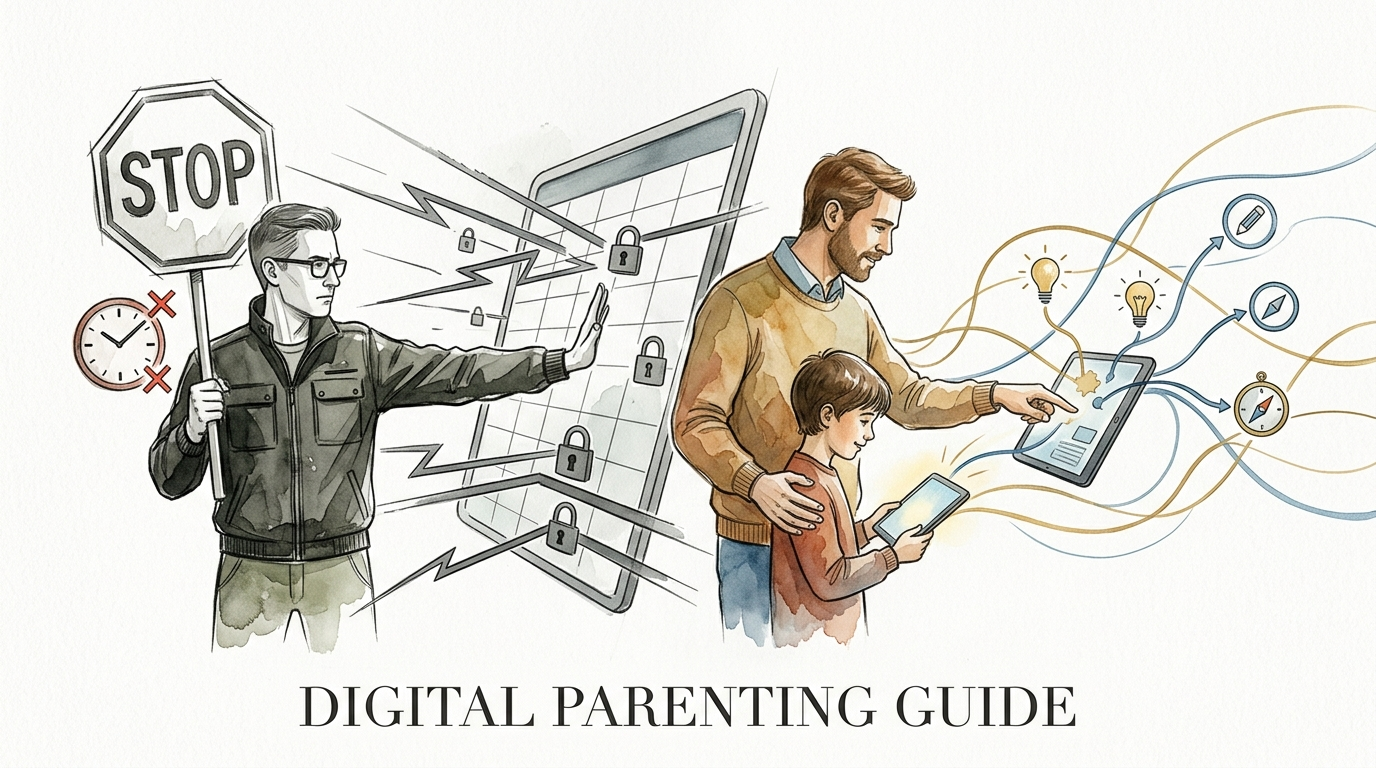
Parenting in the modern age feels like trying to hold back a tidal wave with a plastic shovel. Most parents find themselves stuck in the role of the Tech Referee. You spend your days blowing the whistle on screen time, throwing yellow cards for unapproved app downloads, and confiscating devices like a prison warden. It is exhausting, and frankly, it often backfires.
The goal of this guide is to help you hang up the whistle. Moving from a referee to a Digital Mentor does not mean letting your kids have free rein over the internet. Instead, it means changing your posture from one of suspicion to one of collaboration. This shift is the most effective way to raise resilient, tech-savvy children who can navigate the digital world safely without you standing over their shoulder.
digital parenting guide
Digital parenting is the intentional practice of guiding a child’s relationship with technology, media, and the online world. It is no longer just about “screen time” in the traditional sense of watching TV. Today, it encompasses everything from social media interactions and gaming communities to the use of generative AI for schoolwork.
In the real world, this practice exists on a spectrum. On one end, you have Digital Limiters, who focus almost entirely on restrictions and bans. On the other end, you have Digital Enablers, who provide devices with very little oversight. Digital Mentors occupy the sweet spot in the middle. They use technology alongside their children, explaining the “why” behind the rules and helping kids develop their own internal compass.
Think of it like teaching a child to drive. You would never just hand a ten-year-old the keys to a Ferrari and say, “Good luck!” (that is the Enabler). You also wouldn’t keep them locked in the house until they are thirty to protect them from car accidents (that is the Limiter). Instead, you start with a tricycle, move to a bike, then a permit, and finally, supervised driving. Digital parenting is the “supervised driving” phase of the internet.
Recent research indicates that children of “mentors” are statistically less likely to engage in risky online behaviors. Because they have a trusted adult to talk to, they are more likely to report cyberbullying or accidental exposure to inappropriate content. They develop Internet Maturity—the ability to use tools productively rather than just being a passive consumer of algorithms.
How to Transition from Referee to Mentor
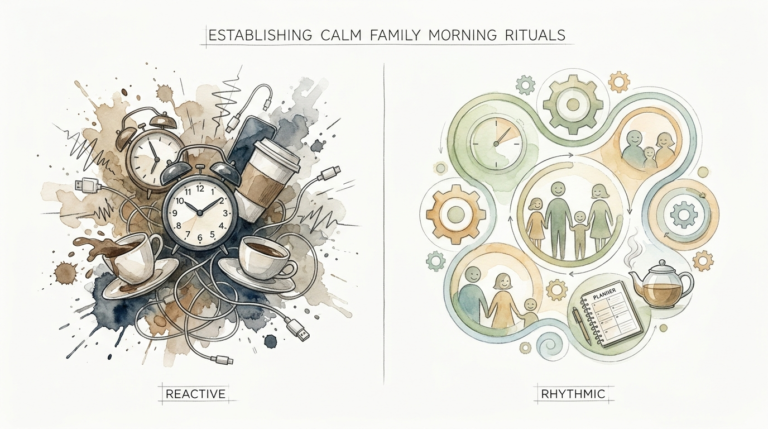
The transition starts with your mindset. A referee looks for mistakes to punish; a mentor looks for opportunities to teach. This requires a proactive approach rather than a reactive one. You must move away from the “gotcha” moment and toward the “let’s look at this together” moment.
Step 1: Conduct a Tech Audit. Sit down with your child and ask them to show you what they love. Which YouTube channels are they watching? What are they building in Minecraft or Roblox? Do not criticize. Just listen. This builds the rapport necessary for them to listen to your guidance later.
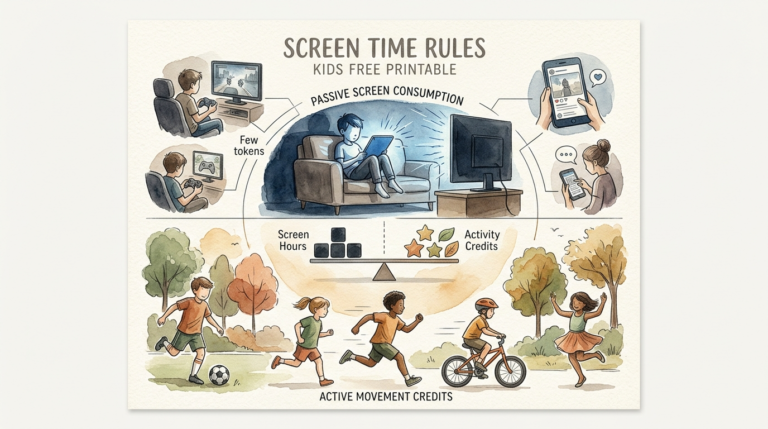
Step 2: Co-Engagement is Key. Research shows that “active mediation”—watching or playing alongside your child—is the most effective way to mitigate the negative effects of screen time. If they are into a new game, play it with them for 20 minutes. If they are watching a TikTok trend, ask them what they think about it. This turns a solitary activity into a social, bonding experience.
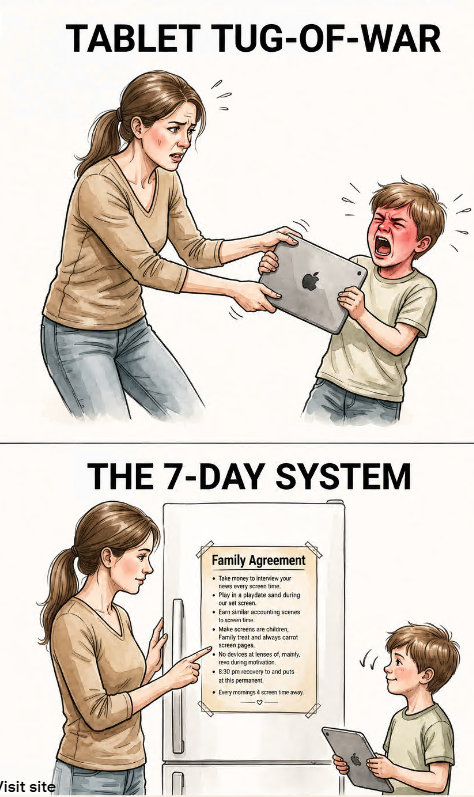
Step 3: Collaborative Rule-Making. Instead of handing down a list of “Thou Shalt Nots,” create a Family Media Agreement. Ask your kids, “What do you think is a fair amount of time for gaming on a school night?” or “What should the consequence be if someone uses their phone at the dinner table?” When kids help create the rules, they are far more likely to follow them.
Step 4: Model the Behavior. You cannot expect your child to put down their phone if you are constantly checking yours during their soccer game. Your tech habits are the blueprint they follow. Practice “tech-free zones” for the whole family, including yourself. Show them that technology is a tool you use, not a master you serve.
Benefits of the Mentor Approach
The mentor approach focuses on long-term character development over short-term compliance. While it takes more effort upfront, the rewards are measurable and lasting. Children who feel guided rather than policed develop a much healthier relationship with their digital lives.
Increased Trust and Communication. When a child stumbles onto something scary or inappropriate online—and they will—their first instinct should be to come to you. If you are a referee, they will hide it because they fear the “punishment” of losing their device. If you are a mentor, they come to you for help because they know you are on their team.
Development of Self-Regulation. The ultimate goal is for your child to be able to turn off the computer on their own. Mentors teach kids to recognize the physical signs of “tech burnout”—the irritability, the eye strain, the “one more level” addiction. By helping them name these feelings, you give them the tools to manage their own dopamine loops.
Enhanced Digital Literacy. A mentor teaches a child how to spot a “deepfake,” how to recognize a phishing scam, and why a certain influencer might be pushing a product. This critical thinking is a vital life skill in an era where misinformation is rampant. You are raising a savvy consumer, not just a compliant user.
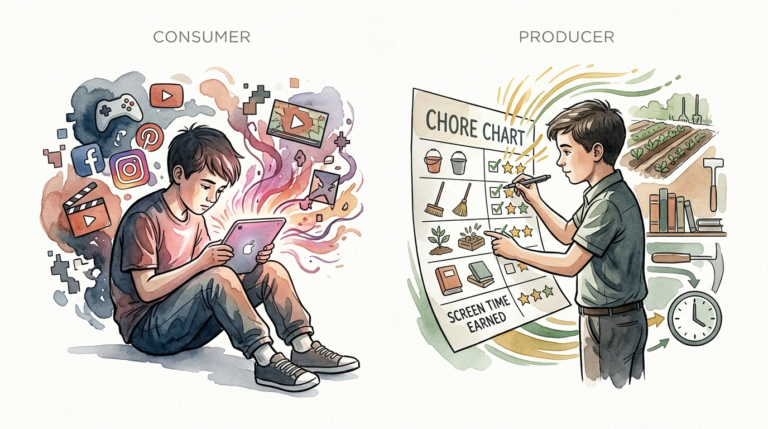
Preparation for the Future Workforce. Most high-paying jobs in the next twenty years will require deep technical fluency. Mentors encourage “productive tech”—coding, digital art, video editing, and AI prompts. You are helping them move from being a consumer of content to a creator of value.
Challenges and Common Mistakes
Even the most well-meaning parents stumble in this journey. The digital landscape moves fast, and it is easy to feel overwhelmed or slip back into old habits. Recognizing these pitfalls is half the battle.
The “Expert” Trap. Many parents feel they cannot be mentors because they don’t know how to use Discord or ChatGPT. You do not need to be a tech expert to be a digital mentor. You only need to be an expert in your child. Approach the technology as a co-learner. Ask your child to teach you. This empowers them and keeps you in the loop.
Inconsistency. Setting a rule and then failing to enforce it—or enforcing it only when you are tired—creates confusion. Digital rules must be as steady as the rule about wearing a seatbelt. If the rule is “no phones in the bedroom,” it must be enforced every night, even on weekends.
Relying Solely on Filters. Parental control apps like Bark or Qustodio are excellent tools, but they are not a replacement for parenting. Tech-savvy kids can often find workarounds. If you rely only on the software to “police” them, you lose the chance to teach them why certain content is off-limits. Filters should be your backup, not your primary strategy.
Ignoring the “Dopamine Loop.” Many parents view a child’s obsession with a game as a character flaw. In reality, these apps are designed by world-class engineers to be addictive. When you criticize the child, they feel shame. Instead, criticize the design. Say, “I can see this game is designed to make it really hard to stop. Let’s figure out a way to beat that design together.”
Limitations and When This May Not Work
While the mentorship model is the gold standard, there are realistic constraints you must consider. It is not a magic wand that works in every single scenario without adjustment.
Age-Appropriate Realities. For toddlers (ages 0-2), mentorship is almost entirely about restriction. Their brains are not yet developed enough to “negotiate” or “learn” from screens in a meaningful way. In these early years, being a “referee” or “gatekeeper” is developmentally appropriate. The mentorship model becomes more effective as the child enters school age.
Neurodivergence Considerations. Children with ADHD or Autism may have a much harder time with the impulse control required for digital self-regulation. For these children, the “dopamine hit” of gaming can be significantly more intense. In these cases, you may need more robust technical “guardrails” alongside your mentorship to help support their executive function.
High-Risk Environments. If a child is already struggling with severe mental health issues, self-harm, or active cyberbullying, a “mentor-only” approach may be too slow. Immediate, restrictive intervention may be necessary for safety. Mentorship is for building resilience; crisis management is for stopping harm. Know the difference.
Referee (Limiter) vs. Digital Mentor
Understanding the difference between these two roles helps you audit your own behavior. Most parents fluctuate between these daily, but the goal is to spend more time in the right-hand column.
| Feature | The Tech Referee | The Digital Mentor |
|---|---|---|
| Core Focus | Stopping bad behavior. | Encouraging healthy habits. |
| Primary Tool | Time limits and bans. | Co-viewing and discussion. |
| Child’s Reaction | Secrecy and defiance. | Transparency and trust. |
| Goal | Compliance. | Self-regulation. |
| Knowledge Source | Fear-based news reports. | Direct engagement with the tech. |
| When Trouble Happens | Device is confiscated. | Problem is analyzed together. |
Practical Tips for Every Age Group
Effective digital parenting looks different depending on the developmental stage of the child. Use these best practices to tailor your approach.
Toddlers and Preschoolers (Ages 0-5)
- Prioritize Human Interaction. At this age, screen time should be “social.” Video chatting with grandparents is great; sitting alone with an iPad for two hours is not.
- Choose High-Quality Content. Stick to slow-paced shows like Bluey or Trash Truck rather than high-intensity “unboxing” videos that overstimulate the brain.
- No Screens at Mealtimes. This is the most critical time to develop the habit of conversation and presence.
Elementary Schoolers (Ages 6-11)
- Play Their Games. This is the “Golden Age” of Roblox and Minecraft. Sit down and let them show you their world. You will learn more about their social life in 10 minutes of gaming than an hour of questioning.
- Establish a Charging Station. All devices should sleep in a common area (like the kitchen), not the bedroom. This prevents late-night scrolling and blue-light sleep disruption.
- Talk About “Fake News.” Start showing them how easy it is to edit a photo or make a video look like something it isn’t.
Middle and High Schoolers (Ages 12-18)
- Focus on Privacy and Reputation. Explain that the internet is written in ink, not pencil. Help them audit their social media profiles for future college or job applications.
- Discuss the “Algorithm.” Teach them that social media feeds are designed to keep them angry or obsessed so they stay on the app longer. Awareness is the first step to freedom.
- Gradual Release of Responsibility. Slowly increase their autonomy. If they have shown they can handle a phone responsibly, allow them to manage their own time limits for a week as a “test drive.”
Advanced Considerations: AI and Deepfakes
We are entering a new era of digital parenting where “screen time” is the least of our worries. The rise of Generative AI poses new challenges for truth, ethics, and schoolwork. As a mentor, you must address these head-on.
AI as a Co-Tutor, Not a Ghostwriter. Teach your kids that tools like ChatGPT or Khanmigo are like a “calculator for words.” They can help explain a complex math concept or brainstorm ideas for an essay, but using them to write the whole paper is a form of intellectual theft that stunts their own growth. Practice “prompt engineering” with them to see how AI can be a productive partner.
The Threat of Deepfakes. Children are increasingly being targeted with AI-generated images and audio. Have a “Family Safe Word.” If they ever get a strange call or message—even if it sounds exactly like you—they should ask for the safe word. This simple step can prevent terrifying scams.
Data Privacy and AI Training. Explain that “free” AI tools often use their data to train their models. Teach them never to upload personal photos, addresses, or sensitive thoughts into a chatbot. At this level, you are teaching Digital Ethics, which is the highest form of digital parenting.
Examples of Mentorship in Practice
Scenario A: Your child sees a violent thumbnail on YouTube.
The Referee: “I told you not to watch that! Give me the iPad right now. You’re banned for a week!”
The Mentor: “Whoa, that looked pretty intense. How did it make you feel when that popped up? Let’s look at the settings together and see if we can tell the algorithm we don’t want to see that kind of stuff. It’s okay to be curious, but that video is designed to scare people for clicks.”
Scenario B: Your teen wants to download a new, trending social app.
The Referee: “No. I read an article saying that app is dangerous. End of discussion.”
The Mentor: “I’ve heard some mixed things about that app. Let’s spend 15 minutes researching the privacy settings and what other parents are saying on Common Sense Media. If we can agree on how to keep your profile private, we can try it out for a two-week trial.”
Final Thoughts
The transition from a Tech Referee to a Digital Mentor is not a one-day event. It is a long-term commitment to being present in your child’s digital life. It requires patience, a bit of curiosity, and the willingness to admit when you don’t have all the answers. By shifting your focus from “policing” to “mentoring,” you are doing more than just managing a device; you are building a bridge of trust that will last long after they leave your home.
Remember that technology is just another environment where your child needs to grow. Just as you taught them to cross the street and handle a knife safely, you are now teaching them to handle the vast, often overwhelming power of the internet. You are their most important filter and their most reliable guide.
Start small today. Ask your child one question about their favorite app without judging the answer. That single moment of curiosity is the first step toward becoming the Digital Mentor your child needs in this fast-paced world. Experiment with these strategies, adjust them to fit your family’s values, and watch the battleground turn into a classroom.
Sources
1 thecozyhomechronicles.com | 2 medium.com | 3 medium.com | 4 medium.com | 5 safespace.qa | 6 substack.com | 7 thementalhealthcoalition.org | 8 childrensmercy.org | 9 childrenandscreens.org | 10 thefyi.org | 11 childrenandscreens.org | 12 childrenandscreens.org | 13 gottman.com | 14 fulleryouthinstitute.org | 15 fosi.org | 16 talkerresearch.com | 17 hbcsd.org | 18 captechu.edu | 19 captechu.edu | 20 psu.edu | 21 ayskids.org | 22 navigatingthedigitaljungle.com