no screen time activities kids school
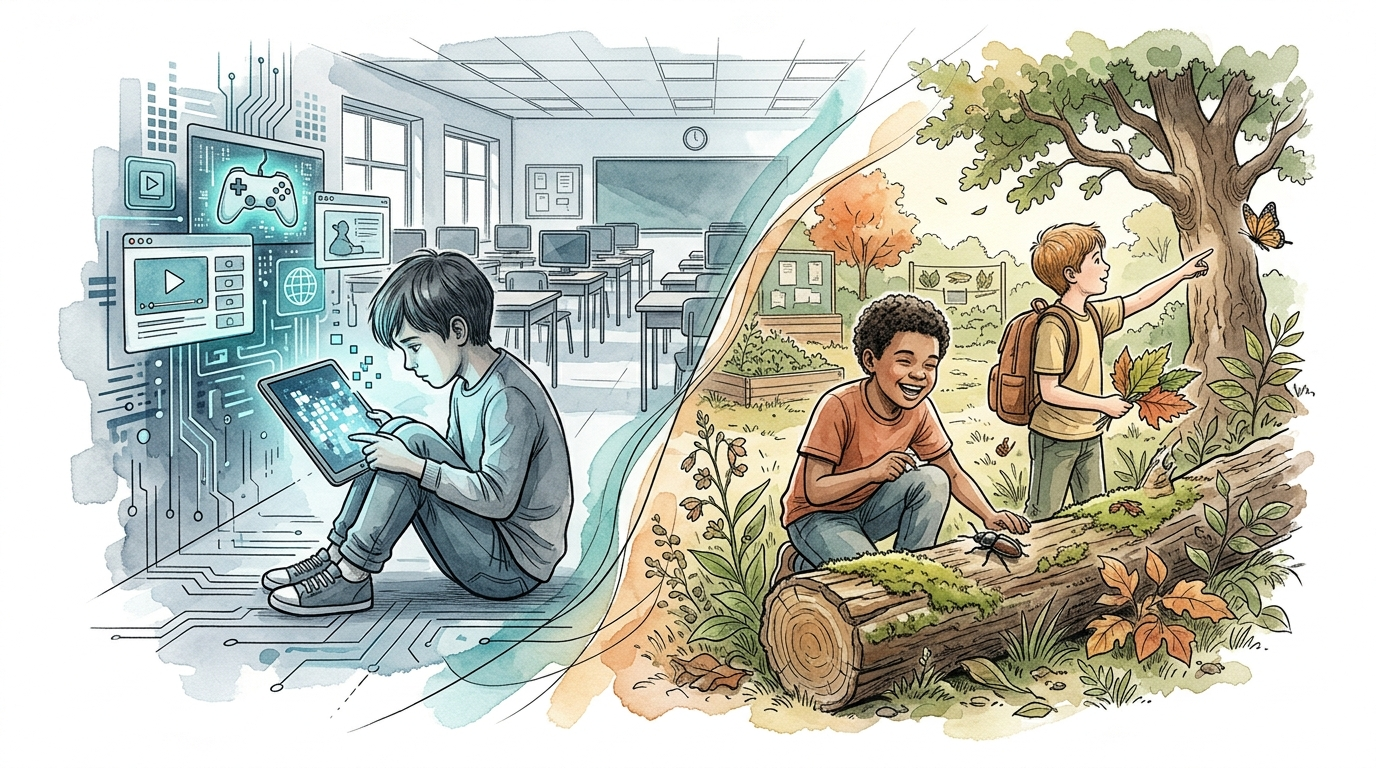
Are we teaching them to scroll or teaching them to see? Switching from pixels to plants isn’t just about ‘no screens’—it’s about re-engaging the natural curiosity that digital simulations can’t replicate. Here are 5 ways to bring natural play back to school hours.
no screen time activities kids school
No screen time activities in a school setting are intentional, tech-free learning experiences that prioritize sensory engagement and physical movement. These activities exist to counteract the sedentary, highly stimulating nature of digital consumption. Real-world situations include outdoor classrooms, garden-based learning, and sensory-rich indoor play that mimics natural systems.
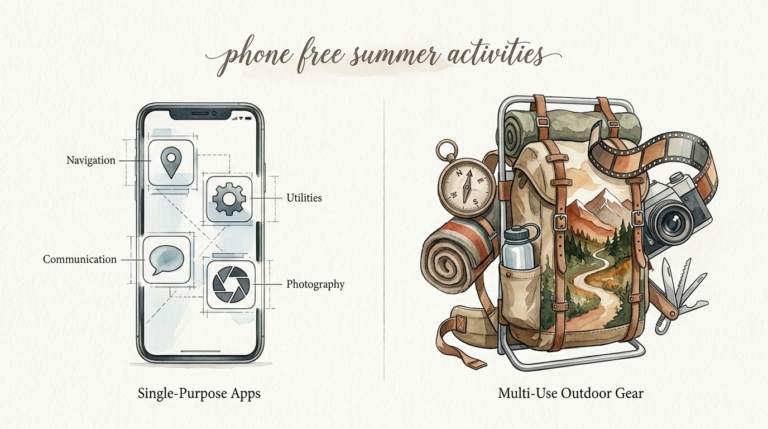
Think of a screen like a treadmill and a forest like a mountain trail. A treadmill gives you the movement, but it is predictable and flat. A mountain trail requires you to adjust your balance, smell the air, and notice the changing terrain. High-quality activities for kids provide this “trail” experience. They offer variable feedback that keeps the brain active without overstimulating it.
Schools use these activities to improve student focus, reduce behavioral issues, and meet curriculum goals in ways that feel like play. Instead of looking at a digital diagram of a leaf, students go outside to touch the veins, trace the edges, and observe the tree in its habitat. This shift from passive consumption to active exploration builds stronger neural connections.
How to Implement Nature-Based Play in the School Day
Bringing nature back into the school day requires a shift in how we view the “classroom.” It starts with moving beyond the four walls. Use your existing school grounds, no matter how small, as a laboratory for exploration.
Phase 1: The Transition to the Outdoors
Start by identifying “zones” on your campus. Even a concrete courtyard can become a site for weather monitoring or chalk-based geometry. Create a “portable classroom” kit for each student. A simple five-gallon bucket can serve as a seat, a storage container for supplies, and a hard writing surface when flipped over. This reduces the logistical friction of moving 30 students outside.
Phase 2: Integrating Curriculum
Don’t treat outdoor time as a “break” from learning. Treat it as the medium for learning.
- Mathematics: Use pine cones or stones for counting, sorting, and pattern recognition. Measure the height of trees using shadows and ratios.
- Language Arts: Implement “Sit Spots.” Students find a specific spot in nature to sit quietly for ten minutes and then write or draw their observations in a journal.
- Science: Create a “Bug Walk” where students document the biodiversity found in just one square foot of soil.
Phase 3: Creating a Sensory-Rich Indoor Environment
When weather or space constraints keep kids inside, bring the natural elements to them. Use loose parts like wood, stones, sand, and water. These “open-ended” materials allow for infinite configurations, unlike a digital game with set rules. Set up a “Nature Table” with seasonal objects that students can touch and study under a magnifying glass.
Benefits of Ditching the Screen for the Soil
The advantages of nature-integrated learning are measurable and profound. Research consistently shows that children who engage in regular outdoor play exhibit higher levels of self-regulation and focus.
Cognitive and Academic Gains
Nature-based learning fosters improved attention spans. Digital screens are designed to capture “top-down” directed attention, which is exhausting for the brain. Natural environments engage “bottom-up” processing, which is effortless and restorative. This allows students to return to their desks with a “recharged” ability to focus on complex tasks like reading or math.
Social and Emotional Well-being
Outdoor play reduces stress and anxiety. The “Equigenic Effect” suggests that access to green space can level the playing field for students from different socioeconomic backgrounds, providing a shared space where social hierarchies often dissolve. Children learn to collaborate on building structures or navigating terrain, which builds social skills that digital simulations cannot replicate.
Physical Health and Resilience
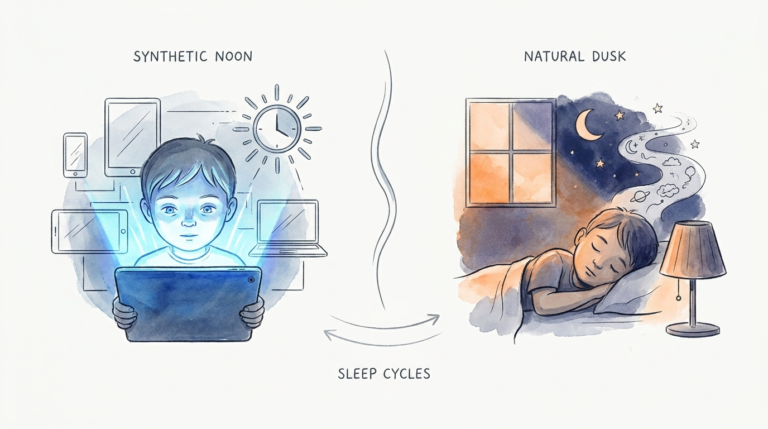
Movement is a core part of no-screen activities. Students develop better gross and fine motor skills by climbing, digging, and balancing. This physical engagement also leads to better sleep patterns and cardiovascular health, which directly impacts their ability to learn during school hours.
Challenges and Common Mistakes to Avoid
Many schools struggle with the transition because they treat the outdoors like an indoor classroom with no ceiling. This leads to several common pitfalls.
The “Recess” Misconception
A frequent mistake is failing to provide enough structure. If you just send kids outside and tell them to “play,” they may struggle to engage deeply with the environment. You must provide a “hook” or a specific challenge. Ask them to find three different textures or to build a bridge that can support a specific weight using only fallen branches.
Over-Managing the Risks
Teachers often fear liability or minor injuries. This leads to “surplus safety” where all challenge is removed from the play. Children need “risky play” to learn how to assess their own limits. Avoid hovering or saying “be careful” constantly. Instead, use “safety checks” where you ask the student, “Do you feel stable?” or “What is your plan for getting down?”
The Curriculum Pressure Trap
Teachers often feel they don’t have “time” for nature because of testing requirements. The mistake is seeing nature as an extra instead of a vehicle. You aren’t “losing” math time by measuring trees; you are making the math more memorable and durable in the student’s mind.
Limitations of Nature-Based Learning
While powerful, this approach has realistic boundaries. It is not a magic fix for every educational challenge, and environmental factors play a huge role.
Environmental Constraints
Not every school has a forest nearby. Highly urbanized schools may face significant “biophobia”—a fear of the outdoors or insects—among students who haven’t had much exposure to nature. In these cases, the “nature” might need to be carefully curated in containers or small garden beds.
Logistical Barriers
Weather is a real factor. Extreme heat, cold, or rain can make outdoor learning difficult without the proper gear. Schools must often invest in “outdoor gear libraries” so that students from all backgrounds have access to waterproof boots and warm coats. Without this, the activities can become exclusionary.
Teacher Confidence and Training
Many educators do not feel equipped to manage a class in an open environment. Without specific training in “emergent pedagogy”—the ability to follow a student’s curiosity as it happens—teachers may find the lack of walls overwhelming.
Synthetic Simulation vs. Natural Exploration
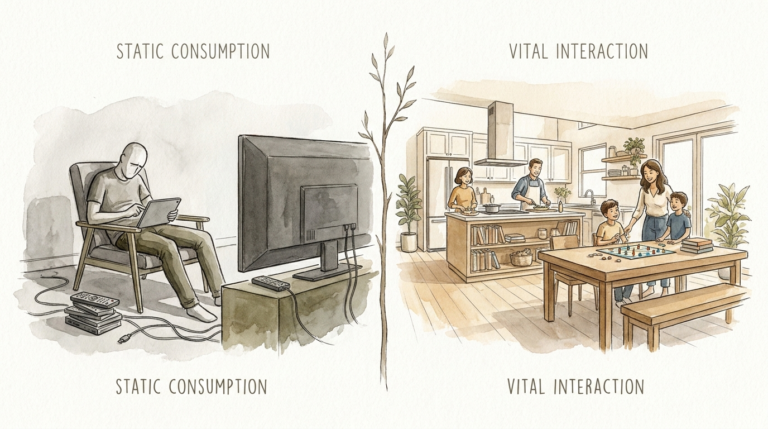
It is helpful to understand why we prioritize exploration over simulation. Digital simulations often provide a “perfect” version of a concept. A natural exploration provides a “messy” version.
| Feature | Digital Simulation | Natural Exploration |
|---|---|---|
| Feedback Loop | Predictable, coded responses. | Variable, sensory, and multi-dimensional. |
| Sensory Input | Primarily visual and auditory. | Full-body sensory engagement. |
| Cognitive Load | High “top-down” directed attention. | Restorative “bottom-up” attention. |
| Problem Solving | Limited by the software’s parameters. | Open-ended with infinite variables. |
Practical Tips for Teachers and Schools
You can start small and scale your efforts as your confidence grows. Use these best practices to ensure your no-screen time is effective.
- The 30-Minute Rule: Aim for at least 30 minutes of outdoor learning daily. This is the threshold where research shows significant boosts in student focus.
- Use “Sit Spots” Regularly: Make this a routine. Students thrive on the predictability of having a personal space in nature they visit every week.
- Curate a “Loose Parts” Kit: Collect pine cones, acorns, smooth stones, and driftwood. These are the “building blocks” of natural play and cost nothing.
- Integrate “Technological Nature” Sparingly: If you must use tech, use it to enhance nature, not replace it. Use a digital microscope to see the leaf a student just found, or a bird-identification app to name the sound they just heard.
Advanced Considerations for Serious Practitioners
For those looking to go beyond basic activities, consider the design of your school grounds as a “Habitat for Learning.” This involves moving from a “playground” model to a “landscape” model.
Designing for Biodiversity
Planting native species isn’t just about aesthetics. It creates a functioning ecosystem that students can study. A school garden that attracts local pollinators becomes a living textbook for lessons on climate resilience and biology. This requires a long-term maintenance plan that involves the students in the care of the land.
Risk-Benefit Analysis (RBA)
Move away from traditional “Risk Assessment” and toward “Risk-Benefit Analysis.” This process acknowledges that while an activity (like climbing a small tree) has risks, the *benefit* to the child’s development far outweighs the likelihood of serious harm. Formalizing this process helps satisfy administrative concerns while protecting the integrity of the play.
The “Portable Puddle” Scenario: A Practical Example
Imagine a second-grade class studying the water cycle. Instead of watching an animation on a smartboard, the teacher takes them to a concrete area of the schoolyard after a rainstorm.
The students use chalk to circle the edges of various puddles. They return every hour to see how the “shape” of the puddle has changed. They use their portable buckets to measure the depth. They notice that the puddles in the shade last longer than those in the sun.
This simple, no-screen activity covers evaporation, measurement, data collection, and physical properties of matter. The students aren’t just memorizing definitions; they are seeing the process happen in real-time. They are engaging their bodies and their brains in a way that creates a permanent “mental anchor” for the concept.
Final Thoughts
Reintroducing natural play into school hours is a rebellion against the “scrolling” culture that dominates modern life. It is a commitment to the idea that children learn best when they are fully immersed in the world around them. By prioritizing these no-screen activities, schools can foster a generation of thinkers who are curious, resilient, and deeply connected to their environment.
The transition doesn’t require a massive budget or a vast forest. It requires a change in perspective. It requires us to see every puddle, every leaf, and every shadow as a potential lesson. Start with 30 minutes. Start with a bucket and a journal. You will find that when you give children the space to see, they will show you a world far more interesting than any screen could simulate.
Experiment with these methods and watch how your students’ energy shifts. You aren’t just taking them away from a screen; you are bringing them back to themselves. Encouraging this natural exploration today builds the foundation for the complex, creative problem-solving skills they will need for the rest of their lives.
Sources
1 substack.com | 2 sparklestories.com | 3 youtube.com | 4 edutopia.org | 5 csba.org | 6 salzburgglobal.org | 7 childrenandnature.org | 8 childrenandnature.org | 9 eealliance.org | 10 researchgate.net