What 300,000 Kids Reveal About Screen Time (And the 7-Day Fix)
The worry every parent shares
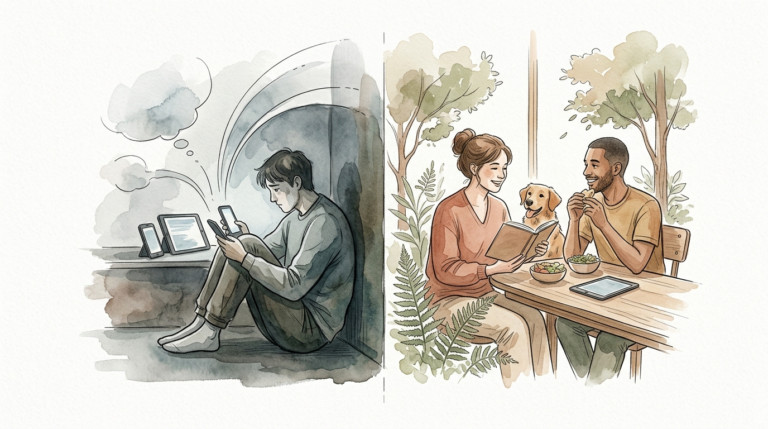
How much screen time is too much? For years that question felt like a matter of opinion — every expert had a different number, every relative had an opinion, and most of us just guessed.
It isn’t a guess anymore.
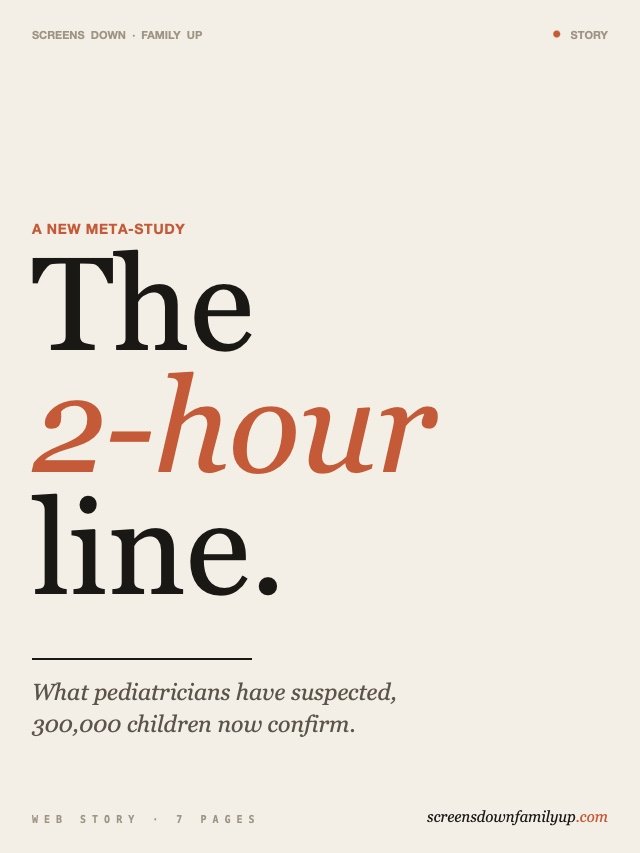
A meta-analysis published in the Psychological Bulletin combined more than a hundred long-term studies, following nearly 300,000 children across half a century. When researchers pooled that much evidence, a clear and consistent pattern emerged.
What the research found
More screen time was associated with three things, again and again:
- More aggression — difficulty controlling behaviour, more conflict.
- More anxiety — higher rates of diagnosed anxiety disorders.
- Lower self-esteem — a weaker sense of self-worth over time.
These weren’t one-off results from a single survey. They held across the whole body of research, which is what makes them hard to dismiss.
The part most articles miss: it runs both ways
Here’s the finding that changed how I think about it. The relationship is a loop, not a one-way street.
More screen time predicted more emotional difficulty. But children who were already struggling also reached for screens more — to soothe, to escape, to cope. That deepened the difficulty, which led to more screen use. Around it goes.
Loops like that don’t break on their own. Someone in the household has to step in and interrupt the cycle deliberately.
How big is the gap, really?
Consider the numbers for kids aged 8 to 12. A large share of them spend more than four hours a day on screens. The American Academy of Pediatrics recommends closer to one hour of recreational screen time.
That’s not a rounding error. Four hours versus one, every day, across childhood, adds up to a fundamentally different way of growing up.
Why willpower isn’t the answer
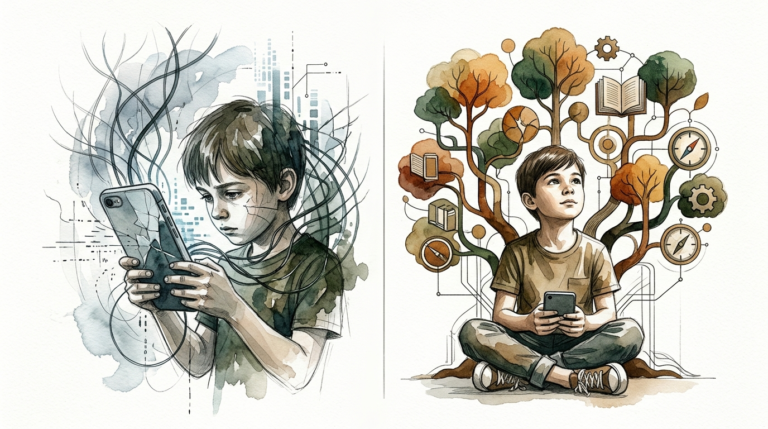
If you’ve tried to cut back and failed, it’s not a character flaw. You are up against products engineered by teams of professionals whose job is to hold attention for as long as possible. Telling a child “just use it less” is like telling someone to out-muscle a slot machine.
What actually works isn’t more willpower. It’s better structure — small, repeatable changes that shift the defaults, so the healthy choice becomes the easy choice.
A 7-day reset any family can run
That’s the whole idea behind the approach we put into a short guide, Screens Down. Family Up. Instead of a dramatic ban, it’s one small move per day for a week:
- Day 1 — Audit. Track where the hours actually go. You can’t change what you haven’t measured.
- Day 2 — The phone-free dinner. One meal, no devices. The easiest win in the week.
- Day 3 — One outdoor hour. Replace screen time with something, don’t just remove it.
- Day 4 — Bedrooms go dark. Screens out of bedrooms, where they damage sleep most.
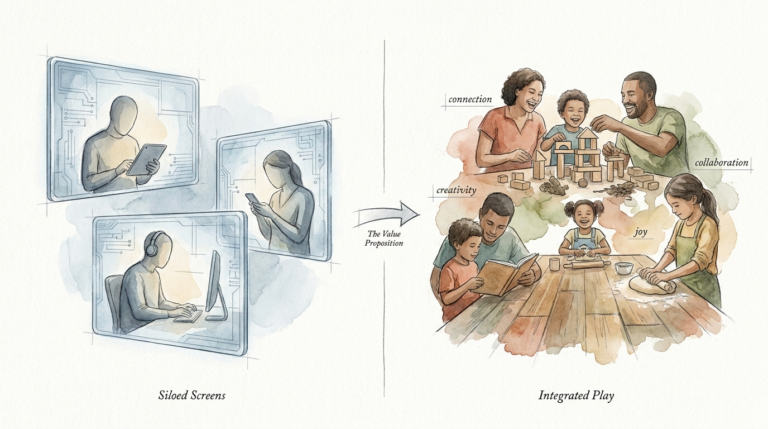
- Day 5 — A new family ritual. Something everyone looks forward to that isn’t a screen.
- Day 6 — The reward swap. Stop using screen time as the default reward.
- Day 7 — Lock it in. Turn the week’s wins into a rhythm that survives next week.
None of these are dramatic. That’s deliberate. The families who succeed aren’t the ones with the strictest rules — they’re the ones who quietly changed a few defaults and let consistency do the rest.
Where to start
If the research resonates, start with the visual version — a 60-second story that lays out the data at a glance:
And if you want the full week mapped out, the complete 7-day plan is here:
We don’t get these years back. But we can absolutely change what fills them — starting tonight.