summer cell phone rules
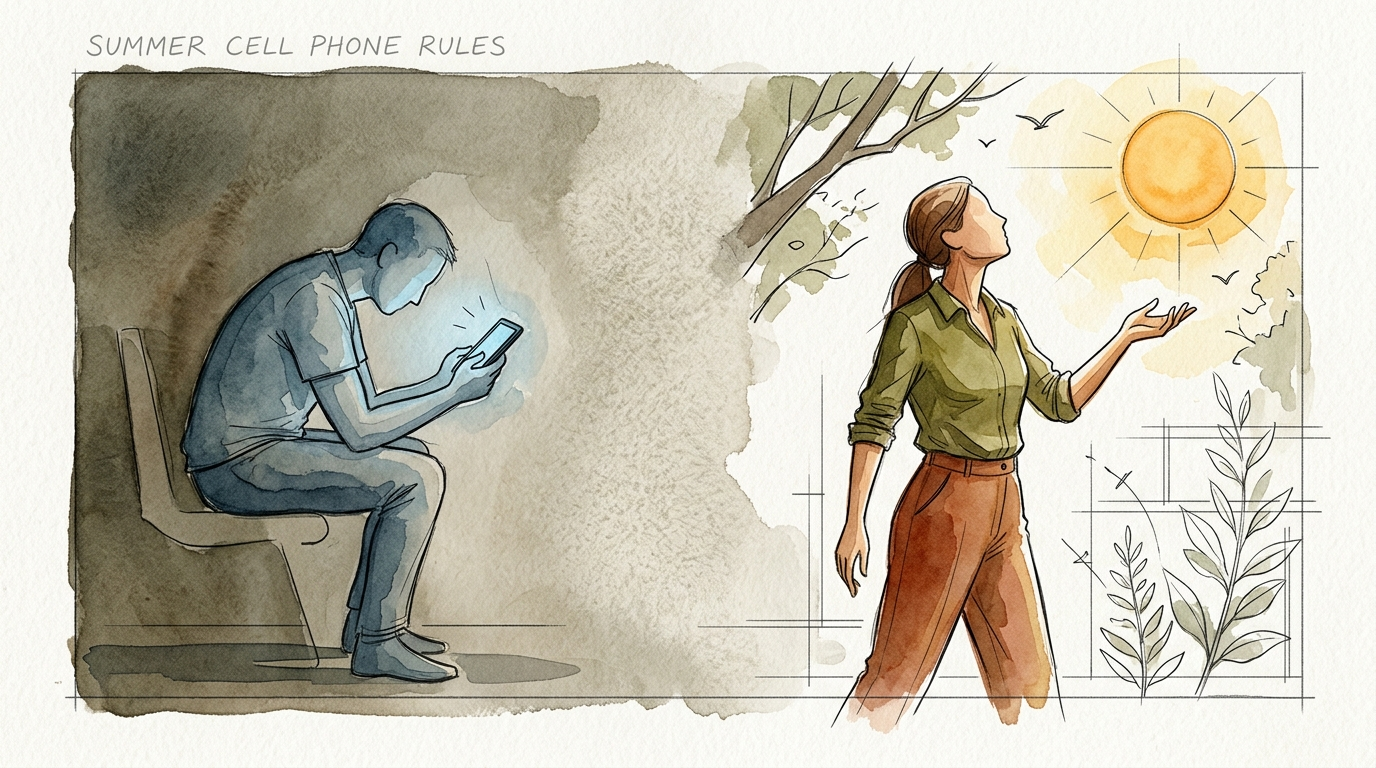
Are they living their summer, or just watching someone else live theirs on a screen?
Summer is for active participation in life, not passive observation through a glass screen. Reset your family’s relationship with technology using these simple boundaries that prioritize presence over pings.
Parents often feel the shift the moment the school bus stops running. The structured routine of the classroom vanishes, leaving a massive void. For many kids, the easiest way to fill that void is through a high-definition glow. Without a plan, summer quickly turns into a marathon of scrolling, gaming, and notification-chasing. This article guides you through reclaiming the season. You will learn how to set boundaries that actually work, why summer requires a different approach than the school year, and how to turn “boring” afternoons into core memories.
summer cell phone rules
The concept of summer cell phone rules refers to a specific set of digital boundaries designed for the long, unstructured months of June, July, and August. Unlike the school year, where academic demands naturally limit device time, summer is a high-risk period for “junk food” digital consumption. Without a bell schedule to follow, a quick check of a notification can easily mutate into a four-hour TikTok binge.
In the real world, these rules act as a framework for digital wellness. They are not about punishment or total deprivation. Instead, they serve as a roadmap for balance. Just as you wouldn’t let your child eat ice cream for every meal simply because school is out, you shouldn’t let them consume unlimited digital content. These rules are used to protect sleep, encourage physical movement, and ensure that family vacations actually involve family interaction.
Think of these rules as “digital guardrails.” On a highway, guardrails don’t stop you from driving; they just keep you from flying off the cliff. Summer rules keep your children from falling into the “dopamine loop”—a cycle where the brain constantly craves the next digital hit at the expense of real-world satisfaction.
How to Create a Summer Tech Rhythm
Implementing effective rules requires a shift from “counting minutes” to “building a rhythm.” Research from the Digital Wellness Lab suggests that targeting when screens are used is often more effective than strictly limiting how long they are used.
Step 1: The “Must-Dos” Before the “Can-Dos”
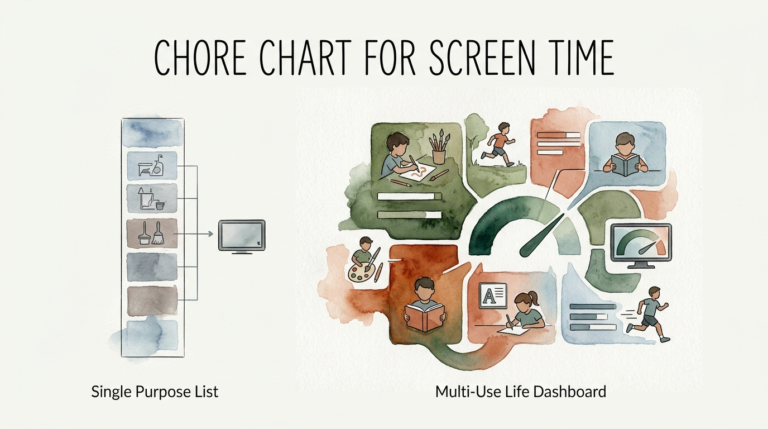
The most successful families use a “Value-First” system. This means certain human needs must be met before a device is even powered on. Create a daily checklist that includes:
- Getting dressed and completing basic hygiene.
- One hour of physical activity (outdoor play, swimming, or sports).
- 30 minutes of reading or a creative hobby.
- Completion of one daily chore or household contribution.
Once these are done, the “digital window” opens. This teaches children that technology is a reward for taking care of themselves, not a baseline right.
Step 2: Establish the “Phone Parking Lot”
Visual cues are powerful. Designate a specific spot in the house—a basket, a charging station, or a kitchen drawer—as the “Phone Parking Lot.” Devices go here during meals, family game nights, and at a set time every evening. According to recent studies, removing the physical presence of a phone improves cognitive performance and reduces anxiety.
Step 3: The 9 PM Sunset Rule
High-leverage change happens at night. The Adolescent Brain and Cognitive Development (ABCD) study found that children who have phones in their bedrooms overnight face a 60% higher risk of poor sleep. Establish a hard “sunset” time where all devices are parked in a common area. This protects the brain’s ability to wind down naturally without the interference of blue light and social stimulation.
The Massive Benefits of Digital Boundaries
Setting these rules provides measurable improvements in your child’s physical and mental health. When you limit passive observation, you open the door for active engagement.
Improved Sleep Quality and Mental Health
Data indicates that 14- to 17-year-olds spending seven or more hours per day on screens are twice as likely to be diagnosed with depression or anxiety compared to those spending just one hour. By capping summer usage, you directly lower the risk of these mental health challenges. Better sleep leads to more stable moods and higher energy levels for daytime adventures.
Development of “Boredom Tolerance”
Constant stimulation atrophies the ability to be bored. Boredom is actually a creative catalyst. When a child cannot turn to a phone the second they feel a lull, their brain eventually looks for other outlets. This leads to the discovery of new hobbies, deeper imaginative play, and better self-regulation.
Physical Health and “Green Time”
Summer is the prime season for “green time”—time spent in nature. Screen-free boundaries naturally push kids outdoors. This has a direct impact on physical health. Experts note that every year a child receives a smartphone younger than age 12, their risk of obesity increases by approximately 10%. Replacing “screen time” with “green time” reverses this trend.
Challenges and Common Pitfalls
Even the best-intentioned parents face hurdles. Understanding why rules fail is the first step toward making them stick.
The “Hypocrisy Trap”
Pew Research shows that 46% of teenagers feel their parents are often distracted by their own phones during conversations. If you are scrolling through Instagram while telling your child to put their phone away, the rule will lose all authority. You must model the behavior you want to see.
Inconsistency and Negotiating
Children are expert negotiators. If you allow “just five more minutes” every single time they ask, the boundary becomes a suggestion. Inconsistency breeds conflict. It is better to have a few firm rules that you enforce 100% of the time than ten complex rules you only enforce when you’re not tired.
Lack of Alternatives
If you take away the phone but don’t provide any other options, you are inviting a summer of whining. While it isn’t your job to be a “cruise director,” you should ensure the environment is “rich.” This means having books, art supplies, sports equipment, and board games easily accessible.
Limitations and Realistic Constraints
A “one-size-fits-all” approach rarely works for every family. You must consider your unique situation.
Working Parents and Safety
For many parents who work outside the home, a cell phone is a vital safety tool. 64% of parents believe students should have access to phones for security. If your child is home alone, they need a way to reach you. In these cases, the rule shouldn’t be “no phone,” but rather “limited apps.” You can use parental controls to disable social media and games while keeping communication and maps active.
Travel and Long Transitions
Practicality matters. On a 10-hour car ride or a 14-hour flight, strict screen time limits can be a recipe for misery. It is okay to have “exception days.” The key is to communicate that these are exceptions, not the new normal.
Educational and Creative Use
Not all screen time is equal. A child using a tablet to learn coding, edit a video, or follow a drawing tutorial is engaging in Active Creation. This is different from Passive Consumption. Rules should be nuanced enough to allow for productive digital work.
Passive Consumption vs. Active Engagement
When building your rules, distinguish between how your children are using their devices.
| Factor | Passive Consumption | Active Engagement |
|---|---|---|
| Activity | Scrolling TikTok, watching YouTube reels, mindless gaming. | Coding, digital art, video editing, educational research. |
| Brain State | Reactive/Dopamine-seeking. | Focused/Problem-solving. |
| Energy Level | Depleting; often leads to “screen fatigue.” | Energizing; builds new skills. |
| Recommended Limit | Highly restricted (e.g., 30-60 mins). | More flexible (e.g., based on project goals). |
Practical Tips for a Success
Start small and be specific. Use these best practices to ensure your summer transition is smooth.
- Create a “Family Tech Contract”: Sit down together and write the rules on paper. Let the kids have a voice in the details. When they help create the boundaries, they are more likely to respect them.
- Use Physical Tools: Don’t rely on the phone for everything. Buy a dedicated alarm clock so the phone doesn’t have to be the first thing they touch in the morning. Keep a physical calendar on the fridge for summer plans.
- Leverage “Screen-Free Zones”: Declare the dining table, the car (for short trips), and bedrooms as permanent tech-free zones.
- The 1-for-1 Swap: For every hour spent on a screen, require an hour spent outdoors. This creates a natural balance without the need for constant monitoring.
- Weekly Tech Audits: Every Sunday, check the “Screen Time” report on the device together. Discuss what apps are eating the most time and adjust the plan for the following week.
Advanced Strategies for Teens
Managing teenagers requires a different toolkit than managing younger children. Teens use their phones as their primary social hub. Cutting them off entirely can lead to social isolation and resentment.
Focus on Digital Citizenship. Instead of just setting time limits, talk about the “algorithm.” Explain how apps are designed to exploit their attention through variable reward systems. Once a teen understands that they are being “hacked” by the app designers, they often become more motivated to take back control.
Encourage “Social Ghosting” during family events. Teach them the value of being unavailable. Explain that a person who is always reachable is a person who never truly belongs to themselves. Introduce the concept of a “Digital Sabbath”—a full 24-hour period once a week where the entire family goes completely offline.
Real-World Scenarios
How do these rules play out when life gets messy?
Scenario 1: The Rainy Day Boredom
It’s been raining for three days. The kids are climbing the walls. The temptation is to let them game all day.
The Solution: Stick to the rhythm. The “Must-Dos” (reading, chores, hygiene) still apply. Once finished, they get their allotted screen time. If they want more, they can “earn” it through extra tasks like organizing a closet or learning a new recipe.
Scenario 2: The Family Vacation
You are at a beautiful national park, but your teen is looking at their lap the whole time.
The Solution: Use the “Photo Only” rule. Phones are allowed for taking pictures and navigating trails, but social media and texting are restricted until the family returns to the hotel or campsite for the evening. This preserves the shared experience while acknowledging the phone’s utility.
Final Thoughts
Summer is a finite resource. Each child only gets about 18 summers before they head into adulthood. Spending those months in a digital fog is a missed opportunity for growth, connection, and genuine rest. By establishing clear summer cell phone rules, you aren’t taking away their fun—you are giving them their summer back.
Success doesn’t require perfection. There will be days when the rules fall apart and everyone ends up on a screen for too long. When that happens, simply reset the next day. The goal is to create a healthy relationship with technology that lasts long after the school bells start ringing again. Encourage your children to look up, breathe in the summer air, and participate in the world around them.
Sources
1 kidshubms.com | 2 kinzoo.com | 3 gabb.com | 4 union.health | 5 union.health | 6 eugenepeds.com | 7 sarahmariekennedy.com | 8 canopy.us | 9 wooclap.com | 10 healthychildren.org | 11 childmind.org | 12 smh.com | 13 princetonnassaupediatrics.com | 14 mindfulkidsandfamilies.com | 15 ymca.org | 16 digitalwellnesslab.org | 17 harvard.edu | 18 reconnect-families.com