Teaching Kids About Firewood And Heat
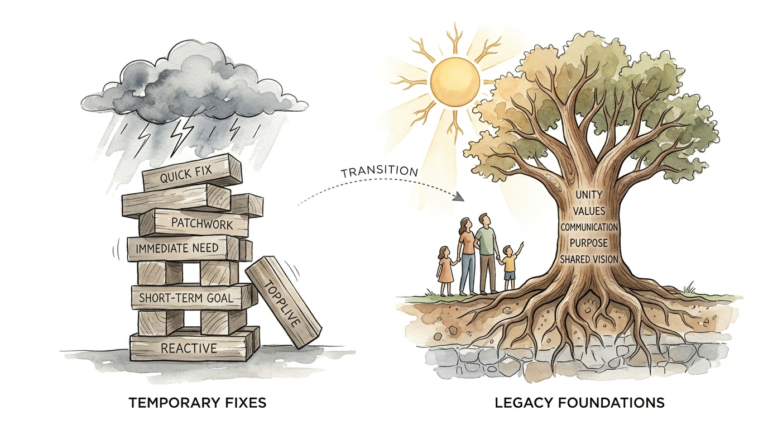
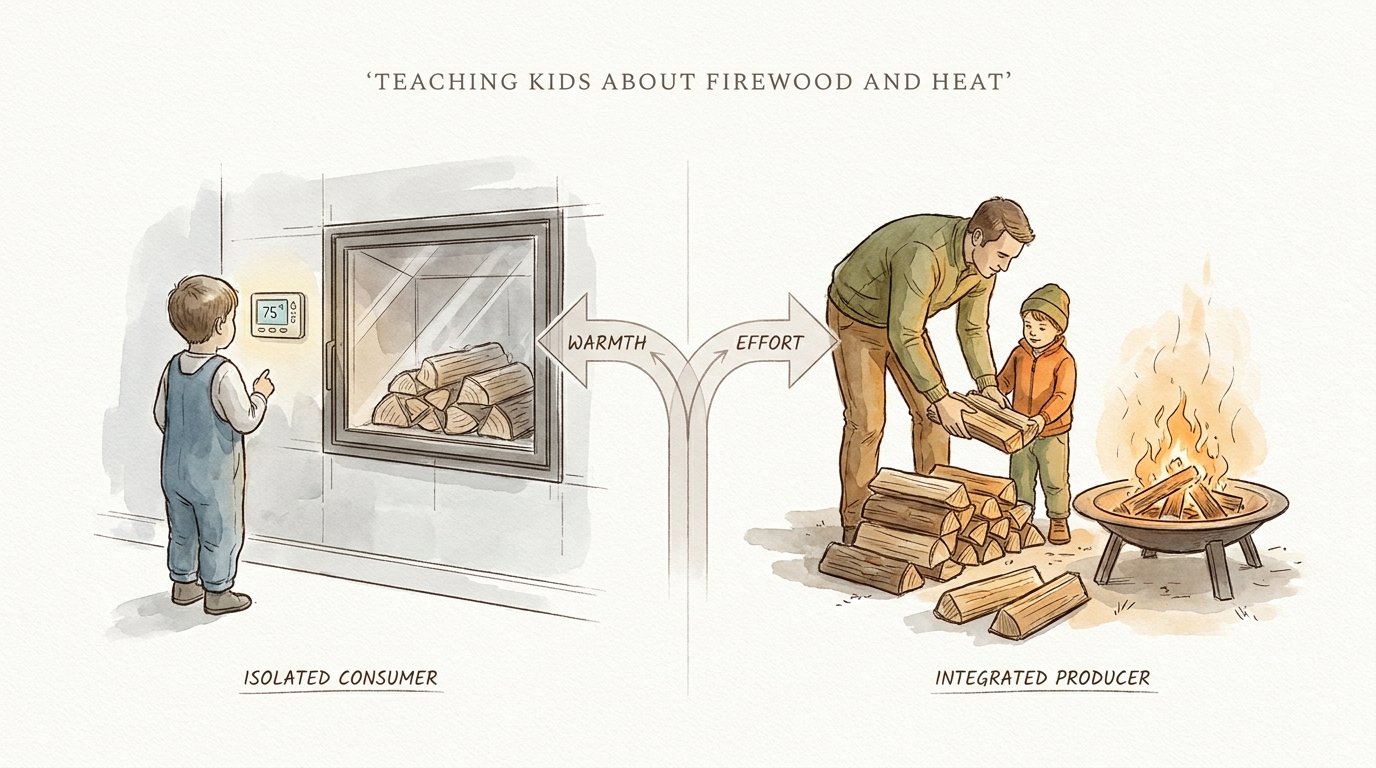
One teaches them to consume heat by pushing a button; the other teaches them exactly how much effort a warm home requires. We’ve isolated our kids from the basic systems of survival. When they help stack the wood that will heat the home, they aren’t just doing a chore; they are integrating into the family ecosystem. They learn that warmth isn’t a right—it’s a result of collective effort.
Modern life has made survival invisible. We flip a switch and the lights come on. We twist a dial and the room gets warm. This convenience is a gift, but it comes with a hidden cost: the loss of connection to the source. When kids don’t see the work behind the comfort, they struggle to value the comfort itself.
Introducing your children to the world of firewood and wood heat changes that dynamic. It moves them from being an ISOLATED CONSUMER to becoming an INTEGRATED PRODUCER. They begin to see themselves as vital parts of a living system. They learn that the fire in January starts with the sweat of July.
Heating with wood is more than a utility. It is a masterclass in physics, biology, and character building. This guide will show you how to involve your family in this ancient rhythm, ensuring safety, efficiency, and a lifelong appreciation for the basic elements of life.
Teaching Kids About Firewood And Heat
Teaching kids about firewood means explaining the relationship between nature, energy, and labor. At its simplest, firewood is stored solar energy. Trees spend decades capturing sunlight and locking it away in cellulose and lignin. When we burn wood, we are releasing that stored sun to keep our families warm.
This process exists because wood is a renewable, carbon-neutral fuel source when managed correctly. Unlike fossil fuels that are pumped from the ground and processed in distant factories, wood is local. You can see it, touch it, and feel the weight of it in your hands. It is the most “real” energy source a child can encounter.
In real-world situations, wood heat is used for primary home heating, supplemental warmth, or emergency backup. For a child, the woodpile is a physical representation of the family’s security. A full woodshed means the family will be safe during the coldest storms. This visual metric helps children understand the concept of “preparedness” far better than any textbook ever could.
Imagine a cold December morning. The wind is howling outside, but the living room is a steady 72 degrees. The child who helped stack that wood knows exactly where that heat came from. They remember the smell of the split oak and the way the bark felt. They aren’t just warm; they are part of the reason the family is warm.
How The System Works: From Forest To Fire
The journey of wood heat follows a strict physical process. Understanding these steps allows children to work safely and effectively. You are managing a cycle of moisture removal and energy release.
The process begins with harvesting. Trees are felled, limbed, and bucked into manageable rounds. This is where kids can first get involved by helping clear small brush or identifying different tree species. They learn that different trees provide different levels of heat. For instance, Oak and Hickory are the heavyweights of the wood world, providing long-lasting coals, while Pine and Poplar burn fast and hot—perfect for starting a fire.
Splitting is the next critical step. This is where we break the “seal” of the bark to let moisture escape. Wood is full of water when it is first cut. Freshly “green” wood can be up to 50% water. If you try to burn it, the energy goes into boiling that water away rather than heating your room. Splitting exposes the interior grain, turning a log into a series of smaller pieces with more surface area.
Seasoning is the most important—and often the most overlooked—part of the process. Wood needs time to dry until the moisture content is below 20%. This usually takes six months to two years depending on the species. Children can use a moisture meter to check the wood, turning a chore into a science experiment. They see the numbers drop over months as the sun and wind do their work.
Burning is the final stage. Inside a wood stove, the wood goes through three stages of combustion. First, any remaining moisture evaporates. Second, the wood breaks down and releases volatile gases. These gases actually contain about half of the wood’s total heat energy. Third, the remaining charcoal burns down to ash. Teaching kids to watch the secondary combustion tubes in a modern stove shows them how we burn smoke to stay warm.
Age-Appropriate Firewood Chores
Involving kids requires matching the task to their developmental level. Safety is always the priority, but every child can contribute something meaningful to the woodpile.
Toddlers (Ages 3-5) can help with “kindling patrol.” Their job is to find small twigs and “pencil-sized” sticks on the ground. They can carry small buckets of these to the porch. This teaches them to distinguish between different sizes of fuel and gives them a sense of pride in “finding the fire.”
Primary School Kids (Ages 6-9) are the champions of the woodpile. They can help stack split wood. This is a giant puzzle that requires focus and physical coordination. Teach them to “cross-stack” the ends of the rows for stability. They can also help rake up the bark and “duff” that falls off the logs during the splitting process, keeping the workspace safe and clean.
Middle Schoolers (Ages 10-13) can take on more responsibility. They can operate a “kindling cracker”—a safe, stationary tool used to split small pieces of wood without a swinging axe. They are also old enough to help haul wood into the house using a sled or cart. This age group can begin learning about wood stove maintenance, such as cleaning the glass or safely removing cool ashes.
Teens (Ages 14+) can learn the art of the maul or axe under close supervision. They can manage the entire wood cycle, from helping with the chainsaw (with proper PPE) to building the fire itself. At this stage, they should understand the mechanics of the chimney draft and how to adjust the air intake for the most efficient burn.
Benefits Of The Firewood Life
The practical benefits of heating with wood are measurable in both dollars and character. While it requires more labor than a furnace, the rewards are far more substantial.
Physical activity is a massive advantage. Stacking wood is “functional fitness.” It builds core strength, balance, and endurance. In an era where kids spend hours behind screens, an hour at the woodpile provides the high-intensity movement they need. It is exercise with a purpose, which is always more engaging than running on a treadmill.
Responsibility becomes tangible. If the wood box is empty, the house gets cold. There is no clearer cause-and-effect relationship in a child’s life. This creates a sense of “radical accountability.” The child isn’t just doing a chore because Mom said so; they are doing it because the family’s comfort depends on it.
Scientific literacy grows naturally. Kids learn about British Thermal Units (BTUs), the chemistry of combustion, and the biology of tree growth. They understand that a cord of Oak (approx. 24-28 million BTUs) provides much more heat than a cord of White Pine (approx. 14-16 million BTUs). They see how airflow affects flame temperature and how creosote forms from cold, smoldering fires.
Economic awareness is the final benefit. When families heat with wood, they often save thousands of dollars a year on utility bills. Showing kids the math—comparing the cost of a cord of wood to the cost of heating oil or propane—teens can see the value of their own labor in real currency.
Challenges And Common Mistakes
Heating with wood is a skill that requires precision. Mistakes can lead to cold houses, smoky rooms, or even dangerous chimney fires.
The most frequent error is burning “green” wood. People often think that if wood looks dry on the outside, it is ready to burn. It isn’t. Burning wet wood creates massive amounts of creosote—a flammable, tar-like substance that coats the inside of the chimney. This is the leading cause of chimney fires. You must teach children that wood is only ready when it sounds “hollow” when banged together and shows “checks” or cracks on the ends.
Stacking directly on the ground is another common pitfall. Wood is a giant sponge. If you stack it on the earth, the bottom layer will soak up ground moisture and rot. Always use pallets, rails, or a concrete pad to keep the wood elevated. Air needs to circulate under the pile as well as through it.
Covering the pile too tightly is a mistake many beginners make. They wrap the entire stack in a blue plastic tarp, thinking they are protecting it from the rain. In reality, they are trapping the moisture inside. This creates a “sauna effect” that prevents the wood from seasoning. Only the top of the stack should be covered; the sides must remain open to the wind.
Neglecting the “three-foot rule” around the stove is a safety hazard. Kids must learn that the area around the wood stove is a “no-toy zone.” Blankets, books, and plastic toys can ignite or melt from the radiant heat even if they aren’t touching the stove. Marking this boundary clearly is essential for a safe home.
Limitations Of Wood Heat
While wood heat is incredible, it is not a “set it and forget it” system. It has realistic constraints that every practitioner must understand.
Environmental limitations play a role. In high-density urban areas, wood smoke can contribute to poor air quality. Some valleys trap smoke during temperature inversions. This is why using a modern, EPA-certified wood stove is critical. These stoves use secondary combustion or catalytic converters to burn off the particulates, making the exhaust much cleaner than an old-fashioned fireplace.
The labor requirement is a significant trade-off. You cannot go on a week-long vacation in February and expect the house to stay warm without a backup system. Wood heat requires someone to be present to “feed the beast.” If your lifestyle involves constant travel or long hours away from home, wood heat might be better as a supplemental source rather than the primary one.
Storage space is a practical boundary. A single cord of wood (4′ x 4′ x 8′) takes up 128 cubic feet. If you need four cords to get through a winter, you need a substantial amount of dry, accessible space. Not every property has the layout to support a multi-year wood rotation.
Comparison: Wood Heat vs. Modern HVAC
Understanding the differences between these systems helps families decide how to balance their energy needs.
| Factor | Wood Heat (Integrated Producer) | HVAC/Electric (Isolated Consumer) |
|---|---|---|
| Fuel Cost | Low (Free if self-harvested) | High (Subject to market fluctuations) |
| Labor Level | High (Harvesting, splitting, stacking) | Zero (Push-button convenience) |
| Reliability | High (Works during power outages) | Low (Fails if the grid goes down) |
| Maintenance | Daily cleaning, annual sweep | Seasonal filter changes, professional tech |
| Connection | Deep understanding of resource use | Disconnected from the energy source |
Practical Tips For Woodpile Efficiency
Applying these best practices will save your back and improve your burn quality.
- Orient stacks to the wind. Airflow is more important than sun for drying wood. Position your rows so the prevailing winds can blow through the sides of the stack.
- Use the “bark-up” rule for outdoor storage. Bark is nature’s shingles. If your wood is outside and uncovered, stacking it with the bark on top helps shed rainwater.
- Stack in single rows. While a big “block” of wood looks impressive, the center of that block will never dry properly. Single rows allow air to hit both sides of every log.
- Invest in a “Kindling Cracker.” This tool allows even younger kids to split small pieces safely. It has a built-in blade that you hit with a mallet, eliminating the danger of a swinging axe.
- Color-code your wood. Use different colored spray paint on the ends of the logs or different colored pallets to mark the year. “Red pallets are for this winter, green pallets are for next winter.” This makes the rotation obvious for kids.
Advanced Considerations For Serious Practitioners
If you want to move beyond the basics, you should look into wood species management and chimney physics.
Wood identification is a skill that takes years to master. Advanced practitioners don’t just see “wood”; they see specific BTU profiles. For instance, Black Locust is incredibly dense and rot-resistant, making it a “gold standard” for overnight burns. However, it can be sparks-heavy. Mixing species is a high-level strategy. You might use fast-burning Birch to get the stove up to temperature quickly, then “bed it down” with Shagbark Hickory for the night.
The physics of the “cold hearth” is another advanced concept. When you first light a fire, the chimney is cold and the air inside it is heavy. This can cause smoke to spill into the room. Learning how to “prime” the chimney by holding a lit piece of newspaper near the flue opening creates a draft before the main fire starts. This is a great “magic trick” to teach older kids.
Ash management is the final step in the ecosystem. Wood ash isn’t waste; it’s a resource. It is high in potassium (potash) and can be used as a garden amendment for acid-loving soils. It can also be used to make traditional soap or to provide a “dust bath” for chickens to prevent mites. Teaching your kids that even the “leftovers” of the fire have value completes the circle of sustainability.
Example: The Saturday Wood Shift
Let’s look at a realistic scenario of a family working together on a Saturday in October.
The goal is to move two cords of seasoned oak from the back pasture to the porch-side woodshed. The father operates the tractor or truck, moving the bulk loads. The 12-year-old daughter is in charge of the “staging area,” where she inspects each piece for moisture and bark-hitchhiking bugs.
The 8-year-old son is the “stacker.” He is learning how to “bookend” the rows. He places two large, flat pieces of wood parallel to each other and then stacks the next layer perpendicular. This creates a stable tower that prevents the entire row from falling over. He takes pride in making the row perfectly straight.
The 5-year-old is on “tinder duty.” She is collecting the small splinters and bark that fall off during the move. She puts them into a dedicated basket labeled “Fire Starters.” By the end of the afternoon, the woodshed is full, the yard is clean, and the family is tired but satisfied. They have physically secured their warmth for the next two months.
Final Thoughts
Heating with wood is an antidote to the “push-button” culture that often leads to entitlement and disconnection. It forces us to slow down and respect the seasons. It reminds us that every luxury we enjoy—even the simple luxury of a warm room—is the result of someone’s energy and effort.
When you involve your kids in this process, you are giving them more than just chores. You are giving them a foundation of self-reliance. You are teaching them that they are capable of providing for their own basic needs. In a world that is becoming increasingly digital and abstract, the woodpile remains stubbornly, beautifully real.
Start small. Let them carry a few sticks. Let them watch you build the fire. Over time, they will stop seeing the woodpile as a pile of logs and start seeing it for what it truly is: the heart of the home. Encourage them to experiment, let them feel the weight of the labor, and together, you will build a family ecosystem that is as resilient as the oak you burn.
Sources
1 vt.edu | 2 medium.com | 3 pgl.co.uk | 4 msu.edu | 5 childdevelopmentinfo.com | 6 brainbalancecenters.com | 7 wonderfullifefarm.com | 8 webmd.com | 9 fullservicechimney.com | 10 ihtspas.com | 11 loucurley.com | 12 healthychildren.org | 13 sydneyheaters.com.au | 14 flandersfamily.info