Nature Based Dramatic Play Ideas
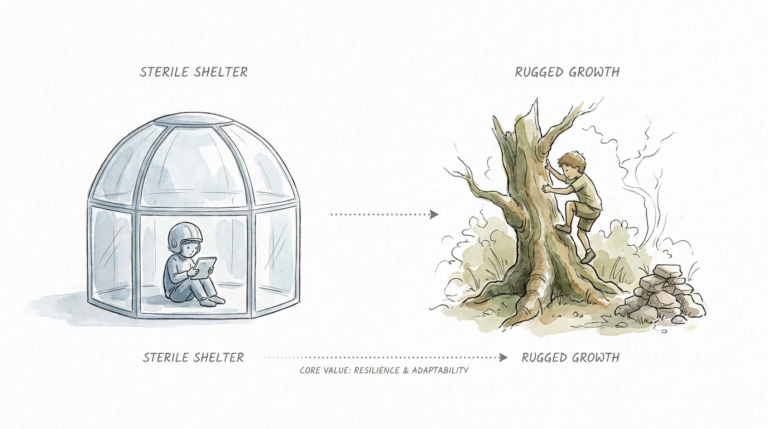
The plastic version has no scent, no texture, and no life. Pretend play shouldn’t be sterile. When a child plays ‘chef’ or ‘florist’ with plastic props, they miss the feedback of the real world. Introducing living materials—clippings from the garden, real water, aromatic herbs—gives the roleplay ‘stakes.’ The flower might wilt; the water might spill; the scent is real. This biological connection anchors the play in a way plastic never can.

We often hand children indestructible toys because they are easy to clean. But ease of cleaning usually means a lack of sensory input. A plastic carrot feels exactly like a plastic hammer. In contrast, a real sprig of rosemary feels oily, smells pungent, and looks intricate. Nature-based dramatic play isn’t just about “being outside.” It is about bringing the raw, unpredictable elements of the earth into the center of a child’s imagination.

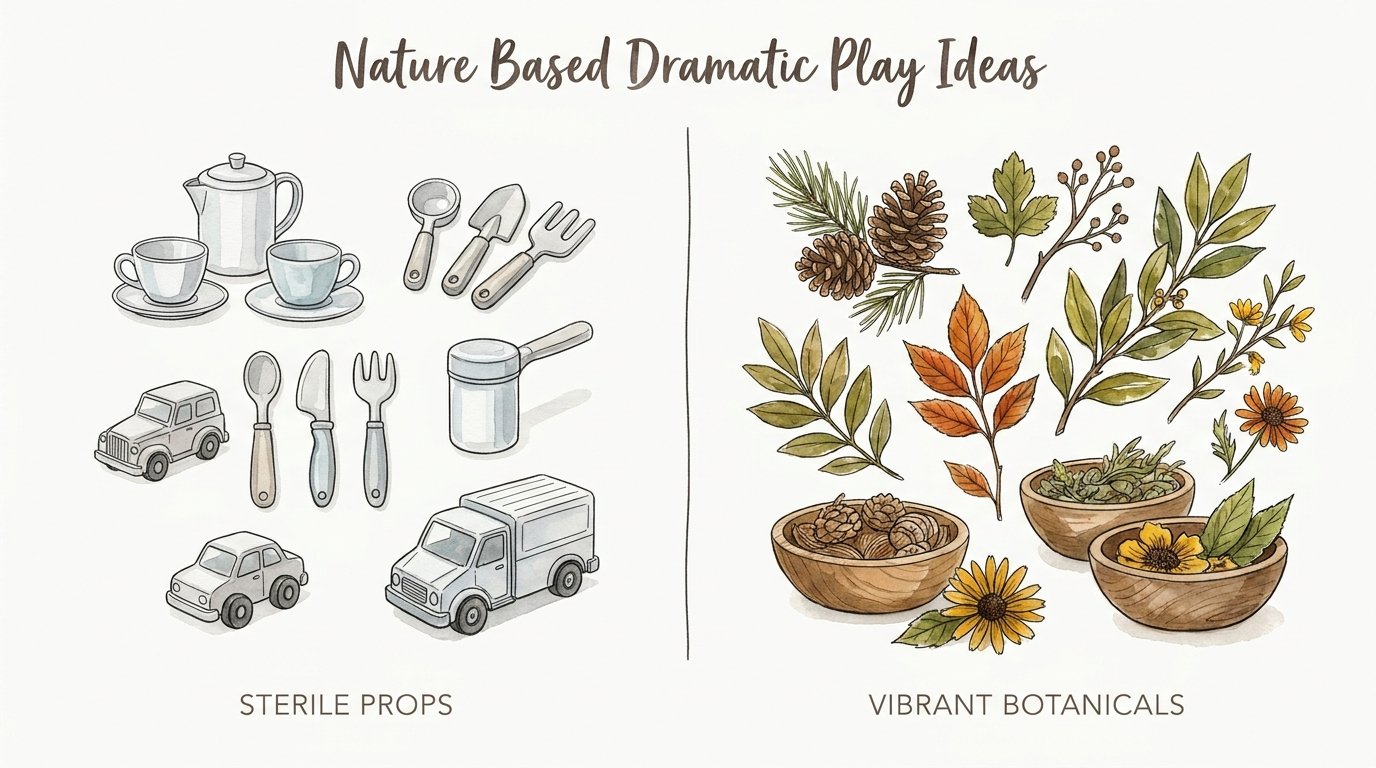
This approach moves us away from sterile props and toward vibrant botanicals. It encourages children to respect the fragility of the living world. They learn that their actions have immediate consequences. If they are too rough with a leaf, it tears. If they forget to water their “shop” inventory, it turns brown. These are the lessons that build empathy and awareness.
Nature Based Dramatic Play Ideas
Nature-based dramatic play is the practice of using organic, living, or once-living materials as the primary tools for roleplay. Instead of a plastic kitchen set, children use mud, stones, and petals. Instead of polyester dress-up clothes, they might use flower crowns or leaf capes. This type of play exists at the intersection of environmental education and creative expression.
In the real world, this mirrors the work of florists, chefs, farmers, and scientists. It isn’t just “playing house.” It is an exploration of biology and chemistry. Children who engage in this play are often seen in “mud kitchens” or “outdoor laboratories.” They use sticks as spoons and large flat rocks as plates. The environment provides the script, and the materials provide the sensory cues.
Think of it as a loose parts play system that changes with the seasons. In the spring, the play is filled with soft green shoots and bright petals. In the autumn, it shifts to crunchy brown leaves, heavy acorns, and dried seed pods. This natural cycle ensures that the “toy box” is never the same twice. It keeps the engagement levels high because the materials are constantly evolving.
Most traditional classrooms rely on static toys. These toys have one function and one texture. Nature-based play breaks this mold. A pinecone can be a pineapple in a grocery store today and a pine-tree-shaped skyscraper in a tiny city tomorrow. The lack of a fixed identity in natural objects forces the brain to work harder, fostering deeper cognitive connections.
How to Implement Nature-Based Dramatic Play
Starting this journey doesn’t require a forest. You can begin in a small backyard or even with a few potted plants on a balcony. The goal is to provide a “menu” of natural textures. Start by gathering clippings from non-toxic plants. Lavender, mint, and rosemary are excellent choices because they offer strong, pleasant scents that trigger memory and engagement.
Setup a dedicated “workstation.” This could be a low table, a stump, or a cleared patch of dirt. Provide real tools if possible. Small metal trowels, stainless steel bowls, and wooden spoons feel better in the hand than flimsy plastic alternatives. Weight matters. A heavy stone “loaf of bread” provides proprioceptive input that a hollow plastic toy cannot match.
Introduce water as a primary element. Water is the universal solvent of play. It changes the color of rocks, turns dirt into moldable clay, and makes petals float. Give children spray bottles, droppers, and small pitchers. This builds fine motor skills while they “water the shop” or “mix potions.” The presence of water instantly raises the engagement level of any dramatic play scenario.
Focus on “loose parts.” These are materials that can be moved, carried, combined, and redesigned. A bucket of smooth river stones, a basket of dried seed pods, and a bundle of willow sticks are far more versatile than a themed play set. These items don’t come with a manual. The child must decide what they represent, which is the core of sophisticated dramatic play.
Scaffold the play without leading it. If the child is playing “restaurant,” you might ask, “What is the special soup of the day?” rather than telling them to make soup. You can provide “menus” made of slate or wood slices where they can “write” using chalk or charcoal. This integrates early literacy and math into the organic experience.
Benefits of Botanical Play
The most immediate benefit is sensory integration. Children today spend a significant amount of time on flat screens. Nature-based play is the antidote. It engages all five senses simultaneously. The smell of crushed eucalyptus, the rough bark of a branch, and the visual patterns of a leaf vein provide a rich “sensory diet” that supports brain development.
Emotional regulation is another massive advantage. Nature has a calming effect on the human nervous system. Studies have shown that children who play with natural materials exhibit lower stress levels and longer attention spans. The “soft fascination” provided by nature allows the brain to rest from the high-intensity demands of digital life and structured schooling.
Environmental stewardship starts here. You cannot expect a child to care about “the planet” if they haven’t first fallen in love with a specific patch of dirt or a certain type of flower. By treating botanicals as precious play items, children develop an innate respect for living things. They learn the names of plants, the timing of the seasons, and the importance of biodiversity through direct contact.
Cognitive flexibility is sharpened when toys don’t have “faces.” When a doll has a fixed plastic smile, it is always happy. When a child makes a “person” out of a stick and a leaf, that character can be sad, angry, or excited depending on the story. This requires the child to project their own emotions and narratives onto the objects, which is a higher-level cognitive task.
Challenges and Common Mistakes
The “mess factor” is the biggest hurdle for most adults. Nature is inherently dirty. Mud will get under fingernails, and water will soak through shirts. If you go into this trying to keep the play “clean,” you will stifle the creativity. The mistake is trying to contain nature-based play to a small, controlled area without accepting the inevitable overflow.
Safety is a valid concern that often turns into an overblown fear. The mistake is banning all plants because some might be toxic. Instead, the solution is education. Teach children which plants are “look but don’t touch” and which are safe for play. Always supervise younger children who are still in the “mouthing” phase, and curate your play garden with non-toxic species like marigolds, snapdragons, and culinary herbs.
Another common error is providing too much structure. Adults often want to “set up” a specific scene, like a perfect fairy garden. However, the most valuable play happens when the child is left with raw materials. If you build the house for them, they are just residents. If you give them the sticks and mud, they are architects. Avoid the urge to make the play space look “Instagram-perfect.”
Seasonality can feel like a challenge when the garden goes dormant. Many people stop nature play in the winter. This is a missed opportunity. Winter provides ice, bare branches, and evergreen needles. The mistake is thinking nature play only happens when things are blooming. Each season offers a different “textural palette” that is equally valuable for the developing mind.
Limitations and Realistic Constraints
Space is a significant limitation for urban dwellers. Not everyone has a forest in their backyard. In high-density cities, accessing high-quality natural materials requires more effort. You may have to visit parks or purchase organic flowers from a market. This adds a layer of logistical planning that plastic toys don’t require.
Allergies are a practical boundary. Some children have severe reactions to pollen, certain grasses, or specific flowers. In these cases, you must be extremely selective about the botanicals you introduce. This doesn’t mean nature play is impossible, but it does mean it must be “curated” rather than “wild.” Focusing on items like smooth stones, driftwood, and sterilized seed pods can bridge the gap.
Time is another constraint. Setting up a botanical play station takes longer than opening a toy box. You have to harvest, wash, and arrange materials. Furthermore, these materials are perishable. A “flower shop” setup might only last two or three days before the inventory needs to be composted and replaced. It requires a commitment to a “slow play” lifestyle.
Weather can dictate the feasibility of outdoor dramatic play. Extreme heat, heavy rain, or freezing temperatures can move the play indoors. When you move nature play inside, the mess becomes harder to manage. You need to use trays, drop cloths, and specific boundaries to keep the “vibrant botanicals” from taking over the living room.
Plastic vs. Botanical Play Materials
| Feature | Plastic “Sterile” Props | Vibrant Botanicals |
|---|---|---|
| Sensory Feedback | Uniform, predictable, static. | Diverse, changing, multi-sensory. |
| Durability | Indestructible; lasts centuries. | Fragile; teaches care and respect. |
| Cost | High upfront cost for quality. | Zero or very low cost (foraged). |
| Environmental Impact | High (manufacturing & waste). | Positive (compostable & renewable). |
| Imagination Level | Low (the toy defines the play). | High (the child defines the play). |
Practical Tips for Success
Create a “Nature Treasure Box.” This is a sturdy container where you can store dried items like pinecones, interesting bark, and dried seed pods. Having a steady supply of “dry” nature items allows you to supplement “wet” living materials like fresh flowers or mud. It ensures the play can continue even if you haven’t had time to garden that day.
Use mirrors in your play space. Placing a large, shatterproof mirror on the ground or behind a botanical “shop” doubles the visual complexity. Children love seeing the underside of leaves and the reflection of their “potions.” It adds a layer of light and depth that makes the natural colors pop.
Rotate your materials based on the “sensory of the week.” One week might focus on aromatic herbs like mint and sage. The next week could focus on textures using different types of moss and tree bark. This focused approach prevents sensory overwhelm and gives children the chance to truly master the properties of a specific material.
Provide “binding materials.” To take nature-based dramatic play to the next level, children need ways to connect items. Provide natural twine, clay, or even just large leaves that can be used as wraps. This allows them to build “bouquets,” “sandwiches,” or “medicine bundles,” extending the duration of the play session.
Document the “creations.” Because botanical play is ephemeral, it can be helpful to take photos or have the child draw what they made. This honors their work before it is composted. It also creates a “look-book” of ideas that they can refer back to during future play sessions.
Advanced Considerations for Practitioners
For educators and serious practitioners, consider the concept of a Permaculture Play Space. This involves planting specific species that are designed to be harvested by children. Willow trees are excellent for “living tunnels” and provide endless sticks. Lamb’s Ear provides a soft, velvet texture that is incomparable for sensory seekers. Designing the landscape with play in mind ensures a self-sustaining supply of materials.
Think about the “chemistry” of the play. When children mix hibiscus flowers with water, the water turns pink. When they add lemon juice to certain petal teas, the color might change again. This is dramatic play that accidentally becomes a science lesson. Providing basic “reagents” like vinegar and baking soda alongside natural pigments can turn a mud kitchen into a high-level laboratory.
Consider the scale of the play. Dramatic play doesn’t always have to be “child-sized.” Micro-dramatic play involves using small natural items to create worlds for insects or tiny figurines. Building “toad houses” or “fairy markets” requires incredible fine motor control and spatial reasoning. It encourages a different kind of focus—one that is quiet, intense, and deeply observant.
Integrate seasonal folklore and cycles. Use the dramatic play space to celebrate the solstices or the first harvest. This connects the child’s play to the broader human experience of living with the land. It gives the roleplay a sense of tradition and importance, moving it from “frivolous” to “meaningful.”
Examples of Nature-Based Play Scenarios
The Botanical Apothecary
In this scenario, the play space is filled with small glass jars, mortars and pestles, and a variety of herbs and flowers. The child takes on the role of a “healer” or “chemist.” They crush mint leaves to make “energy medicine” or steep rose petals in water for “kindness tea.” This scenario encourages heavy sensory exploration and fine motor work through grinding and pouring.
The Forest Florist
Give the child a variety of stems, some “vases” (recycled jars), and pieces of twine. They are now running a shop. They must categorize the flowers by color or size, decide on a “price” (using pebbles as currency), and arrange the botanicals into aesthetically pleasing bundles. This builds math skills through sorting and social skills through the “transaction” of the shop.
The Mud Kitchen Brasserie
This is the classic setup but elevated with real garnishes. The “chef” has access to a dirt pit and a water source. They create “cupcakes” made of mud, decorated with white clover “sprinkles” and acorn “toppings.” The complexity comes from the textures—balancing the viscosity of the mud so the “cake” holds its shape. This is a masterclass in material science disguised as a restaurant.
Final Thoughts
Nature-based dramatic play is a return to the fundamentals of childhood. It rejects the idea that play needs to be loud, bright, and plastic to be engaging. By returning to the earth, we provide children with a playground that is as complex and nuanced as they are. The living world offers a depth of feedback that a factory-made toy simply cannot replicate.
Embracing the mess and the “stakes” of living materials changes the energy of the play. It slows down the pace. It forces observation. It builds a bridge between the imagination and the physical environment. Whether you are an educator or a parent, the shift from sterile props to vibrant botanicals is one of the most significant gifts you can give a developing mind.
Start small. Pick a handful of dandelions. Grab a few smooth stones. Add a splash of water. Watch as the “chef,” the “scientist,” or the “explorer” within the child comes to life. The garden is waiting to be the stage for their next great adventure.