Natural Scent Sensory Play For Toddlers
Is your child consuming a chemical imitation of a smell, or are they producing the aroma themselves? Most sensory ‘scents’ are just synthetic perfumes designed to trigger a purchase. Shift your child from a consumer to a producer by letting them crush, steep, and infuse real plants. The smell of freshly bruised rosemary is a complex chemical library that builds far more neural connections than a lab-created fruit scent.
Children are born with a primary directive: to map their world using every available sensor. While we spend thousands on high-contrast cards and musical toys, the olfactory system—the only sense with a direct line to the emotional and memory centers of the brain—is often fed a diet of plastic-scented playdough and artificial “berry” markers. This creates a sensory gap where children learn to recognize a caricature of nature rather than the intricate reality of it.
True sensory play should involve the active extraction of value from the environment. When a toddler pinches a mint leaf, they aren’t just playing; they are performing a chemical extraction. They are breaking cell walls to release volatile organic compounds that have evolved over millions of years to interact with the mammalian brain. This is the difference between watching a movie and writing a script.
In this guide, we will explore how to transition your child’s sensory experience from passive consumption to active production. We will look at why natural scents are neurologically superior and how you can use simple garden herbs to build a powerhouse of cognitive development right on your kitchen table.
Natural Scent Sensory Play For Toddlers
Natural scent sensory play is the intentional use of aromatic plants, spices, and botanical elements to engage a child’s olfactory system. Unlike synthetic scents found in “scented” toys, which rely on a few dominant molecules to mimic a smell, natural aromatics contain hundreds of distinct chemical compounds. These compounds work together to create a multi-dimensional experience that a lab cannot replicate.
This type of play exists at the intersection of botany, chemistry, and early childhood development. In the real world, scent is a survival tool. It tells us if food is safe to eat, if a storm is coming, or if a predator is nearby. By engaging in natural scent play, toddlers are essentially “calibrating” their internal hardware to understand the complex signals of the natural world.
Imagine the difference between a picture of a forest and actually standing among the pines. The picture is a flat representation. The forest is an immersive data stream of temperature, moisture, and the sharp, resinous scent of needles. Natural scent play brings that data stream into the home, allowing toddlers to explore “smell-scapes” that are grounding, invigorating, or calming without the side effects of artificial fixatives.
It is used primarily in Montessori and Reggio Emilia-inspired environments where “real-world” materials are prioritized over plastic substitutes. The goal is to foster a sense of “biophilia”—an innate connection to life and living systems—while simultaneously building the neural architecture required for advanced memory and emotional regulation.
How It Works: Moving from Consumer to Producer
To shift your child into the role of a producer, you must provide the tools and raw materials for extraction. The scent is “locked” inside the plant’s leaves, stems, and seeds. The play involves the mechanical and thermal processes required to release that scent.
The Crushing Method (Mechanical Extraction)
This is the most basic and satisfying form of scent play. Provide your toddler with fresh herbs like rosemary, mint, or basil. Use a wooden mortar and pestle or simply show them how to “bruise” the leaves between their fingers. As the cell walls rupture, the volatile oils are released. This provides immediate sensory feedback: the harder they work (fine motor skill), the stronger the reward (olfactory input).
The Steeping Method (Thermal Extraction)
Commonly known as “Nature Soup” or “Sunshine Tea,” this involves placing botanicals in water. Warm water speeds up the movement of molecules, making the scent more intense. You can use a large sensory bin filled with water and add sliced lemons, oranges, and lavender sprigs. Encourage the child to stir and “cook” the soup, observing how the water changes color and scent over time.
The Infusion Method (Long-term Observation)
For older toddlers, creating “scent jars” or herb-infused oils is a lesson in patience and chemistry. Place dried cinnamon sticks, cloves, or rose petals into jars with a carrier oil or just a bit of water. Let them sit in a sunny windowsill. Each day, the child can open the jar to see how the scent has deepened. This teaches them that the environment is constantly changing and that they can influence those changes.
Benefits: Why Nature Wins the Scent War
The practical benefits of choosing real plants over synthetic kits are measurable in both developmental milestones and household harmony. Because the olfactory bulb is part of the brain’s limbic system, scent play impacts areas that visual play cannot reach.
- Neural Complexity: Natural scents contain a “chemical library” of hundreds of molecules. A synthetic lemon scent might only have 2-3 molecules. Dealing with complexity forces the brain to build more intricate neural pathways.
- Emotional Regulation: Specific plants have documented physiological effects. Lavender and chamomile promote the release of neurotransmitters that lower cortisol, while citrus and peppermint can increase alertness and focus.
- Language Development: Scent provides a rich platform for descriptive language. It is harder to describe a smell than a color, forcing toddlers to use comparative words like “sharp,” “sweet,” “earthy,” or “spicy.”
- Fine Motor Precision: Pulling leaves off a stem, snipping chives with safety scissors, and grinding seeds requires high levels of hand-eye coordination and finger strength.
- Picky Eating Support: Exposing children to the scents of herbs like cilantro, cumin, or ginger in a play context reduces “neophobia” (fear of new things). When they later see these ingredients on their plate, the “danger” signal in their brain is already neutralized.
Challenges and Common Mistakes
The most frequent error parents make is using concentrated essential oils as a shortcut. While natural, essential oils are highly volatile and extremely potent. A toddler’s olfactory receptors are significantly more sensitive than an adult’s. Using oils “neat” can cause sensory overwhelm, skin irritation, or even respiratory distress in some children. Always stick to the whole plant whenever possible.
Another common pitfall is using pesticide-treated plants from a standard florist or grocery store. Since toddlers often explore with their mouths, the “taste-safe” aspect of this play is vital. Always wash store-bought herbs thoroughly or, ideally, grow your own in a small windowsill pot to ensure they are free from systemic chemicals.
Finally, avoid the “One and Done” mistake. Scent play shouldn’t be a single activity. It should be a lifestyle of sniffing. If you only bring out herbs once a month, the child doesn’t learn to integrate scent into their daily mapping of the world. Keep a “smell station” or an herb garden accessible at all times.
Limitations and Realistic Constraints
Natural scent play is not a universal solution for every child. Children with Sensory Processing Disorder (SPD) may find certain natural smells, even pleasant ones, to be physically painful or overstimulating. In these cases, the “producer” model is even more important, as it gives the child control over the intensity of the scent. If they feel overwhelmed, they can stop crushing the leaves.
Environmental limitations also play a role. If you live in an urban area without a garden, sourcing a variety of fresh botanicals can become expensive. While dried spices from the pantry are a great alternative, they lack the tactile “squish” and immediate oil release of fresh plants. You have to balance the cost of materials with the frequency of play.
Seasonal availability is another factor. You might have an abundance of mint in the summer but struggle to find anything but dried pine in the winter. This requires parents to be proactive about drying herbs or growing indoor varieties to maintain a consistent sensory diet throughout the year.
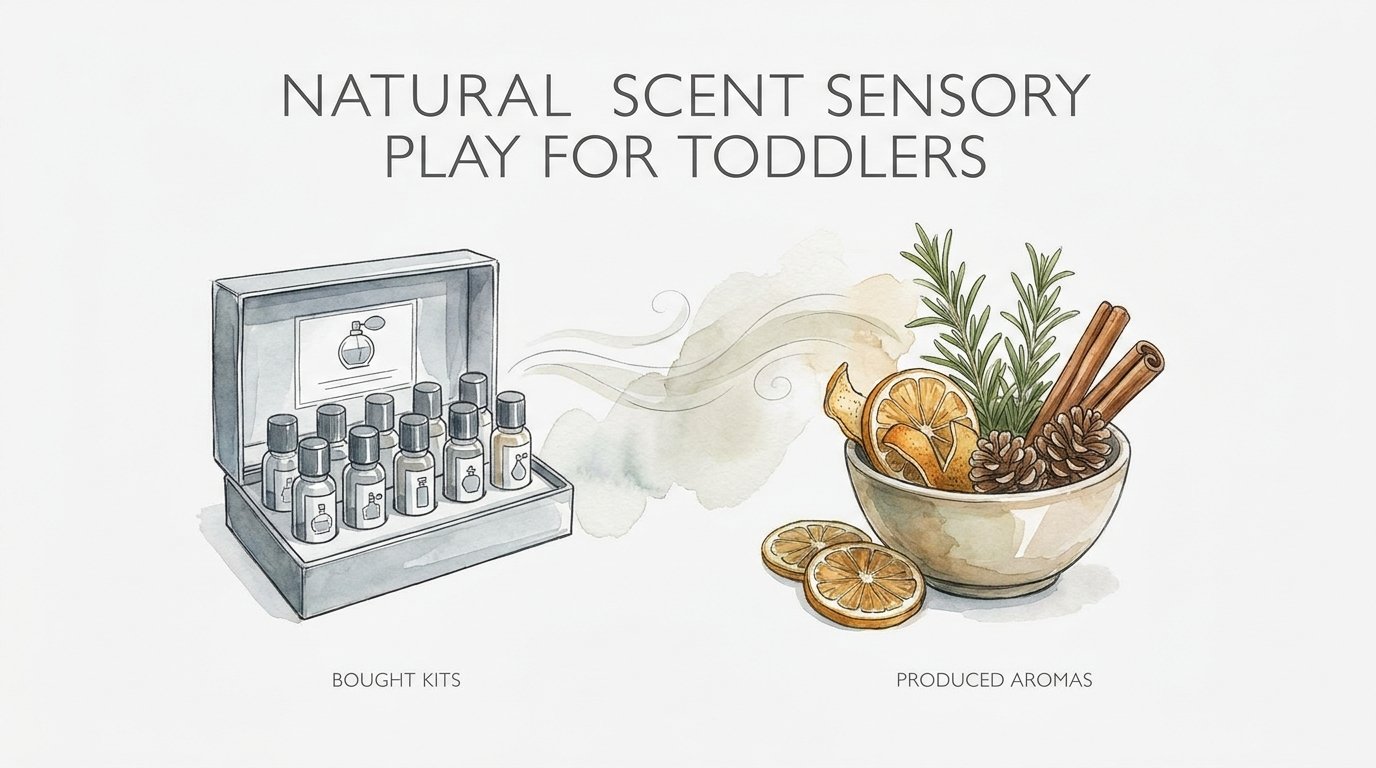
Comparison: BOUGHT KITS vs PRODUCED AROMAS
To understand why moving toward production is superior, we can compare the typical “Scented Sensory Kit” found in stores with the “Produced Aroma” method using garden herbs.
| Feature | Bought Scent Kits (Synthetic) | Produced Aromas (Natural) |
|---|---|---|
| Chemical Profile | 1-5 synthetic molecules; flat. | 200+ organic compounds; complex. |
| Role of Child | Consumer (Passive Smelling). | Producer (Active Extraction). |
| Skill Level | Low; just open the box. | Moderate; involves tools and techniques. |
| Cost Efficiency | High; expensive recurring purchase. | Low; often free or grown for pennies. |
| Brain Impact | Triggers recognition memory. | Triggers exploratory & sensory mapping. |
Practical Tips for Success
Setting up a natural scent station doesn’t have to be complicated. Start with what you have in your kitchen and expand as your child’s interest grows. The goal is to make scent a natural part of their environment.
- Start with “The Big Three”: Mint, Rosemary, and Lavender are the workhorses of sensory play. They are hardy, safe, and have very distinct, unmistakable scents.
- Use a Mortar and Pestle: This is the ultimate tool for a toddler. The weight of the stone and the sound of the grinding provide a heavy-work input that is incredibly grounding.
- The “Sniff Test” Ritual: Before every meal, have your child sniff the herbs or spices you are using to cook. This bridges the gap between play and real-life utility.
- Create a “Smell Library”: Use small salt shakers filled with different dried herbs. Tape the bottom so they can’t spill, and let your child shake and sniff to identify the contents.
- Rotate with the Seasons: Use pine needles and cinnamon in winter, rose petals and lemon balm in spring, and basil and tomatoes in summer.
Advanced Considerations: Olfactory Anchoring
For parents looking to take this further, you can use natural scents for Olfactory Anchoring. This is a technique where a specific scent is paired with a specific emotional state. Because the sense of smell bypasses the logical brain and goes straight to the emotional center, it is a powerful tool for behavior management.
If you always use the scent of lavender or Roman chamomile during your bedtime routine or during “quiet time” play, your child’s brain will eventually form an automatic association between that scent and a state of relaxation. Later, if you are in a high-stress environment—like a crowded airport or a doctor’s office—bringing out a small pouch of those dried herbs can trigger an immediate, subconscious calming response.
You can also use “Alerting Scents” like sweet orange or peppermint to help a child transition from a sleepy morning state to an active learning state. By consciously managing the “smell-scape” of your home, you are providing your child with a biological toolkit for emotional self-regulation.
Example Scenario: The Rosemary Memory Lab
Let’s look at how a simple afternoon activity can turn into a deep developmental session. Imagine a toddler named Leo. His mother gives him three sprigs of fresh rosemary and a small bowl of water. Instead of just handing him a scented toy, she asks, “Leo, where is the smell hiding?”
Leo first tries to smell the sprig. It’s faint. He then begins to pull the needles off the stem, engaging his pincer grasp. He notices the scent gets stronger. He drops the needles into the water and stirs with a wooden spoon, watching the needles swirl. Finally, he takes the spoon and mashes the needles against the side of the bowl. Suddenly, the “piney” scent fills the room.
In this 15-minute session, Leo has practiced fine motor control, learned about the physical properties of water, explored a complex chemical compound, and engaged in problem-solving. He has moved from being a consumer of “scent” to a producer of “aroma.” The neural connections made during that extraction process are permanent and far more robust than any interaction with a synthetic substitute.
Final Thoughts
The shift from synthetic to natural, and from consumer to producer, is one of the most impactful changes you can make in your child’s sensory environment. It replaces “flat” data with “deep” data, providing the brain with the complexity it craves. By allowing your child to crush, steep, and explore real plants, you are giving them the keys to a chemical library that has guided human development for millennia.
Remember that the goal is not to create a “perfect” sensory bin, but to foster a curious, active relationship with the world. Let them get their hands dirty. Let the kitchen smell like a spice market. Let them discover that the most amazing “scented toys” aren’t found in a box, but are growing right outside the door or sitting in the back of the pantry.
Start small today. Hand your child a single leaf of mint or a slice of orange. Ask them where the smell is hiding, and watch as they begin the lifelong process of extracting meaning—and aroma—from the world around them.
Sources
1 thegeniusofplay.org | 2 thimbleandtwig.com | 3 fantasticfunandlearning.com | 4 growinghandsonkids.com | 5 wordpress.com | 6 parenta.com | 7 naturalnicheperfume.com