Free Activities For Ipad Withdrawal
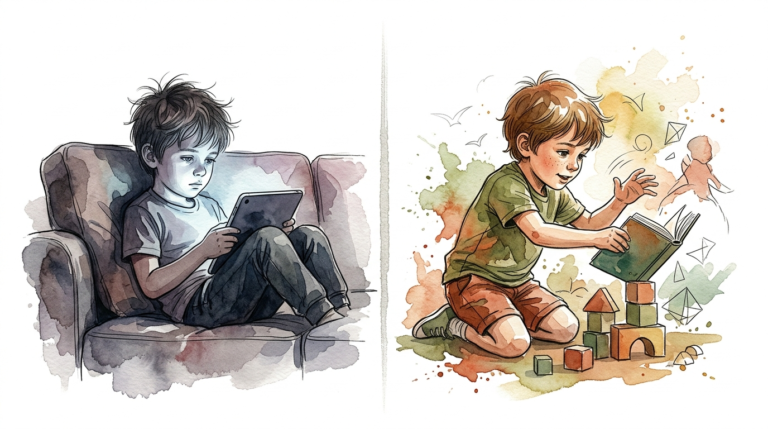
Your child’s brain doesn’t need a thousand-dollar graphics card; it needs a bucket of dirt and the freedom to make a mess. We’ve been sold the lie that ‘educational apps’ are the gold standard for development. But the physics of a mud puddle—viscosity, gravity, and surface tension—provide a multi-sensory data stream that no silicon chip can replicate. When you pull the plug on the $800 device, you aren’t taking away their education; you’re finally letting it begin.
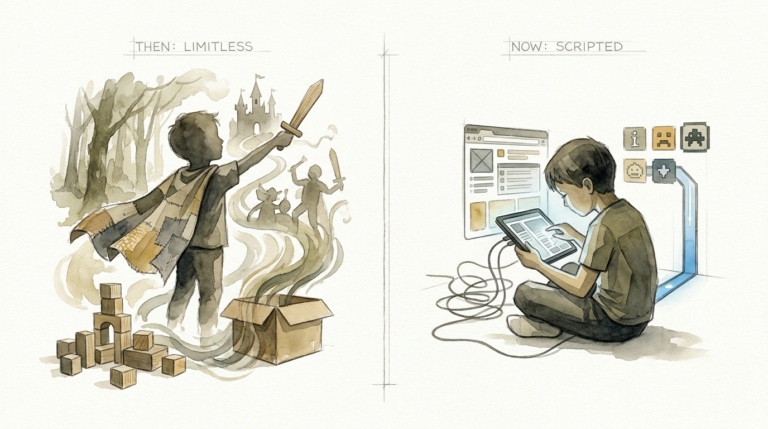
In the modern household, the silence of a child is rarely a sign of peace. It is usually the sign of a screen. We have entered an era where digital devices serve as the default babysitter, the primary teacher, and the only entertainer. But this convenience comes at a biological cost. While tablets offer instant gratification, they bypass the critical developmental milestones that only the physical world can provide.
Transitioning away from constant digital stimulation is not just about “taking away a toy.” It is about recalibrating a child’s nervous system. This guide will walk you through why this shift matters and provide a massive toolkit of free, high-impact activities to replace the “digital zombie” state with active, vibrant discovery.
Free Activities For Ipad Withdrawal
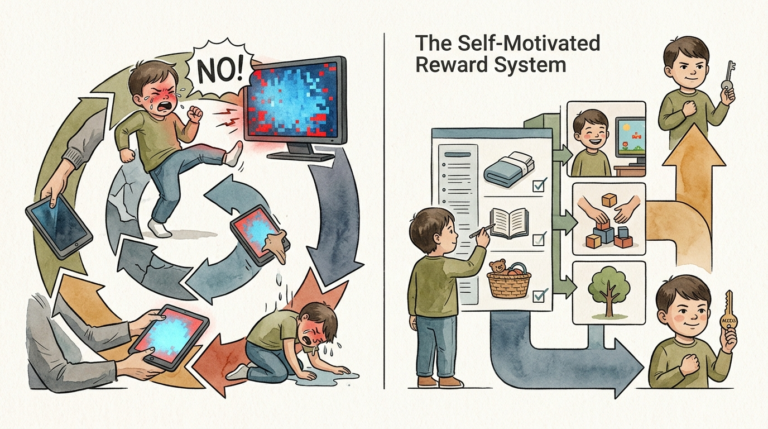
iPad withdrawal is a physiological response to the removal of high-dopamine digital stimulation. When a child plays a fast-paced game or watches short-form videos, their brain is flooded with dopamine—the “feel-good” chemical. When the screen goes black, that dopamine level plummets below its natural baseline, leading to irritability, anxiety, and a total lack of interest in “slower” real-world activities.
To successfully navigate this period, you cannot simply point to a bin of plastic toys and hope for the best. You need activities that provide a high-sensory “hook” to compete with the digital thrill. These activities aren’t just distractions; they are the fundamental building blocks of cognitive and motor development.
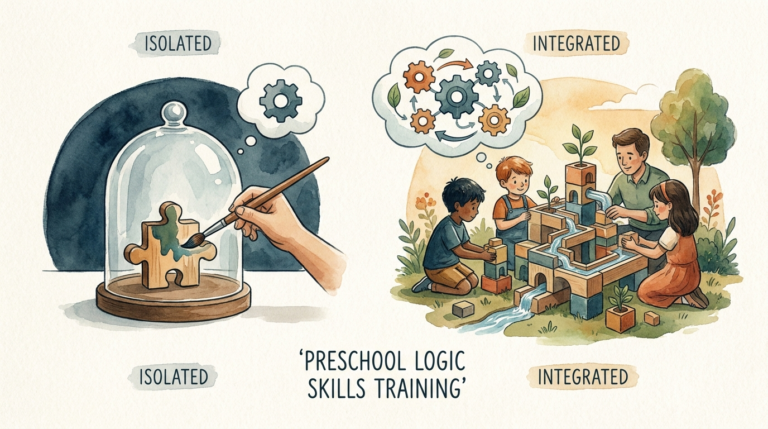
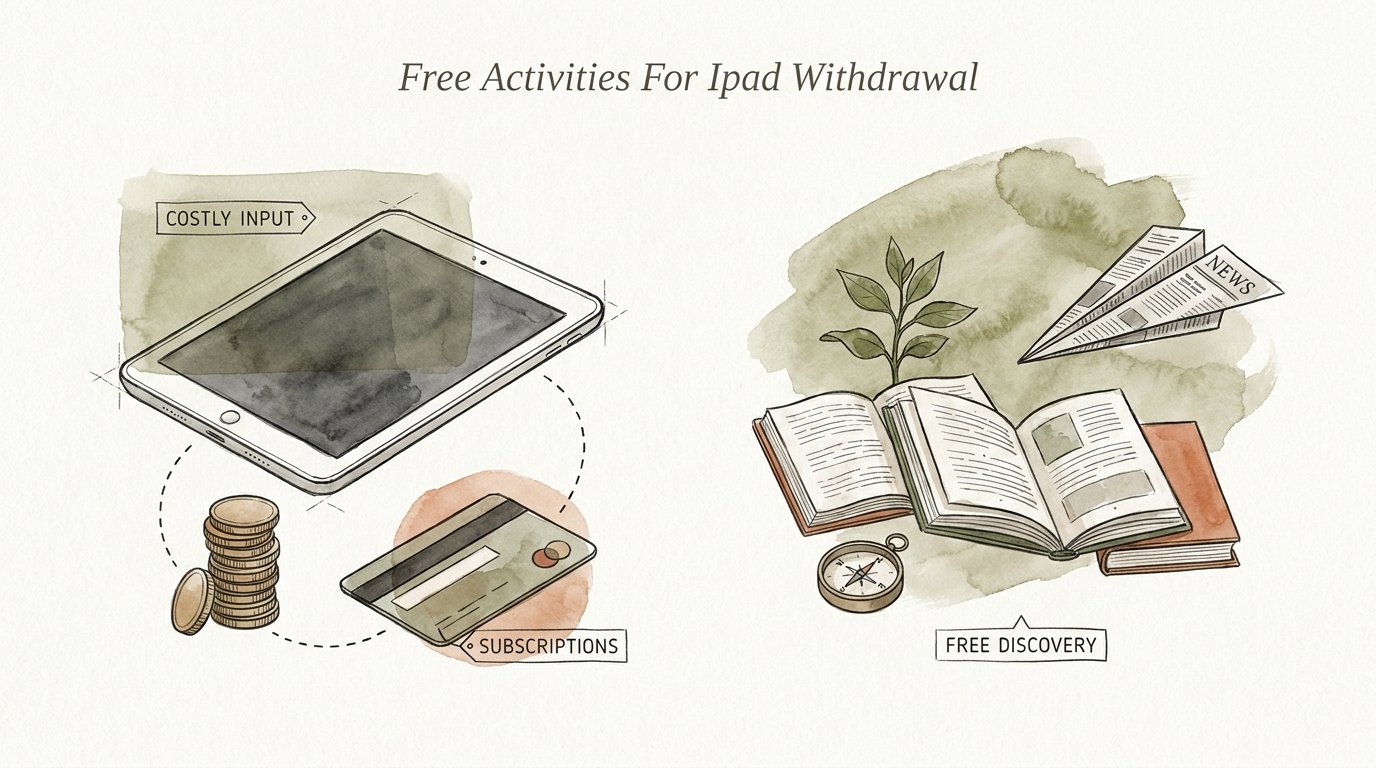
Free activities for iPad withdrawal focus on Free Discovery rather than Costly Input. They utilize everyday household items and the natural world to stimulate the brain’s parietal lobe, which is responsible for processing sensory information. Whether it’s the squelch of mud or the structural challenge of a cardboard fort, these experiences build neural pathways that apps simply cannot reach.
The Science of the Dopamine Reset
Digital withdrawal typically manifests in three stages: the initial meltdown, the period of profound boredom, and finally, the return of imaginative play. Research suggests that the first 24 to 48 hours are the most intense. By providing high-tactile, high-movement activities during this window, you help bridge the gap while their dopamine receptors reset to a healthy level.
How to Implement a Screen-Free Detox
Success in a digital detox requires a strategy that goes beyond “thou shalt not.” It requires creating an environment where the physical world is more interesting than the digital one. Follow these steps to transition your child from screen-dependent to world-engaged.
Step 1: The Tactical Cleanup
Before you announce the change, clear the visual cues. If the tablet is sitting on the charging dock in plain sight, it will trigger an immediate craving. Move all devices to a hidden, high shelf. Replace the “tablet spot” with a “discovery tray”—a simple cookie sheet or bin filled with interesting, low-cost materials like magnets, clothespins, or old keys.
Step 2: Bridge Activities (The High-Energy Phase)
When the screen turns off, energy levels often spike into “chaos mode” or drop into “lethargy mode.” You need a bridge. Use high-intensity physical movement to burn off the restless energy.
- The Floor is Lava: Use couch cushions and pillows to create a path across the room. This develops balance, spatial awareness, and core strength.
- Shadow Tag: If it’s sunny, go outside and play tag by stepping on each other’s shadows. This introduces the concept of light and geometry without a single textbook.
- Balloon Volleyball: Keep a balloon in the air using only your heads or elbows. The slow descent of a balloon is a perfect “visual tracking” exercise for young eyes used to fast-moving pixels.
Step 3: Deep Sensory Integration
Once the initial energy is burned off, move to sensory activities. These are the “heavy hitters” of brain development.
- The Mud Kitchen: Give them a bucket of water, a patch of dirt, and some old kitchen spoons. The science is real: soil contains Mycobacterium vaccae, a natural bacterium that has been shown to boost serotonin levels and improve cognitive function.
- Ice Excavation: Freeze small plastic toys inside a large container of water. Give the child a spray bottle of warm water and a blunt tool to “excavate” the toys. This teaches thermodynamics and builds fine motor control.
The Benefits of Physical Play Over Digital Apps
While many apps claim to be “educational,” they often focus on rote memorization or simple tapping. Real-world play offers a depth of learning that is multi-dimensional.
Multi-Sensory Data Streams
A tablet provides two senses: sight and sound. A bucket of mud provides sight, sound, touch (texture, temperature, viscosity), and smell. When a child’s brain receives information from multiple senses simultaneously, it builds stronger, more resilient neural connections. This is known as sensory integration, and it is the foundation for all future academic learning.
Problem Solving in Three Dimensions
In a digital game, if you can’t solve a puzzle, the app eventually gives you a hint or lets you skip it. In the real world, if your stick fort keeps falling over, you have to engage with gravity and structural integrity. You have to iterate. This builds “grit” and cognitive flexibility—the ability to pivot when an initial plan fails.
Natural Serotonin Boost
Outdoor play regulates the circadian rhythm through exposure to natural light, helping children sleep better. Furthermore, the “green time” found in nature is a powerful buffer against the anxiety and irritability often associated with high screen use.
Common Challenges and Pitfalls
The path to a screen-free lifestyle is rarely smooth. Knowing the obstacles can help you stay the course when the going gets tough.
The “Boredom” Trap
Parents often feel the need to entertain their children the moment they complain of boredom. This is a mistake. Boredom is the silent space where imagination is born. If you fill every second with an activity, the child never learns to self-generate play. When they say “I’m bored,” acknowledge it, but do not fix it. Eventually, their brain will seek out a creative solution.
The Social Pressure
You may feel like the “mean parent” when other kids are playing on their tablets at a restaurant. Carry a “survival kit” in your bag: a small notebook, a few crayons, and a handful of LEGO bricks. These provide an anchor for the child’s focus without requiring a battery.
Parent Burnout
It is easier to give a child a tablet than to clean up a mud-covered kitchen. To avoid burnout, embrace the “Low-Mess Indoor” options. Not every activity needs to be a disaster zone. Use masking tape on the floor to create roads for cars or a hopscotch grid. It’s easy to peel up and provides hours of movement.
Limitations: When This Approach May Not Work
While free, screen-free activities are the ideal, there are practical boundaries to consider.
Weather and Environment
If you live in a high-rise apartment during a blizzard, “go play in the mud” isn’t helpful advice. In these cases, you must lean into indoor “Heavy Work.” Heavy work involves pushing, pulling, or carrying weight, which provides the proprioceptive input (pressure on joints) that helps calm a dysregulated nervous system. Build an “Indoor Gym” using a mattress on the floor for jumping or a laundry basket filled with books for pushing.
Neurodivergence and Specialized Needs
For some neurodivergent children, screens provide a necessary “de-stimulation” period. In these instances, the goal shouldn’t be zero screens, but rather a “sensory diet” that balances digital time with physical input. Consult with an occupational therapist to find the right ratio for your specific child.
Comparison: Digital Apps vs. Physical Discovery
| Feature | Digital “Educational” Apps | Physical Discovery (e.g., Mud/Dirt) |
|---|---|---|
| Sensory Input | 2D Sight & Sound (Low) | 3D Multi-sensory (High) |
| Motor Skills | Fine motor (limited tapping) | Gross & Fine motor (Digging, squeezing) |
| Cost | High (Device + Subscriptions) | Zero (Household/Nature items) |
| Social Interaction | Solitary or Para-social | Cooperative (Negotiating rules) |
| Dopamine Effect | Instant Spike (Addictive) | Slow Release (Sustainable) |
Practical Tips for a Smooth Transition
- The “One-More” Rule: When screen time is ending, don’t just grab the device. Give a “two-minute” warning, then a “one-more” warning (one more level, one more video). This helps the child’s brain prepare for the dopamine drop.
- The Toy Rotation: If you have too many toys out, a child will get overwhelmed and choose nothing. Put 75% of the toys in a bin in the garage. Every Sunday, swap five toys. It feels like Christmas every week, and the “newness” keeps them engaged longer.
- Use Visual Timers: Young children don’t understand the concept of “15 minutes.” A visual timer—where a red disc slowly disappears—makes time concrete and reduces transitions-related anxiety.
- Audit Your Own Usage: Children are world-class mimics. If you are constantly on your phone, they will view the digital world as the most important place to be. Try “Phone Parking”—designate a basket where all adult phones go from 5 PM to 7 PM.
Advanced Strategies: Engineering Complexity into Play
For older children or those who have been screen-free for a while, you can introduce “engineering challenges” that mirror the complexity of a video game.
Cardboard Engineering
A refrigerator box is the ultimate open-ended toy. Challenge your child to build a “machine” that does something specific. Maybe it’s a “Cat Feeding Station” or a “Secret Mail System.” This requires measurement, structural planning, and artistic design. It moves them from being consumers of technology to creators of systems.
Kitchen Chemistry
Baking soda and vinegar is just the beginning. Use red cabbage juice as a pH indicator to test different household liquids (lemon juice, soap, milk). This provides the “visual payoff” of a video game—color changes, fizzing, bubbling—but requires patience and observation.
Stop-Motion Animation (The “Transition” Tech)
If you want to reintroduce tech in a healthy way, try stop-motion animation. Instead of watching a 10-minute cartoon, the child spends two hours moving clay figures and taking photos to create 30 seconds of footage. This transforms the screen into a tool for labor-intensive creation rather than passive consumption.
Examples of Success: Real-World Scenarios
Scenario A: The Restaurant Meltdown
Instead of reaching for the iPad when the food is late, give the child a handful of sugar packets and straws. Challenge them to build the tallest tower possible. The fragility of the sugar packets requires intense focus and fine motor control. By the time the food arrives, they have practiced patience and engineering.
Scenario B: The “I’m Bored” Afternoon
Your child is wandering the house, complaining. You point to the recycling bin. You challenge them to build a “Marble Run” using only cardboard tubes and masking tape on the wall. This engages their spatial reasoning and problem-solving. An hour later, they aren’t thinking about the iPad; they are trying to figure out how to make the marble loop the loop.
Final Thoughts
Reclaiming your child’s attention from a digital interface is one of the most significant gifts you can give their developing brain. It isn’t about being “anti-technology”; it’s about being “pro-human.” By providing the space for mud, mess, and boredom, you are allowing their neural pathways to wire themselves for deep focus and creative resilience.
Remember that the goal is not perfection, but progress. Some days will be harder than others, and the siren call of the screen will always be there. But every time your child chooses a stick over a stylus, or a cardboard box over a YouTube video, their world gets a little bigger, and their brain gets a little stronger.
Start small. This weekend, leave the devices at home, head to the nearest patch of dirt, and let the real-world education begin. You might find that once the screen goes dark, the light in your child’s eyes finally turns back on.
Sources
1 daar.com.au | 2 ourtinythinks.com | 3 busytoddler.com | 4 chesona.com | 5 fantastikurios.com | 6 parentclub.scot | 7 biglittlefeelings.com | 8 youtube.com | 9 kidsusamontessori.org | 10 bipspatiala.net | 11 kidsrkids.com | 12 greenschoolsgreenfuture.org