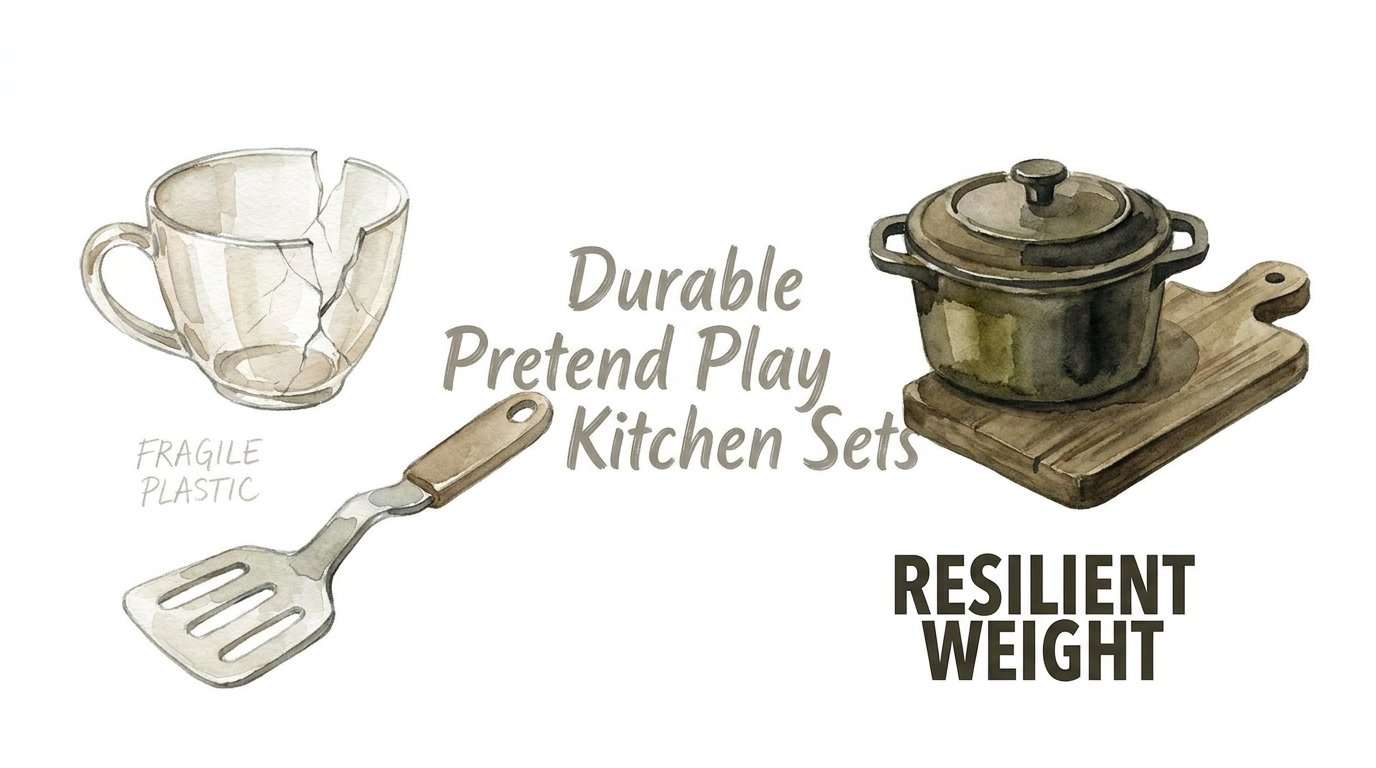
Durable Pretend Play Kitchen Sets
If the toy doesn’t command respect, the child won’t give it any. We give children ‘fake’ versions of the world and wonder why they treat them like trash. When a play cup has no weight, it has no consequence. Introducing small-scale, resilient materials like steel, ceramic, or heavy wood into dramatic play activates the child’s ‘care system.’ Watch how their focus shifts when the props feel like the real world.
Most playrooms are filled with hollow plastic that shatters under the weight of a toddler’s curiosity. These flimsy imitations teach kids that their environment is disposable. Real-world skills require real-world resistance. Choosing a kitchen set isn’t just about decor; it’s about providing a sturdy foundation for cognitive and emotional growth.
Parents often ask why their child loses interest in toys after ten minutes. The answer is usually lack of engagement. A lightweight plastic kitchen doesn’t provide the tactile feedback a developing brain craves. When a child grips a solid wooden spoon or feels the cool surface of a stainless steel pot, they are learning about physics, weight, and consequence.
Durable Pretend Play Kitchen Sets
Durable pretend play kitchen sets are miniature replicas of culinary environments built to withstand years of heavy use. These aren’t your typical grocery store aisle impulse buys. These sets are engineered from materials like solid maple, sustainable rubberwood, and reinforced plywood. They exist to provide a realistic, safe space where children can mimic the complex actions they see adults perform every day.
You will find these high-quality sets in Montessori classrooms, high-end preschools, and homes where longevity is valued over low cost. In the real world, a kitchen is the heart of the home. It is a place of work, creativity, and service. A durable play version respects this reality. It provides functional doors with heavy-duty hinges, knobs that click with mechanical precision, and surfaces that can handle the occasional “spill” of real water or playdough.
Think of these sets as the bridge between “baby toys” and functional life skills. A child who learns to “cook” on a sturdy, reliable surface is more likely to transition smoothly to helping in a real kitchen. These sets are built for the long haul. They are often passed down through generations, becoming family heirlooms rather than landfill contributions.
How to Choose and Set Up Your Kitchen
Creating a high-quality play environment requires more than just unboxing a kit. You need a strategy that prioritizes stability and realism. Follow these steps to ensure your setup commands the attention it deserves.
Select Your Base Material
Start with solid wood if your budget allows. Solid maple or birch provides the best weight-to-size ratio. This prevents the kitchen from sliding across the floor when a child pulls open a “stuck” oven door. If you choose engineered wood, ensure it is high-density and finished with non-toxic, water-based sealants.
Secure the Structure
Safety is the first step of durability. Always anchor the kitchen to a wall stud. Children frequently lean on the open doors of toy ovens or try to climb the counter to reach a high “microwave.” A durable set is useless if it tips over. Use heavy-duty brackets that keep the unit flush against the wall.
Upgrade the Hardware
Many mid-range wooden kitchens come with plastic handles. Swapping these for real brass, steel, or matte black pulls from a hardware store instantly changes the sensory experience. The cold touch of metal communicates to the child that this is a “real” space. This simple hack also makes the set more aesthetically pleasing for common living areas.
Organize for Autonomy
Place the kitchen in a location where the child can access it without adult intervention. Use small baskets made of wicker or seagrass to categorize “ingredients.” Avoid deep bins where toys go to die. Visibility is key to engagement. If a child can see the “stainless steel” whisk hanging from a peg, they are more likely to use it.
The Measurable Benefits of High-Quality Play
Investing in a resilient play environment yields significant developmental returns. These benefits aren’t just theoretical; they are observable in how a child interacts with their surroundings.
Activation of the Care System
Weighted materials naturally slow a child down. When a child carries a ceramic plate (under supervision) or a heavy wooden crate of play fruit, their proprioceptive system engages. They become aware of their own strength and the fragility of the object. This “care system” activation reduces impulsive, destructive behavior.
Advanced Fine Motor Development
Standard plastic knobs often spin aimlessly. Durable sets feature knobs with resistance and a satisfying “click.” This requires more finger strength and precision to operate. Slicing “velcro” wooden vegetables or using a metal tong to move “pasta” develops the manual dexterity needed for writing and drawing later in life.
Social-Emotional Intelligence
Kitchen play is inherently collaborative. Children must negotiate who is the “chef” and who is the “customer.” A sturdy kitchen can accommodate multiple children at once without wobbling or collapsing. This stability allows for longer play sessions where complex social scripts—like running a restaurant or hosting a dinner party—can unfold.
Language Acquisition
The kitchen is a vocabulary goldmine. High-quality sets encourage “narration play.” As children stir, pour, and bake, they use specific verbs and nouns. You will hear them say “simmer,” “whisk,” “preheat,” and “recipe.” This contextual learning is far more effective than flashcards for building a robust vocabulary.
Common Pitfalls to Avoid
Even with the best intentions, it is easy to make mistakes that undermine the value of a play kitchen. Be aware of these frequent errors.
Choosing “Bells and Whistles” Over Quality
Many parents are lured by plastic kitchens that make electronic sizzling sounds or have flashing lights. These features often discourage imaginative play. If the toy does the “work” of imagining the sound, the child’s brain remains passive. A durable wooden set doesn’t need batteries; it needs a child’s imagination to provide the “sizzle.”
Overcrowding the Countertop
A common mistake is buying every accessory kit available and dumping them on the play kitchen. Clutter creates “sensory overwhelm.” When a child sees a mountain of plastic food, they tend to throw it rather than play with it. Limit the items to a few high-quality pieces and rotate the rest.
Ignoring the Height Factor
Children grow fast. A kitchen that is perfect for a two-year-old may be frustrating for a four-year-old. Look for sets with adjustable legs or “risers.” If the child has to hunch over to reach the sink, they will spend less time playing. Ergonomics matter in pretend play just as much as in real life.
Limitations and Constraints
While durable wooden sets are superior in many ways, they are not without their drawbacks. Understanding these helps you make a balanced decision.
Moisture Sensitivity
Wood is an organic material. If your child uses real water in the “sink,” the wood can warp or mold if not dried immediately. Plastic sets are superior for “wet” play or outdoor “mud kitchens.” If you want a durable indoor wooden set, you must establish a strict “no standing water” rule.
The Weight Trade-off
Durable sets are heavy. This makes them stable, but it also makes them difficult to move. If you live in a small apartment and need to tuck the kitchen away frequently, a solid maple unit may be impractical. You will need to commit to a permanent “zone” for the kitchen to live.
Initial Investment Cost
High-quality materials come at a premium price. A top-tier wooden kitchen can cost three to four times more than a basic plastic model. While the resale value is higher and the lifespan is longer, the upfront cost can be a barrier for many families.
Comparison of Play Kitchen Materials
| Feature | Lightweight Plastic | Solid Wood / Plywood | Commercial Grade / Metal |
|---|---|---|---|
| Durability | Low (Cracks easily) | High (Lasts generations) | Extreme (Indestructible) |
| Resale Value | 10-20% of retail | 50-70% of retail | High (Niche market) |
| Sensory Feedback | Minimal (Hollow) | Excellent (Weighted) | Very High (Real texture) |
| Assembly Time | Short (Snap together) | Long (Hardware/Screws) | Moderate |
Practical Best Practices for Longevity
Maintaining a durable play kitchen ensures it stays in peak condition for the next child in line. Follow these maintenance tips to protect your investment.
- Tighten Hardware Regularly: Constant opening and closing of doors can loosen screws. Check the hinges every six months to prevent the doors from sagging or falling off.
- Use Felt Pads: If your wooden kitchen sits on hardwood floors, apply felt pads to the “feet.” This prevents the kitchen from scratching your floors and makes it easier to nudge slightly during cleaning.
- Avoid Harsh Chemicals: Clean wooden surfaces with a damp cloth and mild soap. Avoid abrasive cleaners that can strip the non-toxic finish or dull the paint.
- Rotate the Menu: Keep the play fresh by changing the “ingredients.” In the fall, introduce wooden pumpkins and “cinnamon sticks” (twigs). In the summer, switch to “fruit salad” kits. This keeps the child returning to the kitchen year-round.
Advanced Considerations for Serious Practitioners
For those who want to take pretend play to the next level, consider “functional” integration. This is a hallmark of the Montessori method where the play kitchen becomes a semi-functional workspace.
The Functional Sink
Some high-end sets allow for a real, circulating water pump. This transforms the “pretend” sink into a place where the child can actually wash their hands or rinse off a real apple. While this requires more supervision and maintenance, the developmental impact is profound. It moves the child from “pretend” to “practical life.”
Real Tool Integration
Ditch the plastic spatulas. Buy real, small-scale kitchen tools from a restaurant supply store. A small metal whisk, a tiny wooden rolling pin, and a real stainless steel mixing bowl feel better in the hand and function better during play. These tools are often cheaper than “toy” versions and much more durable.
Lighting and Ambiance
Add battery-operated “puck lights” under the microwave or upper cabinets. This creates a cozy, inviting atmosphere that draws the child in during the darker winter months. Lighting helps define the space as a “real” room within the playroom.
Examples of High-Level Play Scenarios
How does a durable kitchen actually change the way a child plays? Let’s look at a realistic scenario.
The “Slow Pour” Challenge: A child is using a heavy wooden pitcher and small ceramic cups (the resilient materials we discussed). Because the pitcher has weight, the child must use both hands to stabilize it. They focus intently on the rim of the cup. Because they know the ceramic might break if dropped, their movements become deliberate and graceful. This is the “care system” in action.
The “Restaurant Rush”: Two children are playing. One is the chef, the other the server. They are using a KidKraft or IKEA set that has been anchored to the wall. They are slamming the oven door and “stirring” with force. Because the set is durable and stable, it doesn’t wobble or slide. The children feel safe to be “intense” in their play. They are learning about teamwork and the flow of a busy environment without the frustration of the toy failing them.
Final Thoughts
Selecting a durable pretend play kitchen set is a commitment to the quality of your child’s developmental environment. When you provide materials that command respect—weighty wood, cool steel, and stable construction—you are telling your child that their work is valuable. You are giving them a safe harbor to explore the complexities of the adult world.
A flimsy toy is quickly forgotten, but a sturdy, realistic kitchen becomes a staple of childhood memory. It supports the growth of fine motor skills, social intelligence, and a lifelong sense of autonomy. It is one of the few investments in the playroom that truly pays for itself in years of focused, high-level play.
Don’t be afraid to start small. You don’t need the largest set on the market. Focus on the quality of the materials and the stability of the setup. Watch your child’s “care system” activate as they realize they are finally working with something that feels real. The shift in their focus will be all the proof you need.
Sources
1 mother.ly | 2 tinylandus.com | 3 toycycle.co | 4 mentari.toys | 5 robud.co.uk | 6 foodnetwork.com | 7 youtube.com | 8 yummytoddlerfood.com | 9 littlepeoplescove.com | 10 goodnightfox.com | 11 penniesforafortune.com | 12 freshmommyblog.com | 13 themontessoriroom.com | 14 tptoys.com | 15 kitchencabinetkings.com | 16 jk-cabinetry.com | 17 woodandhearts.com