screen time checklist kids
Does technology rule your home, or do you rule your technology? Unregulated screen access creates a chaotic home environment. A simple checklist restores order, reduces tantrums, and brings the focus back to the family.
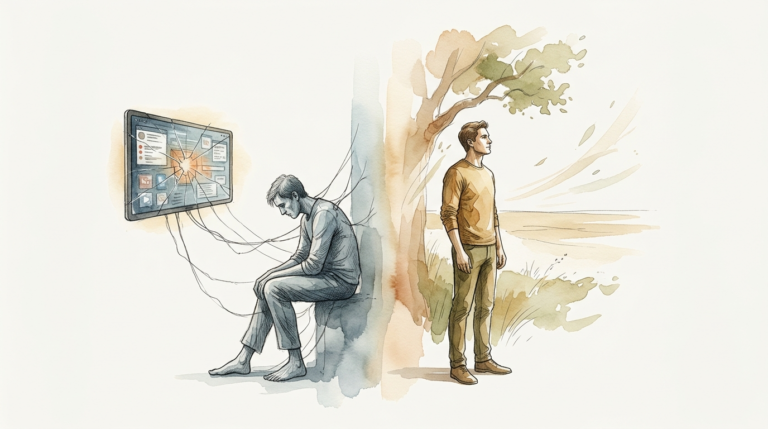
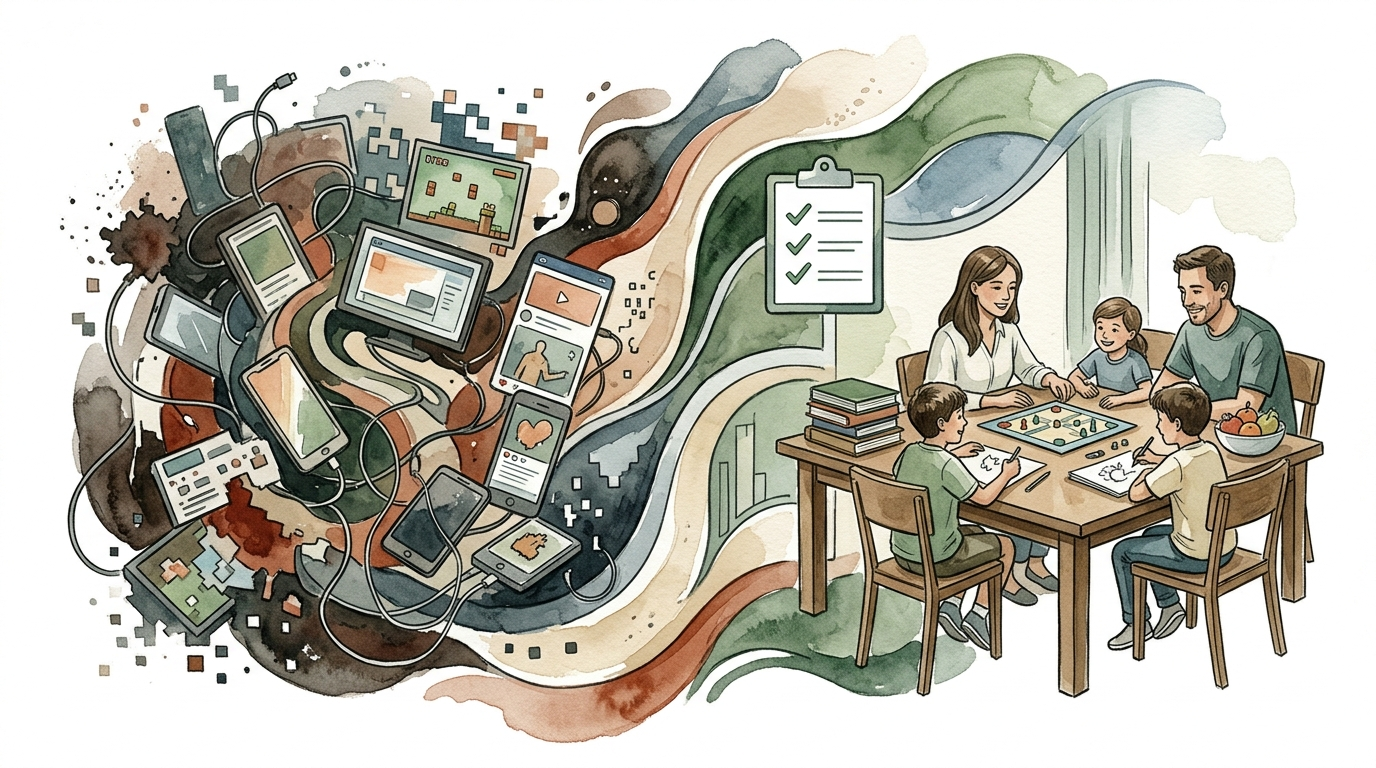
Every parent knows the feeling. You look up, and your living room is silent. Not the peaceful kind of silence, but the eerie, blue-light-glow kind of silence. Everyone is plugged in, tuned out, and drifting into their own digital islands.
Digital chaos doesn’t just happen. It creeps in one “five more minutes” at a time. Before you know it, screens have shifted from helpful tools to the center of your family’s universe. This shift creates friction, anxiety, and a constant low-level hum of conflict.
A screen time checklist is your bridge back to family order. It isn’t about being the “phone police.” It is about teaching your children that technology is a privilege earned through responsibility, not an entitlement guaranteed by birthright.
screen time checklist kids
A screen time checklist is a simple, visual agreement that outlines exactly what a child must accomplish before they get to engage with digital devices. It serves as a “First, Then” system. First, we take care of our minds, bodies, and homes; then, we enjoy our digital entertainment.
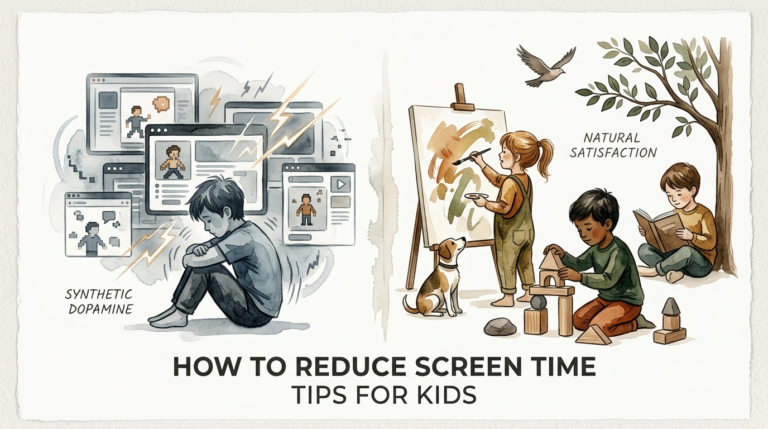
In a world where apps are designed by neuroscientists to keep kids hooked, a checklist acts as a manual override for the dopamine loop. It forces a pause. It reminds a child that their value and their day aren’t defined by a streak on an app or a level in a game.
Think of it as a digital nutrition label. Just as you wouldn’t let a child eat dessert for every meal, you shouldn’t let them consume “junk” content without a balanced diet of real-world activity. The checklist ensures they “eat their vegetables”—homework, chores, and exercise—before the digital “cake.”
How It Works: Building Your Family’s Protocol
The magic of a screen time checklist isn’t in the list itself, but in the consistency of the system. You are building a new family culture. This requires three distinct phases: preparation, execution, and review.
Step 1: Define the Non-Negotiables
Start by listing the activities that must happen every single day for a child to be healthy and successful. These usually fall into four buckets: physical, educational, social, and household. If the bed isn’t made and the dog isn’t fed, the iPad stays in the charging station. Period.
Step 2: Set the “Sun-Down” Rule
Research consistently shows that blue light from screens suppresses melatonin, the hormone that tells the brain it’s time to sleep. Your checklist should include a “Tech-Free Hour” before bed. This isn’t just a suggestion; it is a biological necessity for a growing brain.
Step 3: Categorize Content
Not all screen time is created equal. Watching a documentary on space is different from scrolling through 30-second viral clips. Your checklist can reward high-quality, educational content with more time while limiting “passive” scrolling to a shorter window.
Benefits of a Structured Approach
Moving from a “whenever I feel like it” model to a checklist system provides immediate, measurable benefits for both parents and children. It settles the nervous system and creates a predictable rhythm to the day.
Reduced Decision Fatigue: When the rules are on the wall, you don’t have to decide if they can have the tablet. The list decides. If the boxes aren’t checked, the answer is “not yet.” This removes you from the role of the “bad guy.”
Improved Emotional Regulation: Transitions are the hardest part of screen time. A checklist helps kids anticipate when screens will start and stop. This reduces the “digital hangover”—that irritability and anger that often follows a long gaming session.
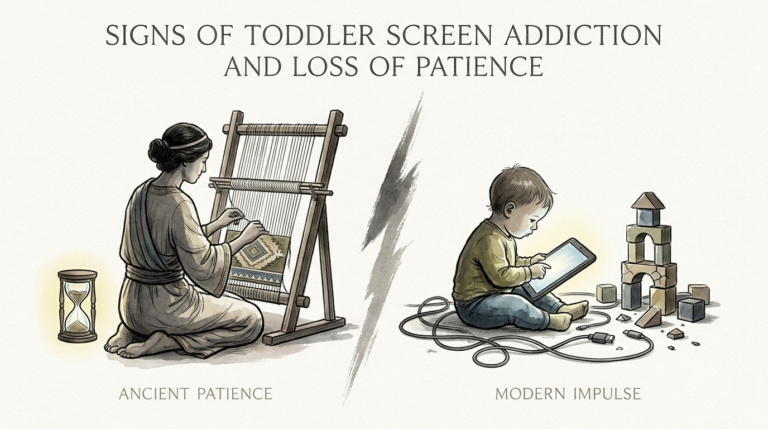
Development of Self-Regulation: The goal isn’t to control your kids forever. It is to teach them to control themselves. By following a checklist, they learn the vital life skill of delayed gratification. They learn that work comes before play.
Challenges and Common Pitfalls
Even the best systems face resistance. Technology has become the #1 source of family conflict in many modern homes, edging out chores and homework. You will hit roadblocks, and that’s okay.
The “Check-the-Box” Mentality: Some kids will rush through their chores with zero quality just to get to the screen. You must emphasize that a task isn’t “done” until it meets a certain standard. A poorly made bed doesn’t count toward Minecraft time.
Parental Inconsistency: This is the biggest killer of any checklist. If you let them skip the list because you’re tired or busy, the system collapses. Children are expert negotiators; if they see a crack in the foundation, they will exploit it.
Forgetting to Model the Behavior: You cannot expect your child to follow a checklist while you sit next to them scrolling through social media. You are their primary digital role model. If you want them off their phones, you have to be off yours too.
Limitations and Realistic Boundaries
No system is perfect, and there are times when a rigid checklist might not be the best approach. Context matters. Digital media is now an integrated part of school, social connection, and even creative expression.
Travel and Special Events: During a 10-hour flight or a long car ride, the checklist might need to go out the window. It is okay to have “exception days.” The key is making sure those exceptions don’t become the new rule.
Sick Days: When a child is home with a fever, sometimes a movie marathon is the only thing that helps. Give yourself—and them—grace in these moments. The checklist is a tool for the “ordinary,” not a cage for the “extraordinary.”
Age Appropriateness: A checklist for a five-year-old looks very different from one for a fifteen-year-old. As kids get older, the checklist should evolve into a “Family Media Contract” that focuses more on safety and privacy than on making the bed.
Comparing Approaches to Digital Management
How does a checklist stack up against other common parenting strategies? Understanding the landscape helps you choose the right path for your specific home environment.
| Strategy | Pros | Cons | Complexity |
|---|---|---|---|
| Total Ban | Zero digital risks. | Stunts digital literacy; causes social isolation. | Low (initially) |
| Unregulated Access | Zero conflict (initially). | High risk of addiction, sleep loss, and poor grades. | Low |
| The Checklist | Teaches balance and responsibility. | Requires consistent parent involvement. | Moderate |
| App-Based Limits | Automated shut-offs. | Kids often find “workarounds” or hacks. | High (technical) |
Practical Tips for Immediate Success
Ready to start? Don’t just print a list and hand it over. You need to launch this system with intention. Here is how to apply this to your family today.
- Print and Laminate: A physical, tangible list is more powerful than a digital one. Put it on the fridge. Use a dry-erase marker so they can physically “check” the boxes.
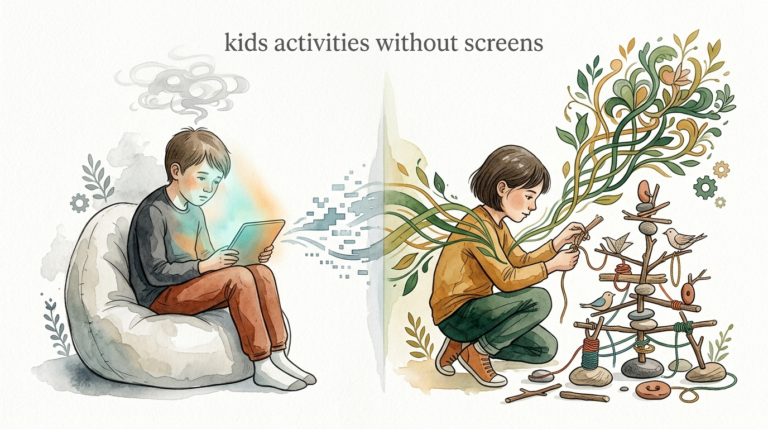
- Focus on “Green Time”: For every hour of screen time, require 30 minutes of “green time” (outdoor play). This counteracts the sedentary nature of digital use.
- Use a Central Charging Station: All devices should live in a common area at night. No screens in bedrooms. This single rule can improve your child’s sleep quality by 40% almost overnight.
- Scheduled “Boredom”: Do not fill every gap with a task. Leave white space on the list. Boredom is the fertile soil where creativity and imagination grow.
Advanced Considerations for the Digital Age
For parents of older children or “tech-heavy” households, you need to look beyond the surface. It isn’t just about the *time* spent on the screen, but the *impact* of the content on their developing brain.
The Dopamine Loop: Short-form video platforms (TikTok, Reels, Shorts) are designed to provide rapid-fire dopamine hits. This can shorten a child’s attention span for longer, more meaningful tasks like reading. Consider a separate “Short-Form” limit on your checklist.
Digital Citizenship: As your kids grow, the checklist should include “Check-ins.” Ask them: Who did you talk to today? Did you see anything that made you feel uncomfortable? These conversations are more important than the time limit itself.
Co-Viewing and Co-Playing: The American Academy of Pediatrics recommends co-viewing as a way to enhance learning. Instead of screens being a solo “zone-out” activity, make them a shared family experience. Play the game with them. Watch the show together.
Example Scenarios: The System in Action
Let’s look at how this plays out on a typical Saturday morning. The “old way” involved the kids waking up at 6:00 AM and disappearing into their iPads until noon, resulting in “brain fog” and a massive tantrum when it was time to leave for soccer.
The “Checklist Way”: The kids know the iPad doesn’t come out until the “Morning Routine” is checked off.
1. Bed made.
2. Dressed.
3. Breakfast eaten (without screens).
4. 20 minutes of reading.
5. 20 minutes of active play.
Only then is the device unlocked.
The result? By 9:00 AM, the kids have already achieved five wins. They are alert, they’ve used their bodies, and their brains are primed for learning. When they finally get their 60 minutes of screen time, they enjoy it more because they earned it. When the timer goes off, the transition is smoother because the “First, Then” contract was respected.
Final Thoughts
A screen time checklist is more than a piece of paper; it is a declaration of your family’s values. It says that we value health over hashtags, reading over reels, and connection over consoles. It is a tool that empowers your children to live a balanced life in an imbalanced world.
Don’t strive for perfection from day one. There will be days when the list is ignored and the chaos returns. That is part of the process. The goal is to consistently return to the center—to that place where technology serves the family, rather than the family serving the technology.
Start small. Pick three things your kids must do every day before screens. Watch how it changes the energy in your home. You aren’t just limiting their digital access; you are opening the door to a world of real-life possibilities. Restore the order. Reclaim your home. Start the checklist today.
Sources
1 rainbowsunited.org | 2 studyfinds.com | 3 choc.org | 4 lindnercenterofhope.org | 5 substack.com | 6 aap.org | 7 aacap.org | 8 harvard.edu | 9 aap.org | 10 cacfp.org | 11 nyp.org | 12 theottoolbox.com