smartphone rules kids
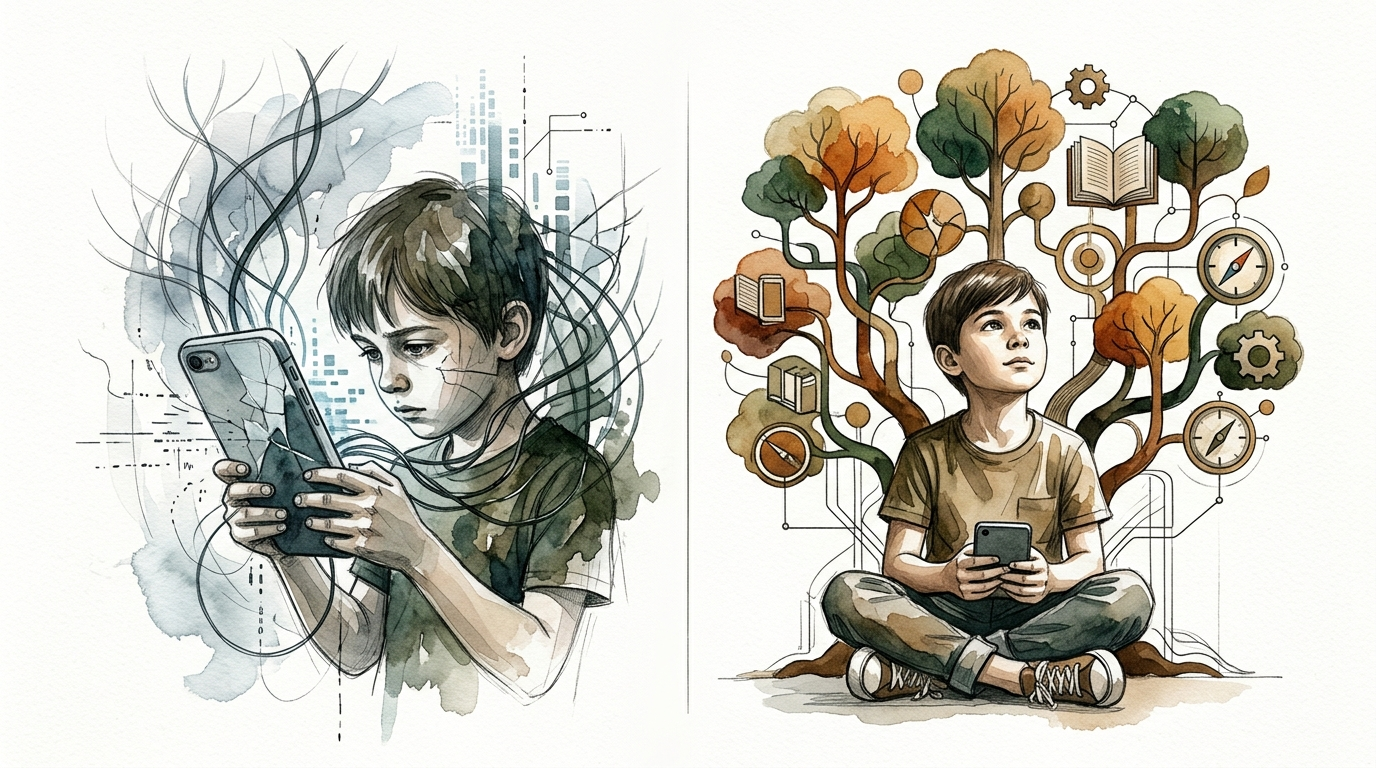
Unregulated tech makes minds fragile; boundaries build resilience. The digital world is designed to fragment attention. These smartphone rules aren’t just about ‘less time’—they’re about building a mind that can handle the modern world.
Handing a child a smartphone today is a high-stakes decision that shapes their neurological and emotional development. Modern research highlights a clear connection between early, unguided access to mobile devices and increased risks of depression, obesity, and chronic sleep deprivation. Creating a structured environment for technology use ensures that children develop a resilient mind rather than a fragile focus.
smartphone rules kids
Smartphone rules for kids are a set of agreed-upon boundaries, technical restrictions, and behavioral expectations that govern how a minor interacts with a mobile device. These rules serve as a developmental scaffolding, helping young people navigate a digital ecosystem designed to maximize engagement and harvest attention.
Experts suggest that the digital world has become a complex ecosystem where children learn, play, and connect. However, many platforms use “engagement-based designs”—such as autoplay and endless scrolling—that are not built with a child’s well-being in mind. Implementing specific rules helps mitigate these risks by providing a safe transition into digital independence.
In real-world terms, these rules function like training wheels on a bicycle. They allow children to gain the benefits of connectivity—such as staying in touch with parents or using educational tools—while protecting them from the most harmful aspects of the internet. Effective smartphone rules for kids generally focus on three pillars: time (when and how long), place (where it is allowed), and content (what apps and websites are accessible).
How to Implement a Multi-Stage Digital Framework
Establishing effective smartphone rules requires a phased approach that matches the child’s maturity and cognitive development. A “one-size-fits-all” ban often fails, whereas a mentorship model encourages responsible use.
Phase 1: The Pre-Smartphone Stage (Ages 6-10)
During these years, children should ideally have zero unsupervised access to a personal smartphone. If communication is necessary, parents often choose “dumb phones,” smartwatches with limited contact lists, or shared family tablets. This phase focuses on building a foundation of digital literacy without the addictive pulls of social media.
Phase 2: The Managed Entry (Ages 11-13)
Recent studies from the American Academy of Pediatrics suggest that age 13 may be a safer threshold for receiving a first smartphone compared to age 12 or younger. When a device is introduced, it should be heavily restricted using tools like Apple’s Screen Time or Google Family Link. Parents should approve every app download and set strict daily time limits.
Phase 3: The Mentored Independence (Ages 14-18)
As teenagers demonstrate responsibility, parents can slowly loosen technical restrictions. The focus shifts from “blocking” to “mentoring.” This stage involves regular conversations about the impact of algorithms, the reality of digital footprints, and the importance of self-regulation.
Technical Setup Guide
Utilizing the built-in safety tools of modern devices is the first step in enforcement. Apple’s 2025 updates and Google’s Family Link Plus offer intuitive dashboards for parents. These systems allow for:
- Downtime Schedules: Automatically locking the device during school hours or late at night.
- App Categories: Setting specific limits for social media while allowing unlimited time for educational apps or music.
- Location Sharing: Providing parents with real-time updates for safety during transit.
- Communication Safety: Filtering sensitive content in messaging apps to protect against inappropriate imagery.
The Practical Benefits of Digital Boundaries
The most immediate benefit of structured smartphone rules is the protection of physical health. Research published in 2025 indicates that children who own smartphones at age 12 or younger face a 1.6 times higher risk of insufficient sleep and a 1.4 times higher risk of obesity. Rules that mandate a “charging station” outside the bedroom overnight can single-handedly solve many sleep-related issues.
Cognitive resilience is another major advantage. The prefrontal cortex, responsible for impulse control and decision-making, does not fully develop until the mid-20s. Setting external boundaries allows the child’s brain to develop these skills without being overwhelmed by the dopamine-driven feedback loops of social media and gaming.
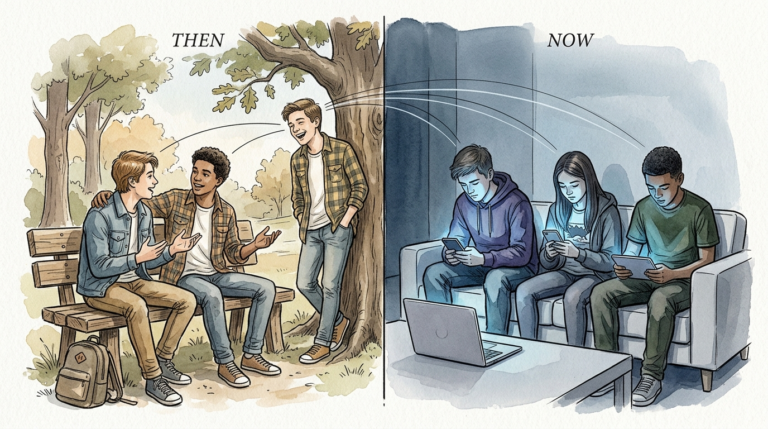
Socially, rules that ban phones at the dinner table or during family activities prevent “technoference.” This term refers to the interruptions in interpersonal interactions caused by mobile devices. Minimizing technoference helps children develop essential non-verbal communication skills, such as reading facial expressions and maintaining eye contact.
Challenges and Common Pitfalls to Avoid
Consistency is the greatest challenge in maintaining smartphone rules. When parents fail to enforce a rule once, it often signals to the child that the boundary is negotiable. This leads to “digital friction”—frequent arguments and power struggles over screen time.
Relying solely on technical blocks is another frequent error. While parental controls are powerful, children are often tech-savvy enough to find workarounds, such as using “incognito” modes or hidden browser apps. Parents must pair technical tools with open communication and “digital trust” to be truly effective.
The “Hypocrisy Trap” occurs when parents set strict rules for their children but remain glued to their own devices. Children mirror the behaviors they see. If a parent constantly checks emails at the dinner table, the child will view smartphone rules as a form of unfair punishment rather than a health-focused boundary.
Limitations and Realistic Constraints
Sometimes, rigid smartphone rules may not be ideal for every situation. In many modern school systems, students are expected to use apps for homework, scheduling, or extracurricular communication. A blanket ban on certain apps might isolate a student from necessary school information or peer group projects.
Emergency situations also present a limitation. If a child is traveling home late from sports practice, a strict “no phone after 6 PM” rule could become a safety hazard. Flexibility is required to ensure that the rules serve the child’s well-being rather than becoming an arbitrary hindrance.
Social isolation is a legitimate concern for teenagers. In an era where the digital world has replaced the local library and the mall as the primary social square, being completely offline can lead to feelings of loneliness. Rules should aim for “digital balance” rather than “digital abstinence.”
Comparing Different Parenting Approaches
Different philosophies exist regarding how to handle technology. The following table highlights the differences between the three most common approaches.
| Approach | Primary Focus | Pros | Cons |
|---|---|---|---|
| Restrictive (Blocking) | Total control of content and time. | Maximum safety from online threats. | May lead to “digital rebellion” or sneaking. |
| Permissive (Laissez-faire) | Child learns through experience. | Low daily conflict over devices. | High risk of addiction and mental health issues. |
| Authoritative (Mentored) | Collaboration and gradual independence. | Builds long-term digital resilience. | Requires high parental time and energy. |
Practical Tips for Success
Creating a written Family Media Contract is one of the most effective ways to establish clarity. This document should outline the consequences for breaking rules and the rewards for responsible use.
- Establish Phone-Free Zones: Designate the dining table, bathrooms, and bedrooms as permanent no-phone areas.
- The “One Hour Before Bed” Rule: Mandate that all screens be turned off at least 60 minutes before sleep to allow the brain to produce melatonin naturally.
- Use “Bonus” Screen Time: Offer extra digital minutes as an incentive for completing chores or physical activities.
- Review Privacy Settings Together: Turn this into an educational moment by showing your child how to disable location tracking or manage social media privacy.
Advanced Considerations: The Science of Attention
Serious practitioners of digital parenting should understand the “Dopamine Loop.” Smartphones are designed to deliver small, frequent hits of dopamine through notifications and likes. Because a child’s brain is still developing, these hits can create a physical dependency similar to chemical addiction.
Algorithms are specifically programmed to show users content that triggers strong emotional reactions. For children, this often results in a “rabbit hole” effect, leading them toward increasingly polarized or inappropriate content. Teaching children to recognize these “nudges” as positive reminders or manipulative tactics is a high-level skill that builds deep mental resilience.
Technological literacy also involves understanding data privacy. In 2024 and 2025, many governments introduced stricter regulations on how companies collect data from minors. Parents should explain to older teens that their “digital footprint”—every post, comment, and search—is a permanent record that could impact future college admissions or job prospects.
Example Scenario: Handling the First Social Media Request
Imagine a 12-year-old child asks for an Instagram account because “everyone in class has one.” A resilient approach doesn’t start with a “no,” but with a conversation about readiness.
The parent might use the family checklist: “Can you manage your homework without being reminded? Do you stick to your current screen time limits? Can you tell me what you would do if someone sent you a mean message?” If the child can answer these and demonstrate responsibility, the parent might allow the account with a “shared password” policy and a 30-minute daily limit. This turns a potentially explosive conflict into a lesson in earned independence.
Another scenario involves the “Middle School Transition.” Many parents feel pressured to get a smartphone for a child entering 6th grade for safety. A practical alternative is a “basic phone” or “GPS watch” that allows for calls and texts but lacks an internet browser or social media. This satisfies the safety requirement while delaying the neurological risks of a full smartphone.
Final Thoughts
Building a healthy relationship with technology is a marathon, not a sprint. The goal of smartphone rules for kids is to eventually render those rules unnecessary. By the time a child leaves home, they should have the internal discipline and digital literacy to manage their own attention in a world designed to steal it.
Setting boundaries today builds the resilience needed for tomorrow. These rules are a gift of focus and mental health that will serve them long after they’ve outgrown their first device.
Encourage your family to see technology as a tool to be used, not a master to be followed. Start small, stay consistent, and remember that your own habits are the most powerful rule of all. Expanding your understanding of digital wellness is the best way to ensure your children thrive in a connected age.
Sources
1 healthychildren.org | 2 mentalhealthcenterkids.com | 3 findingflowparenting.coach | 4 thebalancephone.com | 5 columbiapsychiatry.org | 6 premier-education.com | 7 facebook.com | 8 substack.com | 9 gundersenhealth.org | 10 careynieuwhof.com | 11 childmind.org | 12 childmind.org