30 days screen time challenge
Are you helpless without your handheld computer? Don’t let a battery percentage dictate your mood. Spend 30 days building the skills and resilience that don’t require a charging cable.
Most of us feel a phantom buzz in our pockets even when our phones are on the table. We reach for the screen before our eyes are fully open in the morning. We scroll through strangers’ lives while our own coffee gets cold. This habit isn’t just a preference; it is a profound shift in how our brains process reality and reward.
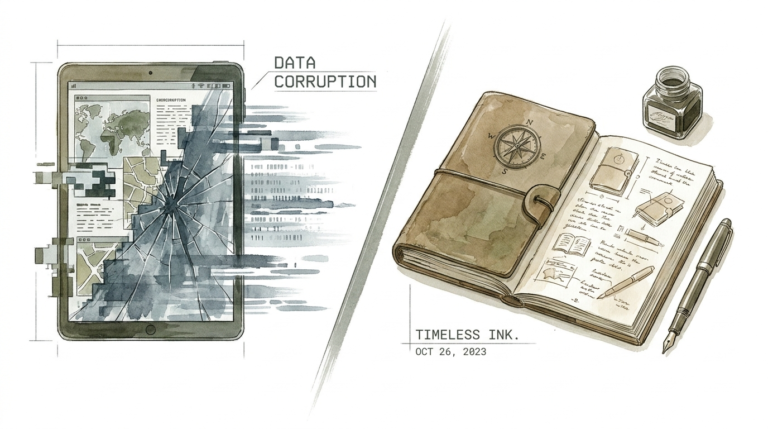
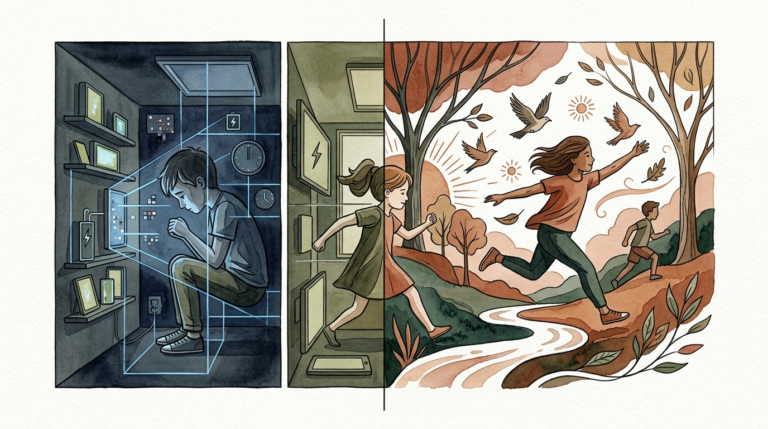
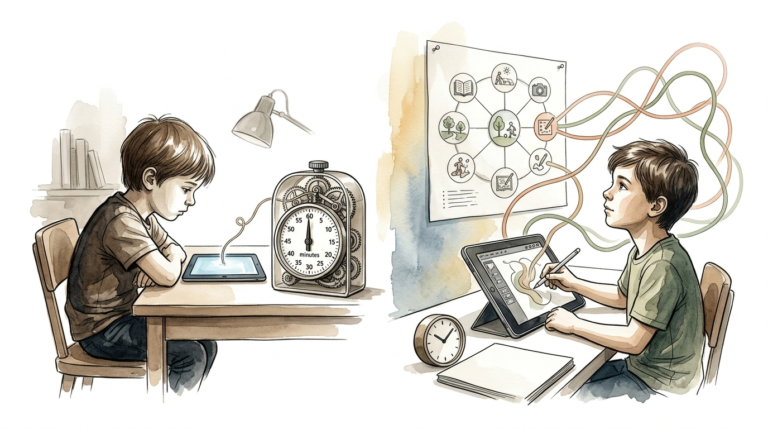
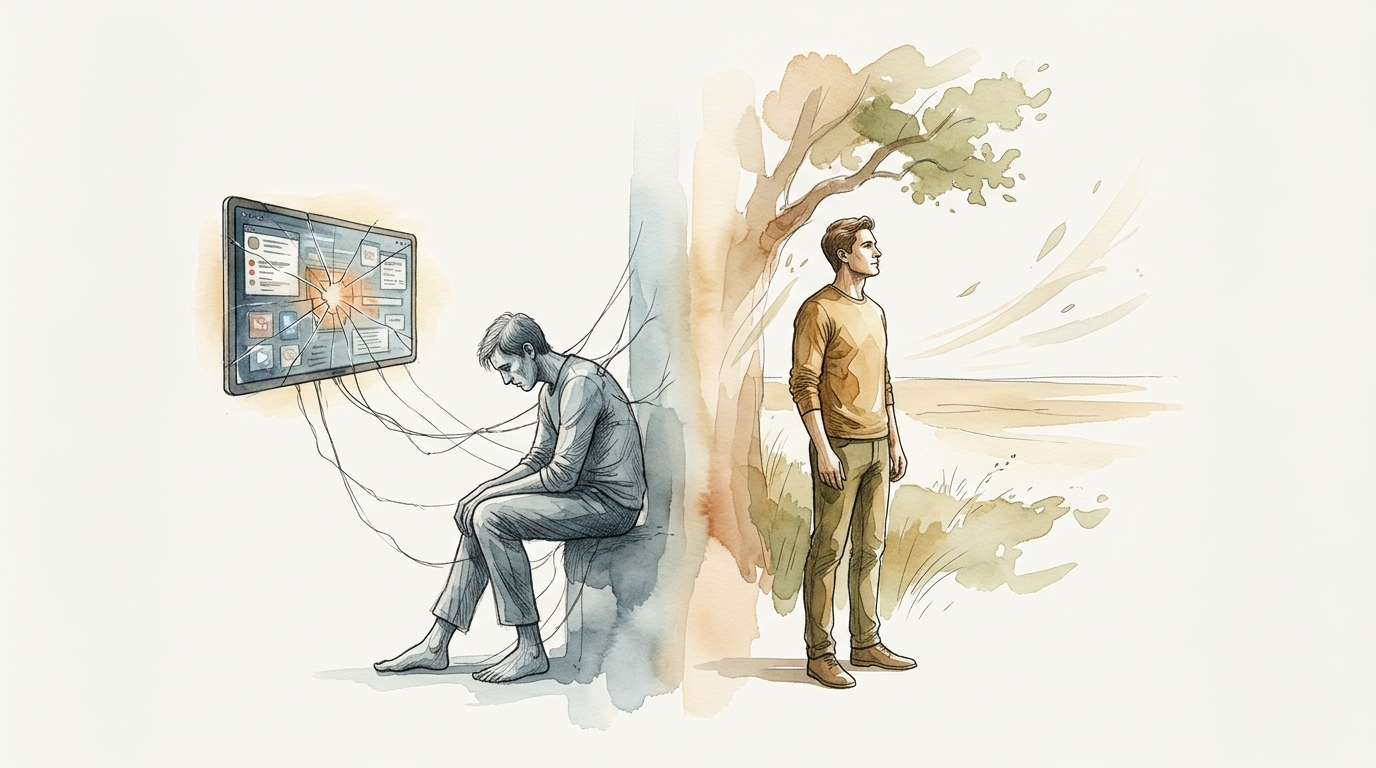
Taking on a month-long challenge isn’t about becoming a luddite or throwing your smartphone in a lake. It is about moving from a state of Fragile Dependency to one of Resilient Autonomy. You want to be the one in control, not the device. This guide will walk you through exactly how to reclaim your focus, your sleep, and your time.
30 days screen time challenge
A 30 days screen time challenge is a structured “reset” designed to break the compulsive loops that keep us tethered to our devices. It is a period of intentional reduction and replacement of digital habits. Instead of mindless scrolling, you focus on high-value activities that nourish your mind and body.
This challenge exists because modern technology is engineered to capture attention. Apps use variable reward schedules—much like slot machines—to keep you checking for likes, comments, or news. Over time, this constant stimulation can desensitize your brain’s dopamine receptors. You might find that real-world activities feel “boring” or slow in comparison.
In real-world terms, this challenge is used by high-performers, students, and parents to recover their “deep work” capabilities. It is essentially a mental decluttering. Think of it like a physical detox; you are giving your nervous system a break from the constant “ping” of the digital world to rediscover your baseline levels of calm and focus.
How It Works: The 4-Week Roadmap
Success requires more than just willpower. You need a system that gradually reduces your dependence while building up your internal resources. Here is a week-by-week breakdown of the process.
Week 1: The Awareness Audit
The first seven days are about data and friction. You cannot fix what you do not measure. Open your phone settings and look at your “Screen Time” (iOS) or “Digital Wellbeing” (Android) report. Look at your total hours and your most-used apps. This is your baseline.
- Turn off all non-human notifications: Only allow alerts from real people (texts, calls). Disable likes, news alerts, and shopping pings.
- The Grayscale Trick: Turn your phone screen to black and white. Removing the bright, “candy-colored” icons makes the screen significantly less stimulating.
- Notification Pruning: Delete apps that you only use out of boredom. If you really need them, you can access them via a web browser later.
Week 2: Establishing Physical Boundaries
Now that you have reduced the “pull” of the device, you must create physical distance. Your brain associates certain environments with scrolling. You need to break those associations.
- No-Phone Zones: Declare the bedroom and the dining table “tech-free.” Buy a basic alarm clock so your phone doesn’t have to be the first thing you touch in the morning.
- The 16-8 Fast: Try a screen-fasting window. For example, no screens from 8:00 PM until 12:00 PM the next day. This forces you to find other ways to spend your evenings and mornings.
- The “Out of Sight” Rule: When you are working or eating, put your phone in another room. Out of sight truly is out of mind for the human brain.
Week 3: The Replacement Phase
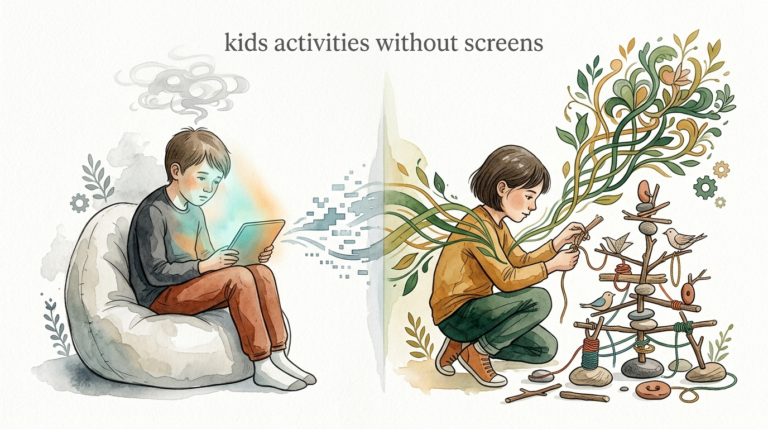
Reducing screen time leaves a “void.” If you don’t fill that void with something intentional, you will revert to your old habits. This week is about rediscovering offline hobbies.
- Identify Analog Alternatives: If you scroll the news, try a physical newspaper or a long-form book. If you play mobile games, try a crossword or a puzzle.
- Increase Physical Movement: Every time you feel the “itch” to check your phone, do ten pushups or take a five-minute walk. Use the physical urge as a trigger for a healthy habit.
- Social Connection: Instead of commenting on a friend’s post, call them. Real-time voice interaction provides a much deeper sense of connection than a “like.”
Week 4: Long-Term Integration
The final week is about sustainability. You aren’t trying to live without a phone forever; you are trying to find a “New Normal.”
- Evaluate Your Tools: Which digital tools actually improved your life this month? Keep those. Which ones made you feel anxious or drained? Keep them uninstalled.
- Scheduled Maintenance: Set a “Digital Sabbath” once a week—24 hours with no screens. This keeps your resilience high and prevents the “creep” of old habits.
Benefits of Reclaiming Your Time
The practical benefits of reducing screen time are measurable and often immediate. Many participants report a significant drop in anxiety levels within the first week. When you aren’t constantly comparing your life to a curated “highlight reel” on social media, your self-esteem tends to stabilize.
Sleep quality is another major advantage. Exposure to blue light from screens suppresses melatonin production. By cutting out screens an hour before bed, you allow your brain to enter its natural sleep cycle. You will likely wake up feeling more refreshed and less “foggy.”
Finally, your “deep work” capacity will skyrocket. Modern life has fragmented our attention into 30-second increments. A 30-day challenge re-trains your brain to focus on one task for an extended period. This leads to higher productivity and a greater sense of accomplishment at the end of the day.
Challenges and Common Mistakes
The most common pitfall is the “Phantom Vibration Syndrome.” You will feel your phone buzzing in your pocket when it isn’t even there. This is a sign of your brain’s anticipation of a dopamine hit. Do not get discouraged; it is a normal part of the withdrawal process.
Another mistake is the “all or nothing” mentality. If you slip up and spend an hour scrolling on day 12, don’t throw away the whole challenge. Acknowledge the slip, identify the trigger (were you stressed? bored?), and get back on track immediately. Perfection is the enemy of progress here.
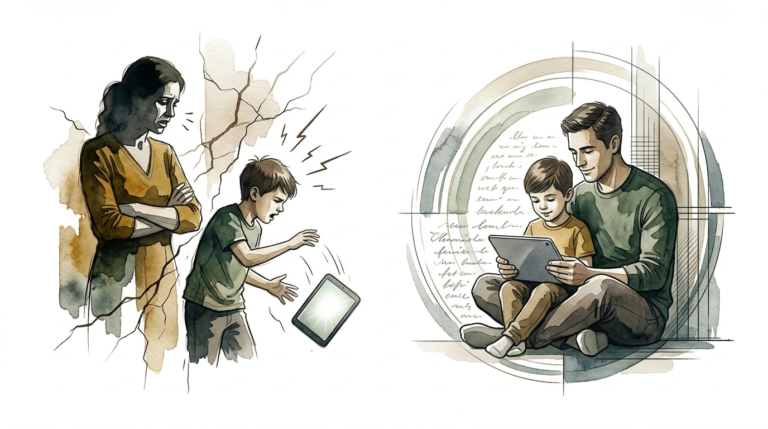
Social pressure can also be a challenge. Friends or family might be annoyed if you don’t reply to a meme instantly. Setting expectations early is key. Tell your inner circle that you are doing a 30-day reset and might be slower to respond to non-urgent messages.
Limitations: When This May Not Be Ideal
A digital detox isn’t a one-size-fits-all solution. For many professionals, their livelihood depends on being “online.” If you are a social media manager or an on-call doctor, a total blackout is impossible. In these cases, the focus should be on Intentional Usage rather than total abstinence.
Emergency situations also require access to communication. You should never put yourself in a position where you cannot be reached for a genuine crisis. The goal is to eliminate mindless use, not functional use. Using GPS to find a new location or a banking app to pay a bill is not “failing” the challenge.
Safety should also be considered. If you are traveling alone in an unfamiliar area, having a smartphone is a vital safety tool. Always prioritize your physical well-being over the strict rules of a challenge.
Fragile Dependency vs. Resilient Autonomy
This challenge is ultimately a move between two different ways of existing in the modern world. Understanding this distinction can help you stay motivated when the urge to scroll is high.
| Feature | Fragile Dependency | Resilient Autonomy |
|---|---|---|
| Focus | Reactive; dictated by pings. | Proactive; dictated by goals. |
| Boredom | Felt as a crisis to be solved. | Felt as a space for creativity. |
| Social Life | Performative and digital. | Present and physical. |
| Navigation | Helpless without GPS. | Able to read maps or signs. |
| Recovery | Slow; requires digital escapism. | Fast; uses internal resources. |
Fragile Dependency means your mood and productivity are at the mercy of an algorithm. Resilient Autonomy means you use technology as a tool, but you do not require it to function as a human being. One is a cage; the other is a choice.
Practical Tips for Immediate Success
Start today with these “quick wins” that require almost no effort but provide immediate relief to your overstimulated brain.
- The 20-20-20 Rule: To reduce eye strain, every 20 minutes, look at something 20 feet away for at least 20 seconds. This resets your focus and prevents “computer vision syndrome.”
- The Bathroom Rule: Never take your phone into the bathroom. It is the most common place for mindless scrolling to start, and it is a habit that is easy to break.
- Buy a Paper Planner: Moving your to-do list and calendar to paper reduces the number of times you have to “check” your phone during the day. Every check is a chance to get distracted by a notification.
- Audio-Only Mode: If you are listening to a podcast or a video, turn the screen off. If you don’t need the visual, don’t give the screen your attention.
Advanced Considerations: Digital Minimalism
For those who want to go beyond a 30-day challenge, Digital Minimalism is the next step. This philosophy, popularized by authors like Cal Newport, suggests that you should only use digital tools that provide massive value to your life and ignore everything else.
This might mean deleting all social media permanently and only using “low-friction” communication like email or phone calls. It could also involve “batching” your digital time—checking all messages and news once at 4:00 PM and then staying offline the rest of the day. This level of optimization requires a strong sense of purpose, but it leads to a lifestyle of profound focus and calm.
Serious practitioners often invest in “dumb phones” or devices like the Light Phone, which have no browser or social media. This “hardware-level” boundary makes it physically impossible to fall back into old habits, effectively automating your resilience.
Example Scenario: Reclaiming the Morning
Consider the story of a typical office worker, we’ll call him Mark. Mark used to wake up at 7:00 AM and immediately check his work email and news feed. By 7:15 AM, his stress levels were already high, and his brain was scattered.
During the 30-day challenge, Mark bought a $10 analog alarm clock and moved his phone to the kitchen at night. Now, he wakes up and spends the first hour of his day stretching, drinking water, and reading a physical book. He doesn’t touch his phone until he is ready to leave for work.
The result? Mark found that his “morning brain” was far more creative. He started solving work problems while in the shower instead of just ruminating on emails he hadn’t answered yet. His commute felt shorter because he was observing the world around him rather than staring at a screen. By changing one single habit—the morning scroll—he transformed his entire daily outlook.
Final Thoughts
The 30 days screen time challenge is not about punishment; it is about liberation. We have spent the last decade running a massive psychological experiment on ourselves, and the results are clear: constant connectivity often leads to a disconnected self. Reclaiming your attention is the most important skill you can develop in the 21st century.
Start small. If 30 days feels like too much, start with a “Screen-Free Sunday.” Notice how your brain resists the silence, and then notice how it eventually settles into a more peaceful state. That peace is your natural condition, and it is waiting for you just on the other side of the “power off” button.
Every hour you claw back from an algorithm is an hour you can spend on your health, your relationships, and your true passions. Take the challenge and see what happens when you stop being a consumer of content and start being the architect of your own experience.
Sources
1 foundationlayer.org | 2 boredomwizard.com | 3 powerhouseplanners.com | 4 hellobrownlow.com | 5 regis.edu | 6 digitaldetoxsolution.com | 7 georgetown.edu | 8 medium.com | 9 cedaroakswellness.com | 10 hackensackmeridianhealth.org | 11 thechallenge.org | 12 t-mobile.com | 13 henleynordic.com | 14 kendal.org | 15 medium.com