
Skip to content
Screens Down Family Up

Screens Down Family Up

    Screens Down Family Up
    Screens Down Family Up
    • Handicrafts For Kids Benefits
      Blog

      Handicrafts For Kids Benefits

      Byruim April 14, 2026

      Is your child learning to watch someone else’s life, or build their own? The digital world wants our children to be the ultimate consumers. The real world needs them to be the ultimate producers. It starts with a simple craft. The average child between the ages of 8 and 18 spends roughly 7.5 hours per…

      Read More Handicrafts For Kids BenefitsContinue

    • Benefits Of Loose Parts Play
      Blog

      Benefits Of Loose Parts Play

      Byruim April 14, 2026

      When a toy does everything, the child’s brain does nothing. Plastic playsets have a script. Loose parts have a story. Which one do you want your child’s brain to be writing today? Welcome to the world of open-ended exploration. This is a space where a simple cardboard tube becomes a telescope, a pirate’s peg leg,…

      Read More Benefits Of Loose Parts PlayContinue

    • Cardboard Box Activities For Kids
      Blog

      Cardboard Box Activities For Kids

      Byruim April 14, 2026

      Your recycling bin is actually a hidden laboratory for your child’s brain. We spend thousands on plastic toys that only do one thing, while the ‘trash’ in our garage has the potential for a thousand different adventures. Here is how to see the asset in the nuisance. Cardboard Box Activities For Kids Cardboard box activities…

      Read More Cardboard Box Activities For KidsContinue

    • Unstructured Play Vs Structured App Time
      Blog

      Unstructured Play Vs Structured App Time

      Byruim April 13, 2026

      Is their imagination living in a paved parking lot or a flourishing meadow? Apps are like ‘urban’ concrete—efficient, paved, and predictable. But a child’s brain needs the ‘wild’ of boredom and unstructured time to grow. Statistics show that children with more ‘unstructured’ time develop higher executive function. Don’t pave over their imagination with a screen….

      Read More Unstructured Play Vs Structured App TimeContinue

    • Deep Work For Kids Vs Screen Multitasking
      Blog

      Deep Work For Kids Vs Screen Multitasking

      Byruim April 13, 2026

      If we flood their brains with everything at once, we lose the ability to see anything at all. Standard content delivery is like a broken sprinkler—it floods everything and nourishes nothing. ‘Precision focus’ is the targeted drip irrigation of the mind. Stats show that ‘content hopping’ reduces the ability to enter a flow state by…

      Read More Deep Work For Kids Vs Screen MultitaskingContinue

    • Open-ended Play Vs Tablet Apps Stats
      Blog

      Open-ended Play Vs Tablet Apps Stats

      Byruim April 13, 2026

      One has a million features but only one outcome; the other has zero features and a million possibilities. Research shows that ‘multi-use’ objects like sticks, boxes, and dirt trigger 4x more creative problem-solving neural pathways than ‘single-use’ digital games. An app tells you how to play; a stick waits for you to decide. Which one…

      Read More Open-ended Play Vs Tablet Apps StatsContinue

    • Effects Of Screen Refresh Rates On Child Brain
      Blog

      Effects Of Screen Refresh Rates On Child Brain

      Byruim April 12, 2026

      Why does 30 minutes of high-speed video leave them more exhausted than 3 hours of quiet observation? Screens use high-energy ‘active’ delivery to keep a child’s attention hostage, while nature uses a ‘passive’ rhythmic flow that restores it. Stats indicate that high-refresh-rate content correlates with higher irritability. It’s time to trade the high-voltage screen for…

      Read More Effects Of Screen Refresh Rates On Child BrainContinue

    • Computational Thinking For Kids Stats
      Blog

      Computational Thinking For Kids Stats

      Byruim April 12, 2026

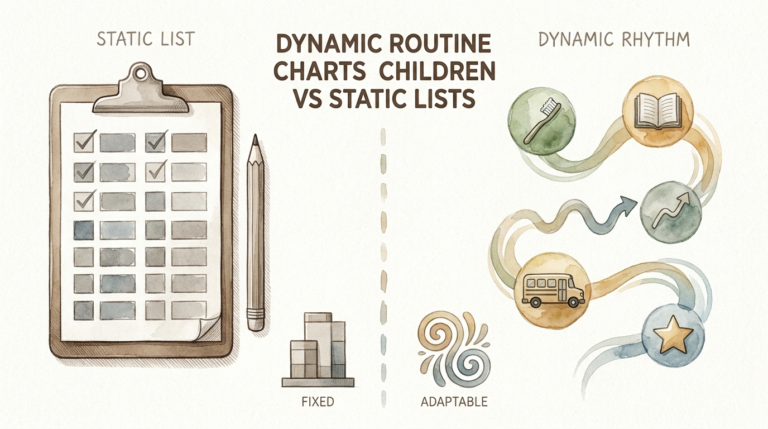
      Escape the refresh button and enter the feedback loop. Most apps are designed to be static loops of consumption. The real power of technology lies in dynamic systems—where the child provides the input, and the world provides the feedback. It is time to move beyond the script. Understanding how the digital world operates is no…

      Read More Computational Thinking For Kids StatsContinue

    • Educational Screen Time Statistics
      Blog

      Educational Screen Time Statistics

      Byruim April 12, 2026

      Stop measuring screen minutes and start measuring milestones. Millions of hours are lost to the infinite scroll—a digital waste of potential. But when we treat technology as fuel for real-world projects, the screen becomes a bridge to engineering, art, and mastery. We live in an era where the word “screen time” carries a heavy weight…

      Read More Educational Screen Time StatisticsContinue

    • Social Isolation In Children Screen Stats
      Blog

      Social Isolation In Children Screen Stats

      Byruim April 11, 2026

      We’ve used technology to build walls when we should have built bridges. Screen time statistics show a rise in household loneliness despite constant connectivity. By moving from isolated ‘personal’ devices to integrated, shared family tools, we can turn tech into a social adhesive. Modern households often resemble a collection of private silos. Each member sits…

      Read More Social Isolation In Children Screen StatsContinue

    Page navigation

    Previous PagePrevious 1 … 51 52 53 54 55 Next PageNext

    © 2026 Screens Down Family Up - WordPress Theme by Kadence WP