
kids screen time rules
Rules shouldn’t just be about ‘No.’ They should be about ‘Move.’ One of the best rules for kids? If you’re using a screen, you must be standing, creating, or moving. Here is why it works.
Parents often feel like they are in a constant tug-of-war with digital devices. The old way was simple: set a timer and pull the plug when it dings. But the world has changed, and our children are growing up in a digital-first reality where screens are used for everything from math homework to socializing with cousins across the country.
This new approach shifts the focus from total restriction to intentional action. Instead of counting minutes, we start looking at the quality of the interaction. When we challenge kids to be active participants rather than silent observers, the entire dynamic of the home shifts.
kids screen time rules
The concept of kids screen time rules has historically focused on duration. We were told two hours was the limit, but that doesn’t account for the difference between a child coding a new game and a child mindlessly scrolling through short-form videos. Screen time is essentially the use of any device with a display, including smartphones, tablets, gaming consoles, and televisions.
In the real world, these rules exist to prevent the negative effects of a sedentary lifestyle. Research suggests that excessive passive screen time is linked to higher risks of obesity, poor sleep, and even developmental delays in younger children. By introducing specific rules, parents create a framework that allows for digital exploration while protecting a child’s physical and mental health.
Think of screen time like food. Just as we wouldn’t say “only two pounds of food per day” without considering whether that’s two pounds of kale or two pounds of candy, we shouldn’t treat all digital content the same. Creative and active use of technology can actually support cognitive development, social connection, and problem-solving skills.
The ‘Move or Create’ Framework
Implementing a “Move or Create” rule means that every time a device is powered on, the child must meet one of three criteria. This system is designed to break the “zombie stare” that often accompanies passive consumption.
The Standing Rule
This is the simplest physical adjustment. If a child wants to play a game or watch a video, they must do so while standing. This naturally limits the duration of the session because standing is more tiring than lounging on a couch. It also promotes better posture. Many children develop “tech neck” from hunching over tablets; standing encourages a more upright spine and better core engagement.
The Creation Rule
The goal here is to move the child from a consumer to a producer. If they are on a screen, they should be using a tool to build something. This includes digital art, music production, writing, or learning to code. When a child is creating, their brain is in a high-state of executive function. They are making choices, solving problems, and expressing themselves, which is vastly different from the passive absorption of a cartoon.
The Movement Rule
This rule involves using technology as a catalyst for physical exertion. This could mean playing an augmented reality (AR) game that requires walking around the neighborhood, following a dance tutorial on YouTube, or using a motion-controlled gaming system. Technology becomes the “coach” rather than the “couch.”
Benefits of Active Digital Engagement
Shifting to active rules provides measurable advantages for a child’s development. Physical health is the most obvious beneficiary. Children who move while using screens are less likely to fall into the sedentary traps that lead to weight gain and weakened cardiovascular fitness.
Cognitively, active screen time encourages “active play,” which engages the mind and emotions. Studies have shown that when children engage with educational or interactive content, they often show better learning outcomes compared to those who only watch TV. This is because interactive media requires the child to process information and respond, strengthening neural pathways related to attention and memory.
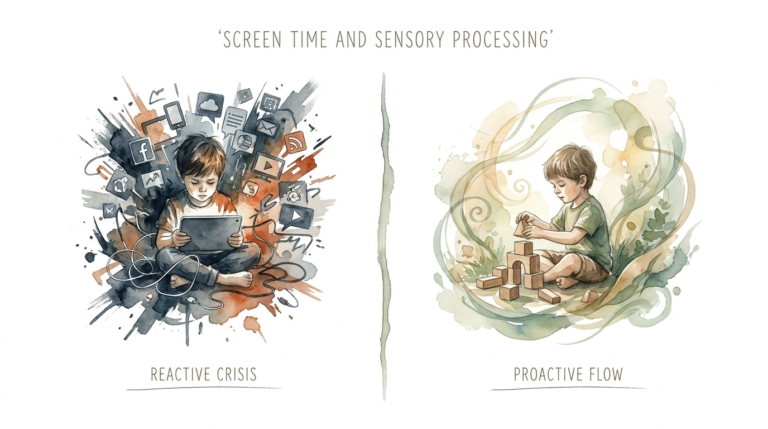
Mentally, this approach reduces the risk of “stimulation loops.” Passive scrolling often leads to a dopamine-driven cycle where the child is constantly seeking the next quick hit of entertainment. Active engagement requires more effort, which naturally regulates the amount of time they want to spend on the device.
Challenges and Common Mistakes
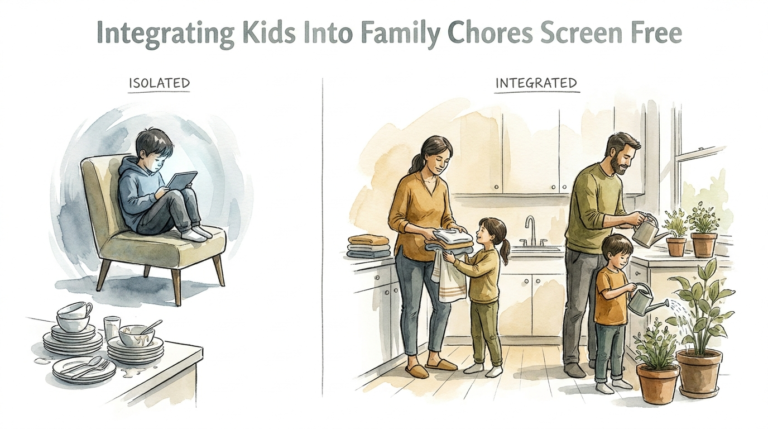
The transition to active screen rules is rarely seamless. The most common challenge is the “Convenience Trap.” Parents often use screens as a “digital babysitter” to get chores done or have a moment of peace. Active rules require more oversight and engagement from the parent, which can be exhausting.
Another mistake is failing to define what “creating” actually means. A child might argue that building a house in a game is “creating,” while a parent might see it as just “gaming.” Without clear definitions, the rules can become a source of constant negotiation and conflict.
Consistency is the final hurdle. If the rules are only enforced when the parent feels energetic, children will quickly learn to push boundaries. Rules work best when they are a non-negotiable part of the household rhythm, similar to brushing teeth or wearing a seatbelt.
Limitations of This Approach
While “standing and creating” is a powerful rule, it is not a universal solution. There are times when these rules are impractical. For example, a child doing research for a long school essay cannot be expected to stand for three hours straight. In these cases, traditional ergonomic setups are more appropriate.
Travel is another significant limitation. On a long car ride or a cross-country flight, expecting a child to be “active” is often impossible and potentially dangerous. During these times, passive consumption might be the only realistic option to maintain sanity and safety.
Finally, illness or recovery can make active screen time a burden. If a child is home with a fever, the goal is rest. Forcing a sick child to stand while they watch a movie would be counterproductive to their recovery.
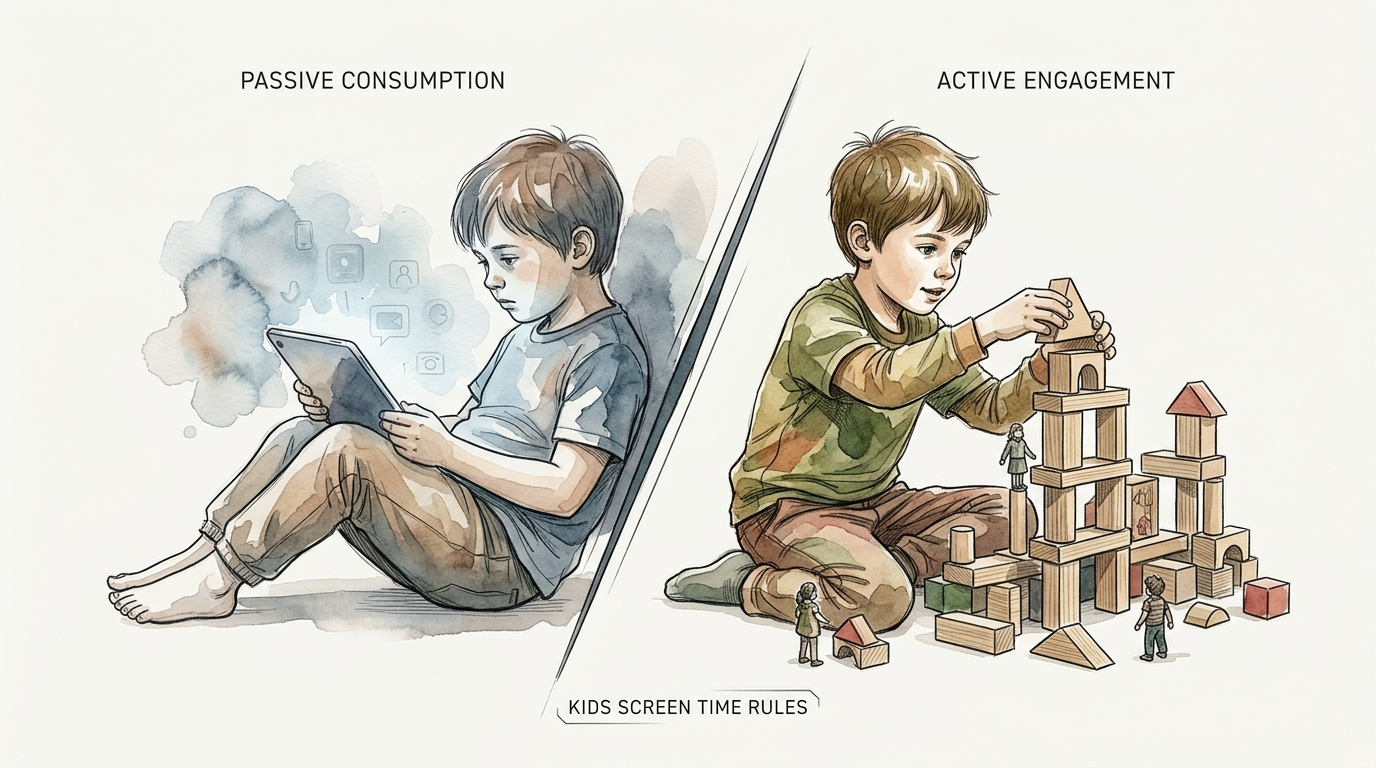
Passive Consumption vs. Active Engagement
To understand why these rules matter, it helps to compare the two primary ways kids use technology.
| Feature | Passive Consumption | Active Engagement |
|---|---|---|
| Brain State | Low-effort, “vegging out” | High-effort, problem-solving |
| Physicality | Sedentary, slouching | Standing, moving, or alert |
| Outcome | Short-term entertainment | Skill building or creation |
| Social Impact | Isolation | Connection or collaboration |
Practical Tips for Success
Start small to avoid overwhelming the household. You might begin by designating one specific device as a “creation-only” tool. For example, the iPad is for drawing and coding, while the TV is for family movies. This helps the child associate specific hardware with specific types of brain activity.
Use the 20-20-20 rule to protect vision. For every 20 minutes of screen time, have the child look at something 20 feet away for at least 20 seconds. This helps reset the eye muscles and prevents digital eye strain, which is becoming increasingly common in younger populations.
Lead by example. Children are incredibly observant. If they see you constantly scrolling through your phone while slouched on the sofa, they will view your “standing and moving” rules as hypocritical. Try standing while you check your emails or engaging in physical hobbies that don’t involve a screen at all.
Advanced Considerations for Digital Well-being
As kids grow older, the rules should evolve into a discussion about digital citizenship and well-being. Serious practitioners of this method often move beyond simple physical rules and start teaching children how to audit their own digital habits.
Optimization strategies might include teaching a child how to use “Do Not Disturb” modes or how to set their own app limits. This shifts the responsibility from the parent to the child, preparing them for the independence of adulthood. When a child understands *why* they feel tired after two hours of YouTube but energized after an hour of digital art, they are gaining a level of self-awareness that will serve them for a lifetime.
Scaling this approach for multiple children requires a “Family Media Plan.” This is a shared document where everyone, including the parents, agrees on the times and places where screens are allowed. Having a written plan reduces the emotional weight of enforcement because the rules are clearly documented and agreed upon in advance.
Example Scenarios
Imagine a Saturday morning where a ten-year-old wants to play Minecraft. Under the old rules, they might sit in a beanbag chair for three hours. Under the new rules, the parent says, “You can play, but only if you use a standing desk setup and your goal for today is to build a replica of our house.” This turns a sedentary gaming session into a lesson in spatial reasoning and physical alertness.
In another scenario, a child wants to watch TikTok videos. The active rule might be: “You can watch for thirty minutes, but you have to learn and record one of the dance trends yourself.” Now, the passive act of watching is tied to the physical act of dancing and the creative act of video editing. The screen is no longer the end goal; it is the starting point for movement.
Final Thoughts
The goal of these kids screen time rules is not to demonize technology, but to integrate it into a healthy, active life. By insisting that our children stand, create, or move while using devices, we are helping them build a relationship with tech that is based on empowerment rather than addiction.
Parents who implement these strategies often find that the “battle” over screens diminishes. When technology requires effort, children naturally gravitate toward other forms of play, like going outside or reading a book, without being forced. It creates a natural balance that a timer simply cannot achieve.
Experiment with these rules in your own home for one week. Notice the changes in your child’s energy levels, their mood when the device is turned off, and their overall posture. You might find that the best way to manage screens isn’t to turn them off, but to turn them into tools for growth.
Sources
1 youtube.com | 2 avidopenaccess.org | 3 screentimelabs.com | 4 capitalareapediatrics.com | 5 kidsusamontessori.org | 6 shopmeems.com | 7 sittercity.com | 8 substack.com | 9 atonechiropractic.com | 10 cmasas.org | 11 medlineplus.gov | 12 waterford.org | 13 childrenandscreens.org | 14 junglejumparoo.com | 15 childandfamilydevelopment.com | 16 mother.ly





One Comment