Screen Time Brain Fog Symptoms In Kids
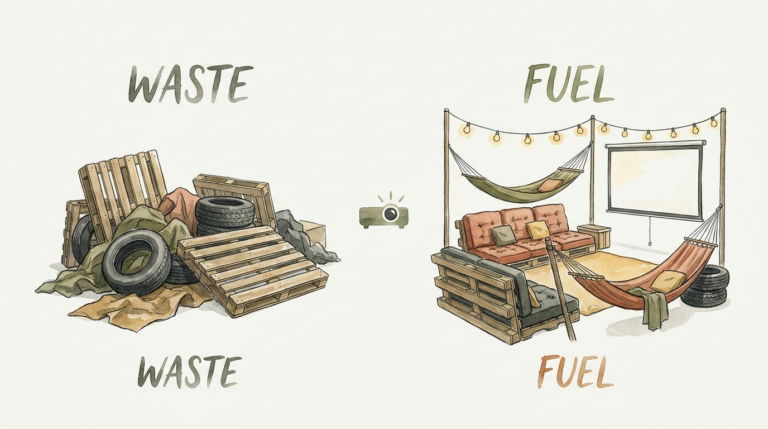
Is the screen feeding their mind or simply draining their battery? Overuse is most visible when the screen stops. If your child ends a session feeling drained, ‘foggy,’ and irritable, they haven’t been entertained—they’ve been harvested. High-dopamine loops are a waste of their mental energy; real-world projects are the fuel that builds a resilient brain.
Digital technology is a double-edged sword that can either sharpen a young mind or dull its edge. Most parents focus on the clock, counting every minute as if all screen time carries the same weight. But the truth is more complex. A child spending an hour coding a custom game is having a fundamentally different experience than a child scrolling through thirty-second clips of strangers dancing.
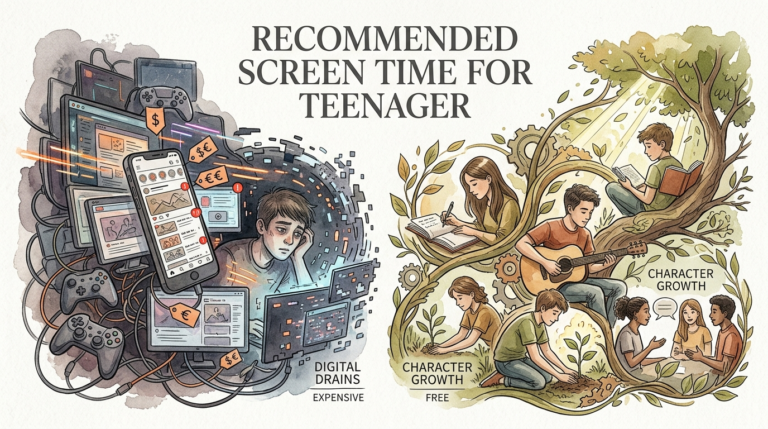
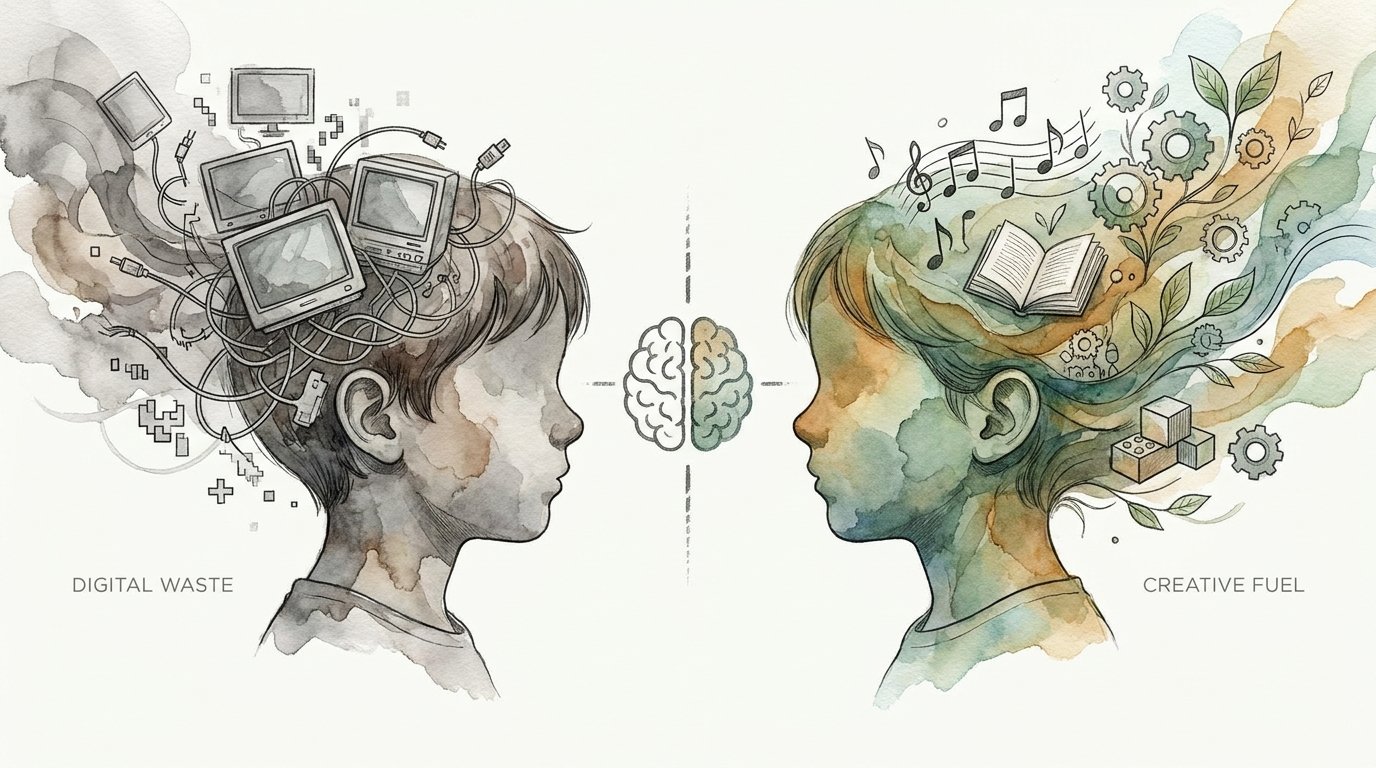
One is an act of creation that builds cognitive muscle. The other is a form of passive consumption that acts as a mental siphon. Understanding this difference is the key to moving beyond the “screen time” battle and toward a lifestyle of digital wellness. It is time to distinguish between Digital Waste and Creative Fuel.
Screen Time Brain Fog Symptoms In Kids
Screen time brain fog is not just a figure of speech; it is a physiological state of overstimulation. When a child is exposed to rapid-fire digital content, their brain is forced to process information at a pace that exceeds its natural capacity. This leads to a specific set of symptoms that often appear the moment the device is put away.
You might notice a “glazed-over” look in their eyes during the session. This is the first sign that the brain has shifted into a passive, survival-style processing mode. Once the screen turns off, the “fog” settles in fully. Common symptoms include:
- Intense Irritability: Also known as “screen rage,” this occurs because the sudden drop in dopamine feels physically painful to a developing nervous system.
- Difficulty Focusing: After the hyper-stimulation of a screen, the physical world feels “slow” and boring. This makes schoolwork or reading feel nearly impossible.
- The “Tired but Wired” Effect: Children may appear exhausted but remain physically hyperactive or unable to fall asleep. This happens because blue light suppresses melatonin while the content keeps the adrenal system spiked.
- Executive Function Deficit: You might notice they struggle to follow simple two-step instructions or can’t decide what to do next. Their ability to plan and execute tasks has been temporarily sidelined.
- Sensory Overload: Everyday sounds or lights may suddenly feel “too loud” or “too bright,” leading to unexpected meltdowns over small triggers.
This fog exists because the brain has been “harvested” for its attention. High-dopamine loops—like those found in short-form video apps or “infinite” games—exploit the brain’s reward system. They provide a constant stream of tiny rewards without any effort, which eventually desensitizes the brain’s receptors. When the screen stops, the world feels dull because the brain is waiting for the next artificial spike that never comes.
The Dopamine Trap: How Digital Waste Captures the Brain
Understanding how Digital Waste works requires a look at the brain’s reward circuitry. Digital Waste refers to any content designed for mindless consumption. This includes autoplaying videos, infinite scrolling feeds, and games that rely on repetitive, “click-to-win” mechanics. These systems are engineered by experts to keep users engaged for as long as possible.
Every swipe or click triggers a small release of dopamine. In a natural environment, dopamine is a reward for effort—like finishing a puzzle or climbing a tree. In the world of Digital Waste, the reward is decoupled from the effort. The child gets the “hit” without the “work.” Over time, the brain starts to prefer these easy wins.
This creates a feedback loop. The more a child consumes Digital Waste, the more their brain craves high-intensity stimulation. Slower, more valuable activities like reading a book or building with blocks start to feel frustrating. The brain is effectively being trained to have a shorter attention span.
Furthermore, many of these platforms use “intermittent rewards.” This is the same logic used in slot machines. The child doesn’t know which video will be funny or which “loot box” will have a rare item, so they keep clicking. This unpredictable reward schedule is the most addictive form of reinforcement known to psychology.
Digital Waste vs. Creative Fuel: The Great Divide
To help your child, you must be able to categorize what they are doing on the screen. Not all digital activity is “waste.” Some of it is “Creative Fuel”—tools that empower the child to become a maker rather than a spectator.
What is Digital Waste?
Digital Waste is characterized by high consumption and low agency. If the device is doing most of the work, it’s likely waste. Examples include:
- Watching unboxing videos or “reaction” content.
- Scrolling through social media feeds or short-form video platforms.
- Playing games that require no strategy, such as basic “clicker” games.
- Binge-watching shows with no educational or narrative depth.
What is Creative Fuel?
Creative Fuel is characterized by high agency and a tangible output. If the child is using the tool to bring an idea to life, it’s fuel. Examples include:
- Learning to code or build logic in platforms like Scratch or Minecraft.
- Digital art, animation, or photo editing.
- Music production and beat-making.
- Researching a specific interest to build a real-world project (e.g., watching a tutorial on how to build a birdhouse).
The difference lies in the “Three Ps”: **Project, Process, and Product**. Creative Fuel always involves a project with a goal, a process that requires effort, and a final product that the child can be proud of. Digital Waste, by contrast, has no finish line and no result.
The Benefits of Choosing Creative Fuel
Shifting from waste to fuel offers measurable benefits for a child’s development. When a child uses technology as a tool for creation, they are building the very skills that the modern world demands.
1. Cognitive Resilience
Creative projects are often frustrating. A line of code doesn’t work, or a digital drawing doesn’t look right. Pushing through these challenges builds “grit.” This is the opposite of the instant gratification provided by Digital Waste.
2. Mastery and Agency
Digital Waste makes children feel like “consumers” who are at the mercy of an algorithm. Creative Fuel makes them feel like “masters” of their environment. This sense of agency is a major factor in developing healthy self-esteem.
3. Executive Function Growth
Building something requires planning, organizing, and sustained attention. These are the core components of executive function. While Digital Waste drains the battery of executive function, Creative Fuel acts as a workout that makes it stronger.
4. Transferable Skills
The skills learned during creative screen time often translate to the real world. A child who learns the logic of a video game engine is also learning the fundamentals of computer science and physics. A child who edits a video is learning about storytelling and pacing.
Challenges and Common Pitfalls
Moving a child away from high-dopamine loops is not easy. Parents often run into specific obstacles that can derail progress if not handled correctly.
Mistake 1: The Total Tech Ban
Suddenly cutting off all screens often leads to intense conflict and doesn’t teach the child how to manage their relationship with technology. It creates a “forbidden fruit” effect. A better approach is to “crowd out” the waste with better options.
Mistake 2: Failing to Transition
You cannot expect a child to jump from a high-dopamine state directly into a low-stimulation task like homework. Their brain needs a “buffer zone.” Moving from the screen to a physical activity—like a quick walk or a snack—helps the nervous system reset.
Mistake 3: Being a “Policeman” Instead of a “Partner”
If your only interaction with their screen use is to tell them to turn it off, you are the enemy. If you sit down and ask them to show you how their Minecraft castle works or help them pick a digital art tool, you become a partner in their creativity.
Mistake 4: Ignoring the “Come Down”
Irritability is a physiological response, not necessarily a sign of a “bad kid.” Expecting the brain fog and irritability allows you to stay calm. Treat the post-screen period with patience rather than punishment.
Limitations: When This Approach May Not Work
While the shift to Creative Fuel is powerful, it is not a magic bullet for every situation. There are realistic constraints to keep in mind.
- Age Appropriateness: Very young children (under age 5) gain the most from “analog” play. Their brains need the physical feedback of gravity and tactile materials. Digital tools, even creative ones, should be a minor part of their world.
- Neurodiversity: Children with ADHD or autism may be more sensitive to digital stimulation. For these kids, even “creative” screen time can sometimes lead to overstimulation if not monitored closely.
- Environmental Factors: If a child’s social circle is entirely based on a specific “passive” game or app, cutting them off entirely can lead to social isolation. Balance is required to maintain their peer connections.
- The Need for Rest: Creativity is work. Sometimes a child is genuinely tired and just needs to zone out. In these moments, forcing a “creative project” can lead to more stress. The goal is to ensure that “zoning out” doesn’t become the default state.
Practical Tips for a Digital Pivot
How do you actually start the transition? Use these actionable steps to reshape your home’s digital environment.
- The 1:1 Rule: For every hour of passive consumption (Digital Waste), the child must spend an hour on a creative project (Creative Fuel) or a physical activity.
- Create “Tech-Free Zones”: Keep screens out of bedrooms and off the dinner table. This prevents the “constant drip” of dopamine from interrupting sleep and connection.
- Curate the Home Screen: On tablets or phones, move the addictive “Waste” apps into folders on the second page. Put the “Fuel” apps—like drawing, music, or coding tools—on the front page.
- Use a Visual Timer: Give them a 5-minute warning, then set a visual timer. Seeing the time run out helps the brain prepare for the transition.
- Focus on the “Output”: Ask “What are you making today?” rather than “How long have you been on that?” This changes the focus from the clock to the content.
Advanced Considerations for Long-Term Success
For those who want to go deeper, consider the long-term impact on the prefrontal cortex. This part of the brain is responsible for impulse control and decision-making. It doesn’t fully mature until the mid-20s.
High-dopamine loops can “hijack” the development of this area. By prioritizing Creative Fuel, you are essentially protecting the structural integrity of your child’s developing brain. You are training their neurons to fire in patterns of sustained focus rather than fragmented attention.
Another advanced concept is “Flow State.” This is a state of deep immersion where time seems to disappear because the person is so engaged in a challenge. Passive consumption never creates a flow state; it only creates a “trance.” Helping your child find digital tools that trigger a true flow state is one of the greatest gifts you can give their cognitive development.
Scenario: Transforming a Saturday Morning
Let’s look at how this works in practice. Imagine a typical Saturday morning. Usually, the child spends two hours watching “Let’s Play” videos on YouTube. By 10:00 AM, they are irritable, won’t eat breakfast, and argue about everything. This is the **Digital Waste** cycle.
Instead, you try the **Creative Fuel** approach. You tell them, “You can use the screen, but today we are going to make our own video.”
- The Plan: You spend 10 minutes storyboarding a simple story using their toys.
- The Process: They use a phone or tablet to film the scenes. They learn how to hold the camera steady and how to use basic editing software to add music.
- The Product: By 10:00 AM, they have a 60-second “movie.”
The result? The child feels a sense of accomplishment. They have used their brain to solve problems. When the screen turns off, they aren’t “foggy” because their brain was active and engaged, not passively harvested. They are ready to show their work to the family, leading to real-world connection.
Final Thoughts
The battle over screens isn’t about the devices; it’s about the quality of the attention they demand. When we treat all screen time as equal, we miss the opportunity to guide our children toward the tools that will build their future. Moving from Digital Waste to Creative Fuel is a fundamental shift in how we view modern childhood.
It requires more effort from parents to be “encouragers” rather than “enforcers.” However, the payoff is a child who is more resilient, more creative, and less prone to the debilitating brain fog of overstimulation. You are not just managing their time; you are protecting their mental energy and fueling their potential.
Encourage your child to experiment today. Find one app that lets them build, draw, or compose. Turn the “passive viewer” into an “active maker.” The result will be a brain that isn’t just drained by the screen, but one that is truly powered by it.
Sources
1 future-youth-media.com | 2 devorahheitner.com | 3 time.com | 4 sustainability-directory.com | 5 sarahwilsonpsychology.co.uk | 6 thejacobsladdergroup.org | 7 healthywithin.com | 8 oneeducation.co.uk | 9 time.com | 10 theottoolbox.com | 11 expressable.com | 12 medium.com | 13 wonjo.kids | 14 thevoiceofearlychildhood.com | 15 socalmentalwellness.com | 16 harvard.edu | 17 childcareed.com