kids screen time illustration
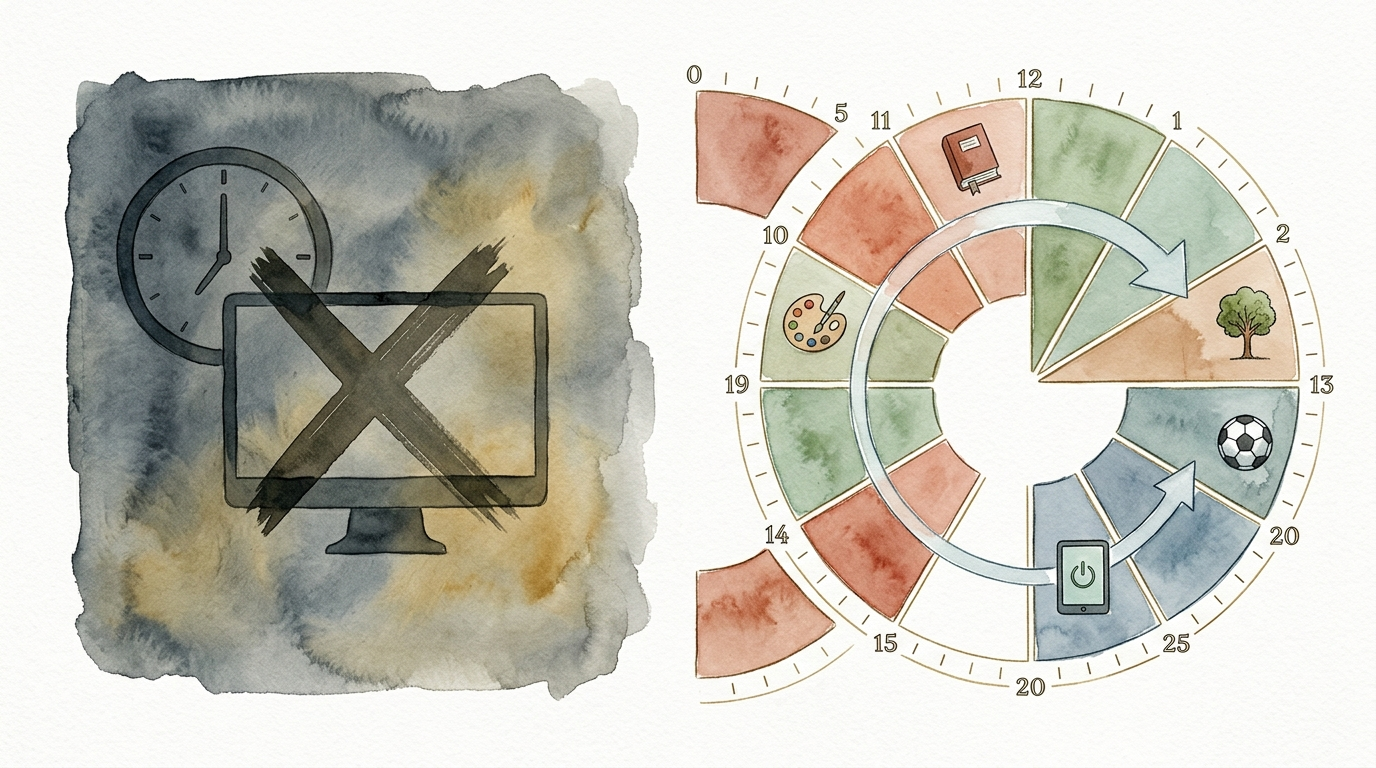
Don’t just take the tech away. Design the day with precision. Banning screens creates resentment. Precision scheduling creates a healthy relationship with technology. See the difference.
Every parent knows the feeling of the “digital tug-of-war.” You want your child to experience the world, but the allure of the glowing rectangle is powerful. Most families default to a cycle of guilt-ridden binging followed by sudden, angry bans. This reactive approach rarely works and often leads to a house full of tension.
There is a better way to handle the modern digital ecosystem. Instead of fighting the existence of technology, you can integrate it with surgical precision. This shift moves the focus from “how much” to “how well,” turning a source of conflict into a tool for growth and connection.
When you stop viewing screens as the enemy, you gain the power to manage them. You can move beyond the standard blanket ban and embrace a strategy that respects your child’s development and your own sanity. This guide explores the transition from haphazard limits to precision time-blocking.
kids screen time illustration
Effective screen time management is no longer about just setting a timer for sixty minutes and walking away. It is an intentional design process that treats digital media as part of a child’s total “nutritional” intake. Think of screens like sugar: a little is fine, but it should never replace the main meal of physical play and face-to-face interaction.
In real-world terms, this looks like a day where every activity has a clear beginning and end. Screens are not used as a default background noise or a constant escape from boredom. Instead, they occupy specific “performance slots” in the schedule, much like a soccer practice or a music lesson. This removes the mystery and the constant begging for “just five more minutes.”
Recent research from 2024 and 2025 emphasizes that the context of screen use matters more than the raw number of hours. Children who use devices for creative projects or to connect with distant family members show different developmental outcomes than those who engage in endless passive scrolling. Understanding this distinction is the first step toward a precision-based system.
Visualizing the daily schedule as a series of blocks helps children develop a sense of time. When they can see that a 30-minute Minecraft session follows 60 minutes of outdoor play, the transition becomes a natural part of the rhythm rather than an arbitrary punishment. This “illustration” of the day creates a shared language between parents and children.
How to Implement Precision Scheduling
Precision scheduling requires a proactive stance. You must move away from “media emotion regulation,” which is the common habit of using a tablet to soothe a tantrum. While it offers immediate peace, studies show it can hinder the development of a child’s internal inhibitory control and cognitive flexibility. Here is how to build a better system.
Start by auditing the current digital environment. Not all apps are created equal. High-quality, interactive educational content is fundamentally different from short-form, high-dopamine video clips. Your schedule should prioritize “active” screen time over “passive” consumption. Active time includes coding, digital art, or strategic gaming, while passive time includes endless YouTube Shorts or TikTok feeds.
Designate specific “zones” and “times” for different activities. For instance, the dinner table and the bedroom are non-negotiable tech-free zones. Scheduling screen time for the late afternoon, after homework and physical activity are completed, ensures that the most important developmental tasks are prioritized. This creates a natural “reward” structure that doesn’t feel like a bribe.
Use visual timers to make the abstract concept of time tangible. A digital countdown or a physical sand timer allows a child to self-regulate. They can see the end approaching, which reduces the “shock” of the device being turned off. This simple tool shifts the role of the parent from the “enforcer” to the “guide” who is simply following the schedule.
Co-viewing is another pillar of precision scheduling. Instead of using the screen as a babysitter, sit down and engage with the content. Ask questions about the characters or the game mechanics. This transforms a solitary activity into a social one, building language skills and emotional intelligence. It also allows you to vet the content in real-time.
Benefits of a Structured Approach
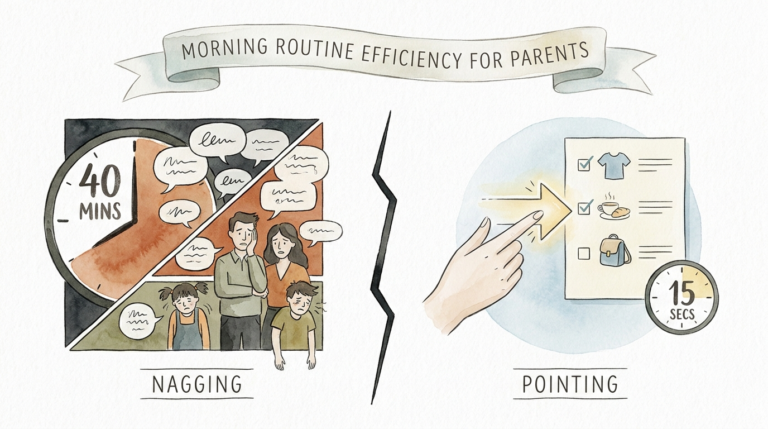
Precision scheduling offers immediate relief from the “ask-and-refusal” cycle. When the rules are clear and the schedule is predictable, the mental load on parents decreases significantly. You no longer have to make a dozen decisions an hour about whether or not the iPad is allowed. The schedule has already made those decisions for you.
Children benefit from the increased predictability. Predictable environments reduce anxiety and help kids feel in control of their day. They learn that screen time is a reliable part of their routine, which reduces the impulse to “binge” whenever they get their hands on a device. Over time, this builds a healthy internal relationship with technology.
Cognitive development thrives under these conditions. By ensuring that screens do not displace sleep or physical activity, you protect the child’s developing brain. Research indicates that maintaining a balance of “hands-on” play is essential for motor skills and problem-solving. A structured day guarantees that these needs are met before the digital fun begins.
Family relationships often improve when the “screen battles” stop. Instead of constant conflict, you have opportunities for connection. You can use scheduled screen time to bond over a family movie or a shared video game. This turns technology into a bridge rather than a barrier, fostering a positive home atmosphere.
Challenges and Common Pitfalls
The biggest challenge is parental consistency. A schedule only works if it is followed every day. It is tempting to break the rules on a rainy afternoon or a particularly stressful workday. However, inconsistency teaches children that the schedule is negotiable, leading to more begging and power struggles in the future.
Relying on screens for “emergency” childcare is another common trap. While understandable in a pinch, using a device to stop a public meltdown or to survive a long conference call can backfire. It reinforces the idea that technology is a coping mechanism for difficult emotions, which can lead to “media emotion regulation” habits that are hard to break.
Over-scheduling can also be a mistake. Precision doesn’t mean every second of the day is planned. Children still need “white space” or “boredom time” to develop their own creativity. If every gap is filled with either an activity or a screen, they never learn how to entertain themselves or manage their own internal states.
Failing to model good behavior is a frequent error. If you are constantly checking your phone while telling your child to put theirs away, the message is lost. Children are astute observers. They will follow your habits more closely than they will follow your rules. A family-wide commitment to precision scheduling is usually more effective than a child-only plan.
Limitations of Precision Scheduling
This method may not be ideal for very young children. The American Academy of Pediatrics (AAP) still recommends avoiding screens entirely (except for video chatting) for children under 18 to 24 months. For toddlers, the risks of overstimulation and language delays often outweigh the benefits of even the most precise schedule.
Neurodivergent children may require a more specialized approach. Kids with ADHD or autism might find the dopamine hits of certain apps much harder to resist. In these cases, simple time-blocking might not be enough, and additional layers of environmental control or specialized parental tools may be necessary to prevent hyper-focus or meltdowns.
Environmental constraints can also play a role. If you live in a high-rise with limited outdoor access, or if you are in a period of intense family transition, a perfect schedule might be impossible to maintain. It is important to aim for progress rather than perfection. Total rigidness can lead to burnout for both the parent and the child.
The quality of the “non-screen” alternatives is vital. If the offline options are consistently boring or lonely, the screen will always be the preferred choice. Precision scheduling works best when it is supported by a rich environment of books, toys, and social opportunities. Without these, the schedule becomes a chore rather than a framework for a good life.
Comparison: Blanket Ban vs. Precision Scheduling
| Feature | Standard Blanket Ban | Precision Scheduling |
|---|---|---|
| Primary Focus | Prevention of all access | Intentional integration |
| Emotional Impact | High resentment and “forbidden fruit” effect | Cooperation and predictability |
| Skill Building | Avoidance only | Self-regulation and time awareness |
| Parental Role | Police officer/Enforcer | Coach/Guide |
| Sustainability | Low (leads to eventual “relapse”) | High (builds long-term habits) |
Practical Tips for Success
Set up a “Tech Landing Station” in a common area. This is where all devices live when they are not in use. Charging them in a central location rather than in bedrooms prevents late-night usage and makes it easier to monitor the schedule. It also creates a physical boundary between “screen time” and “home life.”
Create a “Menu” of alternative activities. When screen time is over, kids often feel a “dopamine crash” and claim they are bored. Having a pre-written list of 10-15 fun, non-screen activities (like LEGO challenges, drawing prompts, or backyard games) makes the transition easier. It removes the friction of having to think of what to do next.
Utilize the “Screen Time” settings on your devices for tracking, not just for blocking. Look at the weekly reports together. Use this data to have a conversation about which apps are providing value and which ones are just wasting time. This turns a surveillance tool into a collaborative reflection tool.
Practice “Tech-Free Transitions.” When it is time to turn off the screen, give a five-minute and a one-minute warning. Then, engage the child in a quick physical task, like jumping jacks or a quick race to the kitchen. This helps “reset” the brain and moves them out of the digital trance before moving to the next block of the day.
Advanced Considerations for Digital Wellness
Serious practitioners of precision scheduling should look into the “Digital Ecosystem” approach. This involves evaluating not just individual devices, but the entire home environment. This might include using smart home automation to turn off the Wi-Fi at a certain time or using a dedicated router that categorizes content into “Educational,” “Social,” and “Entertainment.”
Developing a Family Media Contract is a powerful advanced step. This is a written agreement that outlines the rules, the schedule, and the consequences for breaking them. Having everyone sign it, including parents, creates a sense of mutual respect and shared responsibility. It serves as the “constitution” for your digital household.
Think about the “Socio-Ecological” framework mentioned in the 2026 AAP updates. This means considering how your child’s personality, age, and social circle affect their screen use. A social teen might need more social media time than a younger child, but with stricter boundaries on the content type. Tailoring the schedule to the individual child is the hallmark of true precision.
Consider the role of AI in the digital ecosystem. As of 2025, more teenagers are using AI for homework and even mental health advice. Integrating these tools into the precision schedule requires new rules. You might schedule specific “AI Research Blocks” where you work together to verify the information provided by the software, teaching critical thinking along the way.
Example Scenario: The Saturday Reset
Imagine a typical Saturday that usually dissolves into six hours of unmonitored YouTube. In a precision-scheduled home, the day is designed differently. The “Saturday Reset” begins with a tech-free morning consisting of breakfast and a trip to the local park. This “front-loads” the day with physical activity and connection.
At 1:00 PM, the first “Screen Block” opens. This is a 60-minute window for a creative activity, such as digital drawing or building a world in a sandbox game. Because it follows a period of high activity, the child’s brain is better prepared to focus on a single task rather than just clicking through videos. The parent might check in halfway through to see what is being created.
After the screen block, the visual timer goes off, and the family moves to a “Project Block.” This might be baking, gardening, or a board game. The transition is handled with a quick physical “reset” and a reference to the “Menu” of activities. The device is returned to the Tech Landing Station, and the chargers stay in the kitchen.
Finally, the evening includes a “Family Movie Block.” This is a passive screen activity, but it is social because everyone is watching together. It ends 60 minutes before bedtime to ensure that the blue light doesn’t interfere with the child’s sleep cycle. The day ends not with a fight, but with a sense of completion and balance.
Final Thoughts
Precision scheduling is a shift in mindset. It moves parents from a reactive state of fear and restriction to a proactive state of design and guidance. By treating technology as a managed part of the day rather than a constant intruder, you teach your children the most valuable digital skill: intentionality.
Successful management is not about achieving zero screen time. It is about ensuring that every minute spent on a device is a choice rather than a habit. When you design the day with precision, you create the space for everything else that matters—sleep, play, conversation, and growth. This balanced approach is the foundation of a healthy relationship with the digital world.
Experiment with these strategies and find what works for your unique family. Start small, perhaps with just one “tech-free zone” or one “precision block” per day. Over time, these small changes will accumulate into a durable system that protects your child’s development and restores peace to your home. The goal is a house where the tech serves the family, not the other way around.
Sources
1 aacap.org | 2 inspirechildren.com | 3 findapsychologist.org | 4 aap.org | 5 hopkinsmedicine.org | 6 expressable.com | 7 ccrcca.org | 8 childrenandscreens.org | 9 kidsusamontessori.org | 10 commonwealthpeds.com | 11 timetimer.com | 12 megansumrell.com | 13 monstermath.app | 14 aap.org