
how to limit screen time for teenagers
Is their device a digital pacifier or a professional-grade creative studio? Limiting screen time isn’t just about the clock; it’s about the ‘why.’ Shift your teen from a passive consumer to a digital producer.
The modern teenager lives in a world where the boundary between “online” and “offline” has effectively vanished. Recent data suggests that teens are now spending an average of 7 to 9 hours daily on screens, not including time spent on schoolwork. This digital immersion impacts everything from sleep patterns to emotional regulation and social development.
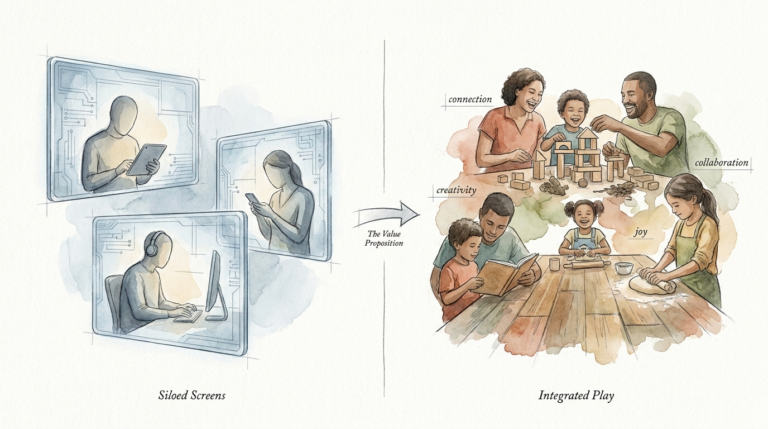
Transitioning from a battle over minutes to a conversation about value is the secret to long-term success. When you stop acting as a “screen-time warden” and start acting as a “digital mentor,” you change the power dynamic. It is about helping them trade Single-Use Passive Scrolling for Multi-Use Creative Mastery.
how to limit screen time for teenagers
Limiting screen time for teenagers is the process of setting intentional boundaries around digital device usage to prioritize physical health, mental well-being, and real-world interactions. In a world where 59.9% of heavy screen users report feeling infrequently well-rested, these boundaries act as essential health interventions. It is not just about turning off the Wi-Fi; it is about teaching a developing brain how to self-regulate in an environment designed to be addictive.
In real-world terms, this looks like moving away from “zombie scrolling” on social media and toward “active engagement.” For example, 15 minutes of watching a tutorial to learn a new skill is vastly different from 15 minutes of mindlessly swiping through short-form videos. Effective limits recognize these differences and encourage high-value digital activities.
Think of screen time like nutrition. A “digital diet” full of passive consumption is like eating junk food; it provides a quick hit of dopamine but leaves the user feeling empty and lethargic. By implementing structured limits, you provide the “vitamins” of boredom and quiet time that are necessary for a teen’s creativity to flourish.
How to Implement a Digital Strategy That Actually Works
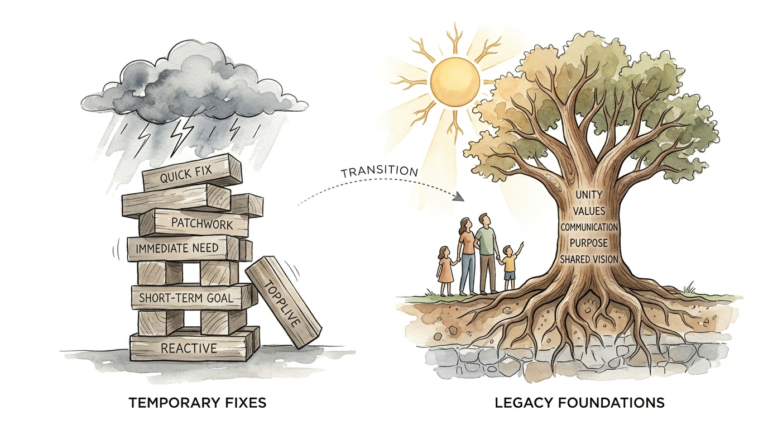
Effective screen management requires a shift from “restriction” to “intentionality.” You cannot simply take the phone away and expect a teenager to know what to do with their newfound freedom. You must build a framework that replaces the digital void with meaningful alternatives.
The first step is establishing a Family Media Plan. This isn’t a list of “don’ts,” but a collaborative agreement that defines where, when, and how technology is used. Start by designating tech-free zones, such as the dinner table and bedrooms. Removing devices from the bedroom is particularly critical, as late-night blue light exposure is a primary driver of irregular sleep routines in adolescents.
Next, use technology to manage technology. Modern parental control apps like Qustodio or Bark allow you to set specific app limits and schedules. Instead of a hard “off” switch, you can allow unlimited access to educational or creative tools while capping social media at 60 minutes. This teaches your teen that their device is a versatile tool, not just a social validation machine.
Finally, prioritize “active” screen time over “passive” scrolling. Encourage your teen to use their device for coding, digital art, or video editing. When they are creating something, they are building executive function and problem-solving skills. These “digital producer” habits are far easier to manage because they are goal-oriented rather than addiction-driven.
The Benefits of Healthy Digital Boundaries
The most immediate benefit of limited screen time is the restoration of the “Default Mode Network” in the brain. This is the mental state activated during boredom or daydreaming, which is essential for processing emotions and generating creative insights. When every spare second is filled with a screen, this network never has a chance to fire.
Beyond creativity, there are measurable physical and mental health advantages. Teens with lower screen usage report better sleep quality and higher levels of social and emotional support. By reducing digital noise, they are forced to engage in face-to-face interactions, which builds the nuanced social skills that emojis simply cannot replicate.
From a future-readiness perspective, a teen who manages their screen time effectively is developing a competitive edge. The ability to focus on deep work without being distracted by notifications is becoming one of the most valuable skills in the modern economy. You are essentially training them to be the masters of technology rather than its subjects.
Challenges and Common Mistakes
One of the most frequent errors parents make is the “Do as I say, not as I do” trap. You cannot expect a teenager to put down their phone if you are scrolling through Facebook during their soccer game. Modeling behavior is the most powerful tool in your arsenal; if you don’t show them what a healthy relationship with tech looks like, they will never find it.
Another challenge is being too restrictive too quickly. Sudden, harsh bans often lead to “digital sneaking,” where teens find ways to bypass filters or use devices in secret. This breaks the foundation of trust. Instead, focus on small, trackable reductions—cutting back by just 15 minutes a day can lead to significant long-term habits without triggering a rebellion.
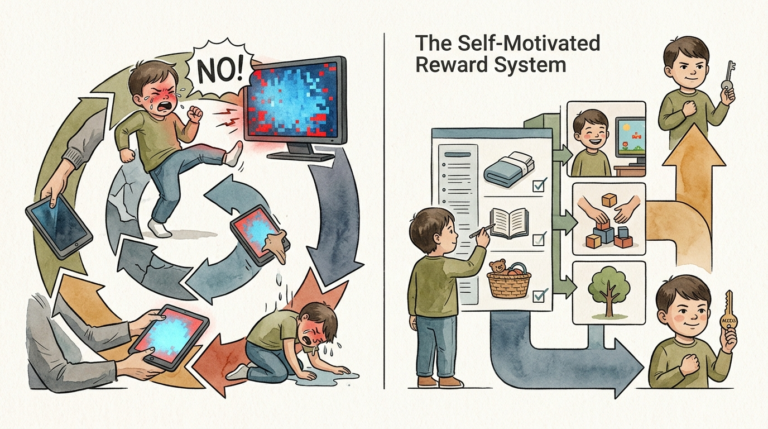
Using screens as a “behavior management tool” is another pitfall. When you use screen time as the primary reward or punishment, you inadvertently increase its value in the teen’s eyes. It becomes a high-stakes currency. Focus instead on “natural consequences”—if they don’t get their chores or homework done because of a game, the game is unavailable until the work is finished.
Limitations: When Restrictions May Not Be Enough
While boundaries are essential, they are not a cure-all for deeper issues. If a teen is using screens to “numb out” from social anxiety, bullying, or depression, simply cutting the Wi-Fi may exacerbate their distress. In these cases, the screen usage is a symptom, not the root cause. You must address the underlying emotional need that the device is fulfilling.
Environmental constraints also play a role. If a teen’s entire social circle only interacts via Discord or gaming servers, a total ban can lead to genuine social isolation. This is why “Digital Nutrition” is a better model than “Digital Starvation.” You have to allow enough access for them to remain socially relevant while preventing that access from becoming all-consuming.
It is also important to recognize that the teen brain is neurobiologically “wired” for social evaluation and immediate rewards. The prefrontal cortex, which handles impulse control, is the last part of the brain to develop. Even with perfect boundaries, a teen will still make mistakes. Your goal is not perfection, but the gradual development of self-regulation skills.
Passive Scrolling vs. Creative Mastery
To help your teen understand why you are setting limits, it can be helpful to compare how different digital activities affect their brain and their future.
| Feature | Single-Use Passive Scrolling | Multi-Use Creative Mastery |
|---|---|---|
| Brain Impact | High dopamine, low effort; leads to “brain fog.” | High engagement; builds problem-solving and focus. |
| Skill Level | Zero skill required; purely consumer-based. | Requires learning software, logic, or artistic theory. |
| Long-Term Value | Wasted hours with no tangible output. | Resulting in a portfolio, a game, or a useful skill. |
| Emotional State | Often leads to FOMO or comparison-based anxiety. | Sense of accomplishment and “flow” state. |
Practical Tips for Immediate Improvement
If you want to see a change today, start with these actionable steps. These are designed to reduce friction and build momentum in your household.
- The “Phone Bed” Routine: Buy a charging station for the kitchen or hallway. All devices “go to sleep” at a set time (e.g., 9:00 PM) and stay there until morning.
- Enable “Grayscale” Mode: Turn the phone’s display to black and white in the accessibility settings. This makes the colorful icons of social media apps much less stimulating and addictive.
- Batch Notifications: Teach your teen to turn off non-human notifications. They don’t need a buzz every time someone likes a photo, only when a real person sends a direct message.
- The 1-for-1 Rule: For every hour of “passive” screen time (YouTube/TikTok), they must spend an hour in “green time” (outdoors) or “active” screen time (creating/learning).
Small adjustments often yield the biggest results. By focusing on these specific technical and behavioral tweaks, you remove the “invisible” hooks that keep teens glued to their displays longer than they intended.
Advanced Considerations: The Neurobiology of the Teen Brain
Serious practitioners of “digital parenting” should understand that a teenager’s brain is not just a smaller adult brain. It is a brain in the middle of a massive structural renovation. The amygdala—the emotional center—is highly active, while the prefrontal cortex—the logical center—is still under construction.
This means that when a teen receives a notification, the “reward” center of their brain fires much more intensely than an adult’s would. They are physiologically more susceptible to the “persuasive design” used by tech companies. Understanding this helps you approach limits with empathy rather than anger.
Furthermore, the “Fear of Missing Out” (FOMO) is a legitimate evolutionary drive for teens. In the wild, being excluded from the tribe was a death sentence. Social media hijacks this survival instinct. Your job is to provide them with enough “real-world” tribal connection that the digital version feels like a supplement rather than a lifeline.
Examples: Real-World Scenarios
Consider the case of a 14-year-old who spends 4 hours a day on TikTok. Instead of a total ban, the parents introduced “Project-Based Access.” They agreed that if the teen spent one hour learning video editing software like DaVinci Resolve or CapCut to make high-quality edits, that time didn’t count against their social media limit. Within three months, the teen was spending more time editing and less time scrolling because the “creation” was more rewarding than the “consumption.”
In another scenario, a family struggling with dinner-time distractions implemented a “Phone Basket Challenge.” Everyone, including the parents, puts their phone in a basket by the door. The first person to touch their phone during dinner has to do the dishes. By gamifying the boundary and holding everyone accountable, the tension around “taking the phone away” was replaced by a shared family goal.
Final Thoughts
The goal of limiting screen time for teenagers is not to eliminate technology, but to master it. By shifting from a focus on the clock to a focus on the content, you help your teen develop the digital literacy they need to thrive in a high-tech world. Remember, every hour they spend off the screen is an hour they spend learning who they are without an algorithm telling them who to be.
Start small, be consistent, and always lead by example. When you prioritize connection over control, the digital boundaries you set will stop feeling like a cage and start feeling like a launchpad. You are not just limiting their screen time; you are expanding their potential.
Sources
1 northeastohioparent.com | 2 lindnercenterofhope.org | 3 raisingteenagers.com.au | 4 devorahheitner.com | 5 annarborfamily.com | 6 sbm.org | 7 embassy.camp | 8 mq.edu.au | 9 teachkidsart.net | 10 psychologytoday.com