how to limit screen time for toddlers
Are you paying for ‘digital learning’ when the best classroom is free in your backyard? We spend hundreds on ‘educational’ apps, but research shows toddlers learn more from a pile of sticks and a mud kitchen. Here is how to reclaim their attention without spending a dime.
Modern parenting often feels like a race to find the next “genius-making” app. We subscribe to platforms promising to teach phonics, coding, and Mandarin to two-year-olds. We tell ourselves it is an investment in their future. Yet, the most sophisticated hardware ever created—the human brain—was designed to interface with the physical world, not a glowing rectangle.
The average household now spends significant sums on digital subscriptions. These costs stack up quickly when you factor in monthly fees for premium learning platforms and the hardware required to run them. Meanwhile, the most effective tools for cognitive and sensory development are lying on the ground outside. Reclaiming your child’s focus starts with understanding that “educational” content is often just a high-tech distraction from real-world mastery.
how to limit screen time for toddlers
Limiting screen time for toddlers is the practice of setting intentional boundaries on how much and what kind of digital media a young child consumes. This topic exists because the toddler years are a critical window for brain development. During this stage, neural connections are formed at an incredible rate, shaped primarily by physical movement and sensory input.
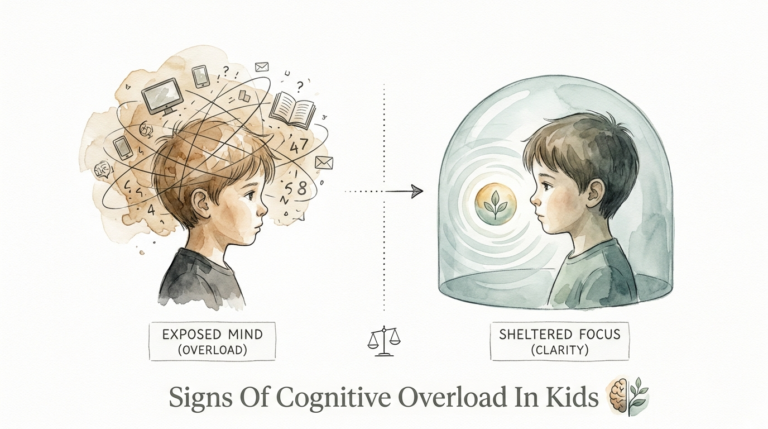
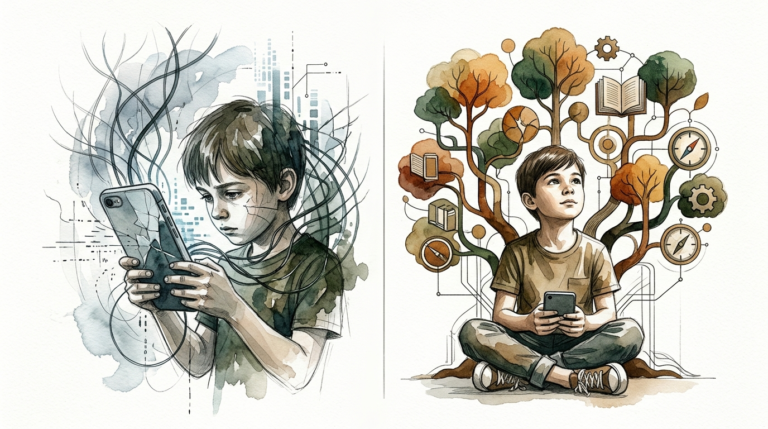
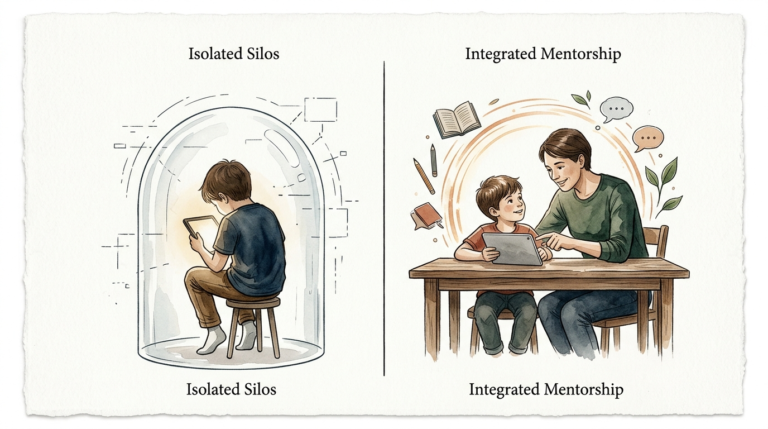
Real-world situations often test these limits. You might reach for a tablet during a long car ride or while trying to cook dinner. These “digital babysitters” provide a quick hit of dopamine that keeps a child quiet, but they do not provide the “serve and return” interaction kids need. In simple terms, a screen is a one-way street, while healthy development requires a two-way conversation with the environment.
Experts suggest that for children under 18 to 24 months, screen use should be restricted almost entirely to video chatting with family. For children aged two to five, the recommended limit is one hour per day of high-quality, interactive programming. High-quality content means shows or apps that encourage a child to think, move, or interact with a caregiver, rather than just passively watching flashing lights.
Think of screen time like a digital dessert. It is fine in small, infrequent doses, but it cannot replace the “meat and potatoes” of childhood development: physical play. When a child spends hours on a device, they miss out on the complex physics of balancing a stick or the fine motor challenge of picking up a pebble. These physical tasks are what actually build the architecture of the brain.
The Mechanics of Nature-Based Learning
Nature play works because it provides “loose parts” that do not have a pre-determined function. A plastic toy truck is always a truck. A stick, however, can be a magic wand, a bridge for ants, a stirring spoon for mud soup, or a structural support for a tiny fort. This open-ended nature forces the brain to engage in high-level symbolic thinking and creative problem-solving.
Sensory processing is another core principle of outdoor play. When a toddler plays in a mud kitchen, they are managing multiple inputs at once. They feel the cold, wet texture of the mud, hear the squelch of the water, and smell the earthy scent of the soil. This “multi-sensory” environment helps the brain organize information more effectively than the flat, two-dimensional experience of a screen.
Implementing a nature-first approach is simpler than most people think. It does not require a forest or a massive garden. A small patch of dirt, a few old pots and pans, and a bucket of water are all that is needed to create a “mud kitchen.” This setup allows children to mimic adult behaviors—like cooking—while experimenting with the physical properties of natural materials.
Actionable advice for parents includes focusing on “process over product.” In an app, there is usually a right answer or a reward for finishing a task. In nature, the reward is the activity itself. Encourage your child to dig, pour, and pile without worrying about the end result. This shifts their motivation from external validation (digital badges) to internal curiosity.
The Cognitive and Physical Benefits
Practical benefits of trading apps for the outdoors are measurable and immediate. Research indicates that children who play outside regularly have better motor skills, improved balance, and higher levels of physical fitness. Climbing over rocks and running on uneven ground strengthens the vestibular system, which is responsible for spatial orientation and balance.
Mental health gains are equally significant. Soil contains a “friendly” bacterium called Mycobacterium vaccae. Exposure to this microbe has been shown to stimulate the immune system and trigger a release of serotonin in the brain. Serotonin is a natural mood stabilizer that helps children feel calmer and more relaxed. This is essentially a free, natural antidepressant for your child’s developing nervous system.
Cognitive development also takes a massive leap in natural settings. Because nature is unpredictable, children must constantly adapt. They have to figure out why a leaf floats on water but a stone sinks. These small “experiments” build the foundations of scientific inquiry and critical thinking. Digital apps, by contrast, are closed systems where every outcome is pre-programmed, leaving little room for genuine discovery.
Social skills flourish when children play in unstructured environments. Without a screen to focus on, toddlers are more likely to interact with peers or caregivers. They learn to negotiate roles, share “ingredients” in the mud kitchen, and communicate their imaginative ideas. These “soft skills” are far more predictive of future success than knowing how to swipe through a digital alphabet.
Challenges and Common Pitfalls
The “digital babysitter” trap is the most frequent error parents make. It is incredibly tempting to use a screen to manage a toddler’s behavior in public or during busy times. This mistake happens because screens are effective at creating immediate silence. However, over-reliance on this tool prevents a child from learning how to self-regulate or cope with boredom.
Mistaking “educational” marketing for developmental value is another pitfall. Many apps use bright colors, loud sounds, and frequent rewards to keep children engaged. This is often “impoverished” stimulation. It triggers a dopamine loop that mimics addiction rather than true learning. Parents may think their child is a “fast learner” because they can navigate an iPad, but this skill does not translate to real-world cognitive mastery.
Avoid the “over-scheduling” mistake when moving to nature play. Some parents feel they need to lead every outdoor activity or turn a walk into a formal science lesson. This can backfire by making the outdoors feel like another chore. True nature play should be child-led and unstructured. Your role is to provide the space and the materials, then step back and observe.
Handling “screen withdrawal” is a major challenge. If a child is used to high-stimulation digital media, the “low-stimulation” environment of a backyard can feel boring at first. This boredom often leads to whining or tantrums. Many parents give in at this point, but this is exactly when the brain starts to transition into creative mode. Pushing through the initial boredom is essential for reclaiming their attention.
Limitations and Environmental Constraints
Realistic constraints often make nature play seem difficult. Families living in urban apartments without private yards may feel that outdoor exploration is out of reach. In these cases, public parks, community gardens, or even “sensory bins” filled with soil and sticks on a balcony can serve as substitutes. The goal is the material, not necessarily the location.
Weather is a common barrier. Rain, snow, or extreme heat can discourage outdoor time. However, many nature-based educators follow the mantra: “There is no such thing as bad weather, only bad clothing.” Investing in a good pair of rain boots and a waterproof suit can turn a rainy day into a high-level sensory experience involving puddles and mud.
Safety concerns often prevent parents from letting their children explore. We worry about germs, sharp sticks, or falls. While these risks exist, “risky play” is actually a vital part of development. It teaches children how to assess their own physical limits and build confidence. Total avoidance of minor risks can lead to physical clumsiness and anxiety later in life.
Time is the ultimate limitation. Modern parents are busier than ever, and a 15-minute app session is easier than a 60-minute park visit. To make this sustainable, integration is key. Nature play does not have to be a separate event; it can be as simple as letting the toddler play with a bucket of water on the porch while you answer emails nearby. Focus on frequency over duration.
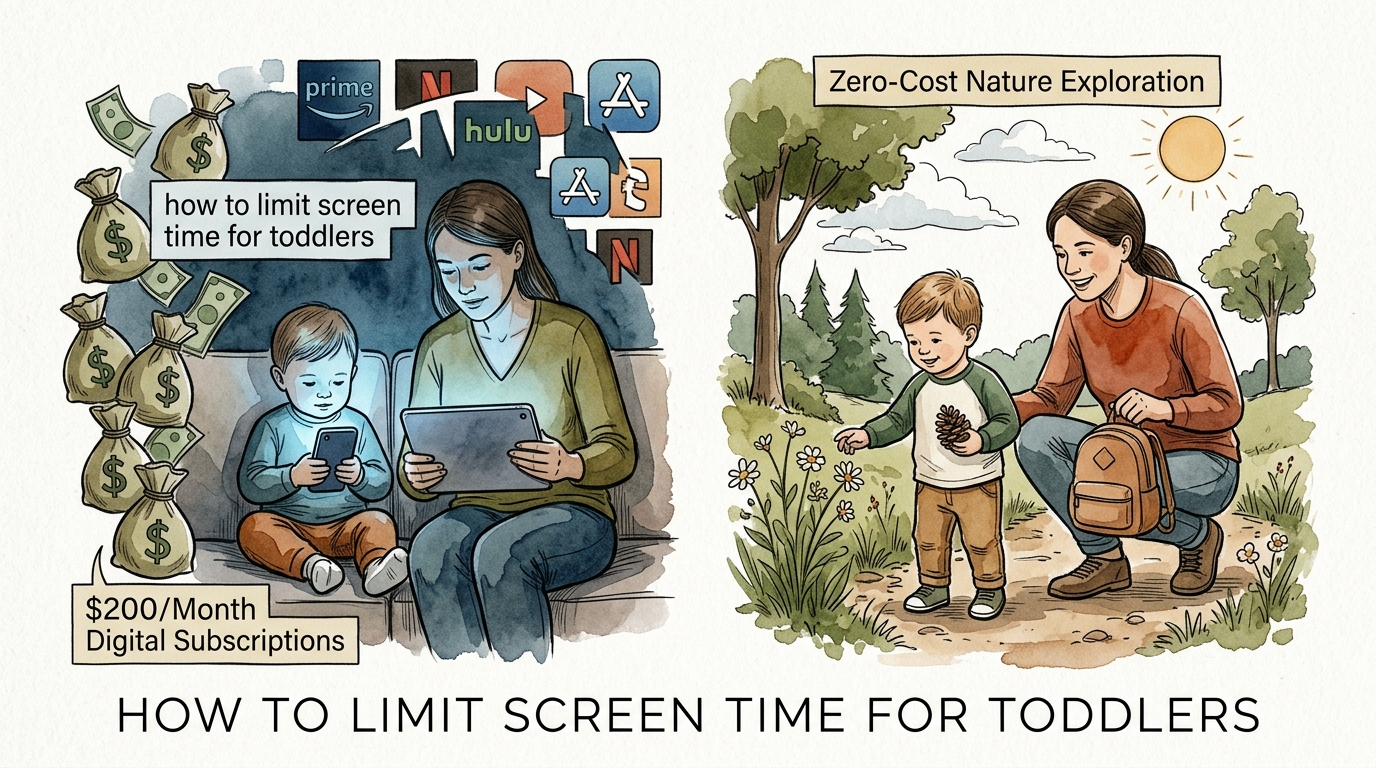
$200/Month Digital Subscriptions vs Zero-Cost Nature Exploration
Comparing the costs of digital and natural learning reveals a staggering difference in both finances and outcomes. Digital learning often requires a “toll” to access, whereas nature provides a premium experience for free.
| Factor | Digital Subscriptions | Nature Exploration |
|---|---|---|
| Direct Cost | $15 – $200 per month (Apps + Hardware) | $0 (Sticks, mud, stones) |
| Cognitive Load | High dopamine, low-effort interaction | Deep focus, high-effort problem solving |
| Physical Impact | Sedentary, eye strain risk | Active, motor skill development |
| Longevity | Limited by software updates and battery | Limitless, evolves with the child |
| Skill Focus | Rote memorization, swiping | Executive function, creativity, grit |
The financial cost is only the surface level. The real “cost” of digital learning is the opportunity cost of what is being replaced. While an app might teach a child to identify the letter “A,” nature play is teaching them how to focus, how to fail, and how to interact with the physical laws of the universe. One is a narrow skill set; the other is a foundational operating system for life.
Practical Tips for Success
Start small by designating “screen-free zones” and “screen-free times” in your home. Mealtimes and bedrooms should be strictly digital-free. This creates natural breaks in the day where the brain can reset and the child is forced to find other ways to entertain themselves. Modeling this behavior is crucial—your toddler will not want to put down the screen if yours is always in your hand.
Create a “Yes Space” outdoors. This is an area where the child is allowed to get as messy as they want without being told “no.” A mud kitchen or a digging pit are perfect for this. When a child is free from the fear of getting dirty, their exploration becomes much deeper and more persistent. Keep old towels and a change of clothes near the door to make the cleanup process less stressful for you.
Use “Transition Tools” to move from screens to play. Many tantrums occur because the switch from a high-dopamine app to a lower-stimulation activity is too jarring. Use a physical timer to give a five-minute warning. Instead of just “turning it off,” try to bridge the gap. For example, if they are watching a show about dinosaurs, suggest going outside to “find dinosaur fossils” in the dirt.
Introduce “Loose Parts” gradually. You do not need to buy a fancy outdoor playset. Collect things like pinecones, large stones, PVC pipe offcuts, and old wooden spoons. Keep them in a basket outside. These items trigger the imagination in a way that finished toys cannot. Periodically rotating these items keeps the “learning lab” feeling fresh and exciting for the toddler.
Advanced Considerations: Neuroplasticity and Executive Function
Understanding the neuroscience behind these activities helps serious practitioners make better decisions. The toddler brain is in a state of rapid “synaptic pruning.” The pathways that are used frequently become stronger, while those that are neglected wither away. Screen time often reinforces “bottom-up” attention, which is reactive and driven by external stimuli like flashes and sounds.
Nature play, conversely, builds “top-down” attention. This is the ability to direct your own focus and ignore distractions. When a child is trying to balance a heavy rock on top of a wall, they are using their prefrontal cortex to plan, execute, and adjust. This is the birthplace of executive function, which includes working memory, mental flexibility, and self-control. These are the primary predictors of academic and life success.
The “Dopamine Loop” is another critical concept. Apps are designed to provide intermittent rewards—dings, stars, and level-ups—that flood the brain with dopamine. Over time, this can desensitize the reward system, making “real life” feel boring and unfulfilling. Nature provides a much slower, more sustainable dopamine release. It teaches the brain that effort leads to reward, which is the foundation of “grit” and persistence.
Proprioceptive input is an advanced physical consideration. This is the “internal sense” of where your body parts are in space. Digging in heavy mud or carrying large sticks provides “heavy work” for the muscles and joints. This input is incredibly grounding for the nervous system. It helps children who may be hyperactive or easily overwhelmed to feel more “in their bodies” and regulated.
Examples and Realistic Scenarios
Consider the scenario of a toddler learning about “gravity.” In a digital app, they might drag an apple to the ground and see a cartoon animation. They have learned a visual association, but their body has not “felt” the concept. The brain has expended very little energy, and the lesson is easily forgotten once the device is turned off.
Now, consider that same toddler in a mud kitchen. They are pouring water from a tall pitcher into a shallow bowl. They see the water splash, feel the weight of the pitcher changing as it empties, and realize that the water always goes down. If they spill, they have to figure out how to clean it up or how to get more water. This is a 360-degree lesson in physics, volume, and responsibility.
Another example involves language development. An app might repeat the word “leaf” ten times. A child might learn to say the word, but they lack context. In the backyard, a parent might say, “Look at this crunchy, brown leaf.” The child touches the leaf, hears the crunch, and sees the color. The word “leaf” is now anchored to a rich network of sensory data, making the language acquisition much deeper and more permanent.
Social negotiation also looks different. In a digital game, the “rules” are enforced by the code. If a child wants to do something the game doesn’t allow, they simply can’t. In nature, if two children both want the same “best” stick, they have to talk, argue, and eventually find a solution. These “muddy negotiations” are where children learn the most important lessons in human interaction.
Final Thoughts
Reclaiming your child’s attention does not require a massive lifestyle overhaul or a move to the wilderness. It simply requires a shift in perspective. The belief that we must buy “educational” tools to ensure our children’s success is a modern myth. The most powerful learning environment has always been, and will always be, the one that is messy, unpredictable, and free.
By prioritizing “green time” over “screen time,” you are giving your child more than just a break from technology. You are giving them the chance to build a resilient, creative, and capable brain. You are teaching them that the world is something to be explored and mastered, not just swiped and consumed. The long-term benefits for their physical health, emotional stability, and cognitive power far outweigh any temporary quiet provided by a tablet.
Start today by turning off the devices and opening the back door. Let them get muddy. Let them get bored. Let them figure out what to do with a pile of sticks. You will find that when you stop paying for “digital learning,” the real learning finally begins. The best part is that this premium education is already waiting for you, just a few steps away.
Sources
1 screenwiseapp.com | 2 mayoclinic.org | 3 cacfp.org | 4 commonwealthpeds.com | 5 compasschildcare.com | 6 mcm.org | 7 communityplaythings.com | 8 safariltd.com | 9 natureplaywa.org.au | 10 chop.edu | 11 harvard.edu | 12 thescreenguardians.com | 13 1stepfamilywellness.com | 14 lemon8-app.com | 15 nih.gov | 16 cmsouthernmn.org