screen free activities for families
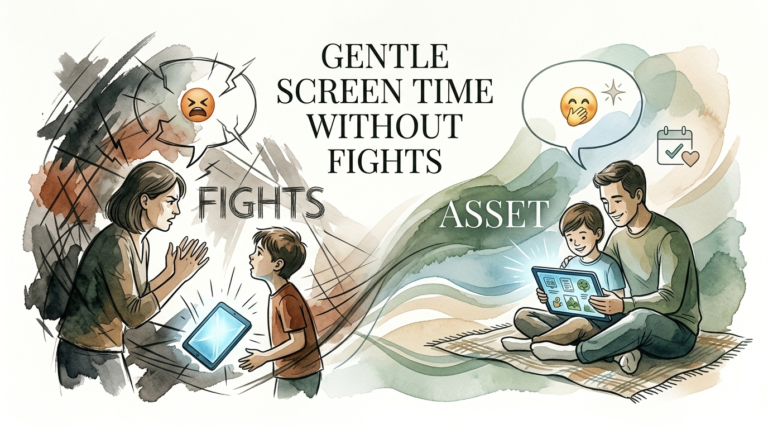
Being in the same room isn’t the same as being together. Move from silos to synergy. Screens often isolate us even when we’re side-by-side. These integrated activities force collaboration and build stronger bonds.
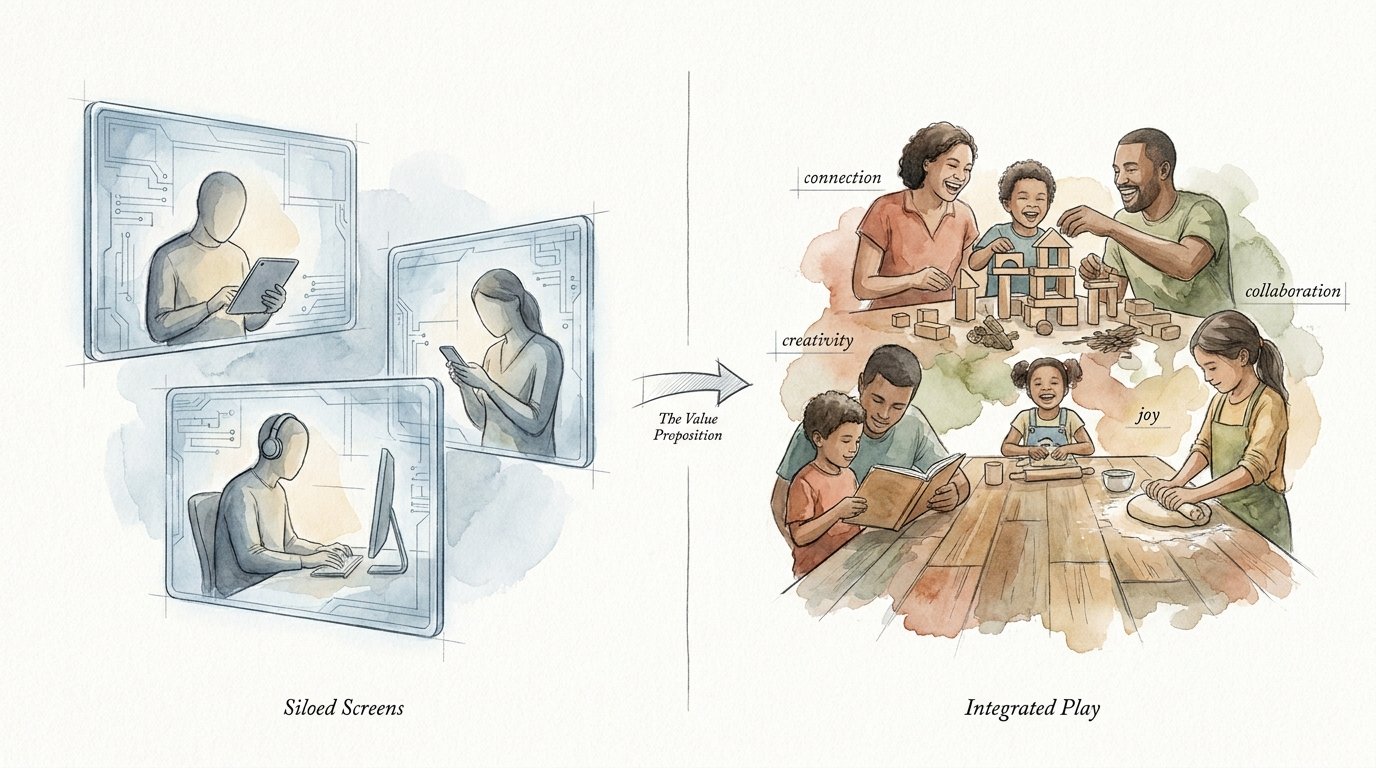
Imagine your living room right now. Everyone is there, but everyone is elsewhere. One person is scrolling through a feed. Another is battling a digital boss. A third is watching “satisfying” videos. This is the siloed life. It feels like connection because the bodies are present, but the minds are miles apart.
True synergy happens when you collapse those silos. It requires a shift from passive consumption to active, shared creation. This guide isn’t just about “putting phones away.” It is about reclaiming the neurobiological magic that only happens when humans interact without a glowing filter. We are going to explore how to turn your home into a hub of integrated play.
screen free activities for families
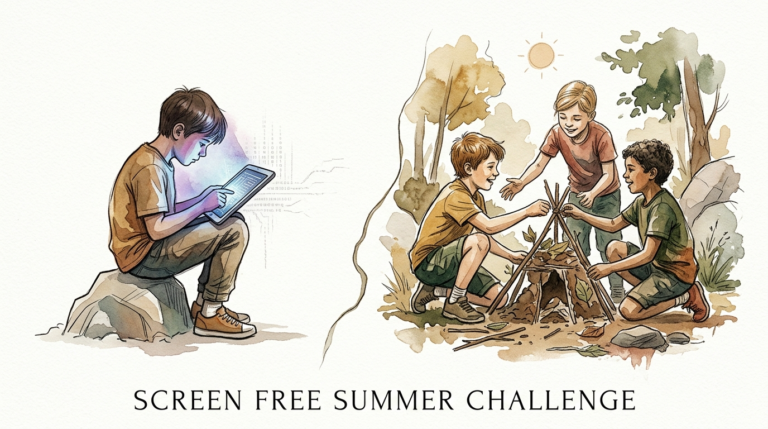
Screen-free activities are intentional engagements that prioritize face-to-face interaction over digital interfaces. They are not merely “time-fillers.” They are essential tools for developmental growth. In the first few years of life, children must master social and emotional tasks like identifying emotions and learning empathy. These skills require live, in-person interactions with caregivers that screens simply cannot provide.
In a real-world context, these activities serve as “co-regulation” sessions. When a child struggles with a complex puzzle or a messy craft, they look to a parent’s reaction. That shared moment of frustration or triumph builds the foundation for mental health and resilience. While digital media often provides “pre-packaged” entertainment, screen-free play is open-ended. It allows for exploration, independence, and the development of regular circadian rhythms by avoiding sleep-disrupting blue light.
Modern families use these activities to break the “dopamine loop” created by high-speed digital content. Instead of the quick, isolated hits of pleasure from a “like” or a game level, families engage in “slow-burn” rewards. These come from finishing a long-term gardening project, building a complex LEGO city, or mastering a new board game strategy. These moments create a shared history and a unique “family culture” that no app can replicate.
How to Transition from Silos to Synergy
The shift away from screens doesn’t happen by accident. It requires a system. If you simply pull the plug, you will face resistance, boredom, and friction. You must replace the digital vacuum with high-energy, high-value alternatives.
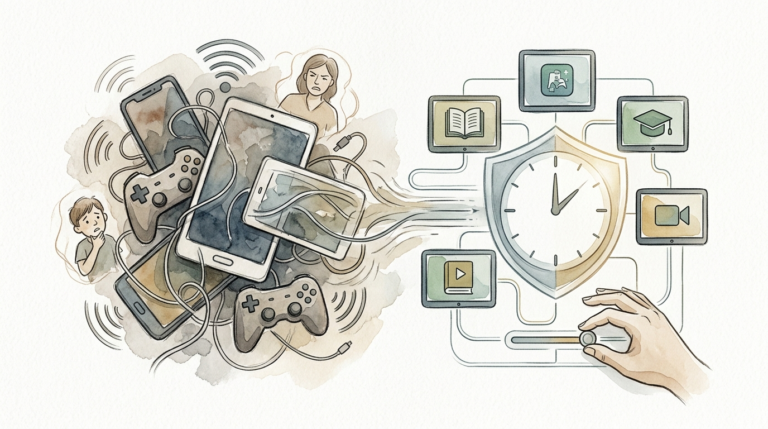
Start by auditing your environment. Designate specific areas of the house as “No-Fly Zones” for devices. The dinner table, bedrooms, and the kitchen should be sacred spaces for conversation and connection. When you enter these zones, the phones stay in a “charging basket” in a common area. This removes the temptation of the “phantom vibrate” and signals that the person in front of you is the priority.
Use the “Scaffolding Method” for new activities. Don’t expect your family to jump into a three-hour strategy game immediately. Start with short, 15-minute bursts of high-engagement play. This could be a quick card game or a collaborative drawing session. Gradually increase the complexity as everyone’s “attention muscles” grow.
Assign roles to ensure everyone is a stakeholder. In a family cooking session, one person is the “Head Chef” (the one with the most experience), another is the “Prep Specialist,” and the youngest can be the “Official Taste Tester.” Giving everyone a specific job prevents passive hovering and forces active collaboration. This is the heart of synergy—the idea that the whole is greater than the sum of its parts.
The Biological and Social Benefits of Unplugging
The benefits of moving to integrated play are measurable and profound. Research shows that families who routinely engage in screen-free time experience fewer conflicts and more positive interactions. This isn’t just a feeling; it is neurobiology in action.
One major advantage is the release of oxytocin, often called the “bonding hormone.” This occurs during physical touch, eye contact, and shared laughter—elements that are frequently absent during siloed screen time. Screen-free play also supports “Social-Emotional Learning” (SEL). It forces children to read social cues, facial expressions, and tone of voice. These are the building blocks of emotional intelligence.
Beyond the social aspect, there are significant cognitive gains. Screens often deliver entertainment in a way that requires very little “executive function.” In contrast, screen-free activities like building a fort or organizing a scavenger hunt require planning, working memory, and impulse control. You are essentially giving your brain a workout that a smartphone app cannot replicate.
Physical health also takes a leap forward. Excessive screen time is linked to obesity, poor sleep, and eye strain. By choosing active play—like a family bike ride or a “Backyard Olympics”—you are establishing healthy rhythms. Better sleep leads to better focus the next morning, creating a positive feedback loop that benefits school and work performance.
Common Mistakes and How to Avoid Them
Many families fail at “going screen-free” because they treat it like a punishment. If the kids feel they are being “sentenced” to a board game, they will resist. The goal is to make the alternative more attractive than the screen.
A frequent error is the “Do as I say, not as I do” approach. If you are telling your teen to put their phone away while you are checking your work email, the message is lost. You must model the behavior you want to see. The biggest problem in many homes isn’t the kids’ screen time, but the parents’ distracted presence.
Avoid over-complicating the setup. You don’t need a $50 craft kit to have fun. In fact, complex setups often lead to stress and “cleaning anxiety.” Stick to “low-friction” activities. Watercolors, a deck of cards, or a pile of blankets for a fort are often more effective than an elaborate DIY project that requires three trips to the craft store.
Don’t force the “fun.” Some of the best bonding happens during the “boredom” phase. When screens are off and there is nothing to do, the brain eventually switches to “default mode.” This is where creativity lives. Allow your kids to be bored for a few minutes; it is the necessary precursor to original play.
Realistic Constraints and Limitations
While the goal is synergy, it is important to recognize that a 100% screen-free life is unrealistic for most modern families. Schools now require tablets for homework, and many social connections for teens happen online. The key is balance, not total abstinence.
Environmental factors can also play a role. During dark, cold winter months, outdoor activities are limited. This requires more intentionality with indoor space. If your home is small, you may need to get creative with how you rotate activities to avoid clutter and “cabin fever.”
Age gaps are another common hurdle. What excites a five-year-old might bore a fifteen-year-old. You must find “bridge activities” that scale. Legacy board games or long-term family projects—like building a raised garden bed—can provide different levels of engagement for different ages. The teen handles the construction, while the toddler handles the planting.
Finally, recognize your own energy levels. Some days, you simply won’t have the mental bandwidth for a high-synergy “Family Science Night.” It is okay to have “Low-Energy Screen-Free” options, like listening to an audiobook together or simply sitting on the porch and watching the birds.
Integrated Play vs. Siloed Screens
Understanding the difference between these two states is crucial for making better choices.
| Feature | Siloed Screens | Integrated Play |
|---|---|---|
| Connection Level | Passive/Proximal (nearby but not engaged) | Active/Synergistic (collaborative) |
| Communication | Minimal/Digital (texts or silence) | High (eye contact, verbal, cues) |
| Brain State | Dopamine-driven/Reactive | Executive-driven/Creative |
| Goal | Personal Entertainment | Shared Outcome/Memory |
Pro-Level Best Practices for Family Bonding
If you want to take your screen-free game to the next level, adopt the “Theme Night” strategy. Instead of just saying “it’s game night,” make it “International Night.” Cook a meal from a different culture, listen to that country’s music, and play a game or do a craft related to that region. This creates an immersive experience that feels like an event.
Use a “Boredom Jar.” Write down 50 different screen-free activities on slips of paper—ranging from “Read a poem out loud” to “Organize a sock-puppet theater.” When someone claims they are bored, they pull a slip. This removes the “decision fatigue” that often leads people back to their phones.
Create a “Family Media Plan.” This is a formal agreement that outlines when and where screens are allowed. By giving your children a say in the rules, they are more likely to follow them. They feel like partners in the process rather than subjects of a mandate. Revisit and update this plan as your children grow and their needs change.
Invest in “Heritage Tools.” Buy high-quality art supplies, a professional-grade telescope, or a really well-made set of woodworking tools. When the equipment feels “real” and professional, it elevates the activity. It transforms a “time-waster” into a “craft.”
Deep Insights: The Psychology of “Co-Play”
For those looking to understand the “why” behind these strategies, the concept of “Co-Regulation” is key. When families play together, they are constantly adjusting their emotional states to match one another. A parent’s calm demeanor during a competitive game helps a child learn to manage their own “big feelings.” This is a fundamental skill for long-term mental health.
We must also distinguish between “Active” and “Passive” screen time. While this article focuses on screen-free time, some digital experts argue that “Co-viewing” (watching or playing something together) is better than siloed use. However, even the best “co-viewing” lacks the physical and sensory engagement of building a real-world object. The tactile nature of screen-free play—the smell of the garden, the feel of the clay, the sound of a real laughter—engages more areas of the brain simultaneously.
Finally, consider the “Counterfeit Connection” theory. This suggests that social media and video games give us the *feeling* of connection without the *responsibility* or the *reward* of real-world relationships. By choosing screen-free activities, you are forcing the “friction” of real-world interaction. This friction is where growth happens. It is where you learn to negotiate, apologize, and celebrate together.
Practical Scenarios for Immediate Success
Scenario 1: The Backyard Bistro
Instead of a normal dinner, turn the backyard into a restaurant. The kids design the menus (art), help cook the meal (STEM/Cooking), and serve the “customers” (Social Skills). No phones are allowed at the table. The focus is entirely on the “service” and the conversation.
Scenario 2: The Living Room Fort Empire
Don’t just build one fort; build a series of “provinces” connected by tunnels. Use clips, blankets, and pillows. This requires engineering and teamwork. Once built, the family can climb inside and read stories by flashlight. This provides a sensory-rich environment that is the polar opposite of a flat screen.
Scenario 3: The Family Time Capsule
Spend a Saturday afternoon collecting items that represent your family “now.” Write letters to your future selves. This activity requires reflecting on shared values and memories. Deciding what to include forces everyone to talk about what matters most to them.
Final Thoughts
Reclaiming your family time from screens isn’t about being “anti-tech.” It is about being “pro-connection.” By moving from silos to synergy, you are giving your family the gift of presence. You are building a foundation of shared memories and essential life skills that no software update can ever replace.
Start small. Choose one activity from this guide and try it this weekend. Don’t worry if it’s messy or if there is a little whining at first. That is just the “digital detox” in action. Stay consistent, model the behavior, and watch as your home transforms from a collection of isolated screens into a thriving hub of integrated play.
Experiment with different hobbies until you find the one that “clicks” for your unique family dynamic. Whether it’s gardening, gaming, or just long walks at sunset, the important thing is that you are doing it together. The synergy you build today will be the bond that holds you together for years to come.
Sources
1 haven-psychology.com | 2 haven-psychology.com | 3 haven-psychology.com | 4 ssww.com | 5 playzusa.com | 6 screenfree.org | 7 screenfree.org | 8 connectedfamilies.org | 9 brainbalancecenters.com | 10 beyondthescreenfamilies.com | 11 medlineplus.gov | 12 psychologytoday.com | 13 workspaceforchildren.com | 14 childrenandscreens.org | 15 etspeaksfromhome.co.uk | 16 cbwchc.org | 17 serenity-counseling.org