Durable Sensory Play Tools For Kids
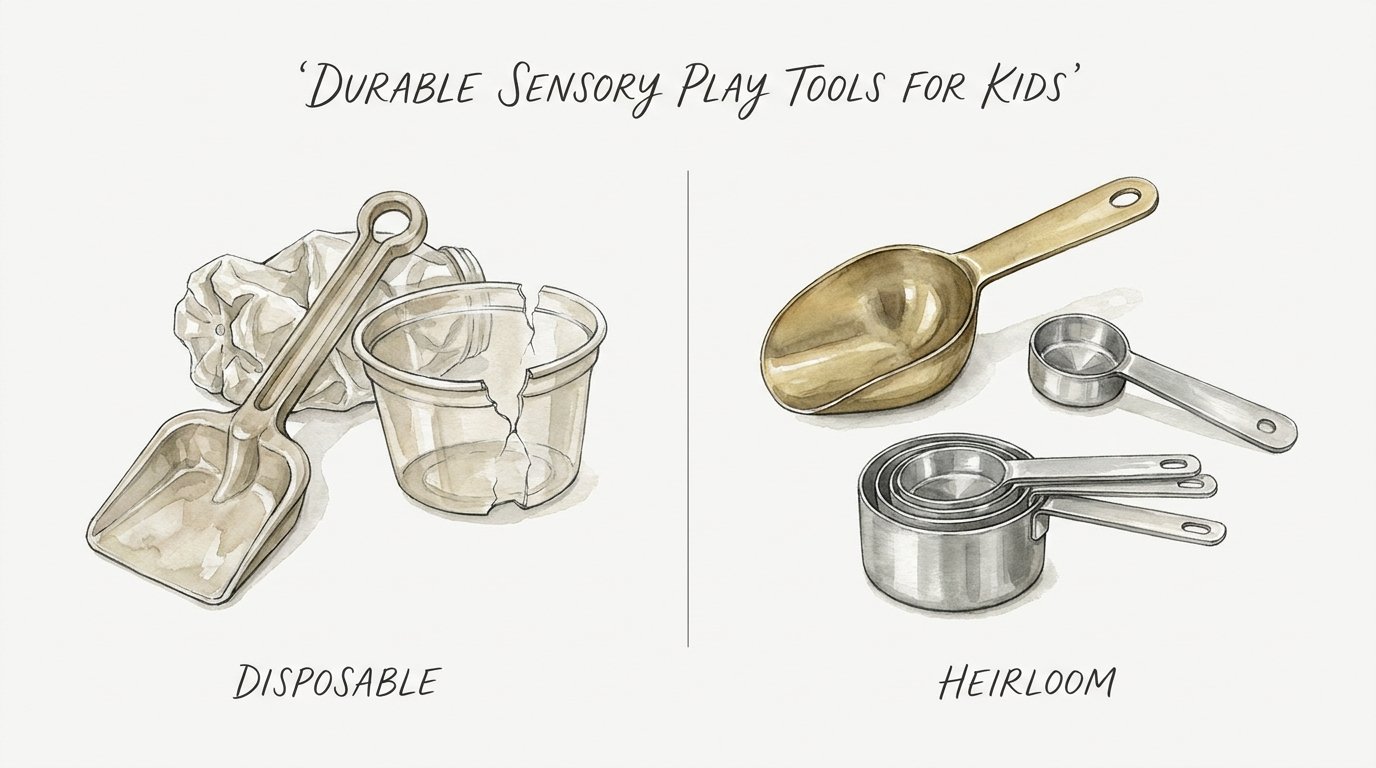
Are you buying toys that will end up in a bin by Christmas, or tools that will survive to see your grandkids? The ‘temporary’ plastic version of childhood is brittle and unsatisfying. When we give a child real tools—made of metal, wood, and stone—we aren’t just giving them a toy; we are giving them a sense of weight and importance. These tools don’t crack; they patina, carrying the memories of a decade of play.

Every parent knows the sound of a plastic shovel snapping in a sandbox. It is a hollow, disappointing noise that usually signals the end of an afternoon. Switching to durable sensory play tools changes the entire energy of the environment. Instead of fragile objects that demand careful handling to survive, kids get tools that can actually do the work.

Real materials offer a connection to the world that synthetic versions simply cannot replicate. A stainless steel bowl feels cool in the morning sun and holds heat when filled with warm water. This thermal feedback is a quiet teacher, showing children how the world actually works. Choosing heirloom-quality materials is an investment in the quality of their attention and the longevity of their play.
Focusing on durability doesn’t just save money over time. It creates a playground where the tools grow with the child rather than being replaced every six months. This guide explores how to move away from the disposable and toward the permanent in your child’s sensory experiences.
Durable Sensory Play Tools For Kids
Durable sensory play tools are functional objects made from natural materials designed to withstand heavy use and outdoor elements. These aren’t miniature versions of “real” items that break under pressure. They are high-quality implements—often repurposed from professional kitchens, gardens, or workshops—that provide intense sensory feedback through their weight, texture, and temperature.
Sensory play is the foundation of early childhood development, but the industry has largely shifted toward cheap, colorful plastics. These “toys” often have a single purpose and a short lifespan. In contrast, durable tools like cast iron pots, copper scoops, and hardwood blocks are open-ended. They become whatever the child needs them to be, from a treasure chest to a scientific laboratory.
Real-world environments like Montessori classrooms and Waldorf schools have prioritized these materials for over a century. They recognize that a child who handles a heavy brass bell or a smooth river stone is practicing more refined motor control than a child hitting a plastic button. The physical resistance and sensory richness of these tools require more engagement from the brain and body.
Durable tools are found in mud kitchens, sand pits, and water tables across the globe. They are the backbone of “loose parts” play, a concept where children use a variety of materials to build, create, and experiment. Because these tools don’t shatter, children feel empowered to take risks and test the limits of their physical world without fear of breaking their equipment.
How It Works: Curating a High-Quality Sensory Environment
Building a collection of durable tools starts with a shift in mindset. Look for materials that have a long history of human use, such as stainless steel, copper, granite, and dense hardwoods like oak or maple. These materials are chosen for their resilience and their ability to be restored if they ever show wear.
Setting up a sensory area begins with a sturdy container or “bin.” Instead of a flimsy plastic tub, consider a galvanized steel trough or a solid wood tray. A heavy base prevents the play area from sliding around or tipping over when multiple children are leaning against it. Once the base is set, layer in tools of varying weights and sizes.
Introduce tools that serve specific mechanical purposes. A mortar and pestle made of stone allows a child to crush dried lavender or chalk, teaching them about force and friction. A set of stainless steel measuring cups provides a satisfying “clink” when stacked and won’t warp if left out in the rain. These items offer a “real” experience that bridges the gap between play and domestic life.
Curating these tools involves a mix of new purchases and clever scavenging. Thrift stores are gold mines for heavy-duty kitchenware like colanders, ladles, and Bundt pans. These items were built to last decades in a kitchen; they will easily survive a summer in a mud pit. Ensure every item is free of sharp edges and lead-based finishes before introducing it to the play space.
Benefits of Heirloom Metal and Wood
Sensory feedback is the primary benefit of high-quality materials. When a child picks up a wooden block, they feel the grain and the warmth of the material. A metal scoop feels cold and heavy, providing proprioceptive input that tells the brain exactly where the hand is in space. Plastic, being light and uniform, provides very little information to the developing nervous system.
Durability leads to a sense of security and mastery. Children who play with tools that don’t break learn to respect their equipment without being hindered by its fragility. This fosters a “can-do” attitude where the child focuses on the task—like digging a deep hole or mixing a “soup”—rather than worrying about snapping a handle. This persistence is a key component of executive function.
Environmental stewardship is a natural byproduct of choosing heirloom tools. Most plastic toys are destined for landfills within years of their creation. Metal and wood tools can be sanded, polished, or recycled. Teaching a child to care for a wooden truck or a metal bucket introduces the concept of sustainability far more effectively than any book could.
Aesthetic value shouldn’t be overlooked. A play area filled with natural textures and muted tones is often more calming for children than a room saturated with neon plastic. This reduced visual noise allows the child to focus more deeply on the tactile and creative aspects of their play, leading to longer periods of “flow” and engagement.
Challenges and Common Mistakes
Weight is the most frequent challenge when transitioning to real tools. A large stone bowl or a cast iron skillet might be too heavy for a toddler to move safely. Always match the weight of the tool to the physical strength of the child. Oversized items can lead to pinched fingers or dropped objects that might cause injury to little feet.
Neglecting maintenance is a common error that leads to premature wear. Even the most durable materials need attention to stay safe. Wood can develop splinters if left in the sun for years without oiling. Metal can develop rust spots if stored in standing water. A few minutes of care every season ensures these tools remain in “heirloom” condition.
Ignoring safety standards for repurposed items can be dangerous. Not every vintage item is safe for kids. Old paint may contain lead, and some antique metals might have sharp solder points. Always scrub second-hand finds thoroughly and test them for structural integrity. If a wooden tool has a deep crack that could harbor bacteria, it is better to retire it or repair it properly.
Overcrowding the play space is another frequent pitfall. Because these tools are so engaging, it is tempting to provide dozens of options at once. Too many heavy items can become overwhelming and cluttered. Focus on a few high-quality “hero” pieces and rotate the smaller accessories to keep the environment fresh and manageable.
Limitations: When Plastic Might Be Necessary
Safety in water play is one area where plastic often holds an advantage. Very young children may struggle with the weight of large metal pails filled with water. In these cases, a BPA-free, high-density polyethylene (HDPE) bucket might be safer for a toddler who is still mastering their balance. Plastic is also non-reactive, making it a better choice for certain messy experiments involving acids like vinegar.
Travel and portability often require lighter materials. If you are heading to the beach or a park, hauling a set of stone bowls and iron shovels is impractical. Lightweight, high-quality silicone or recycled plastic tools are better suited for “on-the-go” play. These materials offer a middle ground between the “disposable” culture and the “heirloom” standard.
Budget constraints are a real factor for many families. Outfitting a complete sensory room with artisanal wooden blocks and copper tools can be expensive. It is important to realize that a “durable” environment doesn’t have to be bought all at once. Start with one or two high-quality items and build the collection over several years.
Extreme weather conditions can affect how metal and stone are used. In a desert climate, a metal slide or a dark stone bench can become hot enough to burn skin within minutes. Always check the temperature of outdoor tools before letting a child play with them. In these environments, wood is often the superior durable choice because it doesn’t conduct heat as aggressively as metal.
Comparison: Disposable Plastic vs. Heirloom Materials
| Feature | Disposable Plastic | Heirloom Metal/Wood |
|---|---|---|
| Lifespan | 6 months – 2 years | 10 – 50+ years |
| Sensory Feedback | Low; uniform texture/weight | High; varying weight/temp/texture |
| Repairability | None (must be tossed) | High (can be sanded/oiled/welded) |
| Environmental Impact | High (landfill bound) | Low (biodegradable/recyclable) |
| Initial Cost | Low | Moderate to High |
Practical Tips for Best Results
Start your collection at the hardware store. Small galvanized buckets, wooden mallets, and paintbrushes made with natural bristles are incredibly durable and far cheaper than many “toy” versions. These items are designed for trade professionals, meaning they can handle whatever a four-year-old throws at them. They also feel more “important” to children because they look like the tools adults use.
Use food-grade mineral oil for wooden tools. Any wood that will be used for play—especially if it might end up in a mouth—should be treated with a non-toxic oil. This prevents the wood from drying out and cracking. A quick rubdown once every few months is all it takes to keep a set of wooden blocks or a play kitchen looking and feeling like new.
Scrub metal tools with a vinegar solution. If your stainless steel scoops or copper bowls start to look dull or develop hard water spots, a mix of water and white vinegar will restore their shine without using harsh chemicals. For outdoor metal tools, a light coat of car wax can help shed water and prevent rust during the rainy season.
Teach your child how to “put the tools to bed.” Creating a ritual of cleaning and storing tools at the end of the day reinforces the value of the materials. When a child sees you carefully wiping down a metal shovel or stacking wooden trays, they learn that these items are worth caring for. This respect for materials often translates into a deeper respect for their environment as a whole.
Advanced Considerations: The Patina of Play
Embrace the concept of “patina.” Durable materials change over time, and this should be viewed as a record of play rather than damage. A copper pitcher will develop a dark, rich color; a wooden workbench will get nicks and dents. These marks tell the story of your child’s childhood and add a layer of history that plastic can never achieve.
Consider the “thermal mass” of your play area. If you are building a permanent sensory station outdoors, materials like stone and heavy timber will help regulate the temperature of the immediate area. A large cedar sandbox stays cooler in the sun than a plastic one. These small environmental differences can significantly extend the amount of time a child is comfortable playing outside.
Integrate “real” weight into developmental milestones. For children with sensory processing needs, “heavy work” is often recommended to help with regulation. Using actual metal pails and solid wood blocks provides this input naturally during play. You can scale the difficulty by changing the “fill” material from light dried beans to heavy wet sand, allowing the tools to grow with the child’s strength.
Look for “full tang” construction in handheld tools. In the world of real tools, a full tang means the metal of the tool head extends all the way through the handle. While rare in toys, you can find small garden trowels and kitchen spatulas with this design. They are virtually impossible to break at the neck, which is the most common failure point for cheaper equipment.
Examples and Scenarios
Imagine a “Mud Kitchen” set up in a backyard. Instead of a plastic play set that will fade and crack in the sun, you install a wooden potting bench. You stock it with a cast iron muffin tin, a stainless steel whisk, and a collection of smooth river stones. After a heavy rain, the child uses the whisk to mix mud in a steel bowl. The weight of the mud requires real effort to stir, strengthening their arm muscles. When play is done, the tools are hosed off. Ten years later, that same muffin tin is still in the yard, ready for the next child, while the plastic version would have been in a landfill for a decade.
Consider an indoor “Sorting Station.” A child is given a heavy teak tray divided into sections. Inside, they find brass hardware (nuts and bolts), polished wooden spheres, and pieces of raw quartz. As they sort the items, they hear the distinct sounds each material makes against the wood: the sharp “tink” of brass, the soft “thud” of wood, and the heavy “clack” of stone. This auditory variety engages the brain far more than the uniform “thump” of plastic on plastic. The child spends forty-five minutes focused on the task, captivated by the different weights and textures of the “real” objects.
Think about a “Beach Day” with a purpose. Instead of a mesh bag full of thin plastic molds, the family brings a set of nested stainless steel bowls and a sturdy wooden spade. The spade doesn’t bend when digging into the wet, heavy sand at the water’s edge. The steel bowls make perfect, smooth sand domes. At the end of the day, the tools are rinsed of salt and sand. Back at home, the bowls go into the dishwasher and then back into the kitchen for making salads. The tools are part of the family’s daily life, not just “toy” clutter that only comes out once a year.
Final Thoughts
Transitioning from disposable plastic to durable, heirloom-quality tools is a transformative choice for any household. It shifts the focus from “more stuff” to “better things,” encouraging children to engage more deeply with their environment. By providing materials with real weight and texture, you are giving your child a more honest and satisfying sensory experience.
These tools are more than just playthings; they are the artifacts of a well-lived childhood. They carry the scratches of the first “experiment” and the polish of a thousand hands. While the initial investment may be higher, the return in longevity, developmental value, and environmental responsibility is immeasurable. Your grandkids will thank you for the tools that survived to tell their story.
Start small, look for quality over quantity, and don’t be afraid to visit the local thrift store or hardware aisle. The most valuable sensory tools aren’t always found in the toy department. They are the ones that feel real, work hard, and last long enough to become part of the family history.
Sources
1 xihakidz.com | 2 xiairworld.com | 3 rockabyemommy.com | 4 creativelearningnj.com | 5 bumbutoys.com | 6 littletikescommercial.com | 7 woodandhearts.com | 8 littlepeoplescove.com | 9 lifetime.com | 10 forestoy.com | 11 babythinklab.com | 12 twentyonetoys.com | 13 tinylandus.com | 14 rhythmsofplay.com | 15 bumbutoys.com