Edible Water Bead Alternatives For Toddlers
Pro parents know that the best textures are the ones you don’t have to worry about if they end up in a toddler’s mouth. Standard water beads are a miracle of chemistry, but a nightmare for safety. The pro-level optimization is switching to large-pearl tapioca. It provides the same ‘squish’ factor and underwater visual appeal but is 100% food-grade and biodegradable. This is how you optimize for deep focus without the stress of constant monitoring.
Edible Water Bead Alternatives For Toddlers
Edible water bead alternatives are materials designed to mimic the tactile experience of traditional super-absorbent polymer beads while being completely safe for ingestion. These alternatives, most commonly large-pearl tapioca or “boba,” are made from cassava root starch. They provide a squishy, slippery, and bouncy texture that toddlers find irresistible during sensory exploration sessions.
Traditional water beads pose a significant risk because they are designed to absorb massive amounts of water, expanding up to 800% of their original size. If a child swallows one, the bead continues to grow inside the intestinal tract, which can lead to life-threatening blockages. Edible alternatives exist to solve this safety crisis, allowing children to engage in “mouthing” behavior—a natural part of their developmental process—without the risk of emergency surgery.
Think of these edible beads as the “training wheels” of sensory play. They allow a child to dive deep into a world of texture, color, and volume while the caregiver enjoys the peace of mind that comes with a food-grade setup. Whether you are using them in a simple tray or a complex water table, these pearls act as a bridge between curiosity and safety.
How to Create the Perfect Edible Sensory Bin
Creating a pro-level sensory bin starts with selecting the right pearls. You want “Large Pearl Tapioca,” often found in the baking aisle or at specialty Asian markets. These pearls start as hard, white spheres and transform into translucent, squishy orbs after cooking. Preparation is simple but requires a few tactical steps to ensure the best texture for play.
The Stovetop Prep Method
Begin by bringing a large pot of water to a rolling boil. Use a ratio of at least 8 cups of water for every 1 cup of dry pearls. This high volume of water prevents the starch from turning into a thick, gummy sludge. Once the water is boiling, slowly pour in the dry pearls and stir immediately to prevent them from sticking to the bottom of the pot.
Reduce the heat to a simmer and let the pearls cook for approximately 15 to 30 minutes. You are looking for the pearls to float to the surface and become mostly translucent. If you want a firmer bead that mimics the “bounce” of a standard polymer, stop the cooking process when the center still has a tiny white dot. For a softer, more “squish-heavy” experience, let them cook until fully clear.
Rinsing and Cooling
Once the desired consistency is reached, drain the pearls using a fine-mesh sieve. Immediately run them under cold water for several minutes. This cold shock stops the cooking process and removes the excess surface starch that makes the pearls excessively sticky. Professionals often repeat this rinse multiple times until the water runs completely clear.
Adding Vibrant Colors
Coloring the pearls is the step that truly engages a child’s visual senses. Divide the rinsed, cooled pearls into small bowls or jars. Add a few drops of food-grade coloring or natural dyes like beet juice or turmeric to each container. Let the pearls sit for 10 to 15 minutes to allow the pigment to penetrate the outer layer of the starch, then give them one final quick rinse to prevent the color from staining your child’s hands or the play bin.
Benefits of Switching to Edible Sensory Beads
The primary advantage of edible alternatives is the total elimination of severe internal injury risks. Standard water beads have been linked to thousands of emergency room visits because they are difficult to detect on X-rays and often require invasive surgery to remove. Tapioca pearls, being starch-based, simply break down and are digested if swallowed in small quantities.
Sensory play with these beads also provides measurable developmental benefits. As children scoop, pour, and pinch the slippery pearls, they are strengthening the small muscles in their hands. This fine motor development is a critical precursor to tasks like holding a pencil or using scissors. The tactile feedback from the “squish” also helps with sensory regulation, calming high-energy toddlers by focusing their attention on a single, repetitive physical sensation.
Environmental sustainability is another major benefit. Traditional polymer beads are a form of microplastic that does not biodegrade. They often end up in the soil or water systems where they can harm wildlife. Tapioca pearls are 100% biodegradable and can even be composted after the play session is over. Choosing this path supports a more eco-conscious household while still providing high-quality entertainment.
Challenges and Common Mistakes
The biggest challenge with tapioca-based beads is their inherent stickiness. Because they are made of starch, they will naturally want to clump together as they dry. Caregivers often make the mistake of leaving the pearls in a dry bin without any moisture, which leads to a giant, unplayable block of glue within an hour. To avoid this, keep a small amount of water in the bottom of the play container or add a few drops of vegetable oil to the pearls after rinsing.
Another common pitfall is improper disposal. Never pour used tapioca pearls down the sink or toilet. As the starch continues to sit in the pipes, it can expand and create a massive clog that requires a plumber to fix. Always dispose of old pearls in the trash or a compost bin. This prevents a fun afternoon of play from turning into an expensive home maintenance disaster.
Color transfer can also be a frustration for parents. While food coloring is safe, it can be potent. If the pearls are not rinsed thoroughly after the dyeing process, the color will transfer to the toddler’s skin, clothes, and even the surrounding carpet. Using a splash of vinegar during the dyeing stage can help set the color, and choosing a dedicated, easy-to-clean play space (like a hard floor or outdoor patio) is always a smart strategic move.
Limitations of Edible Water Bead Alternatives
Realistic constraints must be considered when moving away from polymer beads. The most significant limitation is shelf life. Unlike synthetic beads that can be dried out and reused for months, cooked tapioca is a food product. It will begin to degrade, smell, or even grow mold within 24 to 48 hours, especially if left in a warm environment. This makes it a “single-use” or “short-term” activity rather than a permanent toy bin fixture.
Size can also be a limitation. While large-pearl boba is significantly safer than small polymer beads, anything that fits through a toilet paper roll is technically a choking hazard for children under three. While the “edible” nature removes the internal blockage risk, the “choking” risk remains the same as any other small food item. Supervision is mandatory, and caregivers should ensure the child is capable of managing small, slippery objects before introducing them to the bin.
Texture preference varies among children. Some toddlers who are sensitive to “slimy” or “sticky” textures may find the slightly gummy feel of tapioca pearls off-putting. For these children, the standard polymer beads offer a “cleaner,” dryer tactile experience. If your child pulls their hands away in disgust, you may need to adjust the recipe by under-cooking the pearls or using a different dry sensory base like dyed rice or beans.
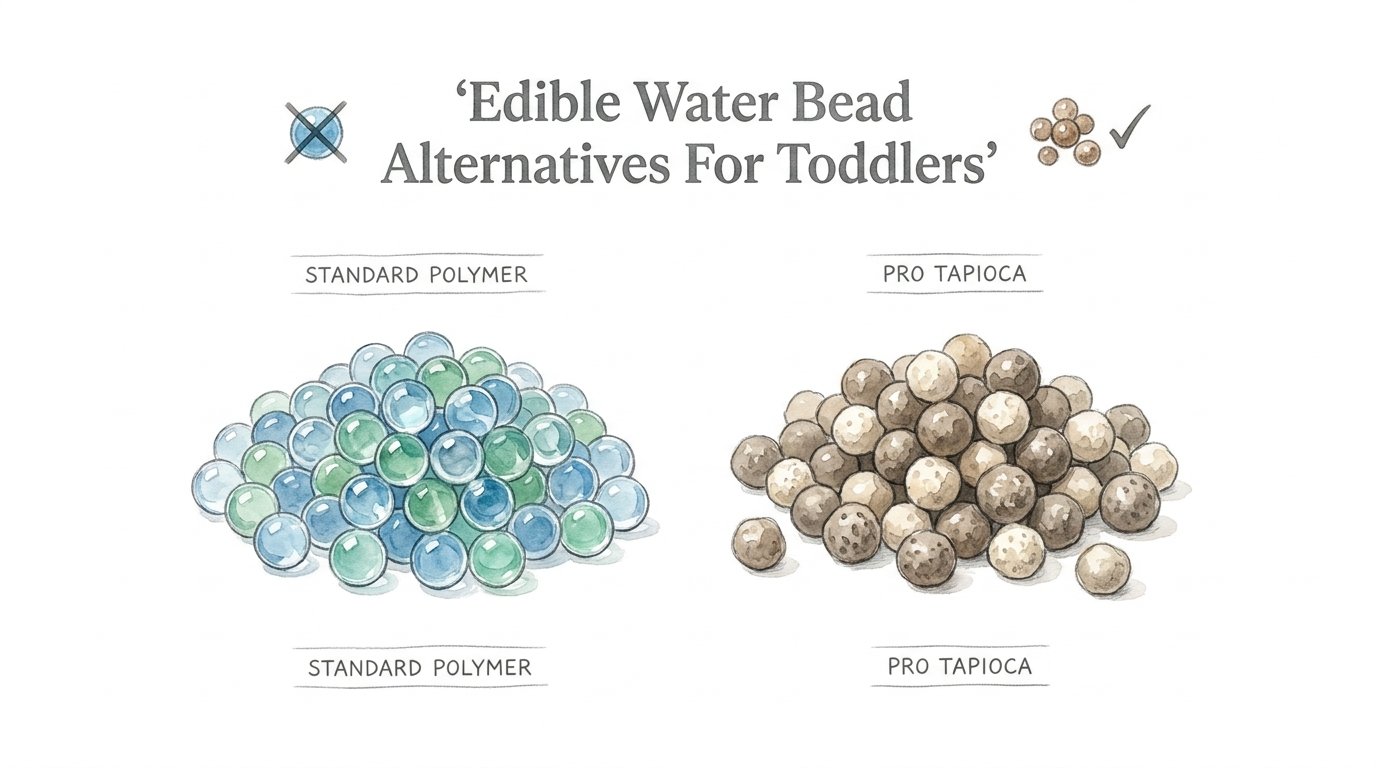
STANDARD POLYMER vs PRO TAPIOCA
Understanding the measurable differences between these two materials helps you decide when and where to deploy each for the best results. Below is a comparison based on safety, maintenance, and environmental impact.
| Factor | Standard Polymer Beads | Pro-Level Tapioca Pearls |
|---|---|---|
| Safety Level | High Risk (Surgical hazard) | Safe (Food-grade/Digestible) |
| Preparation Time | 4–8 hours (Soaking) | 30–45 minutes (Cooking) |
| Reuse Frequency | Highly Reusable | Single-use (1–2 days) |
| Texture | Dry, bouncy, firm | Wet, squishy, slippery |
| Environmental Impact | Non-biodegradable microplastic | 100% Compostable |
Practical Tips and Best Practices
To maximize the “squish factor” and keep the play session going as long as possible, follow these pro-level tips. First, if the pearls start to get too sticky during play, keep a spray bottle of water nearby. A quick misting will reactivate the slippery surface and allow the pearls to slide through scoops and funnels again. This is much more effective than dumping a bucket of water in, which can wash away the color.
Adding a sensory “layer” beyond touch can deepen the engagement. Consider adding a drop of vanilla extract or lemon oil to the pearls after they cool. This introduces an olfactory element to the play, encouraging the child to describe the scents and further developing their language skills. Sensory bins are most effective when they stimulate multiple neural pathways simultaneously.
Storage is key if you want to get a second day of play out of your batch. Store the pearls in an airtight container in the refrigerator with a small amount of water or simple syrup. This keeps the starch from hardening. When you are ready to play again, let them sit at room temperature for 15 minutes or give them a 10-second blast in the microwave to restore their signature chewiness. Cold pearls can be a fun “winter” sensory theme, but many toddlers prefer the soft feel of room-temperature beads.
Advanced Considerations for Experienced Practitioners
Serious practitioners can take this concept further by experimenting with “density gradients” in their sensory bins. By mixing different sizes of tapioca pearls—both large boba and the tiny, traditional tapioca used for pudding—you create a complex tactile environment. This encourages “sorting” behavior, where the child tries to isolate the larger beads from the smaller ones using tongs or spoons.
Consider the science of osmosis if you are working with older toddlers or preschoolers. You can turn the prep phase into a lesson by showing them how the small, rock-hard dry pearls “drink” the water and expand. Measuring the beads before and after cooking provides a tangible way to introduce basic math and volume concepts. This transforms a simple mess-making activity into a comprehensive STEM lesson (Science, Technology, Engineering, and Math).
Scaling for a larger group, such as a daycare or classroom, requires a focus on hygiene. Since tapioca is a food product, it can harbor bacteria more easily than plastic. If multiple children are using the same bin, ensure they wash their hands thoroughly before play. Adding a tiny amount of salt to the cooking water can act as a natural preservative, slightly extending the life of the pearls, though it may change the texture over time by drawing moisture out of the center.
Scenarios: Themed Bins Your Toddler Will Love
Translate this theory into practice with a specific “Under the Sea” scenario. Dye your tapioca pearls in varying shades of blue and teal. Place them in a shallow clear bin and add several drops of blue food coloring to the water to create depth. Submerge plastic sea creatures like whales, sharks, and starfish among the pearls. The translucent beads will look like bubbles or fish eggs, creating a high-fidelity visual experience that keeps a toddler engaged for upwards of thirty minutes.
Another high-energy setup is the “Space Exploration” bin. Use black and deep purple food coloring to dye the pearls. While the pearls are still wet, sprinkle in some edible glitter or luster dust to mimic the stars. Add a few “moon rocks” (grey-painted stones) and small astronaut figurines. The slippery, dark texture of the pearls creates a sense of the “void” of space, providing a unique tactile challenge as the child tries to “rescue” the astronauts from the slippery galaxy.
For a calm-down evening activity, try the “Lavender Clouds” bin. Leave the pearls white or dye them a soft pastel purple. Scent them with lavender essential oil and provide soft silicone scoops and bowls. The combination of the rhythmic squishing and the soothing scent of lavender creates a perfect sensory transition before bedtime or naptime. This proactive approach to sensory regulation is a cornerstone of modern, gentle parenting.
Final Thoughts
Switching from standard polymer water beads to edible tapioca pearls is more than just a safety upgrade; it is a commitment to a better, more thoughtful way of playing. You are trading a synthetic, potentially dangerous product for a natural, biodegradable alternative that encourages deep focus and exploration. While it requires a bit more preparation in the kitchen, the peace of mind you gain is worth every minute spent over the stovetop.
As you experiment with different colors, scents, and themes, you will find that your toddler develops a more sophisticated understanding of the world through their fingertips. These edible water bead alternatives offer a safe harbor for their natural curiosity. They allow for those inevitable moments where a “bead” finds its way into a mouth without triggering a panic-filled trip to the emergency room.
Take what you have learned here and start small. Boil a single cup of pearls, dye them your child’s favorite color, and watch how they react to the new texture. You might find that the “pro-level optimization” of using tapioca doesn’t just make play safer—it makes it more meaningful. Experiment often, stay curious alongside your child, and enjoy the messy, squishy, wonderful world of sensory learning.
Sources
1 mothercould.com | 2 sweetsensoryplay.com.au | 3 lupwaiparentwhisperer.com | 4 umaryland.edu | 5 house.gov | 6 lvhn.org | 7 kiwico.com | 8 aruma.com.au | 9 parentingchaos.com | 10 teachbesideme.com | 11 hdrasontoy.com | 12 nationwidechildrens.org | 13 autumnfraser.ca | 14 themusicscientist.com | 15 gooddayswithkids.com