backyard family night without screens
Turn off the big screen to see the bigger picture. We often think we need a screen to ‘watch’ something, but the best show is already playing above us. Protect your family’s circadian rhythm and reclaim the night with a screen-free backyard campfire.
Modern life pulls us toward the glow of LEDs. We spend our days staring at monitors and our evenings scrolling through feeds. This constant exposure to artificial light does more than just tire our eyes; it fundamentally disrupts our internal biology. Replacing that flickering blue light with the warm, dancing amber of a real flame can transform your family’s health and connection.
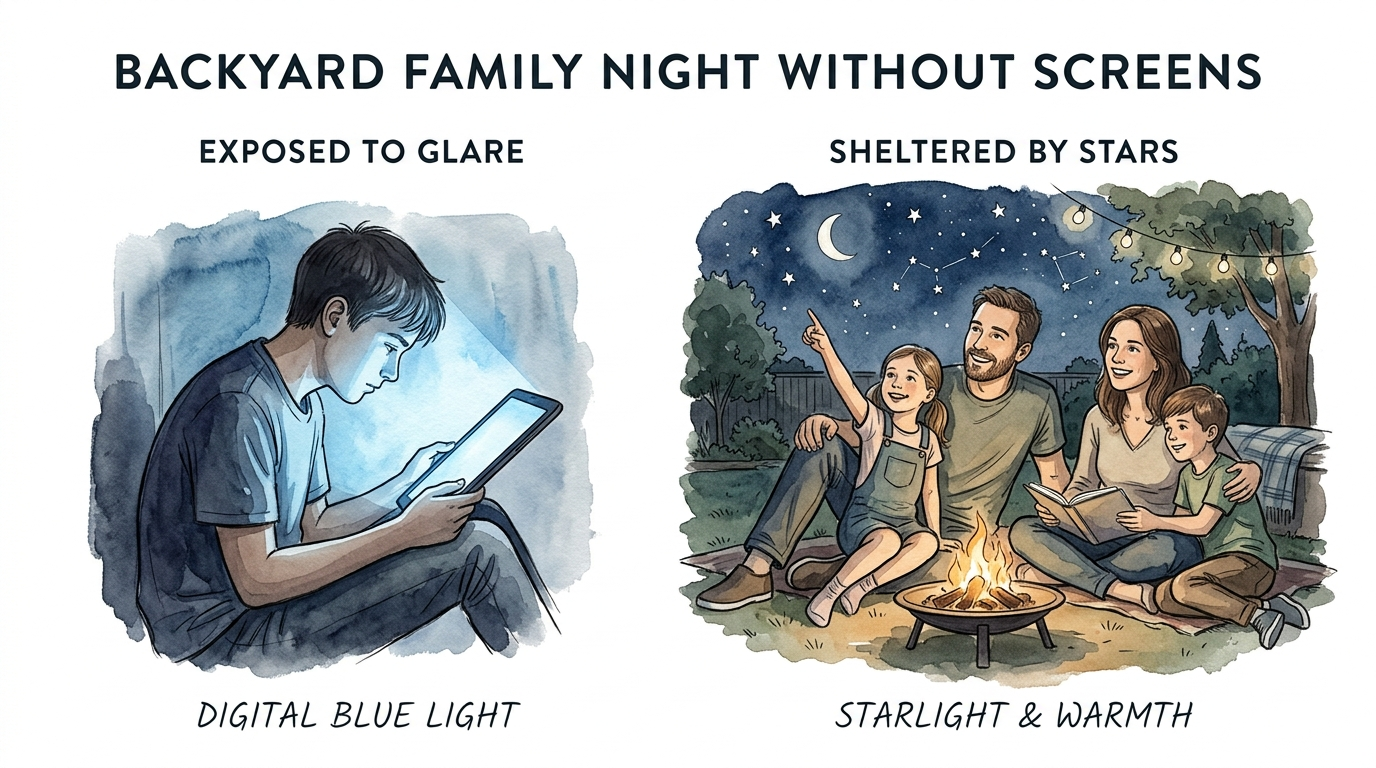
Establishing a routine that moves the evening’s entertainment from the living room to the backyard is one of the most effective ways to hit a physiological reset button. It is a shift from being Exposed to Glare—where screens dictate our attention—to being Sheltered by Stars, where the natural world guides our rest. This guide will show you how to build a sanctuary of light and warmth right in your own backyard.
backyard family night without screens
A screen-free backyard family night is an intentional period where all digital devices are set aside in favor of outdoor, fire-centric activities. It is not just about “going outside.” It is about creating a designated “analog zone” where the primary source of light and entertainment is a campfire or fire pit.
This concept exists to counteract the “always-on” nature of modern technology. In the real world, families use these nights to transition from the high-stress environment of work and school to a restorative state of rest. Think of it as a bridge between the busy day and a deep night’s sleep. Instead of a television providing a passive stream of information, the fire serves as a focal point that encourages active participation, whether through conversation, cooking, or simple observation.
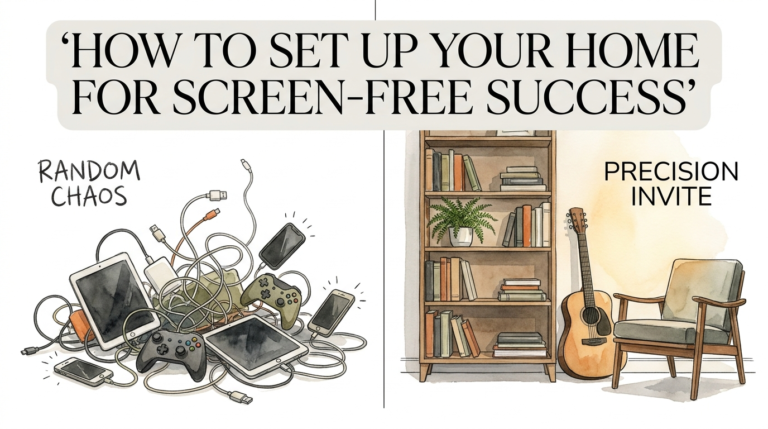
Visualizing this is easy. Imagine the difference between a family sitting on a couch, each person illuminated by the separate glow of their own smartphone, versus that same family circled around a pit. In the second scenario, the flickering light hits every face simultaneously. The crackle of wood replaces the hum of background noise. The focus shifts from the digital world to the immediate, physical presence of the people around you.
How to Set Up Your Screen-Free Sanctuary
Setting up the perfect backyard campfire involves more than just throwing logs into a pile. It requires a balance of safety, comfort, and the right equipment to ensure the night remains enjoyable and stress-free.
First, you must choose your fire feature. You have three primary options: permanent stone pits, portable metal bowls, or smokeless fire pits. Permanent pits offer a sense of longevity and can increase property value. Portable bowls are excellent for smaller yards or those who want to move the “living room” to different parts of the lawn. Smokeless pits use secondary combustion to reduce the amount of irritating smoke, making them a favorite for families with young children or sensitive eyes.
Second, prepare the area for safety. Clear a circle at least 10 feet in diameter of all flammable materials, including dry grass, leaves, and overhanging branches. If you are using a wood-burning pit, ensure it is placed on a non-flammable surface like gravel, pavers, or dirt. Always keep a dedicated “fire kit” nearby, which should include a bucket of water, a shovel for stirring embers, and a fire extinguisher.
Third, gather your fuel. For an authentic experience, use seasoned hardwood like oak, hickory, or maple. Hardwoods burn longer and produce more heat than softwoods like pine. Avoid using pressure-treated lumber or “green” wood, as these can release toxic chemicals or create excessive, thick smoke that ruins the evening.
Finally, set the mood with comfortable seating. Arrange chairs in a circle to promote eye contact. Use outdoor-rated cushions and keep a basket of heavy blankets nearby. This ensures that as the temperature drops, the family stays drawn toward the heat of the fire rather than retreating back inside to the warmth of a heated room and a bright TV.
Benefits of Reclaiming the Night
The advantages of a screen-free backyard night are both biological and relational. The most significant benefit is the preservation and restoration of the circadian rhythm. Research indicates that spending time around a campfire without electronic devices can reset internal sleep cycles, causing melatonin levels to rise up to two hours earlier than they would under artificial light.
Biological benefits include:
- Melatonin Production: Natural firelight is primarily in the red and orange spectrum, which does not suppress melatonin the way blue light from screens does.
- Improved Sleep Quality: By aligning with the natural light-dark cycle, your body enters deep sleep more easily.
- Stress Reduction: The sensory experience of “forest bathing” or simply being in the fresh air reduces cortisol levels and lowers blood pressure.
- Vitamin D Synthesis: While the fire itself doesn’t provide it, spending more daytime hours preparing the outdoor space increases sun exposure.
Relational benefits are equally powerful. Without the distraction of notifications, family members engage in “deep play” and meaningful conversation. The fire acts as a “social lubricant,” making it easier for even the quietest family members to open up. Because everyone is looking at the same thing—the flames—the shared experience creates a sense of unity that individual screen time can never replicate.
Challenges and Common Mistakes
Even the best-laid plans can face hurdles. One of the most frequent errors is failing to check local fire regulations. Many municipalities have “no-burn” days based on air quality or drought conditions. Lighting a fire during a ban can result in heavy fines and, more importantly, poses a serious safety risk to your neighborhood.
Another common pitfall is the “smoke-chase” effect. This happens when poor airflow or wet wood causes heavy smoke to swirl around the circle, forcing everyone to constantly move their chairs. This disrupts the flow of conversation and irritates the eyes. You can avoid this by using only bone-dry wood and ensuring your pit has adequate ventilation holes at the bottom.
Parents often struggle with “engagement lag.” This occurs when kids, used to the high-speed stimulation of video games, find the slow pace of a fire boring at first. The mistake here is giving up too soon. It takes about 15 to 20 minutes for the brain to downshift from digital stimulation to natural observation. Providing a specific task, like tending the fire or preparing roasting sticks, helps bridge this gap.
Limitations and Environmental Constraints
A backyard campfire is not always the ideal solution for every home. Environmental limitations play a massive role. If you live in a high-density urban area with very small lots, the smoke from your fire may be a nuisance to neighbors or even a violation of local ordinances. In these cases, a propane fire table might be the only viable alternative, providing warmth without the smoke.
Weather is the most obvious constraint. High winds make open flames dangerous, as embers can travel long distances and ignite secondary fires. Rain, while not a safety hazard in the same way, simply makes the experience miserable and makes it nearly impossible to keep a fire going without a covered (and properly ventilated) structure.
Additionally, families with members who have severe asthma or respiratory issues may find wood smoke to be a significant trigger. In such scenarios, the trade-off of a natural wood fire is not worth the health risk. Shifting to a 100% smokeless gas-powered unit allows for the “sheltered by stars” experience without the airborne irritants.
Comparison of Fire Pit Fuel Types
Choosing the right fuel depends on your priority: authenticity, convenience, or cleanliness. The following table breaks down the most common options for a backyard family night.
| Feature | Wood-Burning | Propane Gas | Natural Gas |
|---|---|---|---|
| Ambiance | High (Crackle/Scent) | Medium (Silent) | Medium (Silent) |
| Convenience | Low (Cleanup required) | High (Instant on/off) | Very High (No tanks) |
| Heat Output | Very High | Moderate | Moderate |
| Initial Cost | $ (Low) | $$ (Moderate) | $$$ (High – Line install) |
| Smoke Level | Variable (High to Low) | Zero | Zero |
Practical Tips for a Better Night
To make your screen-free night a success, focus on the details that keep everyone comfortable and engaged. Use a “top-down” fire-starting method to minimize smoke at the beginning. Place your largest logs at the bottom, followed by a layer of smaller sticks, and put your kindling and fire starter on the very top. This allows the fire to burn down into the fuel, creating a more efficient and cleaner burn from the start.
Keep a “Campfire Kit” ready to go inside a weather-proof bin. This kit should contain:
- Long-handled roasting forks for marshmallows and hot dogs.
- A star chart or a physical book on constellations (avoid using phone apps for this!).
- A deck of cards or a book of riddles.
- Matches, a lighter, and natural fire starters (like wood shavings or wax).
- Flashlights with red-light modes to preserve night vision.
Manage the transition by having a “phone bucket” at the back door. Every family member drops their device into the bucket before heading outside. This physical act serves as a psychological “check-out” from the digital world. If you need music, use a dedicated battery-operated radio or an acoustic instrument rather than a smartphone connected to a Bluetooth speaker, which often leads to someone “just checking” one notification.
Advanced Considerations: Beyond the Basics
For those looking to deepen their backyard experience, consider the science of thermal mass. If you are building a permanent pit, surrounding it with heavy stone or brick will allow the structure to absorb heat while the fire is roaring and radiate it back to the family long after the flames have died down. This “heat battery” effect makes outdoor nights viable even in late autumn or early winter.
You can also explore advanced outdoor cooking. Moving beyond s’mores to Dutch oven cooking or foil-packet meals introduces a level of skill and teamwork. Preparing a “Shrimp Boil” or “Campfire Chili” requires everyone to contribute to the preparation, turning the meal into a core part of the entertainment.
Serious practitioners also learn the basics of naked-eye astronomy. Knowing how to find the North Star (Polaris) using the Big Dipper or identifying planets like Jupiter and Venus adds a layer of wonder to the night. This connects the family to the ancient human tradition of celestial navigation and storytelling, further reinforcing the feeling of being sheltered by the stars.
Scenario: The “Friday Flame” Tradition
Let’s look at how this works in practice. The Miller family decided to implement a “Friday Flame” tradition to cure their end-of-week burnout. Instead of ordering pizza and watching a movie, they spent 30 minutes together after work setting up their portable fire pit.
The kids were tasked with gathering kindling from the yard, which gave them a sense of ownership over the evening. For dinner, they made “hobo packets”—potatoes, carrots, and ground beef wrapped in heavy-duty foil and placed directly in the embers. While the food cooked, they played a game of “Round-Robin Storytelling,” where one person starts a story with one sentence and the next person adds to it.
The result was a night where the kids didn’t ask for their tablets once. By 9:00 PM, the fire had burned down to glowing coals. The family sat in silence for a few minutes, simply watching the embers. When they went inside, everyone was naturally tired. The absence of blue light allowed their bodies to prepare for sleep, and the children fell asleep faster than they ever had on a typical movie night.
Final Thoughts
Reclaiming your backyard from the digital world is a powerful act of health and connection. By replacing the artificial glare of screens with the natural warmth of a fire, you protect your family’s circadian rhythm and create a space for genuine interaction. It is a simple shift, but its effects on sleep quality and emotional well-being are profound.
The beauty of a screen-free night lies in its simplicity. You do not need an expensive setup or a massive yard to see the benefits. All it takes is a safe place for a fire, a few comfortable chairs, and a commitment to leave the devices inside. The world is much larger than the few inches of glass we carry in our pockets.
Encourage your family to experiment with this routine. Start with one night a month and notice the difference in how everyone sleeps and speaks. You may find that the “best show” really is the one playing right above your head, and the most important connection is the one happening right across the flames.
Sources
1 thensf.org | 2 sbm.org | 3 waveblock.com | 4 youtube.com | 5 harvard.edu | 6 travelers.com | 7 ultramodern.com | 8 pcrichard.com | 9 aosom.com | 10 101cookbooks.com | 11 greenerhorizon.com | 12 wellnessmama.com | 13 thefirepitstore.com | 14 cumminglocal.com