screen time rules for teenagers
Don’t leave your teen exposed to the algorithm. Create a digital sanctuary.
The internet is a wild environment. Setting screen time rules for teenagers isn’t about control—it’s about sheltering their mental health from the relentless noise of the algorithm. We are living in an era where the average adolescent spends between seven and nine hours a day glued to a glowing rectangle. This isn’t just “kids being kids” anymore; it is a battle for their attention, their self-esteem, and their developing brains.
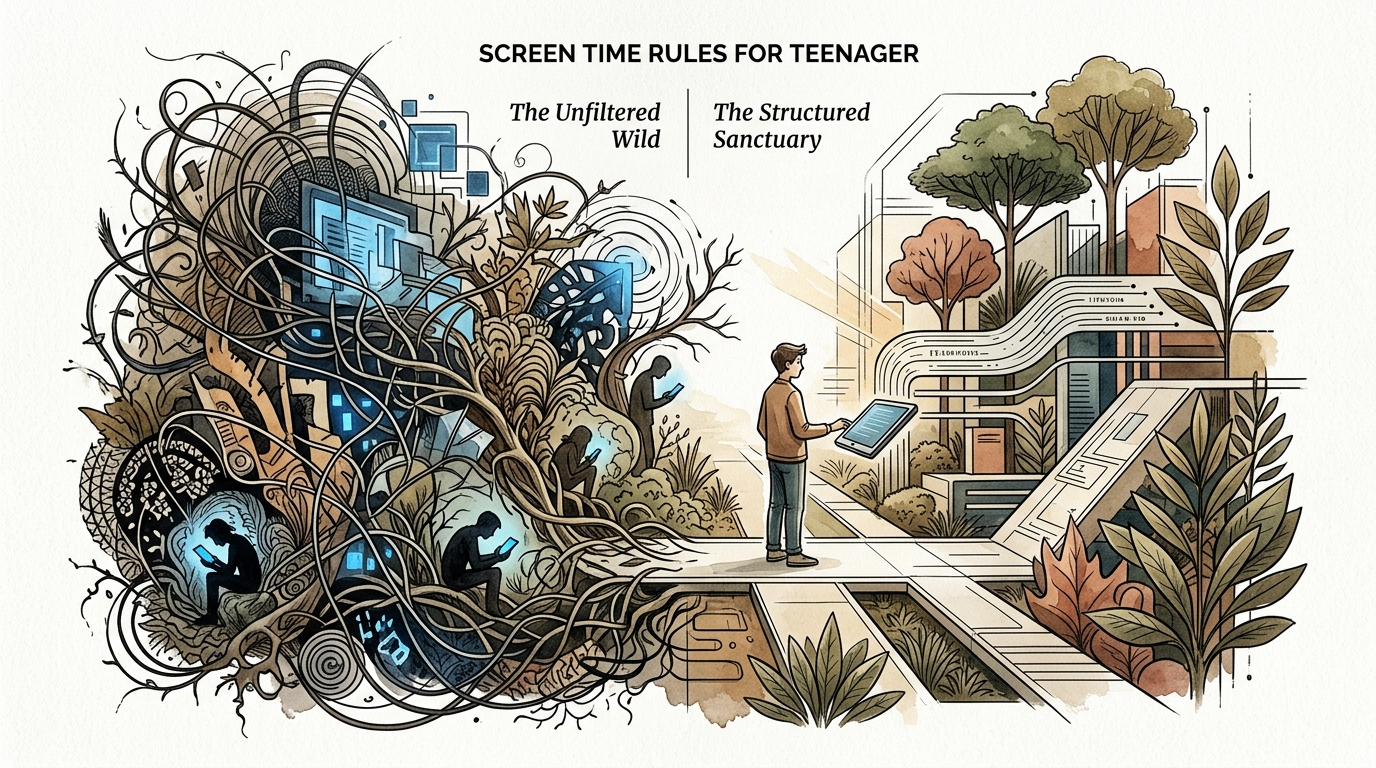
You might feel like you’re losing that battle. Every time you ask them to put the phone away, you’re met with an eye roll or a full-scale argument. But here is the secret: your teen actually needs those boundaries. Without them, they are wandering through the “Unfiltered Wild,” a place designed by world-class engineers to keep them scrolling forever. By building a “Structured Sanctuary,” you aren’t just limiting minutes; you are giving them the space to breathe, sleep, and think for themselves.
screen time rules for teenagers
Screen time rules for teenagers are the digital guardrails that help adolescents navigate the complexities of the modern world. In the past, “screen time” meant how much TV a kid watched. Today, it encompasses everything from TikTok and Instagram to educational portals like Google Classroom and creative tools like video editors. These rules define when, where, and how a teenager interacts with digital devices to ensure technology remains a tool rather than a master.
Think of these rules as a “Digital Family Media Plan.” Instead of a rigid, one-size-fits-all ban, modern rules focus on the 5 C’s: Child, Content, Calm, Crowding Out, and Communication. This framework acknowledges that a 15-minute FaceTime with a grandparent is fundamentally different from a two-hour doomscroll through a fitness influencer’s feed. Rules exist to protect the teen’s prefrontal cortex—the part of the brain responsible for impulse control—which won’t be fully developed until their mid-twenties.
In practice, these rules are applied through a mix of technical settings and verbal agreements. They might include “no phones at the dinner table,” “all devices in the charging station by 9:00 PM,” or “homework first, gaming later.” The goal is to prevent the “Social Media Spiral,” where a quick check of a notification turns into three hours of lost sleep and heightened anxiety.
How to Build Your Digital Sanctuary
Setting up screen time rules requires a two-pronged approach: technical enforcement and psychological buy-in. You cannot rely on one without the other. If you only use tech locks, your teen will find a workaround. If you only use talk, the algorithm will eventually win. Here is how to execute a modern strategy.
The Phased Independence Strategy
Younger teens (13-14) need more “training wheels.” You should be more hands-on with app approvals and time limits. As they reach 16 or 17, the goal should be to transition from “parental control” to “self-regulation.” Slowly increase their daily limits in exchange for maintaining good grades and showing emotional stability. This mirrors the process of learning to drive; you don’t give them the keys to the Ferrari on day one.
Technical Implementation: Apple and Android
Modern devices have powerful built-in tools. For Apple users, “Screen Time” and “Family Sharing” allow you to set “Downtime” (where the phone essentially bricks except for essential apps) and “App Limits.” For Android users, “Google Family Link” provides nearly identical controls, including the ability to lock a device remotely if a teen refuses to put it away.
Establish “No-Fly Zones”
Physical boundaries are often more effective than digital ones. Establish specific areas of the home that are strictly screen-free. The dining table and the bedroom are the two most critical zones. Keeping phones out of the bedroom is the single most effective way to improve a teenager’s sleep quality and mental health. Invest in a dedicated alarm clock so they don’t use the “I need it for my alarm” excuse.
Benefits of Digital Boundaries
The practical, measurable benefits of setting screen time rules for teenagers are profound. You aren’t just “being mean”; you are actively improving their biology and psychology. The Structured Sanctuary allows for deep work and genuine connection that the Unfiltered Wild simply cannot offer.
- Improved Sleep Quality: Removing screens 60 minutes before bed prevents blue light from suppressing melatonin, leading to deeper, more restorative sleep.
- Enhanced Academic Focus: By removing the “multitasking” trap of notifications, teens can enter a flow state, completing their work faster and with fewer errors.
- Reduced Anxiety and Depression: Constant social comparison is a primary driver of teen mental health issues. Rules that limit social media usage help break the cycle of “FOMO” (Fear Of Missing Out).
- Physical Health Wins: Less time spent hunched over a phone reduces the risk of “Text Neck” and promotes more physical activity, which is vital for bone density and cardiovascular health.
Challenges and Common Mistakes
Setting these rules isn’t easy. You will face resistance, and you will likely make mistakes along the way. Understanding these pitfalls is the first step toward avoiding them. Most parents fail because they view the rules as a punishment rather than a lifestyle.
The “Hypocrite Trap” is the most common mistake. If you are constantly scrolling through your own phone while telling your teen to put theirs away, your rules will carry zero weight. Teens are hyper-attuned to hypocrisy. You must model the behavior you want to see. If you want a phone-free dinner, you must be the first one to put your device in the drawer.
The “Total Ban” Failure is another frequent error. Completely banning a specific app often makes it “forbidden fruit,” driving your teen to use a friend’s device or create “finstas” (fake Instagram accounts) that you can’t see. It is better to allow supervised access than to create a situation where they are forced to lie to you to stay socially connected with their peers.
Limitations of Screen Time Rules
Rules have their limits. A digital sanctuary is not a fortress, and it won’t solve every problem. You must recognize when the method might not work as intended or where you need to pivot your strategy.
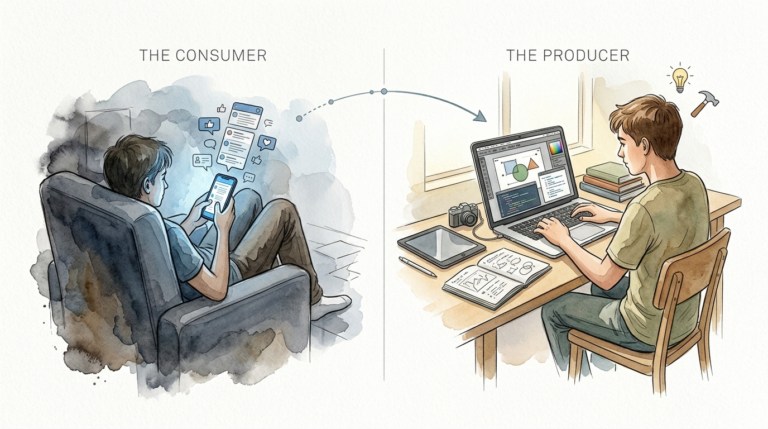
Environmental factors can make rules difficult to enforce. For example, if your teen’s school requires them to be on a laptop for six hours a day, traditional “time limits” become meaningless. You have to distinguish between active use (coding, writing, creating) and passive use (scrolling, watching). A teen who spends four hours editing a video is using their brain differently than a teen watching four hours of mindless pranks.
Additionally, some teens may have neurodivergent traits, such as ADHD, which makes the dopamine hits of an algorithm even harder to resist. In these cases, standard rules might lead to intense meltdowns, and a more collaborative, therapeutic approach may be necessary. Rules are a foundation, but they aren’t a substitute for professional mental health support if your teen is showing signs of genuine addiction.
Restrictive Monitoring vs. Open Dialogue
When implementing screen time rules for teenagers, parents often choose between two different philosophies. Neither is perfect, but understanding the trade-offs can help you find a middle ground.
| Feature | Restrictive Monitoring | Open Dialogue / Mentoring |
|---|---|---|
| Primary Goal | Prevention of all risks | Development of self-regulation |
| Complexity | High (requires tech setups) | Medium (requires time & trust) |
| Teen Response | Often leads to rebellion/hiding | Builds trust/honesty |
| Long-term Success | Low (fails when teen leaves home) | High (teen learns to manage self) |
Practical Tips for Immediate Impact
If you want to start changing the digital culture in your home today, focus on these actionable best practices. You don’t need a 20-page contract; you just need consistency and a few clever adjustments.
- Turn Off All Non-Human Notifications: Go into the settings and disable alerts for games, shopping apps, and news. Only allow notifications from actual people (texts and calls).
- The “Charging Station” Rule: All phones sleep in the kitchen at night. No exceptions. If they need a “night light” or “music,” use a dedicated device that doesn’t have an internet browser.
- Use Grayscale: Making the screen black and white makes it significantly less stimulating. This is a “pro-tip” for breaking the dopamine loop of colorful apps like TikTok or Instagram.
- Schedule “Digital Sabbaths”: Pick one day a week or one weekend a month where the entire family goes “analog.” Go for a hike, play board games, or visit a museum without the pressure of documenting it for the internet.
Advanced Considerations for the Modern Parent
For those who want to go deeper, consider the Neurobiology of the Algorithm. The apps your teens use are designed with “Variable Reward Schedules.” This is the same logic used in slot machines. When they pull down to refresh their feed, they don’t know what they’ll get. It might be a funny video, or it might be a like from a crush. This uncertainty triggers massive dopamine spikes that can physically rewire the teen brain’s reward pathways.
Another advanced consideration is Digital Footprint and AI. It isn’t just about time; it’s about what they are leaving behind. Teach your teen that every “like,” comment, and search is being used to build a profile of them by AI models. In the Structured Sanctuary, we discuss data privacy and the fact that “if the product is free, you are the product.” Empowering them with this knowledge makes them more skeptical of the content they consume.
Real-World Scenario: The Social Media Spiral
Imagine “Sarah,” a 14-year-old who has no screen time rules. She starts her homework at 7:00 PM but has her phone next to her. Every five minutes, a notification pings. She spends 10 minutes responding, then scrolls through TikTok for “just a second.” By 11:00 PM, she is only half-done with her essay, her brain is wired from blue light, and she feels anxious because she saw her friends out at a movie without her. She finally sleeps at 1:00 AM and wakes up exhausted and irritable.
Now imagine Sarah with a Structured Sanctuary. At 7:00 PM, her phone goes into a “Focus Mode” drawer in the kitchen. She sits at her desk and finishes her essay by 8:30 PM because she has zero distractions. She has 30 minutes of “free digital time” to chat with friends, and then at 9:00 PM, her phone locks for the night. She reads a physical book for 20 minutes and is asleep by 10:00 PM. She wakes up feeling capable, refreshed, and in control of her day.
Final Thoughts
Building a system of screen time rules for teenagers is one of the most significant investments you can make in your child’s future. It is not an act of restriction, but an act of love. By creating a digital sanctuary, you are providing them with the quiet space they need to develop their own voice, away from the constant, thrumming influence of global algorithms.
Don’t expect perfection from day one. There will be slip-ups, and there will be times when the “Unfiltered Wild” creeps back in. The key is to keep the conversation open and the boundaries consistent. Over time, your teen will start to recognize the difference in how they feel when they aren’t constantly tethered to a screen. They might even thank you for it—eventually.
If you found this guide helpful, consider looking into digital wellness workshops or parental control software reviews to further refine your strategy. The technology will keep changing, but the core need for human connection and mental rest will remain the same. Start today, be patient, and watch your teen thrive in their new sanctuary.
Sources
1 jelliesapp.com | 2 medlineplus.gov | 3 luriechildrens.org | 4 childrensnebraska.org | 5 purelifeadventure.com | 6 hopkinsmedicine.org