screen?free evening routine for families
Protect your family’s peace from the digital noise. The ‘Sheltered’ evening routine changes everything. Your home should be a sanctuary, not a data hub. Here is how we reclaimed our evenings from the glow of the screen.
Modern evenings often feel like a high-speed chase. We rush through dinner while checking emails and then collapse onto the sofa for a marathon of scrolling. This constant digital hum leaves us feeling frayed and disconnected. Our children, highly sensitive to this environment, often mirror our restlessness with bedtime tantrums or late-night wake-ups.
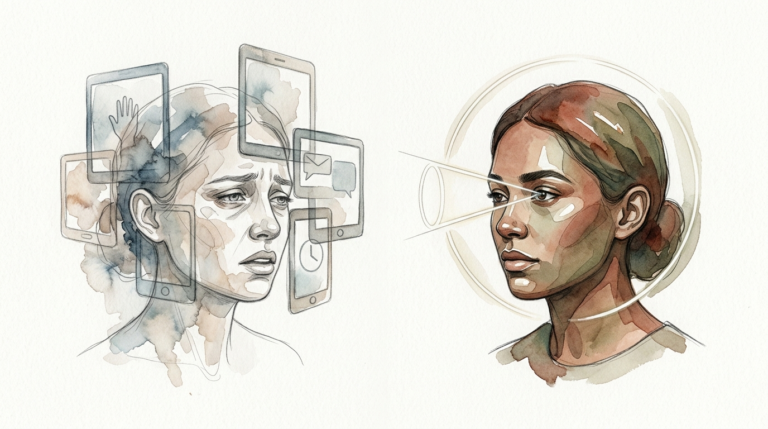
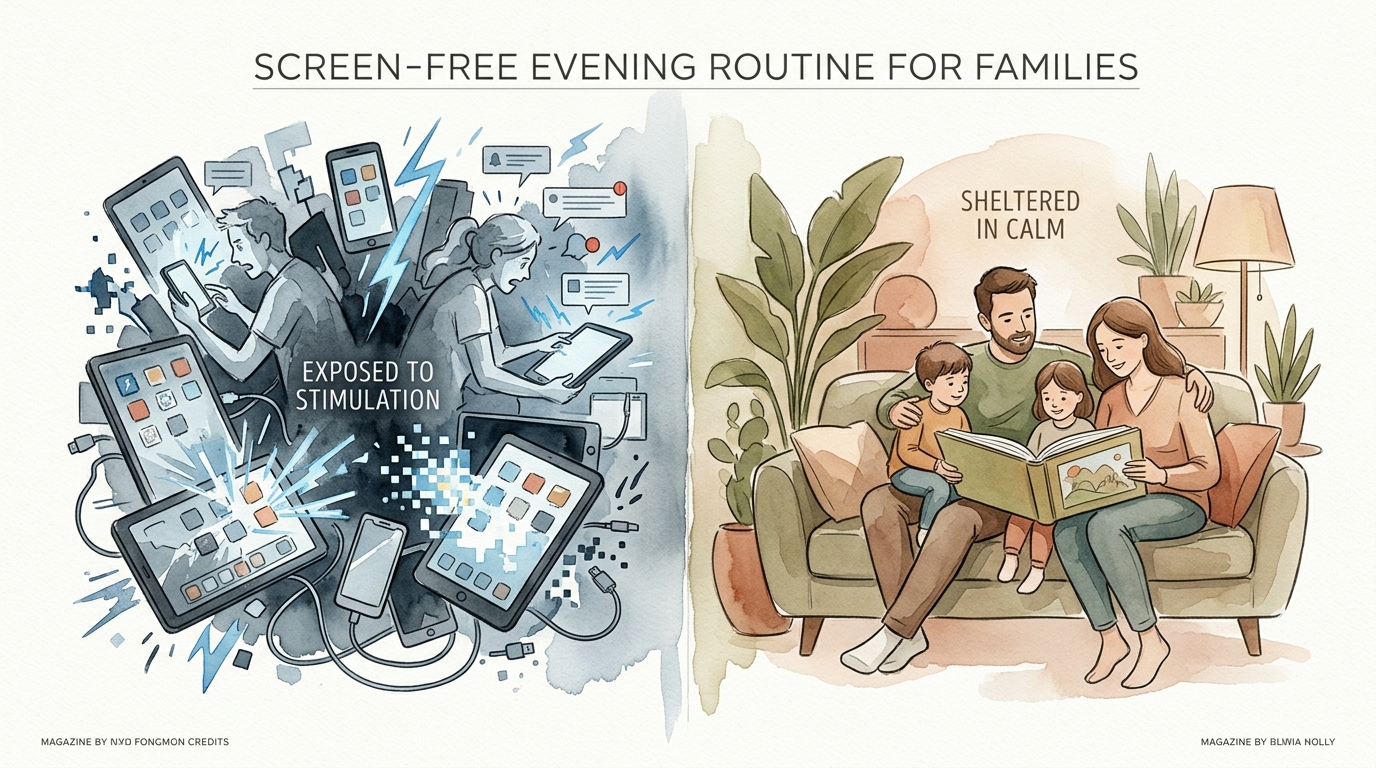
Reclaiming the evening is about more than just turning off the television. It is a fundamental shift from a state of being “Exposed to Stimulation” to being “Sheltered in Calm.” This transition signals to the brain and body that the day is over. It creates a space where real connection can happen without the interference of notifications or algorithms.
Implementing a screen-free evening routine for families may seem daunting at first. We live in a world designed to keep us clicking. However, the rewards—better sleep, deeper conversations, and a more peaceful home—are worth the initial effort. This guide provides a comprehensive roadmap for transforming your household into a tech-free haven once the sun goes down.
screen?free evening routine for families
A screen-free evening routine is a structured period before bedtime where all digital devices are put away. This includes smartphones, tablets, computers, and televisions. The goal is to eliminate artificial blue light and high-energy digital stimulation to allow the body’s natural circadian rhythm to take over. It is not a punishment but a protective boundary for the family’s collective well-being.
Families use this routine to bridge the gap between a busy day and a restful night. In the real world, this looks like a “digital curfew” that starts 60 to 120 minutes before sleep. Instead of passive consumption, family members engage in low-stimulation activities that encourage relaxation. It is a return to analog living during the most sensitive hours of the day.
Think of your home as a laboratory for rest. When screens are active, the brain is flooded with blue light wavelengths that mimic the midday sun. This suppresses melatonin, the hormone responsible for sleep. By removing screens, you are essentially “dimming the lights” inside your brain, allowing the internal biological clock to wind down naturally. This practice transforms the home from a high-energy hub into a quiet sanctuary.
How to Implement a Successful Screen-Free System
Success begins with a clear transition. Abruptly demanding that everyone drop their devices usually leads to resistance and frustration. A better approach involves a gradual wind-down. Start by announcing a “15-minute warning” before the official screen-free time begins. This gives everyone a chance to finish their last video or send that final text message without feeling cut off.
Designate a specific “Digital Parking Lot” in your home. This could be a decorative basket or a charging station in a common area like the kitchen or hallway. Once the curfew hits, every device—including parental phones—goes into the basket. Keeping devices out of sight removes the constant temptation to “just check one thing.” Out of sight truly becomes out of mind.
Replace the lost screen time with a “Menu of Calm.” Boredom is the biggest enemy of a new routine, so having a list of ready-to-go activities is essential. For toddlers, this might be sensory bins or building blocks. School-aged children might enjoy board games or reading together. Teens often appreciate a quiet space for journaling or a relaxed family conversation about their interests.
Establish a “3-2-1 Rule” for maximum effectiveness. This system suggests no food three hours before bed, no work two hours before bed, and no screens one hour before bed. Following this simple hierarchy ensures that the digestive system, the professional mind, and the visual system are all prepared for restorative sleep at the same time.
The Tangible Benefits of Unplugging
Improved sleep quality is the most immediate benefit. When you remove blue light, melatonin levels rise naturally. This reduces the time it takes to fall asleep and increases the duration of deep, restorative REM sleep. Families often report that children wake up less frequently and feel more refreshed in the morning, leading to better focus and mood during the day.
Emotional regulation becomes much easier without digital interference. High-speed content and social media alerts keep the nervous system in a state of “fight or flight” or constant dopamine seeking. Transitioning to a screen-free environment allows the parasympathetic nervous system to take over. This lowers cortisol levels and reduces the irritability that often leads to evening arguments.
Family bonding strengthens when screens disappear. Without the distraction of a glowing rectangle, people actually look at one another. Eye contact, active listening, and shared laughter release oxytocin, the “bonding hormone.” These simple interactions build a foundation of security and trust that digital communication simply cannot replicate. The evening becomes a time for stories, not just status updates.
Creativity often flourishes in the absence of digital input. When children are “bored” because they don’t have a tablet, they begin to use their imaginations. They build forts, draw elaborate pictures, or invent new games. Adults also benefit from this creative space, often finding time for long-neglected hobbies like gardening, woodworking, or reading physical books.
Common Challenges and How to Avoid Pitfalls
Resistance from children and teenagers is a frequent hurdle. Digital platforms are designed to be addictive, and “unplugging” can feel like a withdrawal. Avoid making the routine feel like a penalty. Instead, emphasize the benefits of feeling better and having more fun together. Consistency is key; if the rules change every night, the resistance will persist.
Parental hypocrisy can undermine the entire system. If you expect your children to stay off their devices while you are secretly scrolling under the dinner table, they will notice. Leading by example is the most powerful tool you have. Show them that you value your own peace and family time enough to put your phone away. The routine must be a collective commitment to be effective.
Underestimating the “void” left by screens often leads to failure. If you take away the TV but don’t provide an alternative, the family will just sit in a silent, awkward room until someone gives up. Plan ahead by stocking up on puzzles, books, and craft supplies. The first few weeks require more active leadership from parents to keep the energy positive and the activities engaging.
Fear of missing out (FOMO) affects adults just as much as kids. You might worry about missing an important work email or a breaking news story. Remind yourself that most “emergencies” can wait until the morning. Setting an “Away” message or auto-reply on your phone can help alleviate the anxiety of being unreachable during your sheltered hours.
Realistic Limitations of the Method
Professional requirements can sometimes interfere with a strict screen-free rule. Some parents have jobs that require they stay on-call or finish projects late at night. In these cases, complete avoidance might not be possible. However, you can still protect the family environment by doing work in a separate room and using blue-light-blocking glasses or software filters to minimize the biological impact.
Academic pressure for older children is another significant constraint. High schoolers often have homework that requires a laptop or research via the internet. When schoolwork must happen during the screen-free window, encourage the use of “Focus Modes” that block social media and distracting websites. Once the work is done, a 15-minute “analog buffer” of reading or stretching should follow before they try to sleep.
Special events and travel naturally disrupt the routine. Movie nights, late sporting events, or staying in a hotel can make a strict tech-free evening difficult. It is okay to be flexible during these times. The goal is to make the screen-free routine the “default” state of your home, not an unbreakable law. Aim for consistency 80% of the time to see the long-term benefits.
Comparison: Digital Chaos vs. Sheltered Calm
Choosing between a tech-saturated evening and a sheltered routine involves weighing immediate convenience against long-term health. The following table illustrates the typical differences found in a standard household.
| Feature | Exposed (Digital Chaos) | Sheltered (Calm Routine) |
|---|---|---|
| Lighting | High-intensity blue light from LED screens. | Warm, dim ambient lighting or red-spectrum bulbs. |
| Brain Activity | Hyper-stimulated, high dopamine seeking. | Relaxed, reflective, and imaginative. |
| Social Dynamics | Parallel play (together but separate). | Active engagement and direct communication. |
| Sleep Onset | Delayed; brain thinks it is daytime. | Rapid; body is flooded with natural melatonin. |
| Stress Levels | Elevated cortisol from news and notifications. | Low cortisol; high oxytocin from bonding. |
Practical Tips for Immediate Application
Switch your home lighting to warm tones as soon as the sun sets. Standard LED bulbs often emit a blue-heavy spectrum that keeps you awake. Using lamps with amber or red-toned bulbs in the evening signals to the brain that the day is ending. This environmental cue makes it much easier for the family to settle into a screen-free headspace.
Create an “Evening Toolkit” that lives in the living room. Fill a drawer or box with high-quality card games, a deck of cards, adult coloring books, and a few “coffee table” books with interesting photography. Having these items within arm’s reach reduces the friction of finding something to do. When the urge to scroll hits, reaching for a deck of cards becomes the new habit.
Audio-based entertainment can be a great bridge for families struggling with total silence. Audiobooks, podcasts, or music don’t have the same visual stimulation as video content but still provide a narrative or atmosphere. Listening to a story together while folding laundry or building with LEGOs allows the eyes to rest while keeping the mind gently occupied.
Utilize physical timers to mark the transition. A simple kitchen timer or a dedicated “sand timer” can make the screen-free window feel like a special event rather than a chore. When the timer goes off, the transition is final. Using a physical device rather than a phone alarm helps keep the environment tech-free from the start.
Advanced Considerations for Dedicated Practitioners
Optimizing the bedroom environment is the next step for those who have mastered the basics. Ensure the bedroom is a “Zero-Tech Zone.” This means no charging phones on the nightstand and no television on the wall. Replace your phone’s alarm clock with a dedicated sunrise alarm or a simple analog clock to remove the first and last digital temptation of the day.
Circadian entrainment can be enhanced through temperature control. Along with light, body temperature is a major signal for sleep. Encourage the family to take warm baths or showers about an hour before bed. The subsequent drop in body temperature when they step out of the bath mimics the natural cooling that happens during sleep, further deepening the “sheltered” state.
Performance improvements in children can be tracked over time. Keep a simple journal or “Calmness Log” for a month. Note how long it takes for the kids to fall asleep and their general mood the next morning. Seeing the data often reinforces the habit for parents. You may find that academic performance and athletic recovery improve as the quality of deep sleep increases.
Example Scenario: The 7:00 PM Pivot
The Johnson family consists of two working parents and two children, aged 7 and 14. They previously spent their evenings in separate rooms, each on a different device. Bedtime was a battle that usually ended at 10:30 PM with everyone frustrated. They decided to implement a 90-minute screen-free window starting at 7:30 PM.
At 7:15 PM, the “15-minute warning” sounds. The 14-year-old finishes her last Snapchat, and the parents close their laptops. At 7:30 PM sharp, all four devices are placed in a wooden box on the kitchen counter. The lights in the living room are dimmed, and two small amber lamps are turned on. The “Sheltered” routine begins.
The first 30 minutes are dedicated to “Collaborative Calm.” They spend this time together—sometimes doing a puzzle, sometimes just talking about the funniest thing that happened that day. For the next 30 minutes, they move to “Independent Analog Time,” where the 7-year-old looks at picture books and the teen reads for school. The final 30 minutes are for the “Hygiene Ritual,” including baths and getting into pajamas. By 9:00 PM, both children are in bed and asleep within minutes, and the parents have a quiet, peaceful hour to themselves before their own rest.
Final Thoughts
Reclaiming your evenings is one of the most powerful gifts you can give your family. It restores the natural rhythm of life that has been disrupted by the 24/7 digital economy. By creating a “Sheltered” environment, you provide your children with the mental and physical space they need to grow, learn, and rest. This is not about being anti-technology; it is about being pro-connection.
Starting this journey requires courage and persistence. You will face boredom, you will deal with complaints, and you might even feel a little restless yourself. However, the first time you see your children peacefully asleep or have a deep, uninterrupted conversation with your spouse, you will know it was the right choice. The noise of the digital world can wait until morning.
Experiment with what works for your specific household. Every family is different, and your routine should reflect your unique needs and interests. Focus on the feeling of peace rather than the strictness of the rules. As you become more comfortable in the calm, you may find that the “Sheltered” evening becomes the favorite part of everyone’s day. Start tonight by simply putting the phones in a basket and seeing what happens.
Sources
1 drkristinedwards.com | 2 bloomokids.com | 3 bloomokids.com | 4 sanfordhealth.org | 5 medium.com | 6 homeschoolconnections.com | 7 muddypuddles.com | 8 msu.edu | 9 aanmc.org | 10 cdc.gov | 11 pamelapalanza.com | 12 littledipperwellness.com | 13 brighthorizons.com | 14 rowan.edu | 15 exonpublications.com | 16 sleepfoundation.org | 17 lullabyearth.com | 18 welloclock.com | 19 substack.com | 20 woodlandsmommy.com | 21 nih.gov | 22 daar.com.au | 23 harvard.edu | 24 tonies.com | 25 forbes.com