screen free activities for 7 year olds
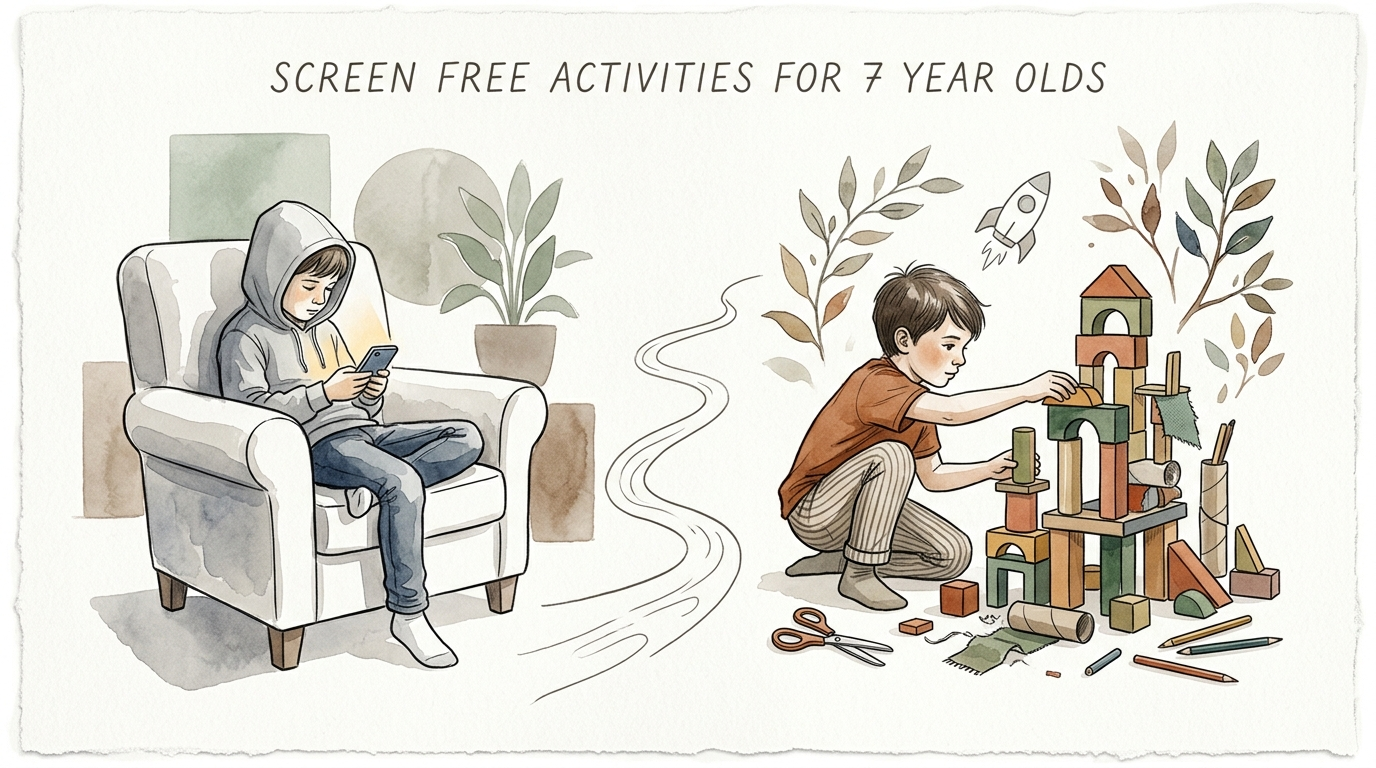
Is your child’s body resting while their brain is on overdrive? A 7-year-old’s brain needs movement to learn. Static screen time freezes the body while overstimulating the eyes. Switch to dynamic play that challenges their coordination and spatial reasoning.
Seven is a magical age. Children at this stage are transitioning from the magical thinking of early childhood into a more logical, curious, and social phase of development. They are physically more capable, often refining their large and small muscle coordination through activities like jump rope or riding a two-wheel bike. Cognitively, they are starting to grasp complex concepts like time, simple math, and empathy for others.
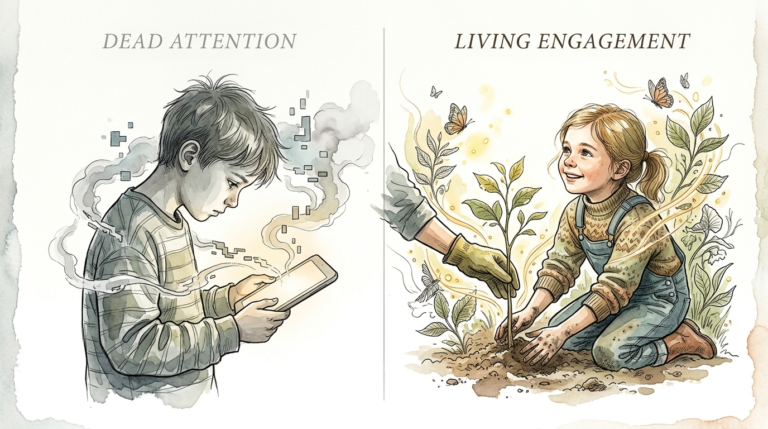
Relying on digital entertainment can stall these natural developments. When a child is glued to a tablet, they are often in a state of static consumption. Their eyes are bombarded with high-speed images, but their hands and bodies remain motionless. This article explores how to break that cycle and engage your child in activities that fuel their growth and happiness.
screen free activities for 7 year olds
Screen-free activities are any forms of play, learning, or exploration that do not involve a digital device. For a 7-year-old, these activities capitalize on their growing independence and refined motor skills. This is the age where “big kid” hobbies begin to take root. They can follow three-step instructions, stay busy for longer stretches, and love to practice skills to get better at them.
Real-world screen-free play looks like a messy kitchen table covered in craft supplies or a backyard transformed into an imaginary kingdom. It exists to give the brain a chance to lead the action rather than just react to an algorithm. At age seven, children thrive on a mix of structured games and unstructured free time.
Common examples include:
- Building and Construction: Complex LEGO sets, marble runs, or cardboard fort building.
- Active Physical Play: Rollerblading, swimming, kickball, or learning a dance routine.
- Creative Arts: Drawing recognizable stories, weaving, simple sewing, or jewelry making.
- Cognitive Challenges: 100-piece jigsaw puzzles, classic board games like Battleship, or simple science experiments like a vinegar volcano.
- Life Skills: Helping with meal prep, folding laundry, or organizing their own collections of rocks or cards.
These activities aren’t just about passing time. They are the primary way a 7-year-old builds a solid sense of self and masters the world around them.
How Active Play Fuels the 7-Year-Old Brain
Active play works by engaging multiple sensory systems simultaneously. When a child builds a fort, they aren’t just moving cushions; they are calculating weight, balance, and spatial relationships. This is a high-level cognitive workout that a screen simply cannot replicate.
The process of screen-free play often follows a “Creation-to-Mastery” loop. A child decides on a goal, such as learning to jump rope or finishing a difficult drawing. They face small failures, adjust their technique, and eventually succeed. This process releases dopamine in a healthy, earned way, unlike the cheap dopamine hits provided by rapid-fire video clips.
Underlying these activities is the development of executive function. This includes the ability to plan, focus attention, and remember instructions. When 7-year-olds play group games with rules, like “Red Light, Green Light” or “Capture the Flag,” they are practicing impulse control and social navigation. They must wait their turn, follow a shared logic, and handle the emotional weight of winning or losing.
To implement more of this at home, start by creating “yes” spaces. These are areas where your child has access to open-ended materials—paper, tape, blocks, or old clothes for dress-up—and the freedom to make a mess without immediate correction.
The Measurable Benefits of Ditching the Device
Choosing screen-free play offers immediate and long-term advantages for a child’s physical and mental health. Research shows that children who spend significant time outdoors have lower rates of myopia, or nearsightedness. Bright outdoor light triggers dopamine release in the retina, which helps the eye grow correctly and prevents elongation.
Cognitively, the benefits are even more striking. Removing digital distractions allows a child’s attention span to lengthen. Without the constant interruption of notifications or auto-playing videos, they can enter a state of “flow” where they become fully immersed in a task. This builds the stamina needed for academic success in the coming years.
Socially, screen-free time forces children to communicate face-to-face. They learn to read facial expressions and tone of voice. They practice empathy by recognizing when a friend is frustrated or bored. These social cues are often lost or distorted in digital environments, making real-world play essential for emotional intelligence.
Physical health is another huge win. Active play helps prevent childhood obesity and improves sleep quality. Exposure to the blue light of screens—especially before bed—disrupts melatonin production. Switching to a book or a quiet board game in the evening leads to faster sleep onset and deeper rest.
Common Obstacles and Why We Fail
Transitioning away from screens is rarely a smooth ride. The most common mistake parents make is attempting a “cold turkey” ban without providing alternatives. This leads to the dreaded “I’m bored” whine, which often breaks a parent’s resolve. Boredom is actually a necessary state; it is the precursor to creativity. However, a child who is used to constant digital stimulation may not know how to handle it at first.
Another pitfall is the “Convenience Trap.” Screens are an easy way to keep a child quiet while a parent works or handles chores. This is a valid modern struggle. The mistake happens when the screen becomes the default solution for every quiet moment.
Misunderstanding the “Static vs. Dynamic” divide is also frequent. Not all non-screen activities are created equal. If a child is sitting silently coloring for four hours, they are still in a somewhat static state. While better than a screen, it doesn’t provide the movement their body craves. A balanced day needs a mix of high-energy physical play and quiet, focused tasks.
Finally, parents often forget to role model the behavior. If a child sees their parent constantly scrolling on a phone, they will view screens as the most valuable and interesting way to spend time. Consistency and example are the two most powerful tools in your kit.
The Realistic Limits of Screen-Free Living
A purely screen-free existence is rarely practical or even ideal in the 21st century. Screens have clear utility in education and long-distance communication. For example, using a video call to talk to a grandparent is a high-value social interaction that uses a screen as a tool for connection rather than consumption.
Environmental limitations also play a role. If you live in an area with extreme weather or limited safe outdoor spaces, screens may become a more prominent part of the day. Similarly, for families with limited resources, some “premium” screen-free activities like organized sports or expensive craft kits may not be accessible.
The goal isn’t necessarily zero screen time; it’s intentionality. A 7-year-old who spends an hour on a high-quality educational app that teaches coding is having a very different experience than one who spends an hour watching unboxing videos. Trade-offs are inevitable, and it’s okay to use screens as a tool when needed, provided they aren’t displacing the core physical and social activities that drive development.
Static Consumption vs. Dynamic Creation
Understanding the difference between consumption and creation is the key to managing a 7-year-old’s time. This framework helps you decide which activities are worth the investment of time and energy.
| Factor | Static Consumption | Dynamic Creation |
|---|---|---|
| Brain State | Passive / Reactive | Active / Proactive |
| Motor Skills | Minimal (Swiping) | Varied (Gross & Fine) |
| Social Impact | Isolated | Collaborative |
| Dopamine Type | Instant / High-Speed | Delayed / Earned |
| Skill Retention | Low | High |
Dynamic creation is about your child being the “Lead Learner.” It’s the difference between watching a video of someone building a birdhouse and actually picking up a hammer and nails. The latter builds confidence and real-world competence.
Practical Tips for a Smooth Transition
Reducing screen time doesn’t have to be a battle. Use these strategies to make screen-free activities the more attractive option for your 7-year-old.
- The Boredom Jar: Write down 20 quick activities on slips of paper. When your child says “I’m bored,” they pick one. Ideas: “Build the tallest tower you can,” “Hide 10 toy dinosaurs,” or “Do 20 jumping jacks.”
- Set a “Digital Window”: Instead of banning screens all day, set a specific hour (e.g., 5 PM to 6 PM) when they are allowed. This removes the constant asking because the rule is clear.
- The “One Hour Out” Rule: Ensure your child gets at least one hour of outdoor time every day, regardless of the weather. This simple habit dramatically improves mood and eye health.
- Toy Rotation: Don’t keep all toys out at once. Keep some in a closet and rotate them every two weeks. Old toys feel new again, sparking fresh interest.
- Involve Them in Chores: Seven-year-olds love to feel capable. Give them real tasks like washing vegetables, matching socks, or using a handheld vacuum.
Small changes lead to big results. Start by designating screen-free zones, such as the dinner table and the bedroom. This protects family connection and sleep hygiene without feeling like a total crackdown.
Advanced Strategies for Long-Term Hobbies
Once your child is comfortable without a screen, you can help them develop deeper interests. At age seven, they have the focus to start mastering complex skills. This is the time to introduce “Deep Play”—activities that require long-term effort and produce a sense of mastery.
Encourage “Series Reading.” Find a book series they love and watch as they build a relationship with characters over hundreds of pages. This develops long-form attention spans that are the opposite of the “TikTok brain” effect.
Introduce “Project-Based Play.” Instead of just “drawing,” suggest they create their own comic book or a field guide to the bugs in your yard. This moves them from a single activity to a multi-day project that requires planning and persistence. These advanced behaviors are the building blocks of professional skills they will use decades from now.
Real-World Scenario: The Rainy Saturday Rescue
Imagine a Saturday morning. It’s pouring rain, and the “can I play on your phone?” questions have already started. Instead of giving in, you pivot to a “Backyard Olympics” moved indoors.
First, you spend 15 minutes helping them build an obstacle course. You use painter’s tape on the carpet for a balance beam, pillows as “lava” to jump over, and a laundry basket for “sock basketball.” This engages their gross motor skills and burns off high-energy steam.
Next, you move to a “LEGO Speed Build Challenge.” You set a timer for 5 minutes and tell them to build “the fastest car in the galaxy.” This transitions them from high-energy play to focused, creative problem-solving.
Finally, you end with a “Puppet Show.” You find an old cardboard box, cut a hole in it, and use socks or stuffed animals to tell a story. This final phase focuses on social-emotional development and language skills. By lunchtime, your child has hit three major developmental milestones without touching a single button.
Final Thoughts
Helping a 7-year-old navigate a world of screens is a marathon, not a sprint. The key is to replace the passive allure of digital consumption with the vibrant, messy, and rewarding world of dynamic play. By prioritizing movement and creation, you are giving their brain the fuel it actually needs to grow.
Every time your child builds a fort, reads a book, or climbs a tree, they are building neural pathways that screens simply cannot touch. These experiences cultivate resilience, creativity, and a sense of independence that will serve them for a lifetime.
Do not aim for perfection. Instead, aim for balance. Start with one more hour of play and one less hour of scrolling. You will soon see the difference in your child’s mood, focus, and energy. Experiment with the activities mentioned here and watch your child rediscover the joy of the real world.
Sources
1 kidcentraltn.com | 2 thechildunplugged.com | 3 techhealthyfamilies.com | 4 woodlandsmommy.com | 5 choc.org | 6 medlineplus.gov | 7 reddit.com | 8 kaiserpermanente.org | 9 mayoclinichealthsystem.org | 10 sparklestories.com | 11 substack.com | 12 strong4life.com | 13 macaronikid.com | 14 tonies.com | 15 oxfordowl.co.uk | 16 expressable.com | 17 kongacademy.org | 18 drrupawong.com | 19 global-edtech.com | 20 dynseo.com | 21 sittercity.com | 22 nih.gov | 23 scholastic.com | 24 smh.com