Outdoor Play For Ipad Addiction
We’ve domesticated childhood to the point of boredom, then we wonder why they turn to the screen for excitement.
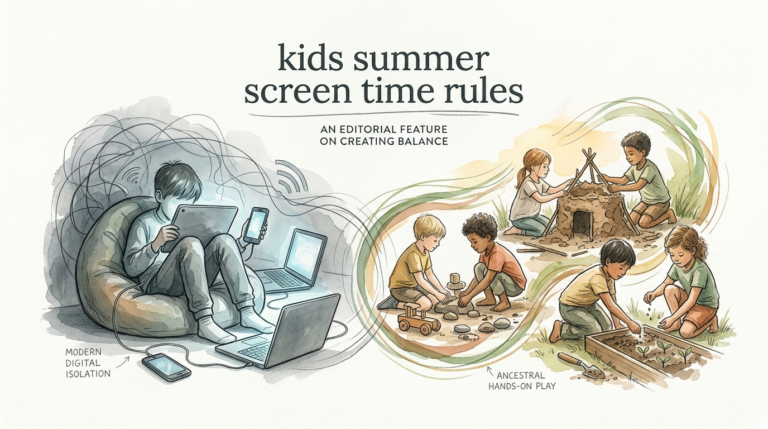
Our modern homes are built for adult comfort—clean, quiet, and predictable. To a child, that’s a sensory desert. The iPad is the only ‘oasis’ of high-stimulus in a paved world.
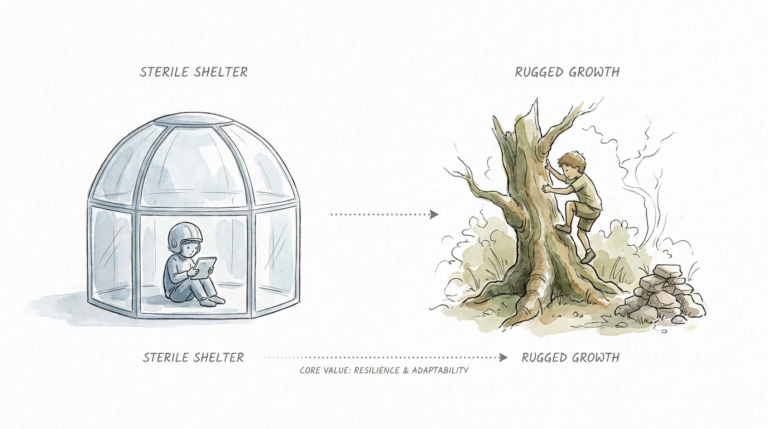
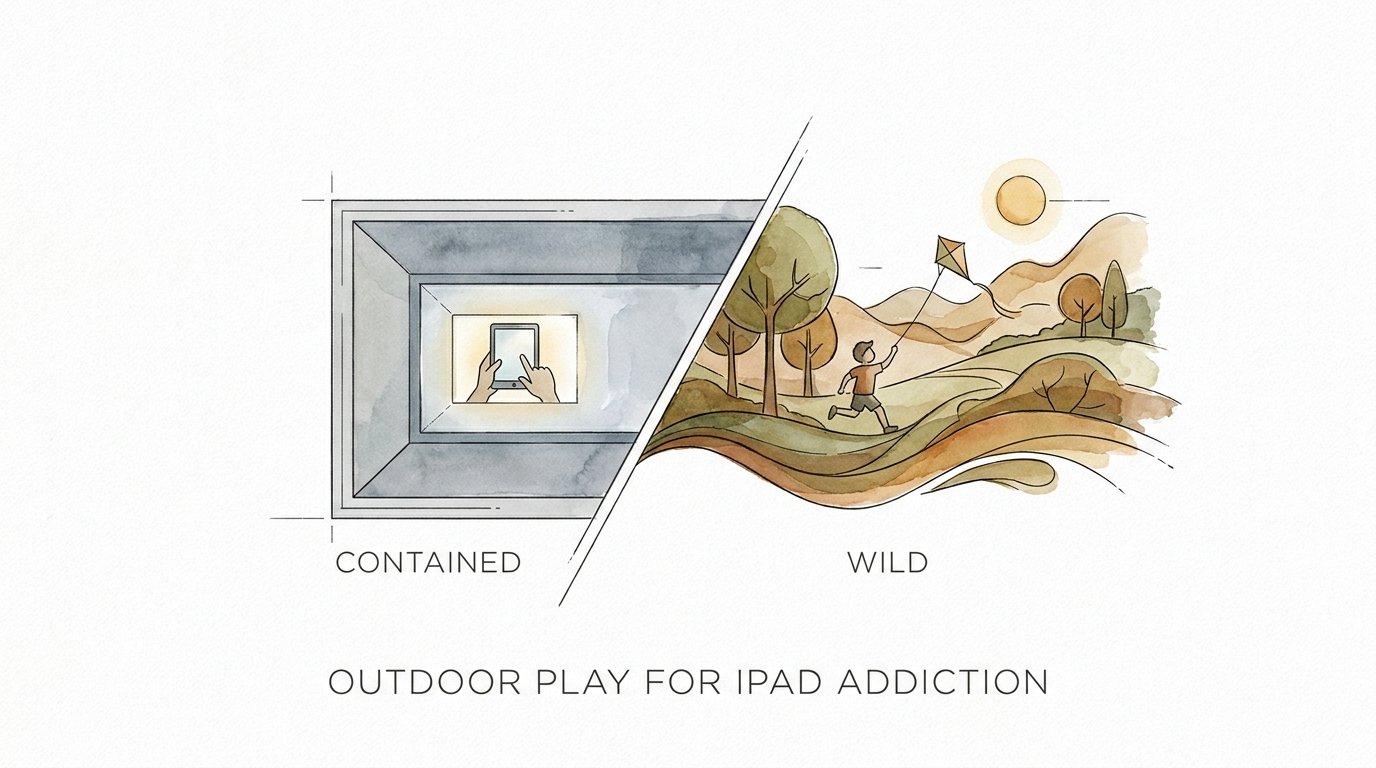
The 7-day reset works because we re-introduce the ‘Wild.’ We trade the safety of the sofa for the managed risk of a climbing tree. Watch the tantrums vanish when the environment finally matches their energy.
Outdoor Play For Ipad Addiction
Outdoor play for iPad addiction is a physiological intervention designed to reset a child’s nervous system. It moves beyond “limiting screen time” and focuses on replacing the intense, artificial dopamine of digital devices with the rich, multi-sensory input found in the natural world.
When a child is hooked on a tablet, their brain becomes accustomed to a high-frequency reward loop. Pixels flash, sounds chime, and levels are cleared every few seconds. This creates a “low registration” state where the child becomes less responsive to the subtle stimuli of real life.
The 7-day reset uses the “Wild” to combat this. While modern homes are “contained”—safe, flat, and temperature-controlled—the outdoors provides “heavy work” and unpredictable sensory feedback. This is the only environment capable of competing with the high-stimulus lure of the iPad.
Think of it as a nutritional reset. If a child is used to a diet of pure sugar (digital dopamine), a carrot (indoor board game) won’t satisfy them. You need to give them a feast of movement, risk, and exploration to satisfy the brain’s hunger for stimulation.
How the 7-Day Reset Works
The 7-day reset is a phased approach to “re-wilding” your child’s attention. It isn’t just about taking the device away; it’s about providing an alternative that is physically and neurologically demanding enough to occupy their focus.
Day 1: The Family Compact
Start with a family meeting. Explain that the “brain needs a vacation” from the blue light. Crucially, parents must model the behavior by putting their own phones in a designated “parking lot.” Transparency builds trust and reduces the “punishment” vibe.
Day 2: The Hard Shift
Remove the iPad from sight and physical reach. This is the “heavy work” day. Engage in activities like pushing a wheelbarrow, raking leaves, or carrying buckets of water. These “proprioceptive” activities provide deep pressure to the joints, which is naturally grounding and calming for a brain in withdrawal.
Day 3: Sensory Re-Awakening
Focus on the senses. Create a “sensory path” in the backyard using stones, sand, and moss. Let them go barefoot. The goal is to wake up the 200,000 nerve endings in their feet, providing a level of tactile input that a smooth screen could never replicate.
Day 4: Managed Risk
Introduce a challenge. Find a “climbing tree” or a steep hill to scramble up. Managed risk forces the brain to enter a state of “flow.” When a child is calculating where to put their foot on a branch, they aren’t thinking about Minecraft.
Day 5: The “Wild” Expansion
Get away from the “contained” environment of the backyard. Head to the woods or a local creek. Use “loose parts”—sticks, mud, and rocks—to build a den. Unstructured play in the wild allows children to create their own “micro-worlds” and take ownership of their play.
Day 6: Nature’s Creative Loop
Engage the creative brain. Use mud for “mud painting” or build a “bug hotel” using hollow sticks and pinecones. This shifts the child from being a passive consumer of digital content to an active creator in the physical world.
Day 7: The New Baseline
Evaluate the week. You’ll likely notice better sleep, fewer meltdowns, and more independent play. Establish “Wild Zones” and “Screen-Free Times” as a permanent part of the family rhythm.
Benefits of Re-Wilding the Sensory Desert
Re-introducing the “Wild” through outdoor play offers measurable benefits that far exceed the simple removal of a tablet.
Neurological Regulation
Outdoor play stimulates the production of serotonin and oxytocin while lowering cortisol levels. This biochemical shift makes children more emotionally resilient. Instead of the “spike and crash” of digital dopamine, nature provides a steady, sustainable reward system.
Proprioceptive and Vestibular Growth
Modern living is often “vestibularly deprived.” Screens keep the head still. Balancing on logs and spinning in the grass develops the inner ear (vestibular system) and body awareness (proprioception). These systems are the foundation for focus and academic learning.
Development of Self-Efficacy
When a child successfully climbs a tree or builds a fort, they gain a sense of “I can do this.” This is true self-esteem built on physical mastery, not “likes” or virtual trophies. This self-efficacy is a powerful buffer against the anxiety often associated with heavy social media and iPad use.
Common Mistakes to Avoid
Many parents fail because they try to “ban” the screen without providing a high-energy alternative.
The “Sofa Swap” Mistake: Simply taking the iPad away while the child is still sitting on the sofa leads to instant boredom and tantrums. You must change the environment. Movement is the antidote to digital withdrawal.
Intervening Too Quickly: Parents often stop kids from climbing or getting dirty because it feels “unsafe” or “messy.” This is “containing” the play. To beat the iPad, the outdoor play must be more exciting than the screen. Let them take the risk.
Inconsistency in Modeling: If you are telling your child to “go play outside” while you scroll on your phone, the reset will fail. The 7-day reset is a family commitment. Children are finely tuned to hypocrisy; they will only value the “Wild” if they see you valuing it too.
Limitations of the Outdoor Method
While powerful, the outdoor reset isn’t a magic bullet for every situation. Environmental and practical constraints can pose challenges.
Living in a high-density urban area without easy access to “wild” spaces requires more effort. You may need to seek out “adventure playgrounds” or travel to state parks. A manicured city park is still “contained” and may not provide the same sensory depth as a wooded trail.
Weather can also be a hurdle. However, practitioners of “Forest School” methods often say, “there is no bad weather, only bad clothing.” Investing in proper waterproof gear is essential for making the 7-day reset work year-round.
Additionally, for children with severe neurodivergent needs, transitions must be handled with extreme care. While nature is highly therapeutic for ADHD and Autism, the initial removal of a “predictable” device like an iPad can be traumatic without a very structured, visual transition plan.
Practical Tips for Immediate Results
Apply these techniques today to start shifting the energy in your home.
- Greyscale Mode: If you must use the iPad, turn it to greyscale in the accessibility settings. It makes the “sensory desert” of the screen less attractive compared to the vibrant colors of the outdoors.
- The “Heavy Work” 15: Before any expected screen time, give your child 15 minutes of heavy work (pushing, pulling, jumping). This “primes” the brain and makes the eventual transition away from the screen much easier.
- Loose Parts Theory: Don’t buy “outdoor toys.” Provide a pile of bricks, some old planks, and a bucket of mud. These are “loose parts” that have infinite play value and keep the brain engaged longer than a static plastic slide.
- The “Wait One Minute” Rule: When your child is bored outside, wait at least one minute before suggesting an activity. Boredom is the gateway to “Wild” creativity. Let them find their own way.
Advanced Considerations for Practitioners
Serious practitioners should understand the “Reward Prediction Error” in the context of digital vs. natural play.
Digital devices are designed to provide “perfect” rewards. The game reacts exactly how the child expects, every time. This creates a rigid brain. Nature is “stochastic”—it is unpredictable. A branch might bend, a bug might fly away, or the wind might blow down a stick fort.
This unpredictability is actually a “feature,” not a bug. It trains the brain to handle “prediction errors.” This is the core of cognitive flexibility. By shifting a child from a “contained” digital loop to a “wild” natural one, you are literally training their brain to handle the uncertainty of the real world.
Furthermore, consider the “Circadian Reset.” Exposure to early morning sunlight (blue-rich light from the sun, not a screen) regulates the pineal gland. This improves melatonin production at night, solving the “iPad-induced insomnia” that plagues many modern households.
Scenario: The “Tantrum to Tree” Transition
Imagine a 7-year-old who has just had their iPad taken away for Day 2 of the reset. The child is screaming, throwing pillows, and demanding the device.
Instead of arguing, the parent says, “The garden needs a wall. I can’t move these heavy stones by myself.” The parent hands the child a pair of work gloves—a “sensory cue” that things have changed.
As the child begins to lift and carry the stones (heavy work), the “proprioceptive” input starts to calm the amygdala. Within 15 minutes, the physical effort has regulated the heart rate. The “tantrum energy” has been channeled into “building energy.”
By the end of the hour, the child isn’t asking for the iPad. They are asking where to find more stones. This is the “Wild” working in real-time.
Final Thoughts
The 7-day reset isn’t a punishment; it is a restoration. By moving from the “contained” environment of our digital homes into the “wild” complexity of the outdoors, we give our children back the childhood they were designed for. We trade the sensory desert of the screen for the sensory feast of the forest.
When we re-introduce risk, movement, and unstructured play, we aren’t just solving an iPad addiction. We are building resilient, capable, and neurologically healthy humans. The tantrums vanish because the child is finally being “fed” the stimulation their body craves.
Take the leap this week. Put the devices in a drawer, grab a pair of boots, and head for the nearest climbing tree. You might find that the “Wild” is exactly what you needed, too.
Sources
1 behavedbrain.com | 2 reddit.com | 3 korukids.co.uk | 4 yellow-door.net | 5 earthltd.org | 6 youtube.com | 7 peacefulparent.com | 8 campsuisse.com | 9 childrenswi.org