screen time challenge
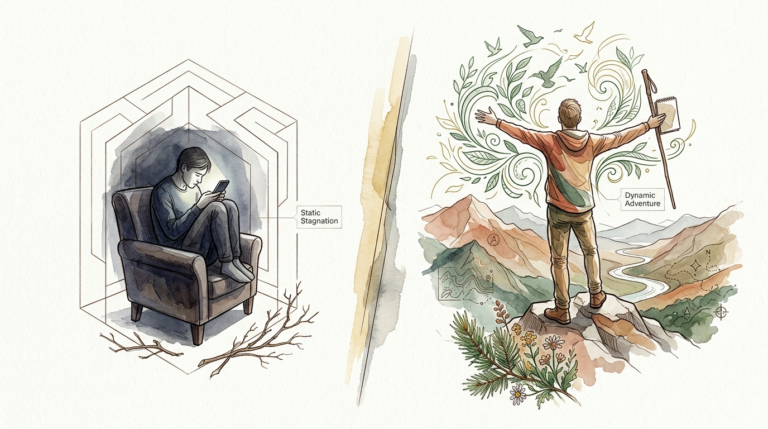
Screens connect us to the world but isolate us from our neighbors. Social media is a poor substitute for social presence. Put the phone down and reintegrate into the real world. Start your challenge tonight.
Have you ever looked up from a thirty-minute “quick check” of your phone only to realize you have no idea where the time went? You are not alone. Modern life has transitioned into a digital-first experience where our pockets hum with the demands of the entire world. This constant connectivity promised to bring us closer, but for many, it has created a profound sense of isolation.
Choosing to step back from the glass rectangle is not about being “anti-technology.” It is about reclaiming your most valuable asset: your attention. This guide will walk you through the process of shifting from a passive, isolated scroller to an active, integrated member of your local community.
screen time challenge
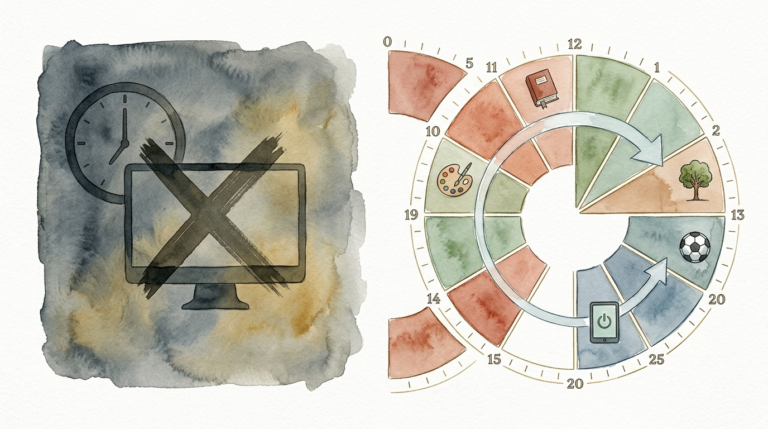
The screen time challenge is a structured effort to reduce the hours spent on digital devices to improve mental, physical, and social well-being. It is a response to a global trend where the average person now spends between six and seven hours on screens daily. In some demographics, such as Gen Z, that number climbs to a staggering nine hours per day.
This challenge exists because our brains are currently losing a war against persuasive design. Apps are engineered to trigger dopamine loops that keep us scrolling far longer than we intended. When we spend forty percent of our waking hours looking at a screen, we naturally lose the time required for deep hobbies, exercise, and face-to-face interactions.
Real-world situations often highlight the need for this shift. Think of a family dinner where every person is staring at a different device, or a beautiful sunset that a crowd only views through their camera lenses. The challenge provides a framework to break these habits and return to a life lived in the first person.
The Step-by-Step Reintegration Plan
Reclaiming your life from your phone requires more than just willpower. You need a system that replaces digital habits with physical ones. Follow these steps to begin your reintegration.
Perform a Digital Audit. Check your phone’s settings to see exactly how much time you spend on specific apps. This data is often shocking. Use it as fuel to identify which platforms are stealing your time without providing value.
Define Your No-Phone Zones. Select specific areas of your home where screens are strictly prohibited. The dining table and the bedroom are the most effective starting points. Keeping phones out of the bedroom ensures that your first and last thoughts of the day are yours, not an influencer’s.
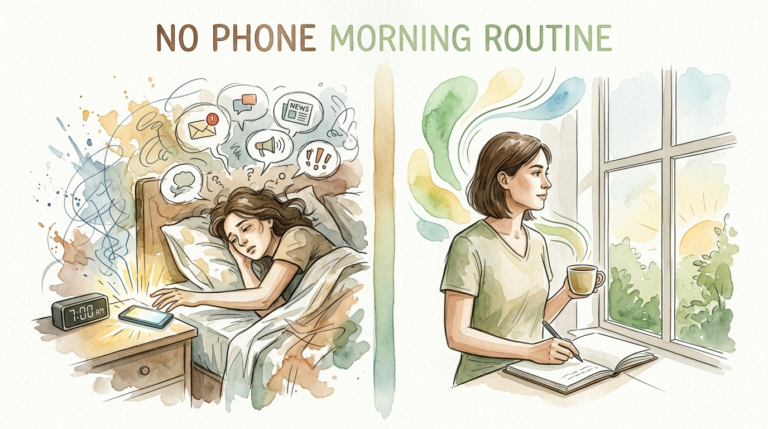
Swap Your Alarm Clock. Most people reach for their phone the moment they wake up because it is their alarm. Buy a physical, analog alarm clock. This simple change prevents the “morning scroll” that often sets a reactive tone for the entire day.
Switch to Grayscale. Colorful icons are designed to be enticing. By stripping the color from your screen in your accessibility settings, you make the device significantly less rewarding to look at. The “slot machine” effect of social media apps vanishes when the vibrant red notification bubbles turn a dull gray.
The Measurable Benefits of Looking Up
Reducing screen time offers immediate and observable improvements to your quality of life. Participants in digital detoxes often report a feeling of “mental clarity” that they haven’t experienced in years.
Mental health is the first to improve. Studies show that even a two-week break from mobile internet can improve attention spans to a level that feels like “subtracting a decade” from your cognitive age. Lower cortisol levels and reduced anxiety follow when you stop the constant cycle of social comparison and “fear of missing out” (FOMO).
Physical health also sees a boost. Removing screens two hours before bed allows your body to produce melatonin naturally. This leads to deeper, more restorative sleep. You also avoid “text neck” and eye strain, while the time saved often naturally transitions into increased physical movement or outdoor activities.
Community integration is the final, most rewarding benefit. When you aren’t looking at a screen while waiting for coffee or walking through the park, you become available for “micro-interactions.” These brief chats with neighbors and strangers build the “weak ties” that make a community feel like a home rather than just a place to live.
Common Pitfalls and Why We Fail
The biggest mistake people make is trying to go “cold turkey” without a plan for the void. If you suddenly have four extra hours in your day and no hobby to fill them, you will return to your phone out of sheer boredom. You must have a physical book, a project, or a social engagement ready to take the place of the screen.
Social pressure is another major hurdle. Friends and family may feel slighted if you don’t respond to their texts within minutes. Clear communication is key here. Let your inner circle know that you are doing a screen time challenge and that you will be checking messages only at specific times.
Underestimating the withdrawal is a frequent error. Your brain is used to high-frequency dopamine hits. When you stop scrolling, you might feel irritable, restless, or anxious. Recognizing these feelings as a natural physiological response to “unplugging” makes them easier to manage.
When High-Tech is Still Necessary
Total digital avoidance is unrealistic for most people in the modern economy. Remote work, digital banking, and emergency communications require us to stay connected to some degree. The goal of a screen time challenge is not to live in a cave, but to eliminate “junk” usage.
If your job requires you to be online, you may need to use “intentional consumption” strategies. This means using a desktop computer for work tasks while keeping your mobile device restricted. Limitations exist when technology serves as a vital tool for accessibility or safety, and those uses should be protected.
Balance is the priority. A surgeon using a screen for a robotic procedure is a high-value use of technology. A person scrolling through “rage-bait” comments on a news article is a low-value use. Learn to distinguish between the two.
Isolated Scrolling vs. Integrated Community
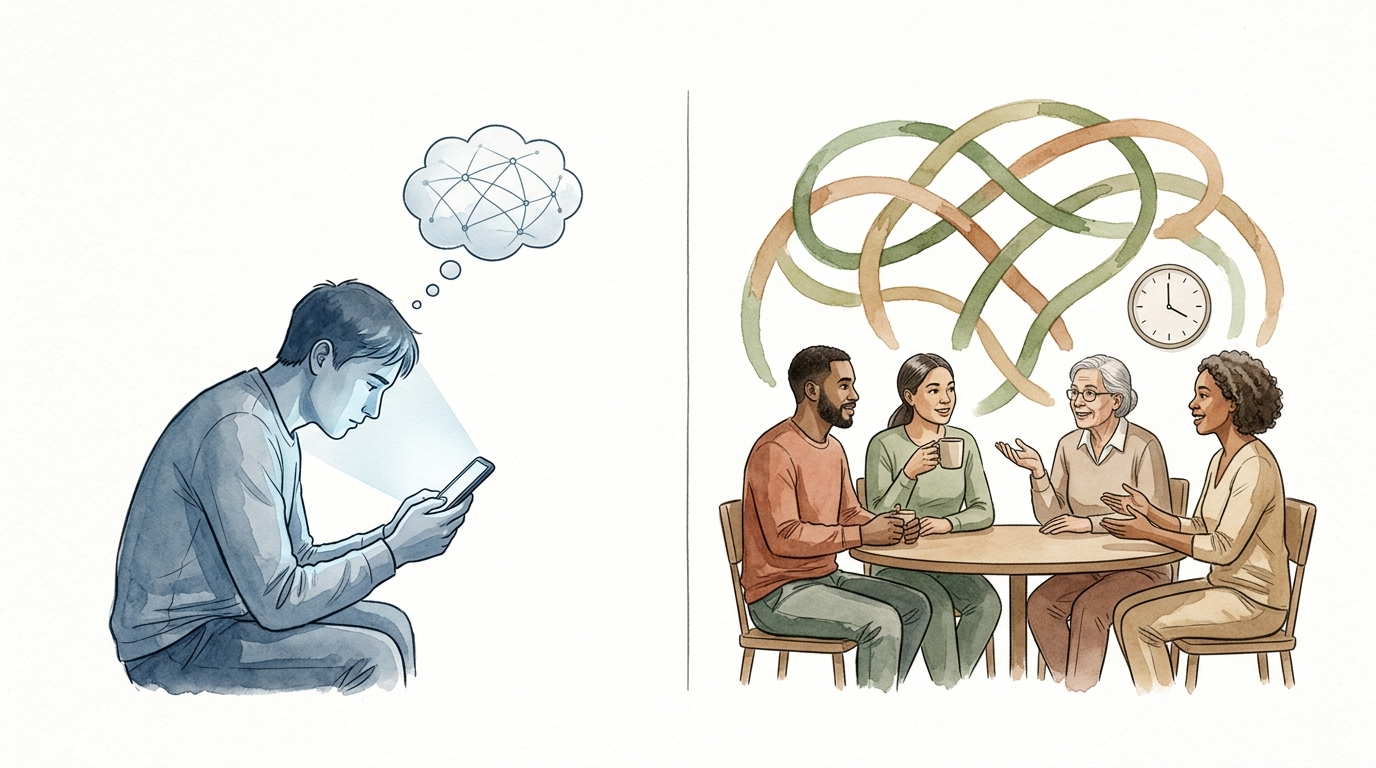
Understanding the difference between digital connection and physical presence is crucial for long-term success. The following table highlights the impact of these two lifestyles.
| Feature | Isolated Scrolling | Integrated Community |
|---|---|---|
| Connection Type | Passive, shallow, curated | Active, deep, authentic |
| Mental Impact | High anxiety, FOMO, envy | Belonging, empathy, calm |
| Attention Span | Fragmented and short | Sustained and focused |
| Social Outcome | Loneliness despite “likes” | Stronger support networks |
Best Practices for a Digital Life
Success in the screen time challenge comes from small, repeatable wins. Use these tips to maintain your progress:
- The 1-Hour Rule: Commit to no screens for the first hour after waking and the last hour before sleeping.
- Delete Addictive Apps: If you find yourself mindlessly opening an app, delete it. You can still check it on a mobile browser, which is much more clunky and less addictive.
- Batch Your Notifications: Turn off all non-human notifications. You do not need to know that a store is having a sale the second it happens.
- Public Accountability: Tell your partner or a friend about your goals. Having someone ask “Why are you on your phone?” at the dinner table provides a helpful reality check.
Advanced Digital Minimalism
Once you have mastered the basics, you can look into deeper strategies for long-term digital minimalism. This philosophy suggests that you should only use technology for things that align with your core values.
Serious practitioners often move toward “single-purpose devices.” Instead of using a smartphone for everything, they might use a dedicated E-reader for books, a dedicated camera for photos, and a paper notebook for lists. This prevents “context switching,” where you pick up your phone to check a grocery list and end up on Instagram for twenty minutes.
Another advanced technique is the “30-day Digital Declutter.” During this period, you remove all optional technologies from your life. At the end of the month, you slowly reintroduce only the tools that provide significant value, rather than just “convenience.” This resets your baseline for what “normal” connectivity looks like.
Example Scenario: The Weekend Blackout
Consider the case of a professional who spends forty hours a week on a computer and another twenty on their phone. They decide to try a “Weekend Blackout.” From 6:00 PM Friday to 8:00 AM Monday, they place their smartphone in a kitchen drawer.
On Saturday morning, they feel the phantom itch to check their pockets. Instead, they go to a local farmer’s market. Without a phone to distract them, they strike up a conversation with a local baker. They spend the afternoon working in a garden or reading a physical book.
By Sunday evening, the “anxiety of the unread” has vanished. They realize they didn’t miss anything urgent. When they return to their phone on Monday, they do so with a sense of control. They use the tool for its intended purpose and put it away, rather than letting it dictate their mood.
Final Thoughts
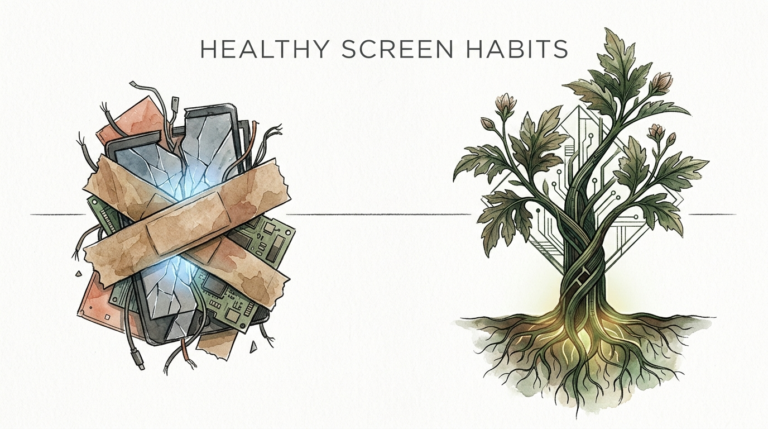
Screens have a place in our lives, but they should never be the center of them. The screen time challenge is a path back to the richness of the physical world. It allows you to trade the shallow validation of a “like” for the deep satisfaction of a real conversation or a completed project.
Reintegrating into your community starts with the simple act of looking up. You will notice things you haven’t seen in years: the details of your neighborhood architecture, the expressions of the people around you, and the quiet beauty of a moment that doesn’t need to be shared online.
Take the first step tonight. Turn off your notifications, leave your phone in another room, and see what happens when you are fully present. The world is waiting for you to rejoin it.
Sources
1 theiasgazette.com | 2 ch-dc.org | 3 digitalwellnessinstitute.com | 4 lifestance.com | 5 grandrisingbehavioralhealth.com | 6 samhealth.org | 7 georgetown.edu | 8 mayoclinic.org | 9 allconnect.com | 10 upandupaba.com | 11 charleston.edu | 12 richinwhatmatters.com | 13 aarp.org | 14 nea.org | 15 youtube.com