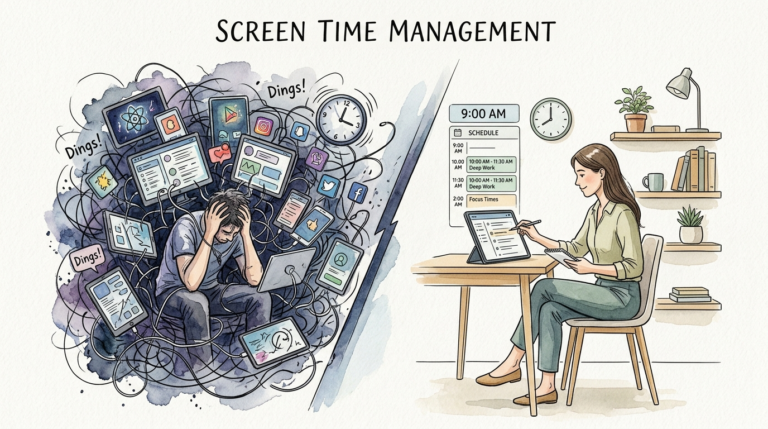
less screen time challenge
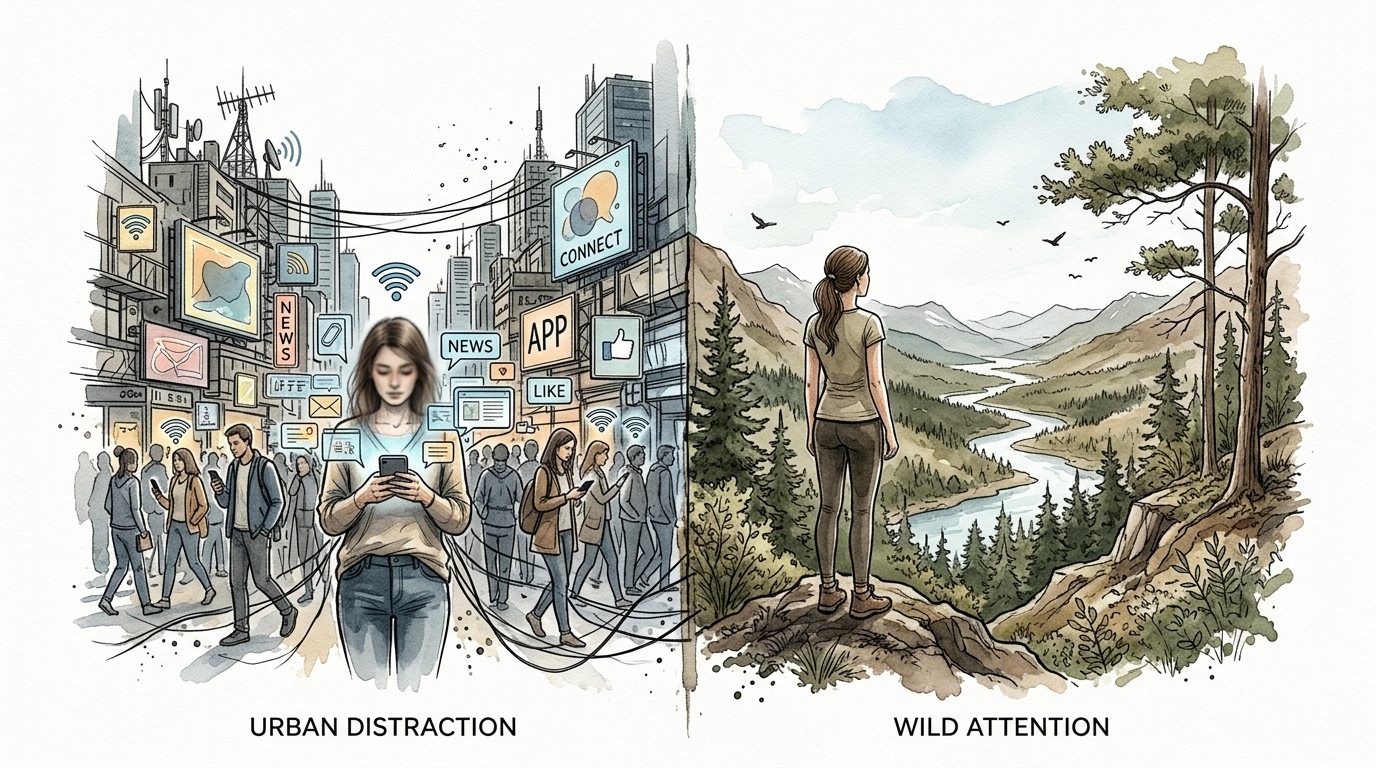
Your attention is a resource. Stop spending it on algorithms. The city in your pocket is designed to keep you distracted. The wild is designed to keep you present. Take the less-screen challenge today.

Every morning, millions of people reach for a glowing rectangle before they even say hello to the person next to them. We have traded our focus for a feed that never ends. We have traded our peace for a pounce of notifications that never stops. This digital noise isn’t just a nuisance; it is a biological tax on your brain. It fragments your focus and leaves you feeling drained by noon.

Choosing to step back from the screen is not about living in a cave. It is about reclaiming your sovereignty. It is about deciding that your time is too valuable to be auctioned off to the highest bidder in the attention economy. When you disconnect from the digital “urban distraction,” you allow your “wild attention” to return. This is where real life happens.
Taking a less-screen challenge is the first step toward a more intentional life. It is a physiological reset that allows your nervous system to breathe. It is a mental decluttering that makes room for creativity, deep work, and genuine human connection. This guide will show you exactly how to navigate this transition and why your brain will thank you for it.
less screen time challenge
The less screen time challenge is a structured commitment to reduce or eliminate the time spent on digital devices for a set period. It is more than just a “digital detox.” It is a deliberate recalibration of your relationship with technology. This challenge exists because we have reached a breaking point where the average person spends over six hours and 40 minutes per day glued to a screen. In the United States alone, the average is roughly five hours per day for smartphone use alone.
At its core, this challenge is about moving from “digital distraction” to “digital well-being.” Digital well-being is the practice of maintaining healthy connections between yourself and your devices so they benefit you rather than consume you. It requires asking yourself when, why, and how you engage with a screen. Real-world applications for this challenge range from corporate wellness programs to individual lifestyle shifts for better mental health.
Think of it as a physical cleanse for your mind. Just as you might cut out sugar to reset your palate, you cut out mindless scrolling to reset your dopamine receptors. We live in a world where 61% of people admit to being addicted to their devices and the internet. The challenge provides the necessary friction to break those habitual loops and rediscover what makes you happy in the physical world.
This challenge is used in varied contexts today. Students use it to regain focus during exam seasons. Professionals use it to overcome burnout. Parents use it to model healthy behavior for children, 54% of whom feel their kids are addicted to screens. Whether it is a “Digital Sabbath” for one day a week or a 30-day structured overhaul, the goal remains the same: reclaiming your attention.
How the Challenge Works: A Step-by-Step Reset
Success in a less-screen challenge requires more than willpower. It requires a system. The most effective way to start is by turning your “smart” phone into what researchers call a “dumb phone.” This means stripping away the apps that provide endless internet access and high-stimulation loops while keeping the tools needed for basic communication, like calling and texting.
Start by auditing your current usage. Most modern smartphones have built-in trackers that show your daily average time, peak hours, and most-used apps. Use this data to identify your biggest time-wasters. Often, just three or four apps account for 80% of your distractions. Deleting these apps or moving them to a hidden folder is a powerful first step in reducing “urban distraction.”
Establish “Tech-Free Zones” and “Tech-Free Times.” Designate your bedroom and dining table as areas where no screens are allowed. Commit to a “Screen-Free Morning” where you do not check your phone for the first hour after waking. Instead of staring at a blue-light emitter, look at the horizon or an object far away. This simple act resets your circadian rhythm and protects your morning cortisol levels from spiking too early.
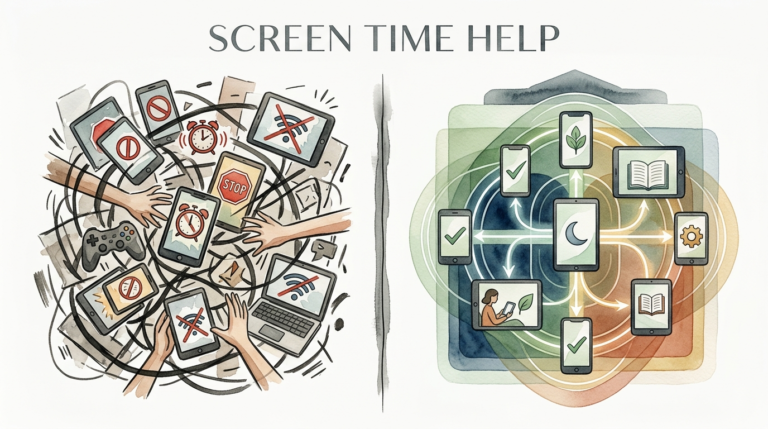
Use friction to your advantage. Set your phone to grayscale mode. This removes the “casino-like” pull of colorful notifications and icons. Use app blockers that require a password or a physical “key” to unlock. When you make a bad habit difficult to start and an enjoyable habit easy to access, your behavior naturally shifts toward the better option.
Find replacement practices. Withdrawal symptoms are common during the first few days of a challenge because scrolling has become a ritual. You must have a plan for what to do when the urge to scroll hits. Keep a book, a journal, or a physical hobby nearby. Engaging in “play” for its own sake reduces stress and fills the void left by digital consumption.
The Measurable Benefits of Disconnecting
Reducing screen time offers profound benefits for your physical health. One of the most immediate changes is improved sleep quality. Screens emit blue light that mimics daytime, suppressing melatonin and delaying its release by several hours. When you cut out evening screens, your body clock desynchronizes, leading to deeper, more restorative sleep. This, in turn, reduces daytime fatigue and the need for more sedentary technology use.
The mental health advantages are equally striking. Excessive screen time is directly linked to rising cortisol—the primary stress hormone. High cortisol levels fracture attention and deplete mental reserves. Studies have shown that even a one-week break from social media can lead to significant drops in anxiety and depression. By lowering your digital load, you allow your brain’s frontal lobe—the area responsible for mood regulation—to function properly.
Physical pain often decreases as your posture improves. “Text neck” and eye strain are common symptoms of a digital-first lifestyle. Following the 20-20-20 rule—looking at something 20 feet away for 20 seconds every 20 minutes—can alleviate eye fatigue. Furthermore, reducing screen time frees up hours for physical activity, which helps prevent obesity and cardiovascular conditions like heart disease and type 2 diabetes.
Social connections become deeper and more meaningful. When you are not constantly checking your phone, you are more present with friends and family. This “full attention” fosters stronger bonds and reduces the “Digital FOMO” (Fear Of Missing Out) that often plagues heavy users. You trade a thousand superficial connections for a handful of genuine interactions that truly “fill your cup.”
Common Challenges and Pitfalls to Avoid
The biggest challenge in any digital detox is the emotional complexity of our devices. Our phones are not just tools; they are lifelines. We use them for validation, to stay connected, and to fill “empty space.” Breaking away can stir up feelings of boredom, loneliness, or even sadness. Recognizing that these feelings are a normal part of the “withdrawal” process is essential for staying on track.
Many people fail because they try to go “cold turkey” without a plan for professional necessities. In 2025, screens are essential for many jobs and studies. A common mistake is setting unrealistic goals that conflict with your livelihood. Instead of total elimination, focus on “intentional connection.” Separate your professional communication from your recreational scrolling to maintain focus without sacrificing productivity.
Another frequent error is neglecting the “social” aspect of the challenge. If your friends and family are all still glued to their screens while you are trying to disconnect, you will feel isolated. This is why researchers recommend engaging in a less-screen challenge alongside others. Shoring up social bonds in the physical world provides the community support needed to resist the pull of the algorithm.
Beware of the “productivity trap.” Some people replace social media scrolling with “productive” scrolling—researching, news reading, or organizing digital files. While these activities feel better, they still tax your “directed attention” and keep your brain in a state of high arousal. True restoration requires stepping away from the data flow entirely, even the parts that seem “useful.”
Limitations: When the Challenge May Not Be Ideal
A full-scale screen time challenge may not be practical for everyone at all times. Professionals in digital marketing, PR, or IT infrastructure often have “eyes on the screen” requirements that cannot be ignored. For these individuals, a total detox is impossible. The strategy must shift from “elimination” to “compartmentalization”—using different devices or OS users for work and personal life to prevent “empty scrolling” during off-hours.
Remote learning presents another limitation. For many students in 2025, screens are essential study tools. AI tools and educational platforms like “StudyTok” have become primary learning resources, especially for those with ADHD who benefit from bite-sized content. In these cases, restricting screen time too heavily can actually harm academic performance. The goal should be “balancing” rather than “restricting.”
Safety and navigation are also practical boundaries. Forgetting your phone or turning it off can be a risk if you are traveling in an unfamiliar city or need to be reachable for family emergencies. It is better to use a “limited-access” strategy—where you only allow calls and GPS—than to leave the device behind entirely if it compromises your safety. Credibility in digital minimalism comes from balance, not extremism.
Urban Distraction vs Wild Attention
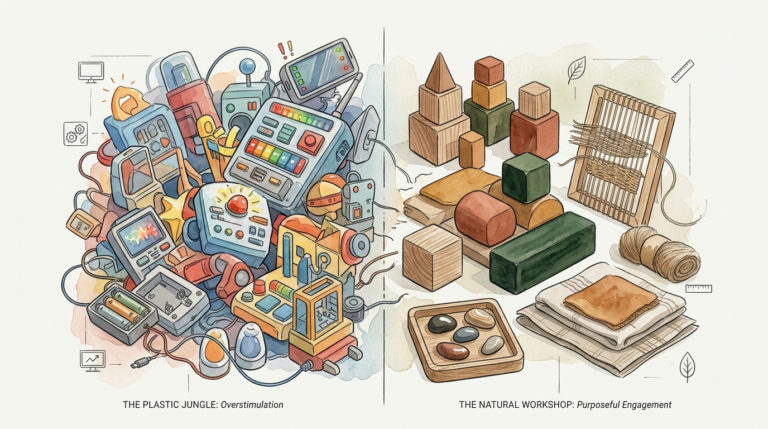
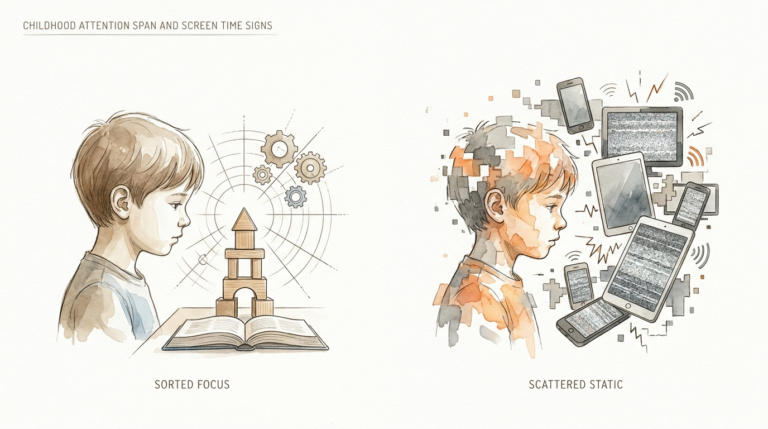
To understand why this challenge works, we must look at the difference between urban and natural environments. This is often framed as the “Urban Distraction vs Wild Attention” comparison. Urban settings—and their digital equivalents like social media feeds—are filled with dramatic stimuli that capture attention from the “bottom-up.” This requires “directed attention” to filter out noise, which is mentally intensive and quickly leads to fatigue.
In contrast, the “Wild” or natural environment elicits “soft fascination.” This is an effortless, involuntary mode of attention. Nature is filled with intriguing but non-threatening stimuli—like moving leaves or clouds—that allow your “directed attention” to rest and replenish. This is the foundation of “Attention Restoration Theory.” Spending even 20 minutes in a natural setting can lower stress hormones by approximately 21%.
| Feature | Urban/Digital Distraction | Wild Attention (Nature) |
|---|---|---|
| Attention Mode | Directed, Voluntary, Effortful | Involuntary, “Soft Fascination” |
| Energy Cost | High (Leads to fatigue) | Low (Restorative) |
| Primary Hormones | Cortisol (Stress), Dopamine (Loops) | Endorphins, Lowered Cortisol |
| Visual Stimuli | High Salience, Artificial, Rapid | Natural Fractals, Slower Motion |
| Cognitive Impact | Fractured focus, Reduced memory | Enhanced focus, Restored mental energy |
Practical Tips and Best Practices
One of the most effective best practices is the “Digital Sabbath.” Pick one day a week—usually a Saturday or Sunday—to go completely tech-free. Use this time to connect with nature, practice a hobby, or spend time with friends and family. This weekly reset prevents the accumulation of “digital fatigue” and makes the rest of your week more productive.
Declutter your digital workspace. Just as a messy desk distracts you, a messy home screen pulls at your focus. Organize your remaining apps into folders and keep your home screen clear of anything that isn’t a essential tool (like a calendar or notes). Replace your wallpaper with a photo of your goal or a natural scene that inspires “wild attention.”
Optimize your notifications. Silence is your best friend. Turn off all non-human notifications. You do not need to know that someone liked a post or that an app has a “special offer.” Only allow notifications for direct messages or calls from a select “Tier 1” list of important contacts. This ensures you are available when needed without being interrupted by the trivial.
Use “Reader Mode” and “Full Screen Mode” when you must be on a computer. These tools strip away sidebars, ads, and other visual “urban distractions” that pull at your eyes. It allows you to focus solely on the task at hand, improving efficiency and reducing the time you actually need to spend in front of the screen.
Advanced Considerations for Serious Practitioners
For those who want to go deeper, consider “Information Dieting.” Unsubscribe from every newsletter and notification that does not add direct value to your life. Evaluate the quality of your information sources. Are you consuming “fast-food” content (sensational news, infinite feeds) or “nutritious” content (long-form books, deep-dive articles)? Digital minimalism is as much about quality as it is about quantity.
Scaling your digital minimalism involves creating a “Professional Framework.” If you are a busy professional, create a hierarchy of communication urgency. Set expectations with your team about your response times. By protecting your focus time, you actually deliver higher quality work, making you more valuable than someone who is “always on” but never deep in thought.
Consider the “Fractal Nature” of your environment. Studies show that viewing natural fractals—repeating patterns found in trees, coastlines, and clouds—specifically restores the brain’s ability to focus. If you cannot get to the wild, even looking at high-quality pictures of nature can provide a modest restorative effect. This “biophilic design” in your digital and physical space can mitigate some of the damage of a screen-heavy day.
Real-World Examples and Scenarios
Consider the case of a corporate executive suffering from chronic burnout. Their average screen time was seven hours a day, mostly spent on email and LinkedIn. By implementing a “Dumb Phone” strategy on weekends and limiting email checks to three specific “windows” during the workday, they reduced their screen time by 40%. Within two weeks, their sleep quality improved, and they reported a significant “mental lightness” they hadn’t felt in years.
Another scenario involves a college student using “StudyTok” as a learning aid. Instead of banning the app, they used a “Friction Strategy.” They only accessed TikTok via a web browser on their laptop, never on their phone. This made the experience less “sticky” and easier to close once the educational content was consumed. This balance allowed them to use the tool without falling into a three-hour “doomscrolling” trap.
A family decided to take a “30-Day Digital Detox Challenge.” They replaced evening TV with board games and walks in a local park. The results were measurable: the children showed less irritability and better academic concentration, while the parents felt more connected to each other. They used a habit tracker to record their success, making the challenge feel like a game rather than a punishment.
Final Thoughts
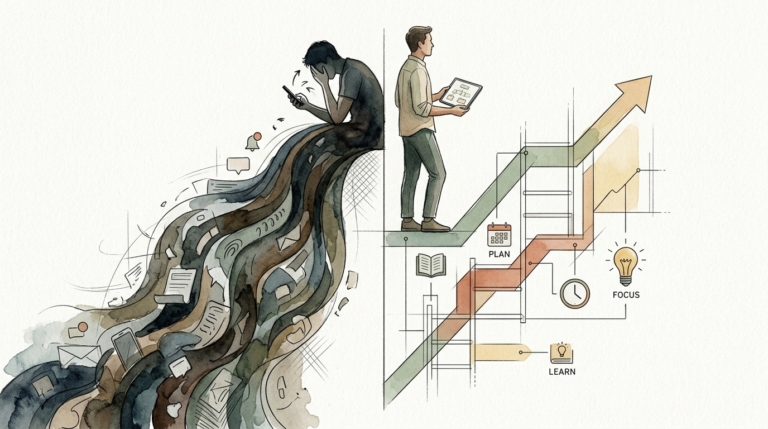
The less screen time challenge is not an act of deprivation; it is an act of liberation. By intentionally stepping back from the digital “city in your pocket,” you create the space for your “wild attention” to return. This mental restoration is the foundation of high performance, deep creativity, and genuine happiness. Your attention is your most valuable asset—it is time to stop spending it on algorithms that do not have your best interests at heart.
Start small if you must. A single screen-free morning or a weekend without social media can provide the proof you need that a different way of living is possible. As you experience the physical and mental benefits—the better sleep, the lower stress, the sharper focus—you will find it easier to maintain these boundaries. The goal is to use technology as a tool for a better life, rather than letting it be the architect of your existence.
Explore the “wild” that exists both outside your door and within your own mind. When you turn off the screen, the world turns back on. Experiment with these strategies, find what works for your unique situation, and reclaim the peace that has always been yours. The challenge is waiting, and the rewards are immeasurable.
Sources
1 totalcommunication.com.sg | 2 aao.org | 3 regis.edu | 4 lifestance.com | 5 georgetown.edu | 6 reddit.com | 7 cacfp.org | 8 richinwhatmatters.com | 9 behavioralhealthnews.org | 10 arizona.edu | 11 charleston.edu | 12 mayoclinic.org | 13 potsdam.edu | 14 tghclinic.com | 15 daar.com.au | 16 lamistad.com | 17 stanford.edu | 18 successfulstudyskills4students.com | 19 umich.edu | 20 mindingyourstress.com | 21 tichoeye.com | 22 nih.gov | 23 cogneurosociety.org | 24 unhookd.app