30 day screen time challenge
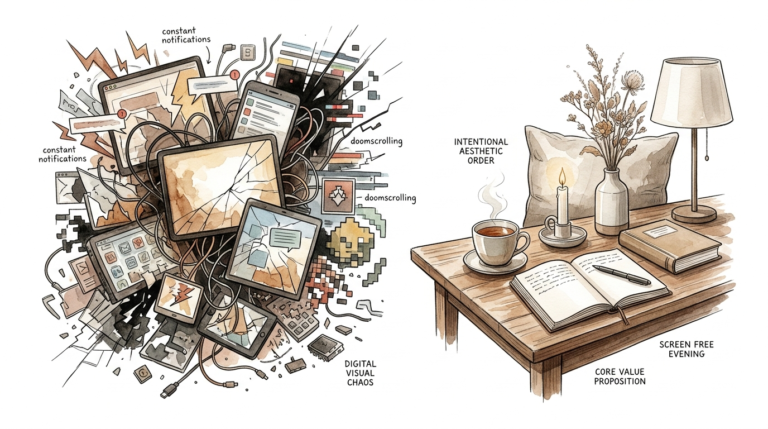
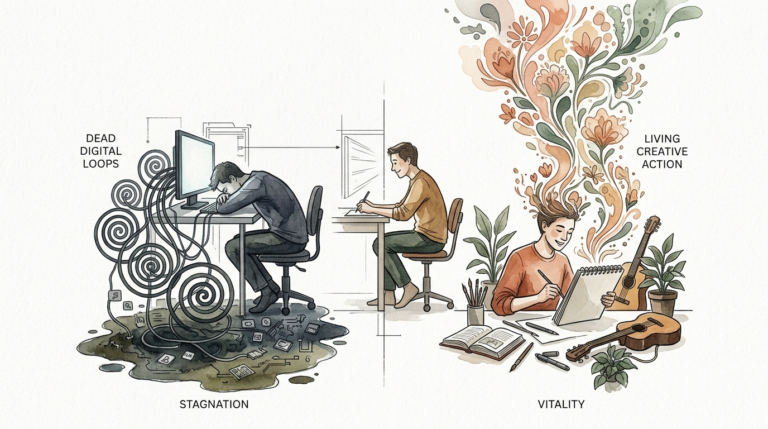
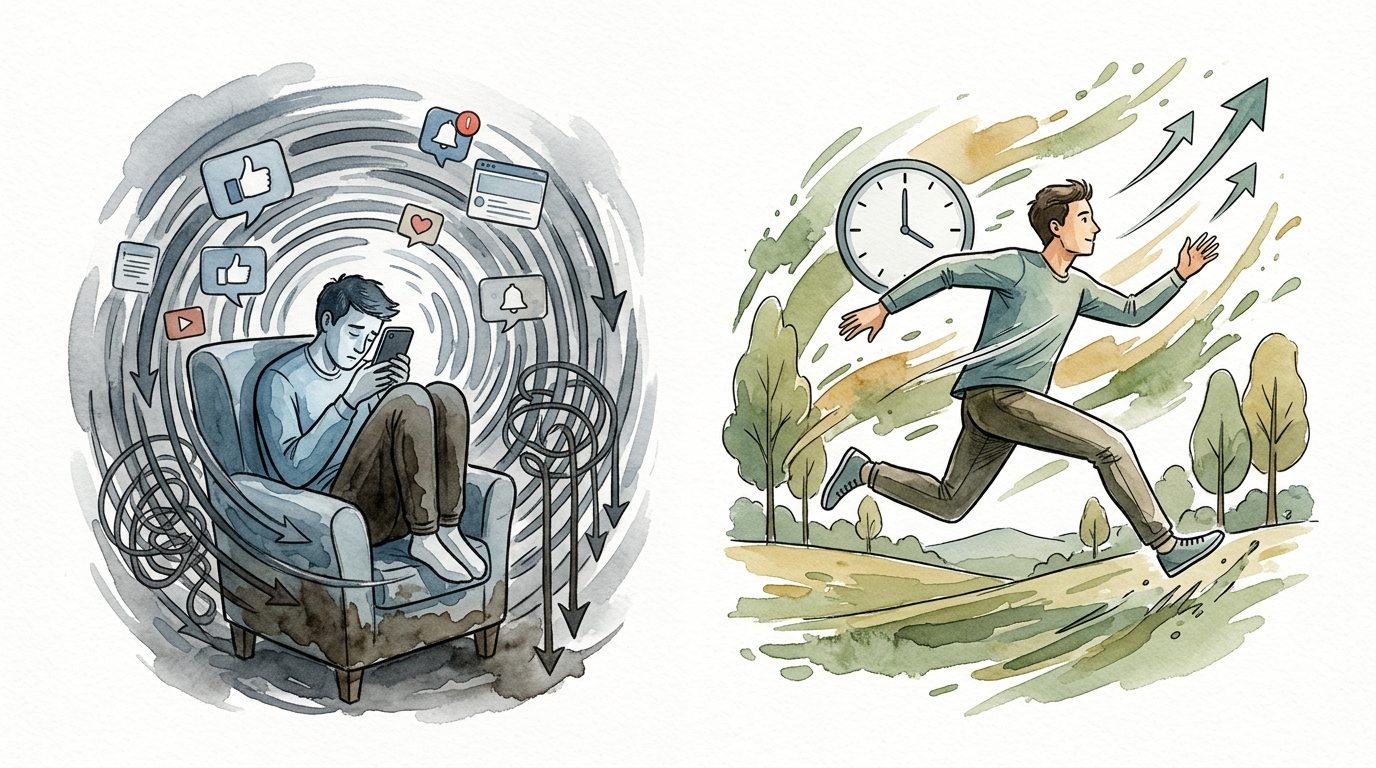
Is your life a static loop or a dynamic adventure? Break the infinite scroll. For the next 30 days, we replace passive consumption with active creation. Watch your energy transform when you put the phone down.
Most of us live in a digital haze. We wake up and immediately reach for a glowing rectangle. We scroll while eating, while waiting in line, and even while talking to the people we love. This habitual behavior is not just a quirk of modern life. It is a carefully engineered cycle designed to keep our eyes glued to the glass. Research shows that Americans now spend an average of over four hours a day on their phones, with two of those hours dedicated strictly to social media. This constant connection comes with a heavy price tag: mental fatigue, fragmented attention, and a persistent feeling of being “on” without ever actually doing anything.
This article serves as your comprehensive roadmap to reclaiming your focus. We are moving beyond simple “phone breaks.” We are looking at a total reset of your relationship with technology. You will learn the science of why your brain craves the scroll and the practical, step-by-step methods to break the cycle for good. Whether you are a student struggling to study or a professional whose productivity has plateaued, this guide offers the tools to transform your digital habits from the ground up.
30 day screen time challenge
A 30 day screen time challenge is a structured period of intentional reduction in digital consumption. It is not about becoming a hermit or throwing your laptop into the nearest river. Instead, it is a targeted intervention designed to break the dopamine-driven feedback loops created by modern apps and platforms. These challenges exist to help individuals regain “cognitive sovereignty”—the ability to choose where their attention goes rather than letting an algorithm decide for them.
The concept is rooted in the principles of digital minimalism. In real-world terms, this challenge is used by high-performers, artists, and parents who realize their digital habits have become a “static loop.” Instead of moving forward in life, they are spinning their wheels in a stream of content they will forget five minutes later. Studies from institutions like Georgetown University highlight that even small doses of screen reduction can positively impact life satisfaction by removing the short dopamine bursts that keep us hooked on gaming and social media.
Think of your attention like a muscle. Currently, that muscle is weak from over-reliance on external stimulation. The 30 day screen time challenge is a training program. It starts with awareness and moves toward radical boundaries. By the end of the month, the goal is not to stay offline forever but to return to your devices with a completely different mindset. You will go from being a passive consumer to an intentional user who commands technology rather than being commanded by it.
How to Execute Your 30-Day Digital Reset
Success in this challenge requires a tactical plan. You cannot rely on willpower alone because the apps on your phone are designed to defeat your willpower. You need a system that evolves over four distinct phases. This progression allows your brain to adjust to lower levels of stimulation without the immediate “withdrawal” that causes most people to quit after day three.
Phase 1: The Awareness Audit (Days 1–7)
The first week focuses on data collection and low-hanging fruit. Start by checking your built-in screen time trackers. Look at which apps consume the most of your time. Usually, it is the “infinite scroll” apps—Instagram, TikTok, or Reddit. Your primary goal this week is to turn off all non-essential notifications. If it is not a direct message from a real human or a critical work alert, it should not be allowed to buzz in your pocket. This simple step eliminates the external triggers that pull you into the screen throughout the day.
Phase 2: Building the Fortress (Days 8–14)
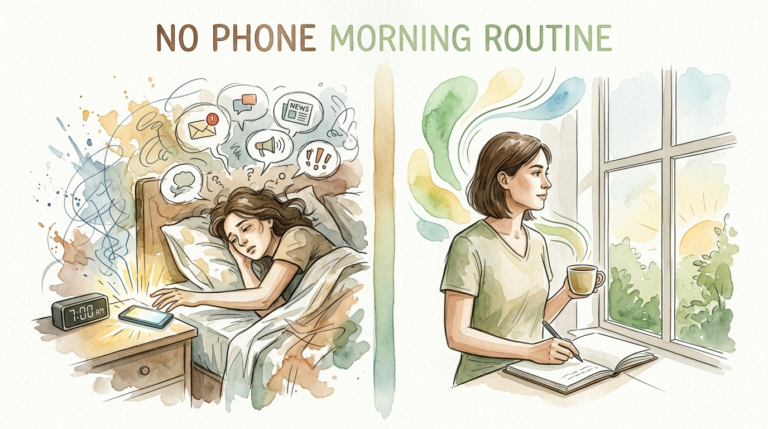
Now that you have stopped the “pings,” it is time to establish physical boundaries. Designate tech-free zones in your home. The bedroom is the most important area; charging your phone outside of the bedroom is one of the most effective ways to improve sleep and morning focus. You should also implement “Screen-Free Mornings,” where you do not check any device for the first hour after waking up. This allows your brain to enter a state of “dynamic movement” rather than starting the day in a reactive, static loop of emails and news.
Phase 3: Deep Replacement (Days 15–21)
This is where the challenge gets difficult. As you cut back on screens, you will feel a void. Boredom will set in. This boredom is actually a sign of your brain healing. You must fill this space with active creation. Replace social media scrolling with a high-quality hobby. This could be reading a physical book, journaling, or learning a manual skill. Research from Harvard Medical School suggests that “boredom is the space in which creativity and imagination happen.” Use this week to rediscover what you actually enjoy doing when you aren’t being entertained by an algorithm.
Phase 4: Conscious Re-Integration (Days 22–30)
The final week is about deciding which digital tools actually add value to your life. You might find that you don’t miss certain apps at all. Delete them permanently. For the tools you need—like email or work chat—set specific “batching” times. Instead of checking email 50 times a day, check it three times. End the challenge with a “Digital Sabbath,” a full 24-hour period without any screens. This solidifies your new habits and proves to yourself that you are in control.
Benefits of Reclaiming Your Attention
The advantages of completing a screen time challenge are both immediate and long-lasting. Participants often report a “mental fog” lifting within the first ten days. This is likely due to the reduction in cognitive switching—the exhausted state your brain enters when you constantly jump between different types of digital content. When you stop the “static scrolling,” your brain can finally consolidate information and focus on complex tasks.
Measurable benefits include:
- Improved Sleep Quality: Reducing blue light exposure and nighttime scrolling helps regulate your circadian rhythm and increases melatonin production.
- Increased Productivity: Without the constant interruption of notifications, you can enter “Deep Work” states more easily, allowing you to finish tasks in half the time.
- Better Social Connection: Removing the phone during meals and conversations strengthens face-to-face bonds and increases empathy.
- Reduced Anxiety: Breaking the cycle of “upward social comparison” on social media leads to higher self-esteem and general life satisfaction.
- Physical Health Gains: Less time sitting and staring at a screen often translates to more time moving, walking, or engaging in physical hobbies.
Beyond the personal metrics, there is a profound sense of freedom. Many people realize they have been using social media as a crutch to avoid stress or boredom. Once that crutch is removed, they develop better emotional resilience. They stop “performing” their lives for likes and start living them for the experience itself.
Challenges and Common Pitfalls
The most frequent mistake is trying to go “cold turkey” without a plan. Your brain is accustomed to a specific level of dopamine. If you remove all digital stimulation instantly, you will likely experience irritability and intense cravings. This is why a staged approach is superior. Another common pitfall is the “Replacement Trap,” where you delete TikTok but spend that saved time watching YouTube shorts instead. You haven’t fixed the habit; you’ve just moved it to a different platform.
FOMO, or the Fear Of Missing Out, is a powerful psychological barrier. You might feel like you are losing touch with friends or missing important news. In reality, the most important information usually finds its way to you, and true friendships are built on more than “liking” a post. To combat this, communicate your challenge to your inner circle. Tell them you are doing a 30-day reset and to call or text if they need you. This removes the social pressure to be “always on.”
Environmental triggers are also dangerous. If your phone is the first thing you see when you wake up, you will pick it up. If it is on the table during dinner, you will check it. Successful challengers use “friction” to their advantage. They put the phone in a different room, delete the most addictive apps, or use app blockers that require a complex password to override. Making the “bad habit” difficult to perform is the key to long-term success.
Limitations and Practical Constraints
A 30 day screen time challenge is not a one-size-fits-all solution. For people working in digital marketing, software development, or remote customer support, “unplugging” is often impossible. In these cases, the challenge must focus on recreational screen time rather than work-related tasks. It is essential to distinguish between “productive screens” and “consumptive screens.” Staring at a spreadsheet for work is different than doomscrolling on a news site for three hours.
Parents and caregivers also face unique hurdles. Technology is often a vital tool for staying in touch with family or managing household logistics. A complete digital detox might be irresponsible in these contexts. Instead, the focus should be on “active boundaries”—for instance, being fully present with children during specific hours and using devices only for essential communication. Real-world constraints require a flexible approach that prioritizes mental health without compromising professional or personal responsibilities.
Static Scrolling vs. Dynamic Movement
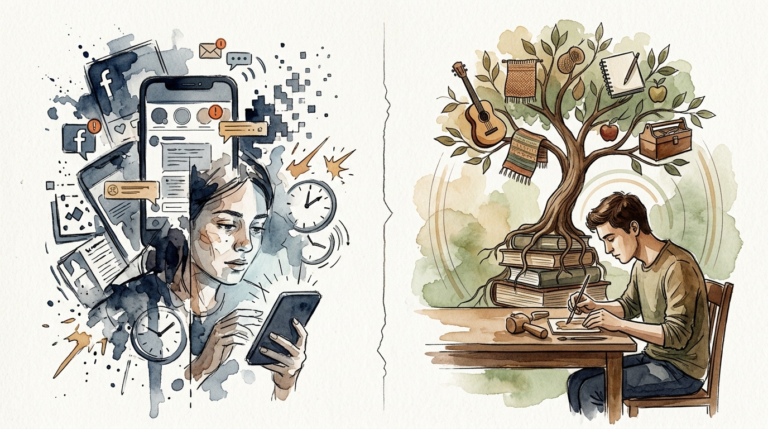
Understanding the difference between these two states is vital for success. Static scrolling is passive. It is a one-way street where you absorb information without processing or acting on it. It leaves you feeling drained because your brain is over-stimulated but under-engaged. Dynamic movement, on the other hand, is active and intentional. It involves using your mind or body to create, learn, or interact with the physical world.
| Feature | Static Scrolling | Dynamic Movement |
|---|---|---|
| Brain State | Passive / Reactive | Active / Intentional |
| Energy Level | Draining / Fatigue | Energizing / Focused |
| Dopamine Source | Short, algorithmic hits | Long-term achievement |
| Output | None (Consumption) | Creation / Learning |
| Long-term Result | Stagnation | Personal Growth |
The goal of the 30 day screen time challenge is to shift your baseline from the left column to the right. When you spend your time in dynamic movement, you feel a sense of accomplishment. When you remain in the static loop, you feel like the day has vanished with nothing to show for it. Choosing dynamic movement is a radical act of self-care in a world that wants you to stay static.
Practical Tips and Best Practices
To make the challenge stick, you need to “hack” your environment. Start by making your phone as boring as possible. Set your screen to “grayscale” mode. Apps are designed with vibrant colors to trigger your brain’s reward centers; removing that color makes the experience significantly less appealing. Next, move all social media apps off your home screen and into a folder on the last page of your phone. The extra few seconds it takes to find the app provides a “mindfulness gap” that allows you to ask, “Do I actually need to open this right now?”
Another powerful strategy is the “Rule of Three.” Before you pick up your phone, identify the three specific things you need to do (e.g., check the weather, send a text to Mom, look at a calendar invite). Once those three things are done, the phone goes away. This prevents the “vortex” effect where you check the weather and somehow end up on Instagram 20 minutes later. You should also invest in a cheap alarm clock so your phone doesn’t have to be the first thing you touch in the morning.
Use technology to fight technology. Set “App Limits” in your phone’s settings and have a trusted friend or partner set the passcode. This creates a hard stop that your willpower cannot override. If you find yourself constantly reaching for your phone out of habit, put a rubber band around the device. The physical sensation of the rubber band serves as a tactile reminder to stay mindful and helps break the unconscious “reflexive grab.”
Advanced Considerations for Long-Term Success
For those who want to go beyond a 30-day experiment, look into the concept of “Digital Decluttering” popularized by author Cal Newport. This involves a permanent shift toward using only the tools that directly support your core values. Serious practitioners often move toward “Single-Purpose Devices.” For example, they might use a dedicated E-reader for books, a physical journal for notes, and a standalone GPS for driving. This prevents the “feature creep” that happens when a single smartphone tries to do everything.
Consider the “Attention Resistance.” This is a growing community of people who intentionally opt-out of the attention economy. They might switch to a “dumb phone” or a “minimalist phone” that only has talk, text, and basic utility apps. While this may seem extreme, it offers a level of mental peace that is almost impossible to find with a modern smartphone. Scaling your digital minimalism means looking at your desktop habits as well—cleaning up your browser tabs, unsubscribing from junk emails, and automating your digital filing so you spend less time “managing” and more time “doing.”
Real-World Examples and Scenarios
Consider the “Overwhelmed Professional.” Sarah, a marketing manager, spent six hours a day on her phone, mostly checking Slack and LinkedIn. She felt constantly behind on her actual projects. During her 30-day challenge, she deleted Slack from her phone and only checked it on her laptop during set work hours. By week three, her productivity doubled, and her “phantom vibration syndrome”—feeling the phone buzz when it wasn’t there—completely disappeared.
Think about the “Creative Student.” James found himself scrolling TikTok for hours every night, leaving him too tired to focus on his architecture studies. He replaced his phone use with a nightly sketching habit. For the first week, he felt restless and bored. However, by day 20, he found that his creative ideas were flowing more naturally. He was no longer just consuming other people’s designs; he was actively creating his own. This shift from consumer to creator is the ultimate goal of the 30 day screen time challenge.
Even families can participate. A household reset might involve a “Tech Basket” at the front door. Everyone drops their devices in the basket at 6:00 PM and doesn’t touch them until the next morning. This leads to more meaningful dinner conversations and a shared sense of presence. These real-world applications show that the challenge is not just about individual discipline; it is about building a lifestyle that prioritizes human connection over digital distraction.
Final Thoughts
The 30 day screen time challenge is not a punishment. It is an invitation to experience life with a clear mind and a steady focus. We have lived in a world of “static loops” for too long, letting algorithms dictate our moods and our minutes. By taking this step, you are reclaiming the most valuable resource you have: your attention. This month is about proving that you can be happy, productive, and connected without a constant stream of digital noise.
Expect resistance. Your brain will fight the change, and the apps will continue to try and pull you back in. But as the days pass, the mental fog will lift. You will find that you have more time than you ever thought possible. Use that time to build, to learn, and to move. Your life is waiting for you outside the screen. It is time to turn the glow off and turn your energy up.
Start your first audit today. Check your screen time, turn off your notifications, and set your phone in another room. The dynamic adventure begins the moment you break the infinite scroll. If you found value in this guide, consider sharing it with a friend who needs a reset—or better yet, invite them to join the challenge with you. Success is always easier when you have a partner in the resistance.
Sources
1 substack.com | 2 kendal.org | 3 medium.com | 4 medium.com | 5 reddit.com | 6 webmd.com | 7 habyts.com | 8 mayoclinichealthsystem.org | 9 richinwhatmatters.com | 10 regis.edu | 11 regis.edu | 12 thechallenge.org | 13 childrenshospital.org | 14 harvard.edu | 15 youtube.com | 16 prairie-care.com | 17 georgetown.edu | 18 charleston.edu | 19 creatingpositivefutures.com | 20 henryford.com | 21 medium.com | 22 mayoclinic.org