Childhood Attention Span And Screen Time Signs
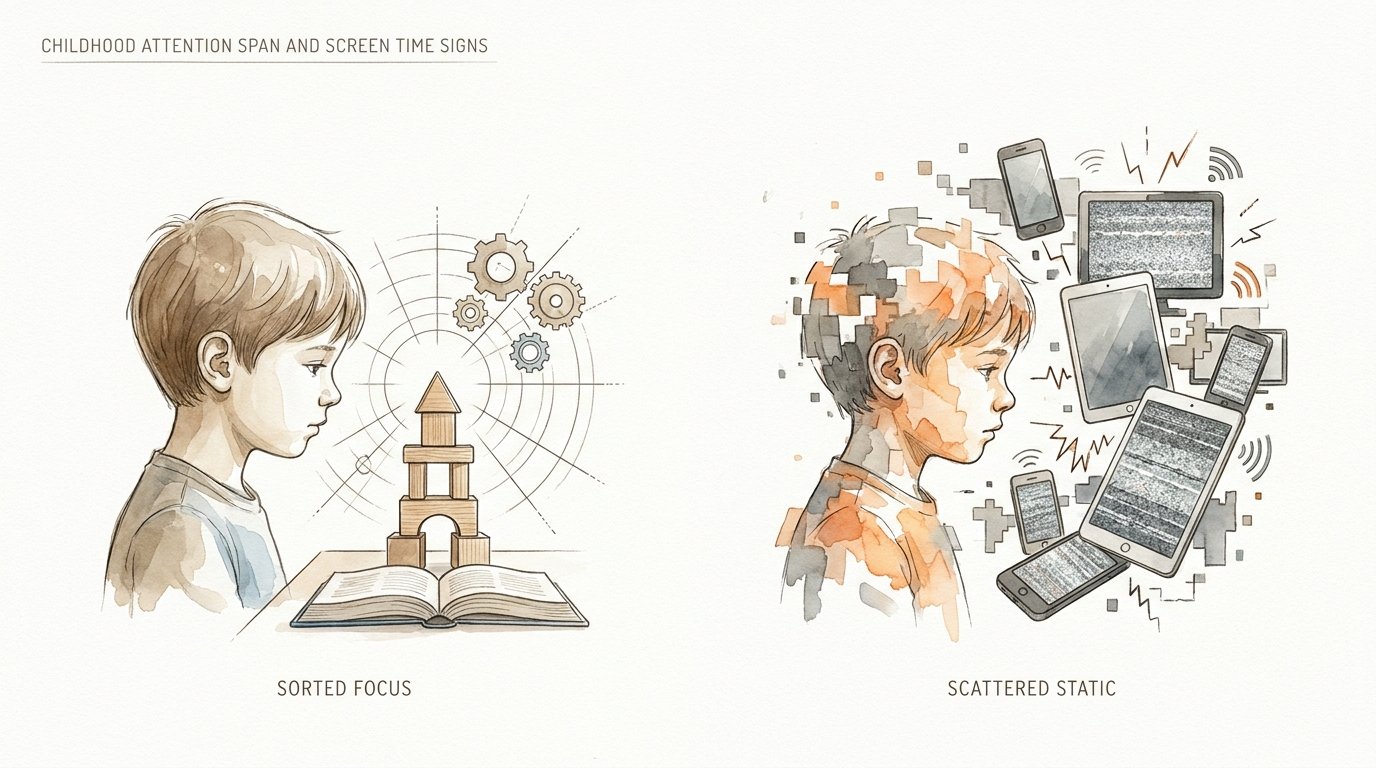
When the shadow-board of their mind turns into a junkyard of static, the habit has officially become a burden. A regulated screen habit keeps the mental tools sharp and organized. Overuse, however, is like dumping a bucket of digital scrap into their internal workshop. If your child can’t find their ‘focus’ tool anymore, it’s because the architecture of their attention has collapsed under the weight of the scroll. See the 5 signs of a mental scrap pile.

The digital landscape has changed faster than the human brain can evolve. Kids today are navigating a world of instant gratification that is perfectly tuned to capture their curiosity. While technology offers incredible windows into the world, it also creates a unique set of challenges for a developing mind. Understanding where the line exists between a useful tool and a mental burden is the first step in restoring a sense of calm.
Focus is a finite resource. When it is spent entirely on high-speed transitions and algorithmic loops, there is nothing left for the quiet, slow-moving parts of life. This guide will walk you through the signs of a screen-heavy lifestyle and provide the blueprints for rebuilding a high-performance attention span.
Childhood Attention Span And Screen Time Signs
Childhood attention span refers to the length of time a child can stay focused on a specific task without being distracted. It is a fundamental building block of learning and emotional regulation. In a world where screens are everywhere, this natural ability is constantly being tested. Screen time signs are the behavioral and physical red flags that suggest a child’s digital consumption is overwhelming their cognitive hardware.
Think of an attention span like a muscle. It needs resistance and steady work to grow strong. Screens often act like a motorized wheelchair for that muscle. They do the heavy lifting of keeping the child engaged, so the brain doesn’t have to work to find interest in the mundane. This is why a child who can watch a movie for two hours might still struggle to sit through a ten-minute lesson.

Real-world situations often require “sustained attention,” such as reading a book, solving a puzzle, or listening to a teacher. Digital media, specifically short-form video, relies on “transient attention.” It moves so fast that the brain never has to commit to one thing for long. When the balance shifts too far toward transient attention, the child starts to show signs of a mental scrap pile.
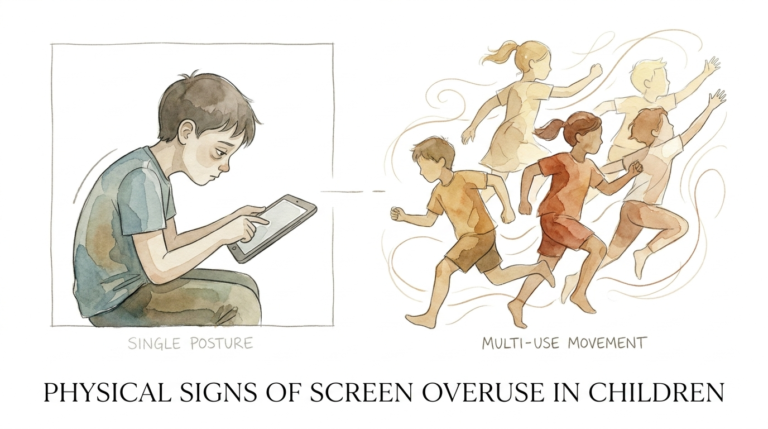
Signs of screen overload often appear as irritability, lack of interest in physical play, and a noticeable drop in frustration tolerance. If a child seems “plugged in” but emotionally “tuned out,” the digital scrap is likely piling up. This isn’t just about the number of hours spent; it is about how the brain reacts when the power button is pressed.
How the Digital Dopamine Loop Works
Digital platforms are designed by experts to be as engaging as possible. They use a system called variable rewards. This is the same principle that makes slot machines so addictive. You never know if the next swipe will bring a funny video, a scary story, or a cool trick. This uncertainty keeps the brain in a state of constant “searching.”
Each piece of new content triggers a small hit of dopamine in the brain. Dopamine is the “reward” chemical. It tells the brain, “This is good, do it again.” For a developing child, these frequent hits of dopamine can create a high threshold for stimulation. Everything in the real world starts to feel slow, boring, and gray by comparison.
The prefrontal cortex is the part of the brain responsible for impulse control and focus. It is the last part of the brain to fully develop, usually not finishing until the mid-20s. Excessive screen use, especially of fast-paced media, can interfere with this development. It prioritizes the “now” over the “later,” making it incredibly difficult for kids to delay gratification.
Breaking this loop requires a shift in environment. The brain needs to relearn that satisfaction can come from slow processes, like building a LEGO set or planting a garden. You are essentially recalibrating their internal reward system so they can find joy in the “sorted focus” of real life again.
Benefits of a Regulated Screen Habit
Restoring balance to a child’s digital life brings immediate and measurable benefits. The most obvious change is an improvement in mood. When the brain isn’t constantly riding a dopamine rollercoaster, emotional spikes become less frequent and less intense. A regulated child is generally more resilient and easier to reason with during transitions.
Academic performance often sees a significant boost when screen habits are managed. Sustained attention is the engine of education. When a child can sit with a difficult math problem or a long reading passage without needing a “digital hit,” their ability to absorb and retain information skyrockets. They move from skimming the surface to diving deep into their subjects.
Physical health is another major winner in this equation. Less time on screens naturally leads to more “green time”—time spent outdoors or in physical play. This improves motor skills, reduces the risk of obesity, and ensures better sleep quality. Blue light from screens is a notorious sleep thief, so cutting back leads to deeper, more restorative rest for the whole family.
Social skills flourish when screens are sidelined. Real-world interactions require reading body language, timing responses, and practicing empathy. These are skills that a screen simply cannot teach. A child who isn’t buried in a tablet is more likely to engage with peers, ask questions, and build the “mental workshop” of social intelligence.
The 5 Signs of a Mental Scrap Pile
If you are wondering if your child’s screen habit has become a burden, look for these five specific indicators. These are the red flags that suggest the architecture of their attention is struggling under the weight of the scroll.
1. The Fidgety Transition
The most common sign is an explosive reaction when it is time to turn off the device. If a simple “five more minutes” turns into a full-scale meltdown or physical aggression, the brain is experiencing a form of digital withdrawal. The screen has become a primary source of emotional regulation, and losing it feels like a genuine threat.
2. The “Boring” Barrier
Everything in the physical world is described as “boring.” If a child can no longer enjoy a trip to the park, a board game, or a creative hobby without asking for a phone, their stimulation threshold is too high. Their brain is looking for the high-velocity input of an algorithm and cannot find it in the slow pace of reality.
3. Fragmented Focus and “Brain Fog”
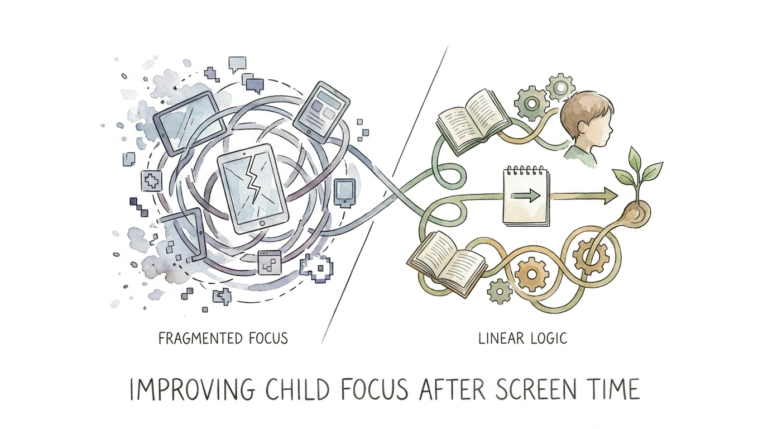
You may notice the child jumping from one toy to another or needing “background noise” to complete a task. This fragmented focus is a sign that the brain has lost the ability to settle into a single stream of thought. They might seem forgetful, struggle to follow two-step directions, or appear generally “spaced out.”
4. The Sleep Stall
Difficulty falling asleep or staying asleep is a major indicator of screen overload. Blue light suppresses melatonin, but the mental stimulation is often the bigger culprit. If a child’s mind is racing with the sounds and images of the last game they played, they cannot enter the calm state required for rest.
5. The Social Fade
Withdrawal from face-to-face interaction is a serious red flag. If a child prefers digital “friends” or NPCs over real-world playdates, their social muscles are atrophying. You might notice a lack of eye contact, decreased empathy, or a lack of interest in family conversations. The digital world is safer and easier, so they stop trying in the real one.
Challenges in Managing Modern Screen Use
Setting boundaries in a digital world is exhausting for parents. We live in a society that is “always on.” Schools often require tablets for homework, and many social interactions for older kids happen exclusively online. This makes a total “ban” almost impossible and often counterproductive.
Peer pressure is a massive obstacle. Kids often feel like they are missing out on the “cultural conversation” if they haven’t seen the latest viral trend. This “FOMO” (Fear Of Missing Out) can lead to anxiety and social isolation if not handled with care. Parents often feel like the “bad guy” for enforcing rules that other families might not have.
The platforms themselves are designed to bypass parental controls. Autoplay features, “infinite scrolls,” and hidden browser windows make it a constant game of cat-and-mouse. It requires a high level of vigilance and digital literacy to keep up with the latest apps and how they function. This “parental burnout” is why many households eventually give up on enforcing strict limits.
Limitations of Universal Guidelines
There is no “magic number” of hours that works for every child. A child with ADHD may be much more susceptible to the dopamine loops of a screen than a neurotypical sibling. Environmental factors, such as a lack of safe outdoor space or a highly stressful household, can also make screens a more attractive—though still problematic—escape.
Age is a critical boundary. The American Academy of Pediatrics has very different recommendations for a two-year-old versus a twelve-year-old. What is “educational” for one might be “passive scrap” for another. Using a single, rigid rule for an entire family often leads to frustration and a lack of compliance.
Screens aren’t the only thing that can affect attention spans. Poor diet, lack of sleep, and underlying learning disabilities play huge roles as well. If a child’s focus doesn’t improve after a significant reduction in screen time, there may be other factors at play that require professional evaluation. A balanced understanding means looking at the whole child, not just their tablet.
Educational Screens vs. Passive Scrolling
Not all screen time is created equal. Understanding the difference between “active” and “passive” consumption is key to building a healthy digital diet. Active use involves creation, problem-solving, or genuine learning. Passive use is the “digital scrap” that piles up in the mental workshop.
| Factor | Educational / Active | Passive Scrolling |
|---|---|---|
| Brain Engagement | High (Problem-solving, coding, creating) | Low (Consumption only) |
| Pacing | User-controlled | Algorithm-driven (Fast-paced) |
| Dopamine Impact | Steady / Goal-oriented | Frequent spikes / Variable reward |
| Attention Type | Sustained focus | Fragmented / Transient |
Focusing on the quality of content rather than just the clock can help reduce the “junkyard of static” in a child’s mind. A child spending an hour learning to code is using their mental tools far more effectively than a child spending twenty minutes on a short-form video feed.
Practical Tips for Rebuilding Focus
Restoring a child’s attention span is a process of “digital decluttering.” It requires a steady, consistent approach rather than a sudden, jarring change. Here are some actionable steps to start clearing out the mental scrap pile today.
- Implement “Green Time” Requirements: For every hour of screen time, require an hour of outdoor or physical play. This balances the nervous system and provides a natural “reset.”
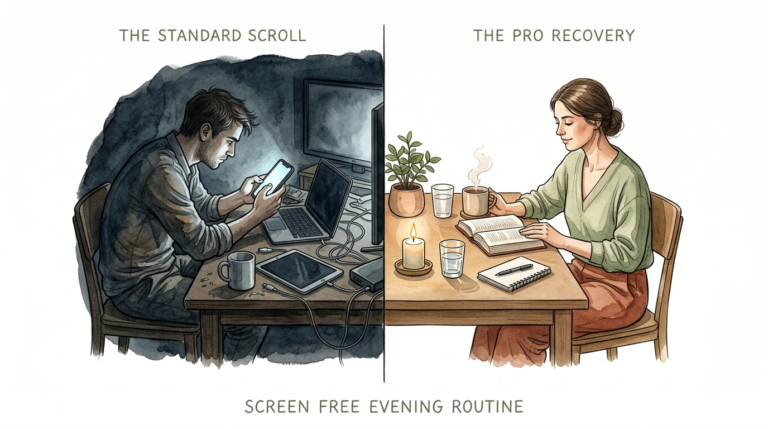
- Create Tech-Free Zones: Declare the dining table and bedrooms as screen-free areas. This prevents “distracted eating” and protects sleep hygiene.
- Use the “20-20-20 Rule”: For every 20 minutes on a screen, have the child look at something 20 feet away for 20 seconds. This reduces eye strain and physical fatigue.
- Model Healthy Habits: Children do what we do, not what we say. If you are constantly scrolling at the dinner table, they will view it as the “normal” state of being.
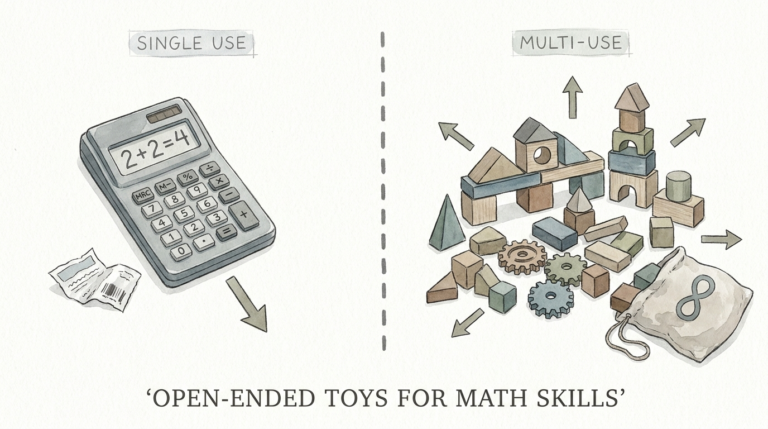
- Prioritize “Low-Dopamine” Activities: Encourage hobbies like reading, painting, or gardening. These activities provide a slower, more meaningful reward cycle.
Small adjustments lead to big shifts over time. Consistency is the most important factor. When the rules are clear and predictable, children stop fighting the boundaries and start exploring the world within them.
Advanced Considerations for Long-Term Focus
For families who want to go beyond basic limits, consider the concept of “executive function coaching.” This involves teaching children how to manage their own digital habits. Instead of just being the “enforcer,” you become a guide. Help them notice how they feel after an hour of gaming versus an hour of playing outside.
Scaling this approach involves looking at the digital environment as a whole. Are notifications constantly pinging on their devices? Turning off all non-essential alerts can significantly reduce “attentional blink”—the moment when focus is lost and takes time to recover. A quiet device is a less demanding device.
Think about “cognitive load” during homework. If a child is using a tablet for schoolwork, ensure that all other apps are closed and social media is blocked. Multitasking is a myth; the brain is simply switching between tasks very quickly, which drains the “focus battery” much faster. Creating a “single-task” environment is a high-level strategy for academic success.
Scenario: The “Digital Detox” Weekend
Imagine a family that has noticed all five signs of the mental scrap pile. The kids are irritable, grades are slipping, and the house feels like a battleground. They decide to try a “Digital Detox” weekend—no screens for 48 hours.
Saturday morning starts with significant pushback and complaints of boredom. However, by Saturday afternoon, the kids have dragged out a box of old art supplies. They spend three hours building a “cardboard city” in the living room. Their focus is sustained because there is no “easy exit” into a digital world.
By Sunday, the atmosphere has changed. The children are playing together without arguing. They are more helpful with chores and more engaged in conversation. The “static” has cleared. While they will return to screens on Monday, the family now has a baseline for what “sorted focus” feels like. They can use this experience to set more intentional limits moving forward.
Final Thoughts
Protecting a child’s attention span is one of the most important jobs of a modern parent. When the mental workshop is clear of digital scrap, a child is free to explore, learn, and grow at their own pace. A regulated habit doesn’t mean removing technology; it means ensuring that technology remains a tool rather than a burden.
The signs of a mental scrap pile are not a reason for guilt, but a call to action. By identifying the 5 signs early and implementing practical boundaries, you can help your child find their ‘focus’ tool again. This journey requires patience, consistency, and a willingness to lead by example.
Start small today. Choose one tech-free zone or one hour of “green time.” You will soon notice the static fading and the sharp, organized architecture of your child’s natural curiosity returning to the foreground.
Sources
1 jewelautismcentre.com | 2 instituteofchildpsychology.com | 3 qustodio.com | 4 sciencealert.com | 5 brainbalancecenters.com | 6 sharpeminds.ca | 7 richmond.edu | 8 nih.gov | 9 piqe.org | 10 psychologytoday.com | 11 cnld.org | 12 hellopediatrics.com | 13 greggfamilyeyecare.com | 14 gohealthuc.com | 15 hsa.net | 16 childrenandscreens.org