healthy screen time habits
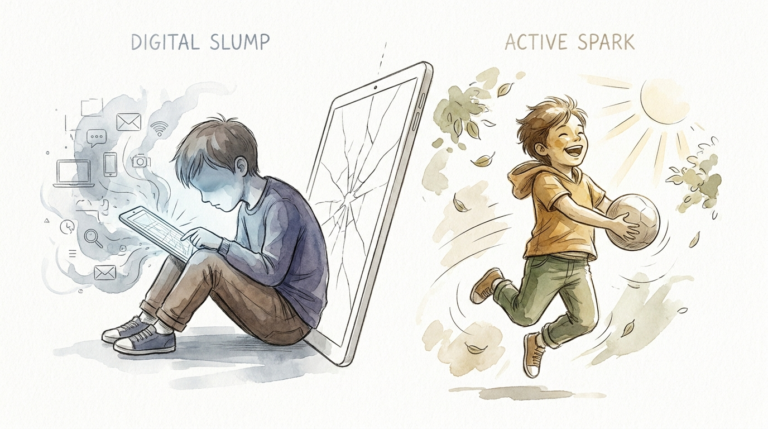
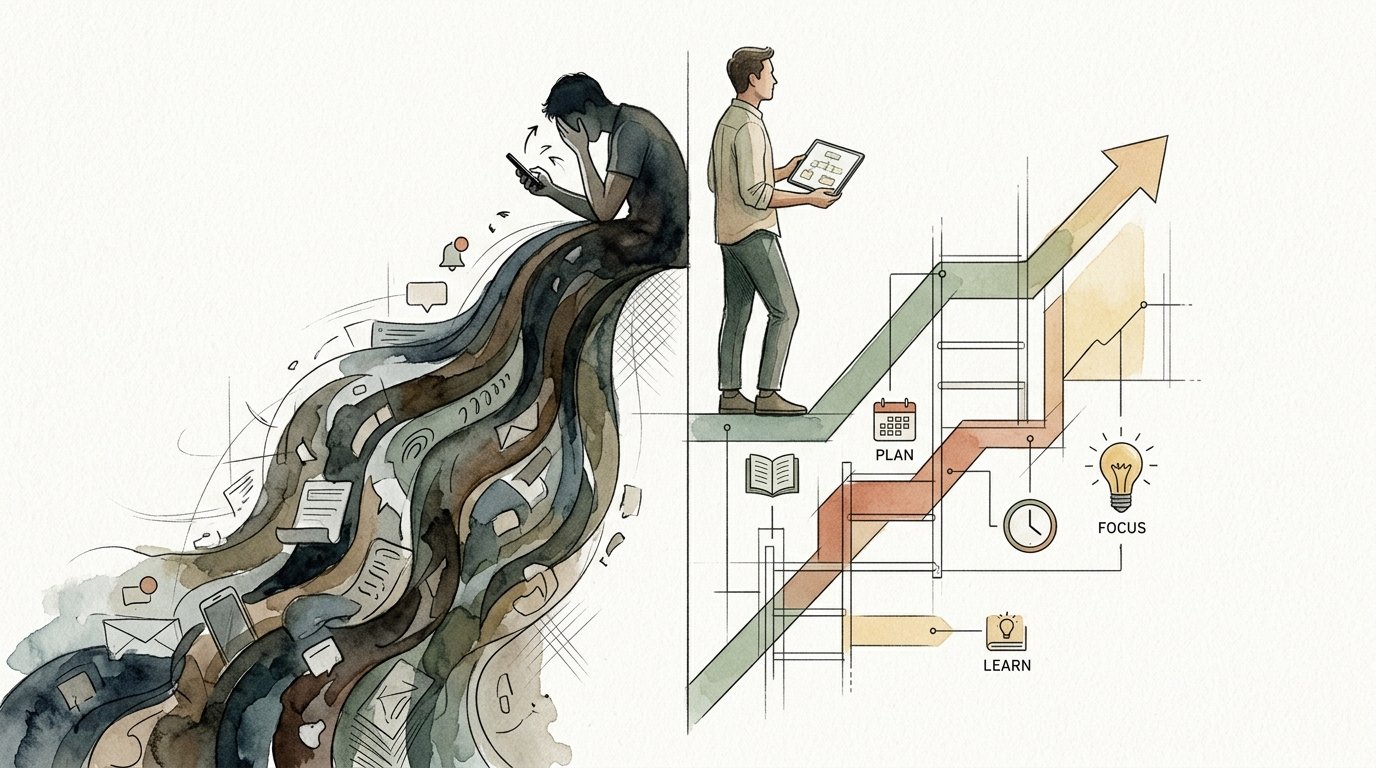
We’ve traded intentional tools for addictive loops. It’s time to reclaim the original purpose of technology. Modern habits are designed to keep us scrolling. Reclaiming your focus starts with five small shifts in how you pick up your device.
Most people feel the pull of their smartphone before they even open their eyes. Research from 2026 shows the average person now spends 6 hours and 45 minutes on screens every single day. This accounts for roughly 42% of our waking life. For many, this time isn’t spent accomplishing goals, but rather lost in a “dopamine loop” of infinite scrolling and variable rewards.
This article provides a comprehensive guide to building sustainable digital boundaries. Whether you are a professional struggling with deep work or a student finding your attention span dwindling, these strategies will help you move from passive consumption to purposeful utility.
healthy screen time habits
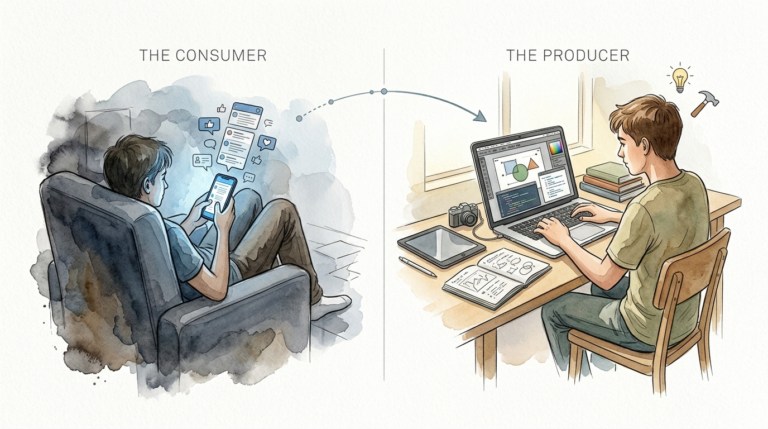
Healthy screen time habits refer to the intentional and structured use of digital devices that serves your long-term goals rather than your short-term impulses. This concept is not about total abstinence or “digital asceticism.” Instead, it is about shifting the power dynamic between the user and the interface. In a healthy relationship with technology, the device is a tool used for a specific task—like navigation, communication, or creation—and is then put away.
Unhealthy habits, by contrast, are characterized by “domamine-scrolling.” This is the habitual act of swiping through feeds in pursuit of novel or entertaining content without a clear end goal. Modern software is often engineered to mirror the psychological framework of gambling. Designers use “variable ratio reinforcement,” where rewards are intermittent and unpredictable, much like a slot machine. This keeps the brain in a state of constant anticipation.
Establishing healthy habits means restoring the “stopping cues” that modern apps have removed. It involves retraining the prefrontal cortex—the part of the brain responsible for impulse control—to resist the siren call of the infinite scroll. When you use your phone with purpose, you regain hours of your day and significant cognitive energy that would otherwise be lost to “brain rot” or mental fatigue.
The Mechanics of Digital Manipulation
Understanding why we scroll is the first step toward stopping. Most apps use a system called the “Hook Model,” which consists of a four-part cycle: Trigger, Action, Variable Reward, and Investment.
The Role of Variable Rewards
Psychologist B.F. Skinner discovered in the 1950s that lab rats would press a lever most compulsively when the reward was random. If the lever gave a pellet every time, the rats eventually got bored. If it gave a pellet randomly, they became obsessed. This is exactly how the “pull-to-refresh” mechanism and algorithmic feeds work. You never know if the next scroll will show a boring ad or a hilarious video, so your brain keeps you swiping to find the “jackpot.”
Attentional Hijacking and Neuroplasticity
The human brain is remarkably plastic, meaning it adapts to the stimuli it receives. Constant exposure to ultra-short-form content has fragmented our collective attention. Studies indicate that the average attention span on a digital device plummeted from 150 seconds in 2004 to just 47 seconds in 2024. Frequent task-switching and notification interruptions weaken the prefrontal cortex’s ability to maintain sustained focus. Over time, this leads to a “popcorn brain” effect, where the mind is so used to rapid-fire stimulation that it finds “slow” activities like reading a book or sitting in silence almost painful.
Benefits of Reclaiming Your Focus
Transitioning to intentional technology use offers measurable improvements in almost every area of life. The impact is both psychological and physiological.
Improved Mental Health: Excessive screen time, particularly on social media, is linked to higher risks of anxiety and depression. Users who deactivate social apps for even one week report a significant improvement in their ability to complete complex tasks and a reduction in perceived stress.
Restored Cognitive Function: Reducing digital overstimulation allows the brain’s “default mode network” to recover. This area is crucial for self-reflection and creativity. When you stop “dopamine-scrolling,” you often find that your ability to plan, reason, and remember information increases within just 48 hours.
Higher Quality Sleep: Blue light from screens suppresses melatonin, but the psychological stimulation of scrolling is often more damaging. Removing screens from the bedroom ensures that your nervous system can downshift into a restorative state, leading to better mood and energy levels the following day.
Time ROI: If the average person spends nearly 7 hours on screens, reclaiming even two of those hours grants you 14 hours of “found time” per week. This is enough time to learn a new language, exercise regularly, or build a side business.
Challenges and Common Mistakes
The path to digital intentionality is rarely a straight line. Many people fail because they treat screen time as a matter of willpower alone, ignoring the fact that they are fighting against billions of dollars of engineering.
The All-or-Nothing Trap
A common mistake is the “cold turkey” approach. While a 24-hour digital fast can be a helpful wake-up call, long-term change requires sustainable systems. Total abstinence is often impossible in a modern professional environment. The goal should be “Digital Minimalism”—pruning away the low-value apps while keeping the high-value tools.
Underestimating the Social Cost
We live in a world designed for the “always-on” individual. Choosing to be less reachable can lead to FOMO (Fear Of Missing Out) or social friction. Friends might be annoyed if you don’t reply to a meme instantly. Navigating these social expectations requires clear communication and the courage to set boundaries.
Ignoring Environmental Triggers
Willpower is a finite resource. If your phone is the first thing you see on your nightstand, you will eventually pick it up. Most people fail because they don’t change their physical environment. Success usually requires adding “friction” between yourself and the device, such as keeping the phone in another room while you sleep.
Limitations and Realistic Constraints
It is important to acknowledge that not everyone has the same level of control over their screen time. Professional and environmental factors can create hard boundaries on how much we can disconnect.
Professional requirements often demand high screen usage. If your job involves social media management, software engineering, or rapid response communication, you cannot simply “delete your apps.” In these cases, the focus must shift from *reducing time* to *increasing quality*. This might involve using desktop versions of apps to avoid the mobile “scroll traps” or using strict work-only profiles.
Emergency accessibility is another valid concern. Parents, caregivers, or people in critical roles need to be reachable. This often serves as a “permission slip” to keep the phone nearby at all times, which then leads to mindless scrolling. The solution here is to use “Focus Modes” that silence all notifications except for specific, high-priority contacts.
The Infinite Scroll Habit vs Purposeful Utility
Understanding the difference between these two states is essential for diagnosing your own behavior. Use the table below to evaluate your current relationship with your devices.
| Factor | Infinite Scroll Habit | Purposeful Utility |
|---|---|---|
| Primary Intent | Escapism or boredom relief | Solving a specific problem |
| Reward Mechanism | Short-term dopamine spikes | Long-term goal satisfaction |
| Stopping Cue | Physical exhaustion or external interruption | Task completion |
| Mental State | Passive, “trance-like” consumption | Active, focused engagement |
| Energy Outcome | Leaves user feeling drained/depleted | Leaves user feeling productive/capable |
Practical Tips for Immediate Change
Reclaiming your focus doesn’t require a radical lifestyle shift overnight. Small, tactical adjustments to your phone’s “sensory profile” can make it significantly less addictive.
- Switch to Grayscale: Most apps use bright, vibrant colors to trigger the brain’s reward centers. By turning your phone to black and white in the accessibility settings, you strip away the “candy-like” allure of the interface.
- The “One-Screen” Rule: Move all social media and “infinite scroll” apps off your home screen. Hide them deep in folders or, better yet, delete the apps and only access those services via a web browser. Browser versions are intentionally clunkier, which adds the friction needed to stop mindless use.
- Disable Non-Human Notifications: If a human didn’t specifically type a message to you, you don’t need a buzz in your pocket. Turn off all “likes,” “reminders,” and “news alerts.” Only allow calls and direct messages from important people.
- Establish a “Phone Parking” Zone: Designate a spot in your home—like a basket in the kitchen—where the phone “lives.” When you enter that room, the phone stays in the basket. This breaks the habit of carrying the device from room to room as if it were an extra limb.
- Use the “Why” Check: Before you unlock your phone, state your intention out loud. “I am picking this up to check the weather.” If you find yourself on Instagram 30 seconds later, you have caught yourself in a loop and can consciously put the device down.
Advanced Considerations for Long-Term Recovery
For those who want to go deeper, digital minimalism involves a more fundamental re-evaluation of how technology fits into your life. This level of intentionality is about protecting your “cognitive sovereignty.”
Serious practitioners often adopt a “Digital Declutter.” This is a 30-day period where you remove all optional technologies from your life. This isn’t just a break; it’s a reset. During this month, you rediscover offline activities that provide high-quality leisure, such as reading, crafting, or physical exercise. After the 30 days, you selectively re-introduce only the tools that add significant value to your life, setting strict “operating procedures” for each one.
Scaling these habits to a family or team level is also critical. If you are a parent, modeling these behaviors is more effective than any software filter. Establishing “Device-Free Zones” (like the dining table) or “Screen-Free Mornings” creates a collective culture of presence. In a work environment, advocating for “asynchronous communication” helps reduce the pressure to be “always on,” allowing everyone to engage in deep, uninterrupted work.
A Realistic Scenario: The “Intentional Morning”
Consider the difference between a “Default Morning” and an “Intentional Morning.” In a default morning, the alarm goes off on the phone. You pick it up to silence it, see a notification, and spend 45 minutes scrolling in bed. You start your day reactive, stressed, and behind schedule.
In an intentional morning, you use a physical alarm clock. Your phone is “parked” in the kitchen. You wake up, drink water, and perhaps read or exercise for 30 minutes. You don’t “plug in” to the digital world until you have finished your morning routine. Using this approach, you begin the day in a proactive state of mind. You have protected your focus during the most cognitively valuable part of the day.
Final Thoughts
Technology is a marvelous servant but a terrible master. The goal of building healthy screen time habits is not to live in the past, but to ensure that our future is defined by our own choices rather than the choices of an algorithm. Every time you consciously choose to put your phone away, you are strengthening your prefrontal cortex and reclaiming a piece of your humanity.
Start small. Choose one room in your house to be a “phone-free zone” today. Notice the discomfort that arises when you can’t immediately satisfy a “micro-boredom” with a scroll. That discomfort is the feeling of your brain beginning to rewire itself.
Reclaiming your focus is a lifelong practice. It requires constant tuning and adjustment as new technologies emerge. However, the reward—a life of presence, deep work, and genuine connection—is worth every bit of the effort. Experiment with these tools, find what works for your lifestyle, and never stop guarding your attention. It is the most valuable thing you own.
Sources
1 nih.gov | 2 blankspaces.app | 3 letsgolearn.com | 4 stanford.edu | 5 ubiehealth.com | 6 uxmag.com | 7 reddit.com | 8 cuanschutz.edu | 9 medium.com | 10 ijsred.com | 11 digitraly.com | 12 nih.gov | 13 medium.com | 14 sfihealth.com | 15 sgu.ac.id | 16 sqmagazine.co.uk | 17 elisplace.org | 18 explodingtopics.com | 19 nih.gov | 20 nih.gov | 21 timily.app | 22 eset.com | 23 clevelandclinic.org | 24 netpsychology.org | 25 ijsret.com