How To Set Up Your Home For Screen-free Success
The more options you give them, the less they actually do; the secret is in the selection. When a room is a mess of a thousand toys, the brain shuts down and asks for the iPad. When you present one ‘invitation to play’ with precision, the imagination has room to breathe and take flight.

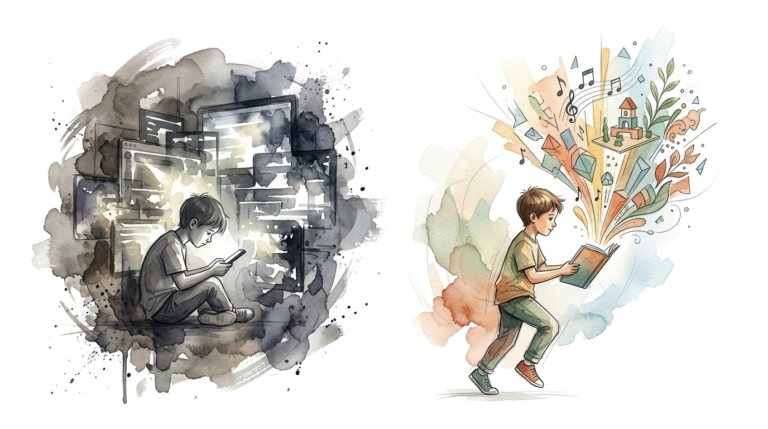
Parents everywhere are feeling the burnout. We are surrounded by “educational” apps and flashing plastic toys, yet our children seem more bored than ever. The constant pull of the screen feels like an unbeatable force. But the problem isn’t your child’s attention span. The problem is the environment.
Screens offer high-dopamine, low-effort entertainment. Real play requires effort, focus, and a spark of curiosity. To compete with the tablet, your home needs to stop looking like a toy store and start looking like a workshop for the mind.
How To Set Up Your Home For Screen-free Success
Setting up your home for screen-free success means creating a “Prepared Environment.” This concept, popularized by the Montessori method, suggests that the room itself should act as a teacher. It is a space designed to meet a child’s developmental needs without requiring constant adult intervention.
A successful setup focuses on accessibility and order. Imagine walking into a kitchen where every single spice, pot, and ingredient is dumped on the floor. You wouldn’t want to cook; you would want to order pizza. Children feel the same way when they see a mountain of toys. They don’t see possibilities. They see a chore.
In a prepared environment, everything is at child height. Toys are displayed on low, open shelves rather than hidden in deep toy chests. When a child can see their options clearly, they can choose with intention. This simple shift reduces the “decision fatigue” that leads to screen-seeking behavior.
The Mechanics of the “Invitation to Play”
An “Invitation to Play” is a deliberate arrangement of materials designed to catch a child’s eye and provoke curiosity. You aren’t just handing them a toy. You are setting a scene that asks a question.
To do this effectively, use open-ended materials. These are items that don’t have a single “right” way to be used. Think of wooden blocks, scarves, magnetic tiles, or even recycled cardboard.
Step one is the selection. Choose 2–3 items that complement each other. For instance, place a set of animal figurines next to a few green silk scarves and some wooden blocks. You have just “invited” them to build a jungle.
Step two is the presentation. Set this up on a tray or a clear spot on the floor before they wake up or come home from school. The visual “pop” of a clean, intentional setup is what draws them in.
Step three is the exit. Once they engage, step back. Your goal is independent play. If you stay and direct the story, they will become dependent on your input. Let them lead.
The Science of Choice: Why Less is More
Research from the University of Toledo confirms what many parents suspect: an abundance of toys reduces the quality of play. In their study, toddlers with only four toys played for longer periods and in more creative ways than those with sixteen toys.
Fewer toys allow a child to develop “sophisticated” play. When they have only one truck, that truck becomes a car, a crane, and a spaceship. When they have fifty trucks, they just dump them out and move on to the next thing.
This phenomenon is called “Choice Overload.” Too many options spend a child’s cognitive energy on the act of choosing rather than the act of playing. By narrowing the field, you protect their focus and allow them to enter a “flow state”—the same state of deep concentration that leads to real learning.
Challenges and Common Mistakes to Avoid
The biggest mistake parents make is the “Great Toy Purge” without a system. If you take away all the toys and leave nothing but empty space, your child will experience a massive spike in boredom and screen-seeking.
Another pitfall is making the setups too complex. You do not need to be a Pinterest artist. If it takes you thirty minutes to set up a sensory bin that they play with for five minutes, you will quit within a week. Keep setups under sixty seconds. A basket of balls next to a cardboard box is a perfect invitation.
Avoid “Closed Toys.” These are toys that only do one thing—the singing plastic house or the light-up laptop. Once the child pushes the button and sees the result, the play is over. These toys are “passive.” To encourage “active” play, stick to items that require the child to do the work.
Limitations and Realistic Constraints
This approach is not a magic wand that works instantly. If your child is used to high-dopamine screen time, they may have a “withdrawal” period. They might claim they are bored or follow you around the house complaining. This is normal.
Environment design also faces physical limitations. If you live in a small apartment, you might not have room for beautiful low shelves in every room. In these cases, use vertical space and “rotating bins” that you can pull out one at a time.
Acknowledge that siblings of different ages can make this difficult. A toddler’s sensory bin with small beans is a choking hazard for a baby. You must use “Yes Spaces”—areas where the environment is 100% safe for the specific child using it—to allow for truly independent play.
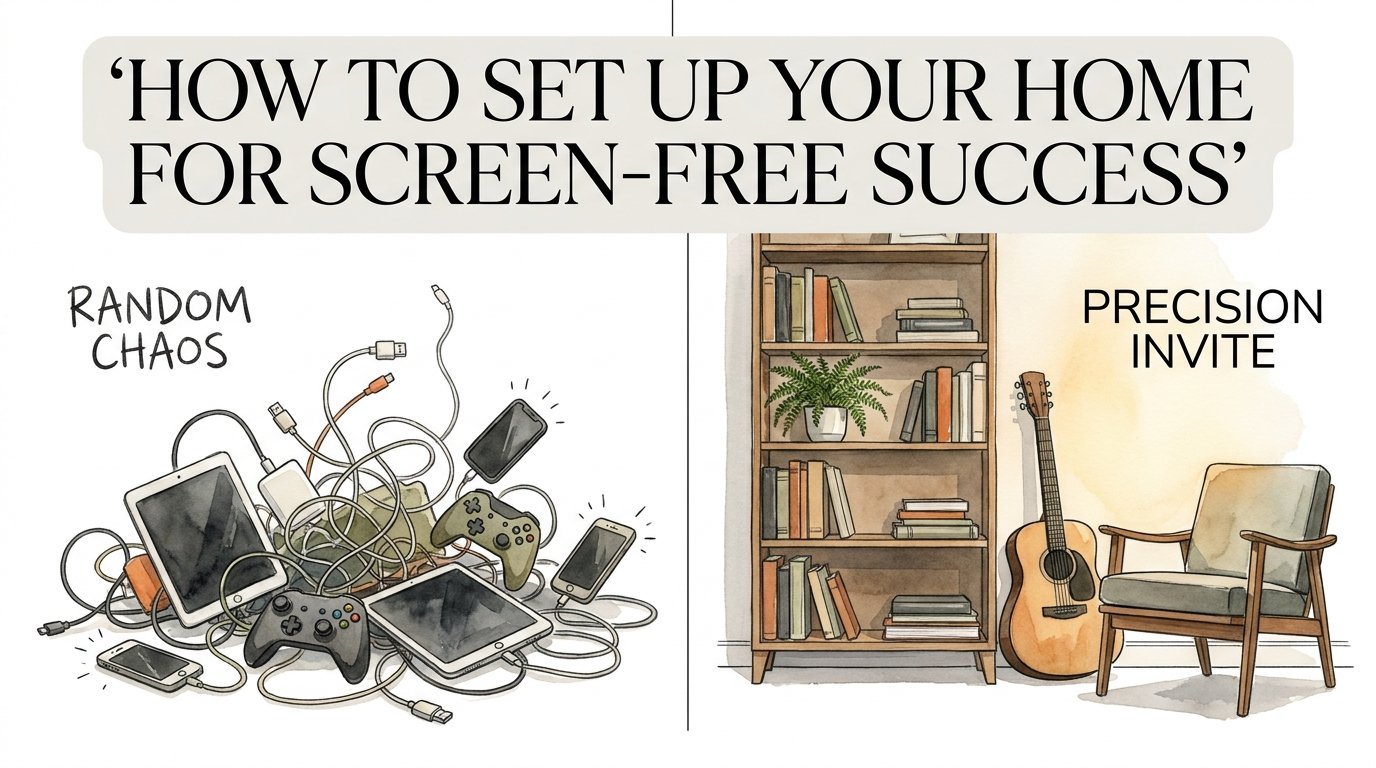
Random Chaos vs. Precision Invite
| Feature | Random Chaos | Precision Invite |
|---|---|---|
| Setup Time | Zero (dumped in a bin) | 60 seconds |
| Attention Span | Short (constant switching) | Long (deep engagement) |
| Cleanup | Exhausting (entire room) | Simple (2-3 items) |
| Creativity | Low (overwhelmed) | High (problem-solving) |
Practical Tips for Immediate Implementation
Start by auditing your current toy collection. Observe which toys your child actually uses and which ones they just step over.
Implement a toy rotation system. Keep 80% of your toys in a closet or the garage and only have 20% out at any time. Swap them every two weeks. This creates “toy novelty” where old items feel brand new again.
Use “strewing.” This is the art of leaving an interesting item in a common path. Leave an open book about dinosaurs on the coffee table with a single plastic T-Rex on top. Don’t say a word. Just let them find it.
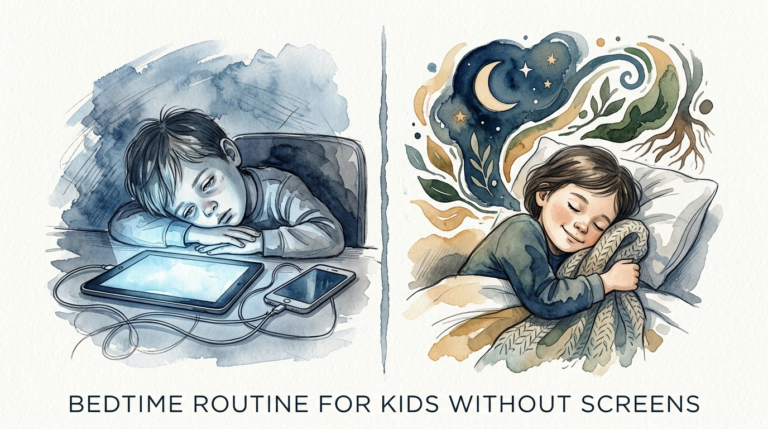
Create screen-free zones. The dining table and the bedrooms should be strict no-tech areas. This forces the brain to look for other ways to fill the silence, which is when the best play happens.
Advanced Considerations for Long-term Success
As you get better at observing your child, you can start matching your “invitations” to their “play schemas.” Schemas are patterns of repeated behavior that children use to understand the world.
If your child is constantly throwing things, they are in a “Trajectory” schema. Instead of fighting it, set up an invitation with soft balls and a target. If they are obsessed with hiding in small spaces, they are in an “Enveloping” schema. Give them blankets and clothespins to build a fort.
The more you align the environment with their internal drives, the less they will care about the iPad. You are essentially hacking their biology to prefer the real world.
Scenarios: Turning Theory into Action
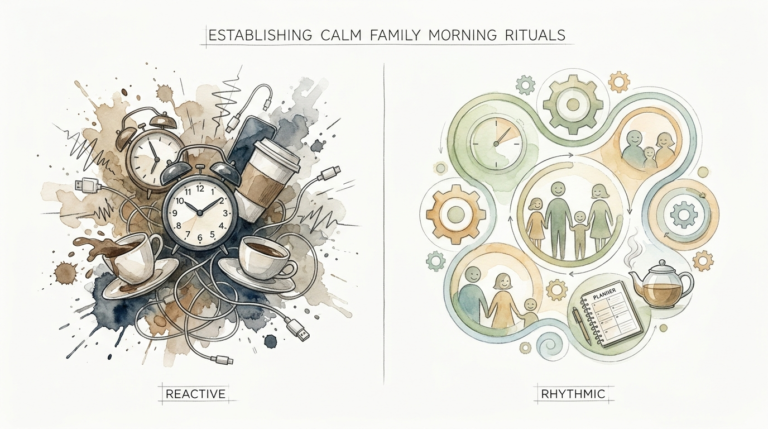
Scenario 1: The Morning Rush. Instead of turning on cartoons while you make coffee, place a tray of magnetic tiles on the kitchen floor with a few toy cars. The novelty of the tiles in a “new” location (the kitchen) often buys 15–20 minutes of focus.
Scenario 2: The Boredom Meltdown. When a child asks for a screen, don’t just say no. Offer a “Low-Dopamine Bridge.” Fill a shallow container with dry rice and hide a few small “treasures” (coins, stones, small toys) inside. Give them a spoon and a cup. The sensory input of the rice acts as a natural calmant for a dysregulated brain.
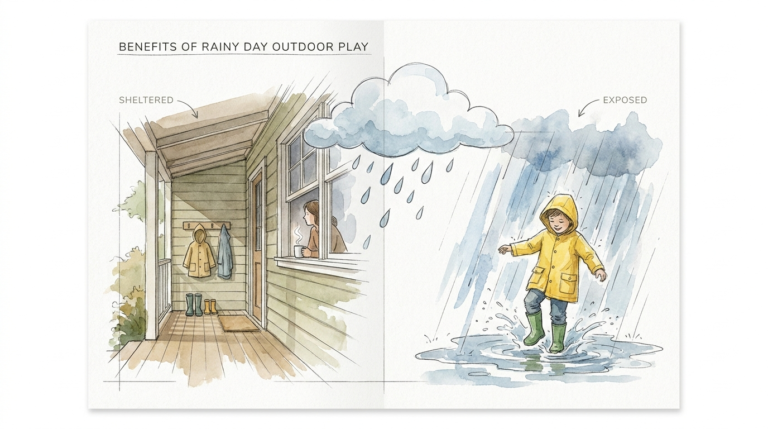
Scenario 3: The Rainy Afternoon. Take a large cardboard box and cut a few holes in it. Leave it in the middle of the room with a set of washable markers. This is a “Precision Invite” that uses a simple material to spark a massive imaginative project.
Final Thoughts
The transition to a screen-free home isn’t about being “anti-technology.” It is about being “pro-imagination.” By curating the environment and offering precise invitations to play, you are giving your child the greatest gift possible: the ability to entertain themselves.
Focus on progress, not perfection. Start with one shelf. Try one invitation tomorrow morning. You will find that the less you give them, the more they will actually do.
As your home moves from chaos to order, your child’s play will move from shallow to deep. You might even find that you have enough time to finish your own coffee while it’s still hot. That is the true power of a prepared environment.
Sources
1 tinylandus.com | 2 plusplususa.com | 3 threadbeardesign.co.uk | 4 pbs.org | 5 homontessori.com | 6 nooknz.com | 7 playper.com | 8 littletoytribe.com.au | 9 vivvi.com | 10 theelefant.ai | 11 medium.com | 12 smartdraw.com | 13 childrenandscreens.org | 14 psychologytoday.com | 15 bps.org.uk | 16 zerotothree.org