Signs Of Screen Addiction In Children
When the screen light mimics the sun, your child’s brain forgets how to find the dark. Our ancestors followed the sun, but our children are following the algorithm. If your child’s eyes are wide open when the stars are out, the ‘habit’ has become a biological hijack. It’s time to trade the blue light for the moonlight.
Modern parenting often feels like a constant battle against an invisible current. Digital devices have moved from being occasional treats to becoming essential utilities for education, social connection, and entertainment. However, this shift has brought about a silent crisis: the disruption of the natural rhythms that have guided human development for millennia. Understanding how screens affect a child’s brain isn’t about blaming parents; it’s about reclaiming a biological birthright of rest, focus, and emotional stability.
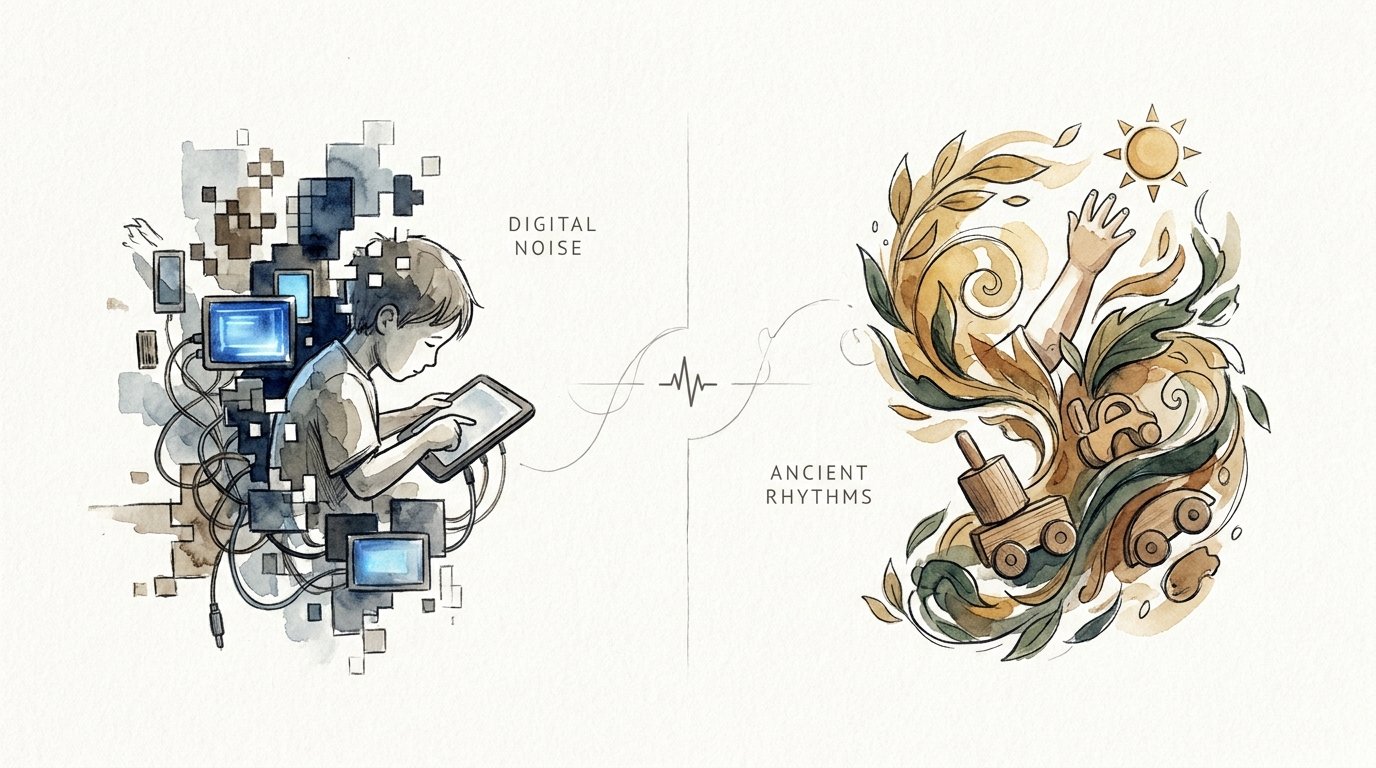
Digital noise has effectively replaced the ancient rhythms of the day. In the past, the setting sun signaled the brain to produce melatonin, the hormone responsible for sleep and cellular repair. Today, a tablet held six inches from a child’s face sends a powerful signal to the suprachiasmatic nucleus—the brain’s internal clock—telling it that it is still high noon. This confusion leads to a cascade of physiological changes that impact everything from mood to metabolic health.
The practical reality is that our children are part of a massive, unplanned experiment in neuroplasticity. Their brains are more sensitive to light and dopamine than at any other point in human history. To navigate this new landscape, we must first learn to recognize the signals that the digital environment is overwhelming their biological systems.
Signs Of Screen Addiction In Children
Screen addiction in children is not defined solely by the number of hours spent on a device. Instead, it is characterized by the quality of the child’s relationship with the screen and the severity of their reaction when it is removed. A “habit” becomes an addiction when it begins to interfere with daily life, responsibilities, and emotional health. Recognizing these signs early is crucial for preventing long-term developmental setbacks.
One of the most telling indicators is emotional dysregulation during transitions. While most children will show a brief moment of frustration when asked to turn off a game, an addicted child may experience a full-scale meltdown that lasts 30 minutes or more. This occurs because the brain is experiencing a “dopamine crash.” The high-frequency rewards of the digital world are suddenly replaced by the relatively low-stimulation environment of the real world, leading to intense irritability or even aggression.
Another red flag is the loss of interest in “analog” activities. If a child who once enjoyed Lego, drawing, or playing outside now finds these activities “boring,” it is often because their reward threshold has been shifted. Their brain has become accustomed to the rapid-fire stimulation of short-form videos or gamified apps, making slower, more creative play feel unrewarding. They may also begin “sneaking” devices or lying about their usage, showing a compulsive need to return to the digital space even when prohibited.
Physical symptoms are also common. You might notice a child who appears “wired but tired”—they are physically exhausted but their mind remains in a state of high arousal. Chronic blue light exposure can lead to headaches, dry eyes, and a noticeable shift in sleep patterns, such as difficulty falling asleep or frequent night awakenings. When the screen becomes a primary tool for self-soothing or avoiding negative emotions, the risk of a deep-seated addiction is significantly higher.
How the Biological Hijack Works
The “biological hijack” occurs at the intersection of light physics and brain chemistry. It starts with the specific wavelength of light emitted by modern LED screens. Blue light, specifically in the 400–500 nm range, is highly effective at suppressing melatonin production. Research shows that children are up to twice as sensitive to this suppression as adults. For a young child, even short periods of evening screen use can delay the onset of sleep by several hours, pushing their entire circadian rhythm out of alignment.
Beyond light, the content itself is designed to be “sticky.” Developers use variable reward schedules—the same mechanism used in slot machines—to keep users engaged. Every like, new level, or auto-playing video triggers a release of dopamine in the brain’s reward center. For a developing brain, this constant stimulation can lead to a thinning of the cortex, the area responsible for critical thinking and reasoning. A landmark study from the National Institutes of Health (NIH) found that children with more than seven hours of daily screen time showed visible structural changes in this region.
This process creates a cycle of dependency. As the brain becomes desensitized to normal levels of dopamine, the child requires more screen time to feel “normal.” This is why traditional parenting tactics often fail; you aren’t just fighting a behavioral choice, you are fighting a neurochemical mandate. Restoring balance requires a systematic approach to “re-wilding” the child’s brain and resetting their internal clock.
Benefits of Reclaiming Ancient Rhythms
Stepping away from the digital noise offers immediate and measurable benefits for a child’s development. The most profound change is often observed in sleep quality. When melatonin is allowed to rise naturally, children fall asleep faster and spend more time in the deep, restorative stages of sleep. This is when the brain “cleans” itself of metabolic waste and consolidates learning from the day. A well-rested child is naturally more resilient, focused, and emotionally stable.
Another major benefit is the restoration of the “attention muscle.” Unstructured play—playing with blocks, running outside, or engaging in imaginative games—requires the child to generate their own entertainment. This builds executive function and problem-solving skills that passive screen consumption tends to erode. Children who have regular screen-free time often show improved language development because they engage in more “reciprocal dialogue” with the adults around them, a key factor in cognitive growth.
Physical health also sees a significant boost. Excessive screen time is strongly correlated with sedentary behavior and a higher Body Mass Index (BMI). By trading the blue light for the moonlight and morning sun, children are more likely to be physically active. Furthermore, removing the “light-at-night” effect reduces the risk of long-term metabolic issues like insulin resistance and hormone imbalances that are linked to disrupted circadian rhythms.
Challenges and Common Mistakes
Many parents fall into the “Quiet Child” trap. In a busy world, the screen is an incredibly effective tool for keeping a child still during a long car ride or a meal at a restaurant. While this provides short-term relief, it prevents the child from learning how to regulate their own boredom or frustration. Relying on screens as a “digital babysitter” or emotional regulator often leads to more difficult behavioral challenges in the long run.
The “Cold Turkey” mistake is another frequent pitfall. Abruptly removing all screens without providing a “bridge” or alternative activity can lead to intense family conflict. Because the child’s brain is physically accustomed to high dopamine levels, a sudden withdrawal can feel like a genuine crisis to them. It is more effective to gradually reduce time while simultaneously introducing high-value, engaging offline activities that help transition the brain out of its “wired” state.
Finally, many parents overlook their own “background” digital noise. Leaving a TV on in the background or constantly checking a phone while interacting with a child sends a powerful message. Children mimic the digital habits of their parents. If the adults in the house are perpetually “plugged in,” the child will struggle to see the value in unplugging. Modeling healthy boundaries is often the most difficult, yet most important, part of the process.
Limitations and Realistic Boundaries
We live in a digital-first world, and it is unrealistic to expect a child to grow up in total isolation from technology. School assignments, social coordination for teenagers, and digital literacy are all legitimate reasons for screen use. Total prohibition can sometimes lead to social isolation or a lack of the skills needed for future career success. The goal is balance, not complete avoidance.
Environmental constraints also play a role. Parents living in urban areas with limited access to safe outdoor spaces or those working multiple jobs may find it harder to provide constant “analog” alternatives. In these cases, the focus should be on the *quality* of screen time rather than just the *quantity*. Using screens for creative projects, like digital art or coding, is vastly different from the passive scrolling of algorithmic feeds.
Age also dictates different limits. While the American Academy of Pediatrics (AAP) recommends zero screen time for children under 18 months, teenagers have different social needs. For older children, the focus shifts from strict time limits to “media wellness”—teaching them to recognize how social media makes them feel and helping them set their own boundaries. It is about moving from external control to internal self-regulation.
Comparison: Screen Types and Their Impact
Not all digital experiences are created equal. Understanding the difference between passive and active content can help parents make better decisions about what to allow into their child’s day.
| Content Type | Dopamine Impact | Cognitive Load | Primary Risk |
|---|---|---|---|
| Passive (TV/Movies) | Moderate | Low | Sedentary behavior, sleep delay |
| Short-Form (TikTok/Reels) | Extremely High | Fractured | Attention span erosion, addiction |
| Interactive (Gaming) | High | High | Aggression on exit, social isolation |
| Creative (Art/Coding) | Low to Moderate | High | Eye strain, posture issues |
Practical Tips and Best Practices
Implementing a “Family Media Plan” is the most effective way to transition from digital chaos to ancient rhythms. Start by designating tech-free zones in the home. The dining table and all bedrooms should be strictly off-limits for devices. Charging phones and tablets in a central location, like the kitchen, ensures that the temptation to scroll late at night is removed.
Use the “One-Hour Rule” before bed. Turn off all screens at least 60 minutes before the desired sleep time. This allows the child’s brain to begin its natural melatonin ramp-up. During this hour, engage in low-arousal activities like reading a physical book, drawing, or listening to calming music. These “ancient” activities signal to the nervous system that it is safe to wind down.
Introduce the “Bridge” method when screen time ends. Instead of simply saying “it’s over,” provide a transition activity that involves a different sensory experience. Offering a healthy snack, asking for help with a simple kitchen task, or suggesting a quick five-minute board game can help the brain transition more smoothly from the high-stimulation digital world to the real world. This significantly reduces the likelihood of a meltdown.
Apply the 20-20-20 rule for necessary digital work. Every 20 minutes, have the child look at something 20 feet away for 20 seconds. This simple habit prevents “computer vision syndrome” and helps keep the eyes’ focusing muscles flexible. It also provides a micro-break for the brain, preventing the “trance-like” state that often accompanies long periods of screen use.
Advanced Considerations for Long-Term Wellness
For parents who want to go deeper, understanding the concept of “sensory processing” is vital. Excessive screen use can lead to sensory overload, where the brain becomes hyper-reactive to normal sights and sounds. This can manifest as increased irritability or difficulty concentrating in a traditional classroom environment. Incorporating “green time”—time spent in natural sunlight and greenery—has been shown to counteract these effects by calming the amygdala and restoring cognitive resources.
Consider the long-term impact on the developing frontal lobe. This area of the brain, which governs impulse control and decision-making, doesn’t fully mature until the mid-twenties. By limiting addictive digital loops during the critical years of 6 to 12, you are giving the frontal lobe the space it needs to develop without being constantly overriden by the primitive reward centers. This is an investment in the child’s future ability to self-regulate as an adult.
Think about “digital literacy” beyond just using the tools. Teach children about the *business* of the attention economy. When they understand that apps are designed by psychologists to keep them scrolling, they gain a sense of autonomy. Helping them see that they—not the algorithm—should be in control of their time is a powerful psychological shift that builds resilience against future digital addictions.
Realistic Scenarios: The Dinner Table Shift
Imagine a typical Tuesday evening. In many homes, the child might be on a tablet while the parents prepare dinner, followed by the child asking for the tablet again at the table to avoid the “boredom” of conversation. This is the biological hijack in action. The child’s brain is seeking the high-dopamine reward of the screen rather than the low-reward (but high-value) social connection of the family.
By shifting this scenario, the parent might invite the child to help stir a pot or set the table. While this may lead to some initial resistance, it engages the child’s motor skills and sense of contribution. During the meal, without screens present, the child is forced to practice waiting, listening, and speaking. Over time, the brain recalibrates to these “ancient rhythms” of social interaction, leading to a much calmer evening and a smoother transition to sleep.
Another scenario involves the weekend “detox.” Dedicating one full day per week to being “offline” as a family can have a profound resetting effect. Without the digital noise, children often rediscover old hobbies or find joy in simple outdoor play. This isn’t just a break from screens; it’s a recalibration of the entire family’s nervous system, proving that life is rich and rewarding even when the pixels are off.
Final Thoughts
The journey from digital noise back to ancient rhythms is not about returning to the stone age; it is about ensuring our biology remains the master of our technology. When we protect our children’s sleep, attention, and emotional health, we are giving them the best possible foundation for a successful life. The meltdowns and the resistance are temporary, but the neural pathways of resilience and focus that you are building will last a lifetime.
Start small. Choose one tech-free zone or one hour of the day to reclaim. As you see the “light” return to your child’s eyes and the “wired” irritability fade away, you will realize that the trade-off is worth every moment of effort. The moonlight has always been enough to guide us; it’s time we let our children see it again.
By consistently applying these principles, you move from being a digital enforcer to a biological guardian. This shift empowers your child to use technology as a tool for creation and connection, rather than becoming a cog in an algorithm’s wheel. The goal is a child who is as comfortable in front of a campfire as they are in front of a keyboard—balanced, healthy, and whole.
Sources
1 peaceathomeparenting.com | 2 pediatricassociatesct.com | 3 luriechildrens.org | 4 childtherapycenterla.com | 5 cwcpediatrics.com | 6 chronobiologyinmedicine.org | 7 blockbluelight.com.au | 8 nyp.org | 9 drkristinedwards.com | 10 michiganmedicine.org | 11 nyp.org | 12 commonwealthpeds.com | 13 newcanaanpediatrics.com | 14 sf-stemful.com | 15 mayoclinic.org