screen?free family routine ideas
Trade the blue glow for a true glow. Digital consumption is passive. Real life is active. We swapped our evening scroll for these 5 high-engagement family routines and the difference in our kids’ moods was instant.
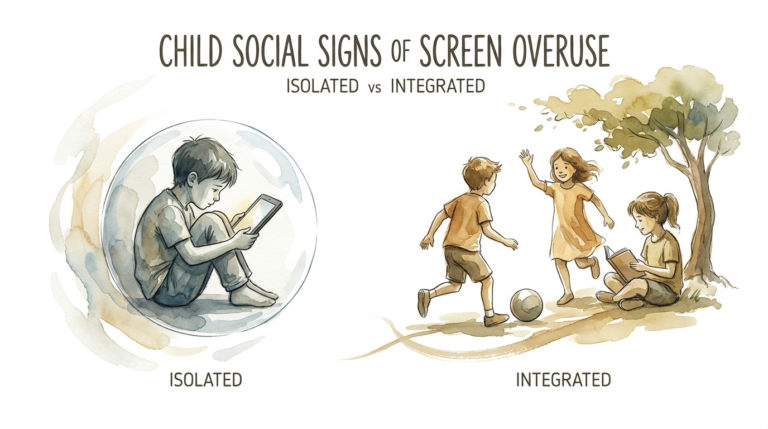
The modern home often feels more like a collection of charging stations than a place of connection. We spend our days tethered to devices, and our evenings frequently disappear into the “scroll hole” of social media or the hypnotic flicker of a streaming service. This constant digital noise creates a barrier between family members, replacing shared experiences with isolated consumption.
Active engagement is the antidote to this digital drift. When we shift from being observers to participants, we activate different parts of the brain associated with focus, creativity, and social bonding. These high-engagement routines aren’t just about filling time; they are about reclaiming the evening hours for meaningful development and genuine joy.
Real-world connection happens in the messy, unscripted moments of play and conversation. By intentionally choosing activities that require interaction, we teach our children that their presence matters more than any notification. This transition may feel difficult at first, but the long-term rewards for your family’s mental health and emotional stability are profound.
screen?free family routine ideas
Screen-free family routines are intentional periods of the day where all electronic devices are sidelined in favor of interactive, hands-on activities. These routines exist to foster “Living Connection”—a state of being where family members are fully present, responding to each other’s facial expressions, tone of voice, and physical cues. Unlike digital consumption, which is often a solitary experience even when people are in the same room, these routines require collaborative effort.
High-engagement routines focus on three core pillars: sensory input, physical movement, and cognitive collaboration. In real-world situations, these might look like a shared cooking project where everyone has a specific role, or a family-wide building challenge using blocks or recycled materials. These activities are used to bridge the gap between the high-stimulus environment of school or work and the restorative calm needed for a good night’s sleep.
Examples of these routines include things like “The Story Loom,” where a family collectively weaves a narrative one sentence at a time, or “The Kitchen Lab,” where children help experiment with flavors and textures during dinner prep. These aren’t just chores or distractions; they are deliberate frameworks designed to replace the passive dopamine hits of a screen with the lasting oxytocin of human bonding. By centering the evening around these ideas, you create a predictable environment where children feel secure and seen.
How to Build High-Engagement Routines Step-by-Step
Establishing a new routine requires more than just a “no phones” rule; it requires a compelling alternative. You must lead by example and create an environment that makes interaction more attractive than isolation. Start by identifying the “witching hour” in your house—usually that chaotic time between 5:00 PM and 7:00 PM—and introduce one small, high-engagement anchor.
The first step is to define the “Device Depot.” Choose a physical location, like a decorative basket or a charging drawer, where all phones and tablets go at a specific time every night. This physical act of “checking in” your digital life signals to the brain that the work day is over and family time has begun. Consistency is vital here; the rules must apply to adults just as strictly as they do to children.
Next, choose one of these five high-engagement routines to master first:
- The Kitchen Lab: Assign every family member a “station” for dinner prep. One child might be the “Master Mixer,” while another is the “Garnish Architect.” This turns a daily task into a sensory-rich collaborative project.
- The Living Room Olympics: Create a simple indoor obstacle course or a series of physical challenges like “the floor is lava.” This provides “heavy work” that helps regulate a child’s nervous system after a long day of sitting at a desk.
- The Story Loom: Sit in a circle and start a story. Each person adds exactly one sentence. This builds listening skills and requires children to pay close attention to the narrative thread created by others.
- The Collaborative Canvas: Lay out a long roll of butcher paper and provide markers or crayons. Everyone works on the same drawing simultaneously. This encourages non-verbal communication and shared creative vision.
- The Neighborhood Night Patrol: Take a 15-minute walk outside after dinner with flashlights. This resets the circadian rhythm by exposing the eyes to natural evening light and provides a low-pressure environment for conversation.
Actionable advice for success involves keeping the barrier to entry low. Do not aim for perfection or a Pinterest-worthy result. The goal is the process of interaction, not the final product. Common pitfalls include making the activities too complex or “educational,” which can make them feel like extra schoolwork for the children.
The Tangible Benefits of Tech-Free Evenings
The practical, measurable benefits of these routines often appear within the first week of implementation. One of the most immediate changes is improved sleep quality. By removing blue light exposure at least 60 minutes before bed, the body can naturally produce melatonin, leading to faster sleep onset and deeper rest for both parents and children.
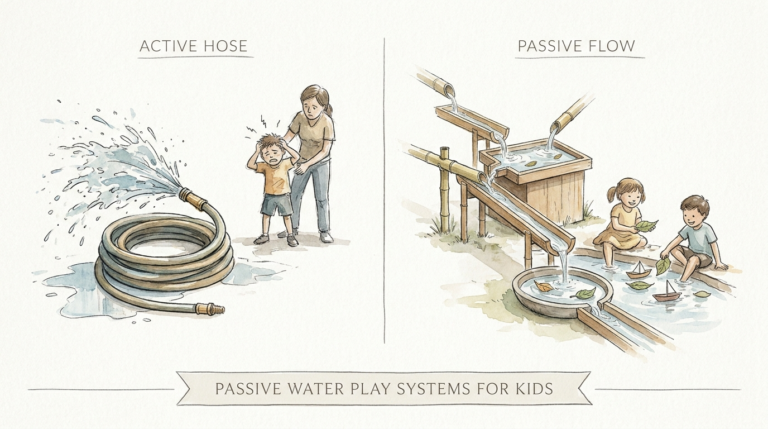
Another observable advantage is the reduction in behavioral meltdowns. Screens often put children in a state of “passive overstimulation,” where their brains are flooded with rapid imagery but their bodies remain still. This disconnect can lead to irritability when the screen is finally turned off. High-engagement routines allow for a gradual “ramp-down” of the nervous system through movement and sensory play.
Long-term benefits include enhanced focus and emotional intelligence. Without the constant interruption of notifications, children learn to sustain their attention on a single task or conversation. They also become more adept at reading facial expressions and social cues—skills that are often neglected in digital environments but are essential for healthy real-world relationships.
Challenges and Common Mistakes to Avoid
One common pitfall is the “Cold Turkey” trap. If your family is used to several hours of screen time, moving to a totally tech-free evening overnight can cause significant pushback and resentment. Gradual transitions are usually more sustainable. Start with just 20 minutes of high-engagement time and expand it as the family becomes more comfortable with the new rhythm.
Mistakes often happen when parents use these routines as a form of punishment or a bargaining chip. “If you don’t eat your broccoli, no Family Olympics” turns a bonding opportunity into a source of stress. These routines should be a “sacred yes”—a guaranteed part of the day that the child can rely on regardless of their earlier behavior. This builds trust and makes the routine something they look forward to rather than endure.
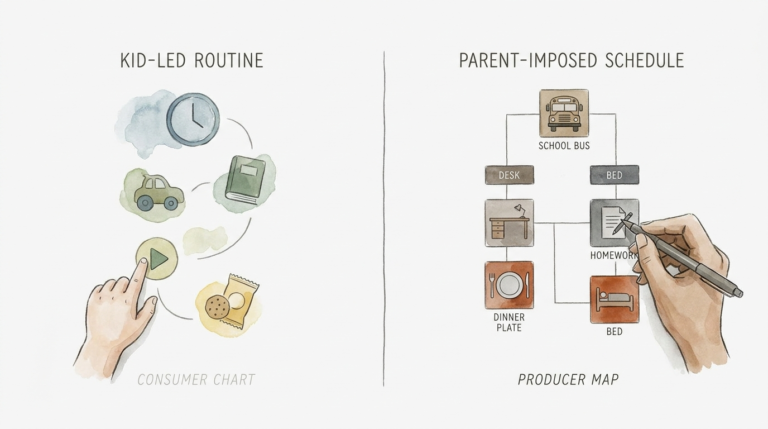
Another frequent error is micromanaging the play. Adults often have a specific vision of how a game or art project should go. However, if the goal is engagement, you must allow the children to take the lead. If the “Living Room Olympics” devolves into a game of “hide the pillow,” go with it. The connection happens in the shared laughter, not in the adherence to the rules.
Limitations and When These Methods May Not Work
Realistic constraints often include parental burnout or erratic work schedules. Some evenings, you may simply not have the energy to lead a “Kitchen Lab” or organize an obstacle course. It is important to have “low-energy” screen-free options available, such as listening to a family-friendly podcast or an audiobook while everyone colors silently.
Environmental limitations can also play a role. Families living in small apartments may find physical routines like the “Living Room Olympics” difficult. In these cases, focus on cognitive or sensory routines that require less space, such as card games or playdough “sculpt-offs.” The concept is flexible; the specific activity matters less than the intentional lack of screens.
Finally, there may be times when digital tools are actually beneficial for the family. Using a video call to connect with a grandparent or watching an educational documentary together can still be a form of connection. The key is to avoid “Dead Interaction,” where everyone is looking at their own screen in silence, and instead use technology as a springboard for shared discussion.
Living Connection vs. Dead Interaction
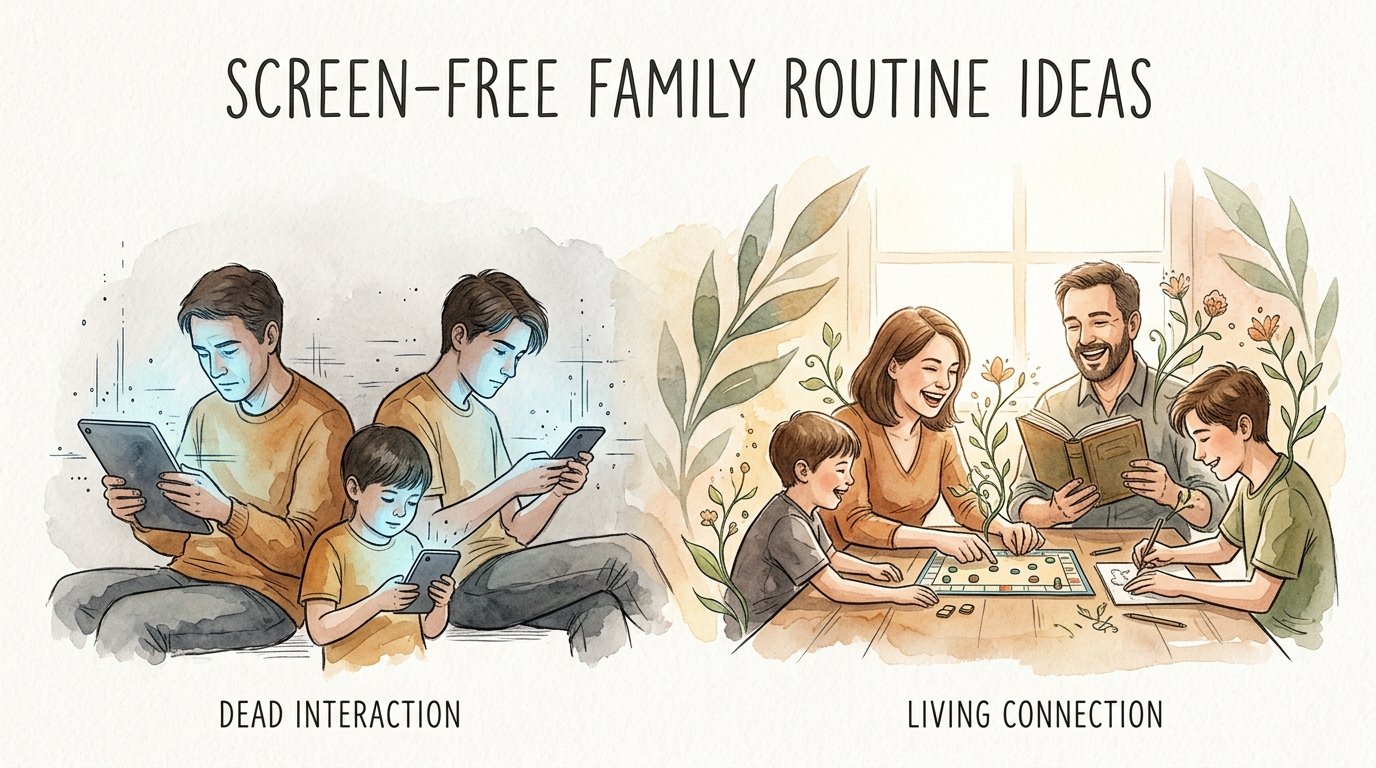
Understanding the difference between these two states is crucial for evaluating your family’s evening habits. Dead Interaction occurs when individuals are physically present but emotionally and cognitively absent, usually due to separate screen usage. Living Connection occurs when the family is engaged in a “serve and return” dynamic of communication.
| Feature | Dead Interaction (Digital) | Living Connection (Active) |
|---|---|---|
| Attention | Fragmented / Multi-tasking | Sustained / Focused |
| Brain State | Passive Consumption | Active Problem Solving |
| Feedback Loop | Algorithm-driven | Human-driven (Empathy) |
| Energy Level | Draining (Decision Fatigue) | Restorative (Bonding) |
Focusing on Living Connection ensures that the time spent together is high-quality. While a “Dead Interaction” might be easier to facilitate at the end of a long day, it rarely leaves anyone feeling more connected or refreshed. Active routines require more initial effort but result in a much higher emotional ROI.
Practical Tips for Immediate Application
If you want to start tonight, the most actionable advice is to announce the “Sunset Hour.” Choose a time—perhaps 6:30 PM—when all big lights are dimmed and all screens are powered down. This physical change in the environment serves as a powerful cue for the brain to stop searching for digital stimulation and start focusing on the people in the room.
Another best practice is to keep a “Boredom Box” filled with low-tech supplies. This should include things like a deck of cards, a puzzle that stays on a side table, some tactile materials like clay, or even a book of riddles. When a child says they are bored without their tablet, you can point to the box as an immediate, pre-approved alternative.
Try to incorporate “Parallel Play” for those moments when you aren’t actively doing a group activity. This involves being in the same space doing different things—perhaps you are reading a physical book while your child is building with Legos. This still fosters a sense of togetherness and models healthy, screen-free hobbies without requiring constant interaction.
Advanced Considerations for Long-Term Success
For those looking to deepen their commitment to screen-free routines, consider the “Spatial Design” of your home. If every piece of furniture in your living room faces the television, the TV will naturally remain the focal point of your family life. Try rearranging the space to create “conversation nooks” or dedicated areas for hobbies and games.
Scaling these routines as children get older is another important factor. Teens may find a “Kitchen Lab” or “Living Room Olympics” babyish, but they may engage deeply in a family “High-Stakes Board Game League” or a collaborative DIY project like building a piece of furniture or planning a garden. The principle remains the same: move from passive consumption to active contribution.
Think about the “Dopamine Management” of your household. Digital devices provide instant gratification, which can make real-life activities feel slow or boring at first. By consistently practicing screen-free routines, you are helping your children recalibrate their reward systems to appreciate the slower, more substantial satisfaction of mastery and social connection.
A Realistic Scenario: The Tuesday Turnaround
Imagine a typical Tuesday evening. Everyone arrives home tired. Usually, the kids would go straight to their tablets while dinner is being microwaved, leading to a silent meal and a difficult bedtime transition. Instead, you decide to implement “The Kitchen Lab.” You hand your 6-year-old a dull nylon knife and a cucumber, and you ask your 10-year-old to find a playlist of “upbeat cooking music” on a dedicated Bluetooth speaker (no scrolling allowed).
As you work together, the 6-year-old talks about a drawing they made at school. The 10-year-old vents about a difficult math problem. There is no screen to buffer the conversation. After dinner, you spend 15 minutes on the “Neighborhood Night Patrol,” looking for the first stars. When you return, the children go to their rooms without the usual fight. Because their “connection buckets” are full and their brains aren’t buzzing from blue light, they fall asleep within twenty minutes.
This scenario doesn’t require extra money or elaborate planning. It simply requires a shift in priority from the digital to the physical. The theory of bonding becomes a practical reality through these simple, repeatable steps. You aren’t just “killing time”; you are building a family culture that values people over platforms.
Final Thoughts
Trade the blue glow for a true glow by realizing that your time is your most valuable asset. Digital consumption is designed to be passive and endless, but real-world interaction is active and fulfilling. By swapping even just one hour of scrolling for a high-engagement family routine, you provide your children with the emotional stability they need to navigate a tech-heavy world.
The key takeaways are consistency, leadership by example, and a focus on the process rather than the result. Whether you are building an indoor obstacle course or just walking around the block with a flashlight, these moments of “Living Connection” are where the real memories are made. Start small, stay patient, and watch as your family’s mood and connection levels transform.
Encourage your family to experiment with these ideas and see what fits your unique rhythm. You might find that the “witching hour” becomes the highlight of your day. Reclaiming your evenings isn’t about being anti-technology; it’s about being pro-connection. The difference in your kids’ moods—and your own—will be the only proof you need.
Sources
1 littledipperwellness.com | 2 littledipperwellness.com | 3 empoweredmomsandkids.com | 4 aspergerparaasperger.org | 5 high5inc.org | 6 psychologytoday.com | 7 jessalittlecreative.com | 8 medlineplus.gov | 9 encompassfss.net | 10 sparklestories.com | 11 medium.com | 12 thechildunplugged.com | 13 unplugged.rest | 14 childandfamilydevelopment.com | 15 childrenandscreens.org | 16 ffpeds.com | 17 scrippsamg.com