screen free evening aesthetic
Reclaim the warmth of a world before the blue light. There is a specific kind of peace that only comes when the screens go dark. Lean into the warmth and slow down.
We live in a world that never stops glowing. From the moment we wake up until the seconds before our eyes close, we are tethered to high-definition displays that pump artificial energy into our systems. This constant digital hum has a cost, often paid in the currency of our rest and mental clarity. This guide is your roadmap to reclaiming your nights through a deliberate, high-energy transition toward a screen-free evening aesthetic.
Modern life has blurred the lines between day and night. We use the same bright, blue-shifted light to work at noon as we do to “relax” at 9:00 PM. By choosing to step away from the pixelated world, you aren’t just putting down a phone; you are signaling to your biology that it is time to return to a more natural, rhythmic way of being. Let’s explore how to transform your home into a sanctuary of analog warmth.
screen free evening aesthetic
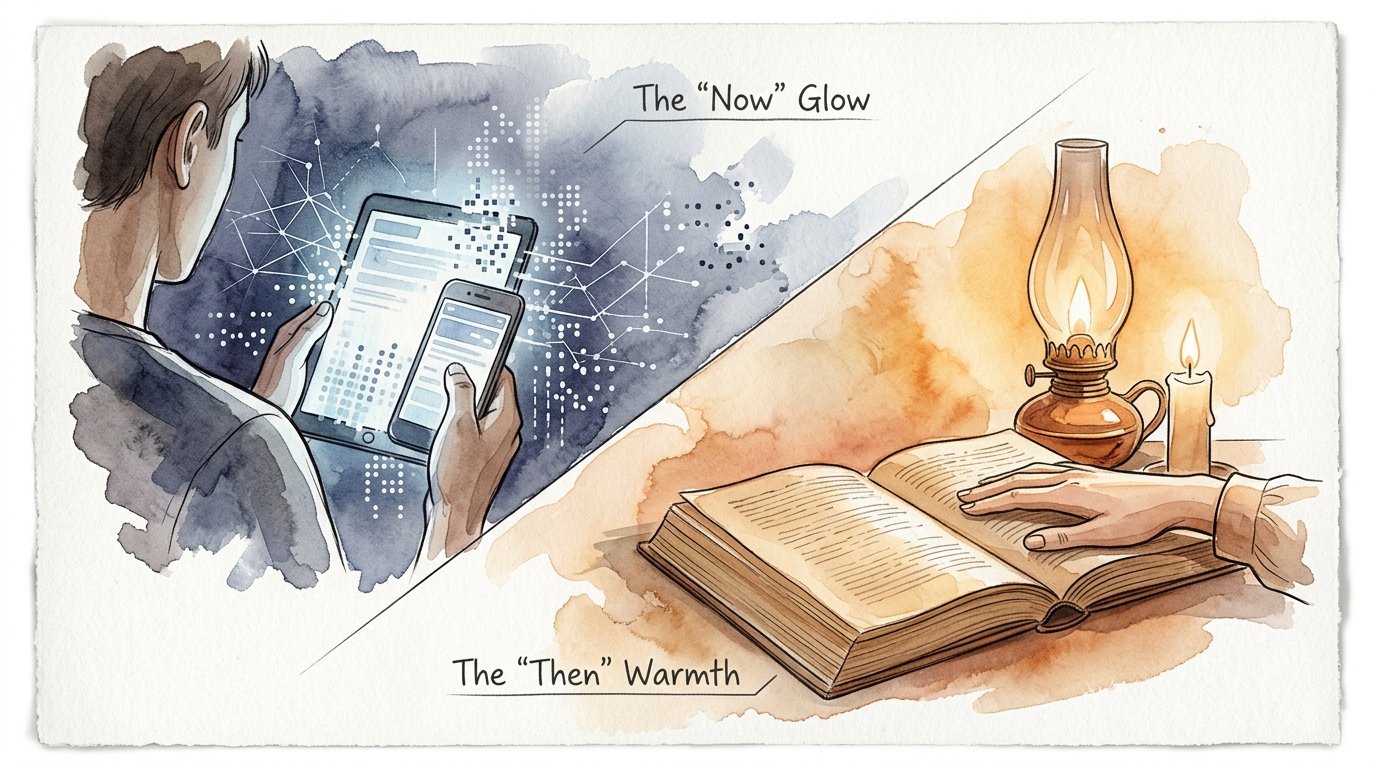
The screen free evening aesthetic is more than just a lack of devices; it is a sensory-rich environment designed to support the body’s natural transition into sleep. It replaces the harsh, flickering “Now Glow” of LEDs with the steady, amber “Then Warmth” of fire, filament, and physical textures. It is an intentional design choice that prioritizes tactile feedback over swipe-based interactions.
At its core, this aesthetic focuses on low-intensity, long-wavelength light. Think of the color of a setting sun or a flickering candle. In real-world terms, this means swapping overhead fluorescent bulbs for floor lamps with warm-toned LEDs (2700K or lower) or salt lamps that emit a soft orange glow. This environment mimics the “firelight” conditions under which humans evolved for millennia, allowing our nervous systems to decompress from the high-alert state demanded by digital productivity.
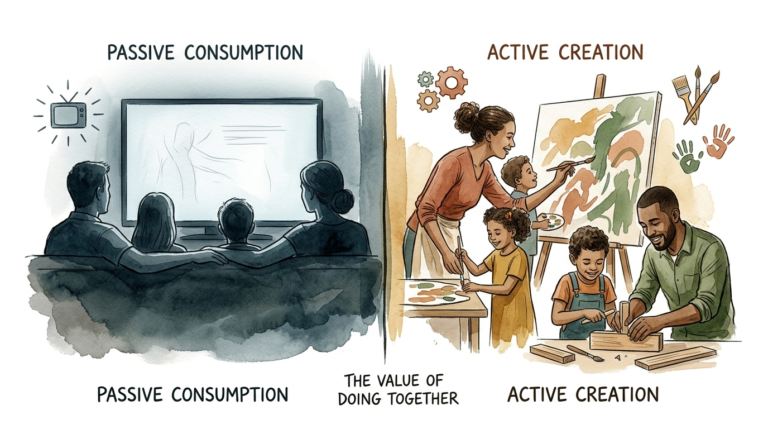
Visualizing this concept involves moving from “flat” experiences to “deep” ones. A screen is a flat surface where you consume information passively. An analog evening involves depth: the physical weight of a hardcover book, the smell of brewing herbal tea, and the sound of a record needle hitting vinyl. These are 3D experiences that ground you in the present moment, ending the “doomscroll” loop that keeps your brain in a state of perpetual anticipation.
How to Transition Your Environment
Creating this aesthetic doesn’t happen by accident. You need a system to shift your home from a high-output office or entertainment hub into a low-input recovery zone. Follow these steps to build your analog sanctuary.
Start with a Digital Curfew. Set a hard “tech-off” time at least 60 to 90 minutes before you intend to sleep. Research indicates that using screens within an hour of bedtime significantly increases the risk of insomnia and reduces total sleep time. When the alarm goes off, devices are placed in a designated “charging station” outside the bedroom. This physical separation is the first and most important barrier against the late-night scroll.
Layer Your Lighting. Do not simply turn off the lights and sit in the dark. Instead, use “layered lighting” to create warmth. Turn off all overhead lights. Use small lamps placed at hip level or lower. Low-level lighting signals to the brain that the sun has set. Invest in smart bulbs that can be programmed to shift from 5000K (cool white) during the day to 2000K (amber) after dinner. If you want to go further, use actual candles or battery-operated LED candles to add a flickering, natural element to the room.
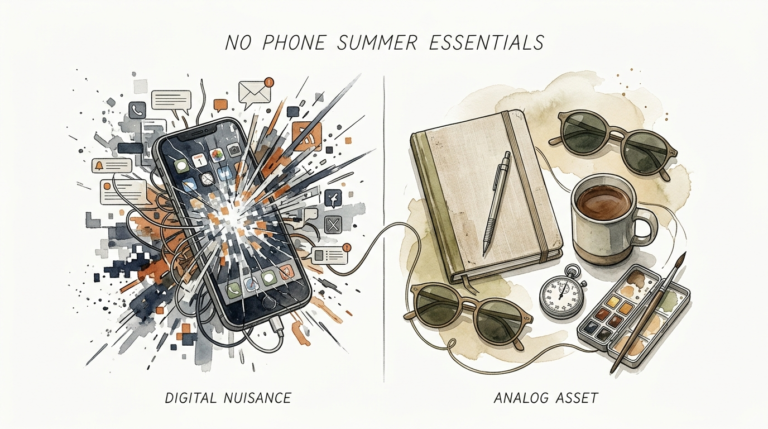
Engage the Tactile Senses. Prepare your space with physical objects that invite use. Lay a thick wool blanket over your favorite chair. Keep a physical journal and a high-quality pen on the coffee table. These objects act as “analog cues.” When you see a book instead of a remote, your brain is more likely to choose the restful path. This is about environment design; make the healthy habit the easiest one to reach for.
The 3-2-1 Rule for Success
- 3 hours before bed: Stop eating large meals to allow digestion to settle.
- 2 hours before bed: Stop working and close all professional communication apps.
- 1 hour before bed: Turn off all screens, including TVs, tablets, and smartphones.
The Science of the Sunset
The reason the screen-free aesthetic feels so good is rooted in human biology. Our bodies are governed by the circadian rhythm—a 24-hour internal clock that regulates everything from body temperature to hormone release. This clock is primarily set by light. When the “intrinsically photosensitive retinal ganglion cells” in your eyes detect blue-wavelength light (450–480 nm), they tell your brain it’s morning.
Exposure to this blue light in the evening suppresses melatonin, the hormone responsible for making you feel sleepy. Even small amounts of screen time can delay melatonin onset by hours, leaving you alert when you should be drowsy. Chronic suppression of melatonin doesn’t just cause tired mornings; it is linked to increased oxidative stress and potential long-term health issues like metabolic imbalances and mood disorders.
By switching to a screen-free evening, you allow your cortisol levels—the stress hormone—to drop naturally. Digital content is designed to be “sticky,” often using variable reward schedules (like a slot machine) to keep you engaged. This keeps your brain in a state of high arousal. Stepping away into an analog environment allows your “parasympathetic nervous system” to take over, moving you from “fight or flight” into “rest and digest” mode.
Benefits of the Analog Evening
The practical advantages of reclaiming your nights are measurable and immediate. Most practitioners notice a change in their mental health within the first 48 hours of a consistent routine.
Drastically Improved Sleep Quality. Avoiding screens helps you fall asleep faster (reduced sleep latency) and spend more time in REM and slow-wave sleep. These stages are critical for memory consolidation and physical recovery. You wake up feeling like you actually rested, rather than just “shutting down” for a few hours.
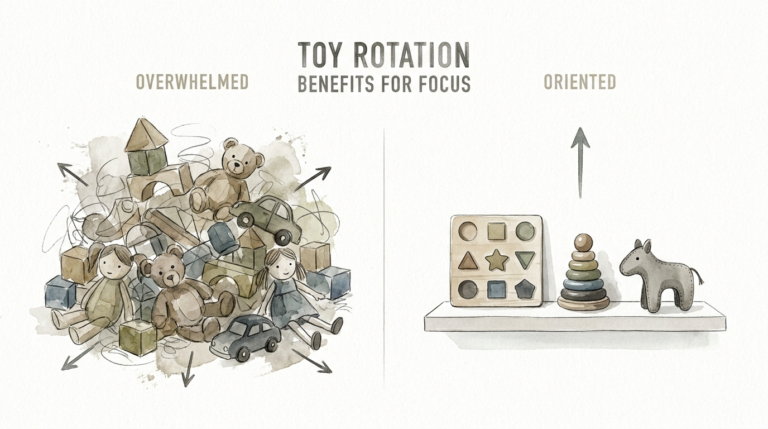
Reduced Cognitive Load. Screens provide an “impoverished” form of stimulation that bombards the brain with fragmented information. Analog activities like reading a physical book or doing a puzzle require sustained, singular focus. This strengthens your attention span and reduces the “brain fog” associated with digital overstimulation.
Emotional Regulation and Presence. Without the constant ping of notifications or the comparison trap of social media, you are forced to be present with yourself or your family. This leads to deeper conversations and a more stable mood. It allows you to process the events of the day rather than burying them under a mountain of new content.
Challenges and Common Mistakes
The transition to a screen-free aesthetic isn’t always smooth. We are biologically and psychologically wired to crave the dopamine hits that our devices provide. Understanding these pitfalls is the key to overcoming them.
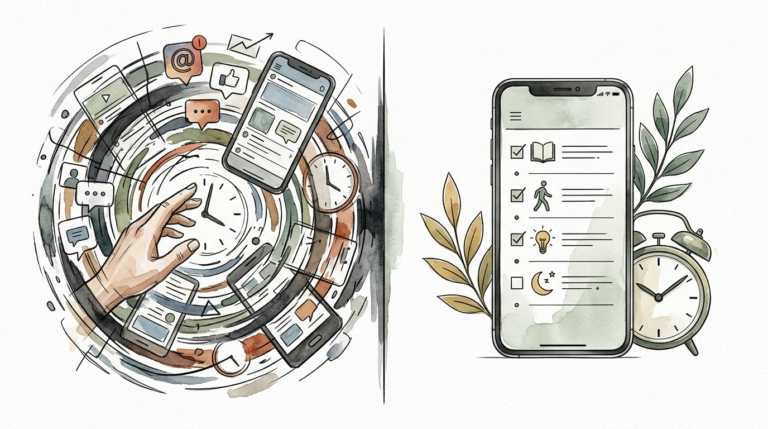
The “Just One More” Loop. This is the most common failure point. You pick up your phone to check the weather for tomorrow, and 45 minutes later, you’re watching a video on how to restore vintage watches. To avoid this, use a physical alarm clock instead of your phone. If your phone is your alarm, you are guaranteed to look at a screen the moment you wake up and the moment before you sleep.
Underestimating Boredom. In the first few nights, you will feel bored. This is a sign of dopamine withdrawal. Your brain is used to a high level of constant input. Instead of giving in, view this boredom as “mental white space.” It is in these quiet moments that creativity and self-reflection happen. Have a “boredom kit” ready: a puzzle, a book of sketches, or a complicated recipe to try.
Lack of Analog Alternatives. If you turn off the TV but have nothing to do, you will inevitably turn it back on. You must replace the digital habit with an analog one. You cannot just “not watch TV”; you must “read your novel” or “practice the guitar.” The goal is to swap a passive activity for an active, tactile one.
Limitations and Realistic Constraints
While a 100% screen-free evening is the ideal, it isn’t always practical for everyone. Credibility requires acknowledging that modern life often demands digital connectivity.
For individuals in on-call professions—doctors, IT specialists, or emergency services—a total blackout is impossible. In these cases, the “aesthetic” can still be maintained by using hardware filters. Physical red-light filters or high-quality blue-light-blocking glasses can mitigate the damage. The focus should be on “utility-only” use: answer the page, then put the device away. No scrolling is permitted.
Living situations also play a role. If you share a home with someone who isn’t committed to the screen-free lifestyle, you may need to create a “personal analog zone.” This could be a specific chair or a bedroom that remains a no-tech sanctuary. It’s about managing the environment you can control rather than demanding perfection from everyone around you.
The ‘Now’ Glow vs. The ‘Then’ Warmth
Understanding the difference between these two states helps you make better choices throughout the evening. One is designed for consumption; the other is designed for restoration.
| Feature | The ‘Now’ Glow (Digital) | The ‘Then’ Warmth (Analog) |
|---|---|---|
| Light Spectrum | Blue-heavy (450nm+), high Lux | Amber/Red-heavy, low Lux |
| Mental State | High Arousal, Rapid Switching | Deep Focus, Flow State |
| Hormonal Impact | Suppresses Melatonin, Raises Cortisol | Supports Melatonin, Lowers Cortisol |
| Interaction | Passive Consumption (Swiping) | Tactile Engagement (Turning Pages) |
| Maintenance | Constant Updates/Notifications | Zero Maintenance, Self-Contained |
Practical Tips for Immediate Application
If you want to start tonight, these high-impact adjustments will give you the fastest results. You don’t need a complete home renovation; you just need a few tactical shifts.
The “Out of Sight” Rule. Humans are visual creatures. If you see your phone, your brain expends energy *not* checking it. Put your phone in a drawer, a kitchen cabinet, or a different room entirely. This drastically reduces the cognitive load of resisting the device.
Curate an “Analog Library.” Collect magazines, books, and physical puzzles. Place them in the spots where you usually sit with your phone. Having a high-quality “National Geographic” or a book of crosswords ready to go makes it much more likely that you’ll engage in a screen-free activity.
Use Scent to Trigger the Shift. Our sense of smell is directly linked to the emotional centers of the brain. Light a specific candle—lavender, cedarwood, or sandalwood—the moment you turn off your screens. Over time, your brain will associate that specific scent with the “power down” phase of your day, making the transition almost automatic.
- Swap your smartphone for a physical book at 9:00 PM.
- Use a red-light nightlight in the bathroom to avoid bright light if you wake up.
- Keep a “brain dump” notebook to write down tomorrow’s tasks so they don’t keep you awake.
Advanced Considerations for Practitioners
For those who want to optimize their evening further, consider the specific physics of your environment. This is where you move from “habit” to “bio-optimization.”
Red Light Therapy (RLT). Some advanced practitioners use dedicated red-light panels in the evening. Unlike blue light, which stimulates, red light has a very low impact on the circadian clock. Some studies suggest that red light exposure in the evening can even improve subsequent sleep quality and physical recovery. Adding a 10-minute red light session can serve as the ultimate “biological reset.”
Color Rendering Index (CRI) and Kelvin. When choosing light bulbs for your evening aesthetic, look for a high CRI (90+) and a low Kelvin rating (under 2200K). High CRI ensures that colors look natural even in dim light, which reduces eye strain and makes the environment feel more “high-end” and cozy rather than just dingy and dark.
Analog Hobby Depth. Move toward hobbies that require proprioception (body awareness). Activities like knitting, whittling, or playing an instrument engage the motor cortex and provide a “flow state” that is deeper than reading. This helps to completely disconnect the brain from the “scroll-and-click” neural pathways that cause anxiety.
Example Scenario: The Sunset Schedule
Let’s look at how a typical high-energy, screen-free evening might look for a professional looking to recharge.
6:30 PM: The Digital Sunset. Work laptop is closed and placed in a bag. Phone is put on “Do Not Disturb” and placed on the kitchen counter. The overhead kitchen lights are dimmed.
7:00 PM: The Sensory Shift. Music is played via a dedicated speaker (not a phone if possible). A warm meal is prepared without a podcast or video playing in the background. The focus is on the textures and flavors of the food.
8:15 PM: The Amber Hour. All bright lights are turned off. Salt lamps and warm floor lamps are the only light sources. A pot of herbal tea (chamomile or valerian root) is brewed. This ritual signals to the body that sleep is roughly 90 minutes away.
9:00 PM: Analog Engagement. The individual sits in a comfortable chair with a physical book. There are no notifications to interrupt. If a thought about work pops up, it is written in a physical “tomorrow” notebook and then set aside.
10:00 PM: Total Darkness. The bedroom is kept completely dark. A physical alarm clock is set. Because the body has been producing melatonin for the last two hours, falling asleep happens within minutes.
Final Thoughts
The screen-free evening aesthetic is not a rejection of technology; it is a sophisticated management of it. By choosing when to step away, you gain the clarity and energy to be more effective when you are actually online. It is an act of self-respect that prioritizes your biological needs over the demands of the attention economy.
Start small. You don’t need to throw your TV out the window today. Start with a 30-minute window of no screens before bed and one warm lamp. Notice how the silence feels. Notice how your eyes relax. The warmth of the world before the blue light is still there, waiting for you to turn off the glow and lean in.
Experiment with different analog hobbies and lighting setups until you find the combination that feels like home. As you master this transition, you may find that the most productive thing you do all day is the moment you decide to do nothing digital at all. Enjoy the peace; you’ve earned it.
Sources
1 bioneurix.com | 2 drkristinedwards.com | 3 mother.ly | 4 storyofstuff.org | 5 sleepeducation.org | 6 brandenbodendorfer.com | 7 gelatopique.us | 8 sparklestories.com | 9 thedebtist.com | 10 unplugged.rest | 11 thensf.org | 12 stanford.edu | 13 chronobiologyinmedicine.org | 14 avocadogreenmattress.com | 15 ebsco.com | 16 aanmc.org | 17 lifegoalsmag.com | 18 harvard.edu | 19 fromjenn.com | 20 cerexuu.com