screen time rules kids free printable
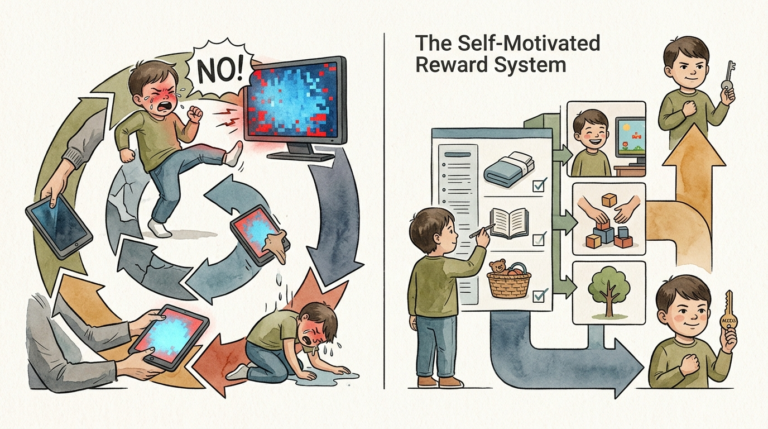
Want them to move more? Make movement the currency for their favorite digital activities. Stop fighting the screen and start using it to get them outside! Our ‘Active-to-Earn’ printable ensures that for every minute of passive consumption, they’ve earned it through active play.
Parenting in the digital age often feels like a constant battle against the glow of a tablet. You want your kids to experience the world, but the allure of infinite scrolling and fast-paced games is a powerful competitor. Modern childhood is increasingly sedentary, with many children spending over seven hours a day on screens while getting less than ten minutes of unstructured outdoor play.
This shift has real consequences for physical health, motor skill development, and emotional regulation. However, the solution isn’t necessarily a total ban on technology. Instead, the “Active-to-Earn” system transforms screen time from a point of contention into a powerful motivator for physical activity.
Think of it as a metabolic exchange program. By using a structured system, you empower your children to take control of their own habits. They learn the value of balance and the physiological necessity of movement. This guide will walk you through how to implement a movement-based screen time system that actually works.
screen time rules kids free printable
A screen time rules kids free printable is a visual management tool designed to create a transparent relationship between physical activity and digital consumption. It serves as a contract between the parent and the child, outlining exactly how much movement is required to “unlock” various levels of screen time. This removes the “middleman” of parental negotiation and replaces it with a self-governing system.
In the real world, this concept mirrors how we manage adult responsibilities. We work to earn a paycheck, and we exercise to maintain the health required to enjoy our leisure time. For a child, a printable chart makes these abstract concepts concrete. It provides a roadmap for the day, ensuring that essential developmental milestones—like gross motor play and outdoor exploration—are met before the sedentary behavior begins.
These printables typically include sections for tracking different types of activities, such as “Outdoor Exploration,” “High-Intensity Play,” and “Skill Building.” By categorizing movement, you ensure your child isn’t just doing the bare minimum but is engaging in a diverse range of physical behaviors that support their growing bodies.
How to Implement the Active-to-Earn System
Setting up the system requires a clear “exchange rate.” A common and effective starting point is a 1:1 ratio. For every one minute of active, heart-pumping movement, the child earns one minute of screen time. This simple math is easy for children to track and provides an immediate sense of reward for their effort.
First, print the “Active-to-Earn” chart and place it in a high-traffic area like the kitchen or the playroom. Consistency is vital during the first two weeks. Explain to your children that the goal isn’t to take away their games, but to make sure their “internal batteries” are charged up through play before they sit down to recharge their devices.
Define what counts as “Active Movement.” Running in the backyard, riding a bike, jumping on a trampoline, or participating in a sports practice are all excellent candidates. You might also include “Active Screen Time,” such as follow-along dance videos or fitness-based games, which can earn credits at a lower 2:1 ratio.
Establish a “Payout Period.” Some families prefer to track movement daily, while others use a weekly bank. For younger children, daily payouts are better because their sense of delayed gratification is still developing. Older kids might appreciate the ability to “save up” credits for a longer gaming session on the weekend.
Benefits of Movement-Based Screen Rules
The most immediate benefit is a significant increase in daily physical activity. Research indicates that children need at least 60 minutes of moderate-to-vigorous physical activity every day. By making screen time conditional on movement, you ensure this baseline is consistently met without having to nag or cajole.
Beyond physical health, this system develops essential life skills like self-regulation and delayed gratification. When a child has to work for their entertainment, the entertainment itself becomes more valuable. They are less likely to mindlessly scroll and more likely to choose high-quality content because they know exactly how much effort went into earning those minutes.
This approach also drastically reduces parental stress and the “constant ask.” Instead of asking “Can I have the iPad?” children start asking “What can I do to earn time?” The shift in language reflects a shift in mindset. You are no longer the gatekeeper of fun; you are the facilitator of a system that rewards their healthy choices.
Challenges and Common Pitfalls
One frequent mistake is using the system as a punishment. If a child loses their earned screen time because of bad behavior unrelated to the chart, the system loses its credibility. The “Active-to-Earn” credits should be treated like a currency that the child has rightfully earned through physical labor. If behavior issues arise, handle them through separate disciplinary channels.
Another challenge is the “obstacle effect.” This happens when children begin to view physical activity as a chore or an obstacle standing in the way of the screen. To prevent this, focus on making the movement itself intrinsically rewarding. Choose activities they already love, like soccer or tag, rather than forcing them into “exercise” routines that feel like work.
Inconsistent tracking is the fastest way to break the system. If you allow them to “borrow” time with the promise of moving later, the structure will eventually collapse. The rule must be “Movement First, Screens Second.” This prevents the dopamine-depleted “screen coma” that makes it nearly impossible for kids to get active after they’ve already been staring at a device.
Limitations and Realistic Boundaries
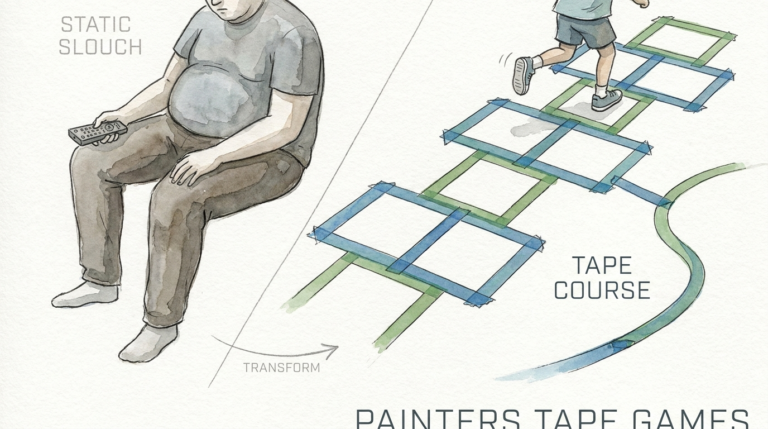
Environmental factors can sometimes limit the effectiveness of a strict outdoor-play-only system. Bad weather, illness, or living in an urban area without easy park access can make earning time difficult. In these cases, you must have a “Plan B” of indoor activities—like hallway obstacle courses or yoga—to keep the system functioning without frustration.
It is also important to recognize that screen time isn’t a monolith. Educational apps required for school or video calls with grandparents shouldn’t necessarily be “earned.” The system should focus on recreational, passive consumption. Mixing mandatory schoolwork with recreational rewards can confuse the child and create a negative association with learning.
Be aware that for some children, especially those with certain neurodivergencies, a strictly transactional reward system can increase anxiety or obsession with the screen. If you find your child is becoming hyper-fixated on counting minutes to the point of distress, it may be time to pivot to a more flexible “Routine-Based” schedule rather than a “Minute-for-Minute” system.
Comparing Movement Credits vs. Passive Consumption
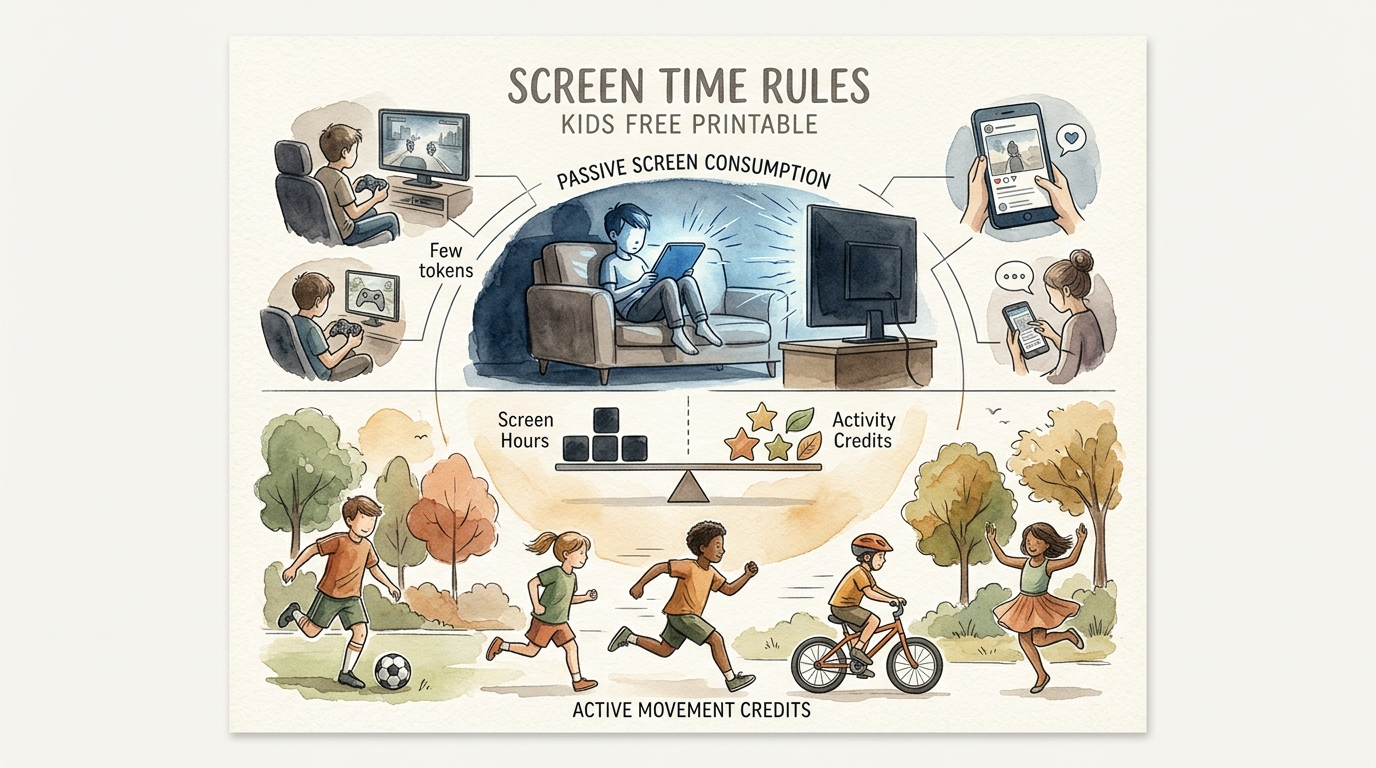
Understanding the difference between active movement and passive consumption helps parents value the “exchange rate” correctly. The goal is to balance the sedentary nature of digital media with the physiological benefits of movement.
| Factor | Active Movement Credits | Passive Screen Consumption |
|---|---|---|
| Metabolic Impact | High: Increases heart rate and calorie burn. | Very Low: Sedentary behavior. |
| Brain Engagement | Active: Develops spatial awareness and coordination. | Receptive: Processes pre-made visual stimuli. |
| Dopamine Source | Slow-release: Earned through effort and play. | Fast-release: Delivered instantly by algorithms. |
| Social Value | High: Often involves peers or physical interaction. | Variable: Can be isolating or digitally social. |
Practical Tips for Success
Make the system visible. A chart buried in a drawer won’t be used. Use a colorful printable and put it on the refrigerator. Using physical tokens or “Screen Time Bucks” can also make the earning process feel more tactile and rewarding for younger children.
Customize the activities to your child’s interests. If they love superheroes, call the active time “Training for the Avengers.” If they love nature, frame it as an “Explorer’s Quest.” Gamifying the movement phase makes it less about the screen and more about the adventure.
- Keep it simple: Don’t overcomplicate the math. Round numbers are better.
- Set a daily cap: Even if they earn five hours of time, have a maximum daily limit to protect sleep and family time.
- Join in: Kids are more likely to move if you are moving with them. Lead by example.
- Reward high-quality movement: Offer double credits for “Vigorous Activity” like swimming or running.
Advanced Considerations for Long-Term Success
As children age, their digital needs change. For teenagers, the focus should shift from simple “Active-to-Earn” to “Digital Health Literacy.” Use the printable to start conversations about how their bodies feel after moving versus how they feel after four hours of gaming. Helping them recognize the physical sensations of “brain fog” versus “endorphin rush” builds long-term self-awareness.
Consider introducing “Bonus Challenges.” These could be weekly physical goals, like learning a new skill (e.g., a handstand or a jump shot) that earn a larger “Digital Jackpot.” This encourages mastery and deep engagement with a physical hobby, which can eventually become its own reward, reducing the reliance on screens as the primary source of dopamine.
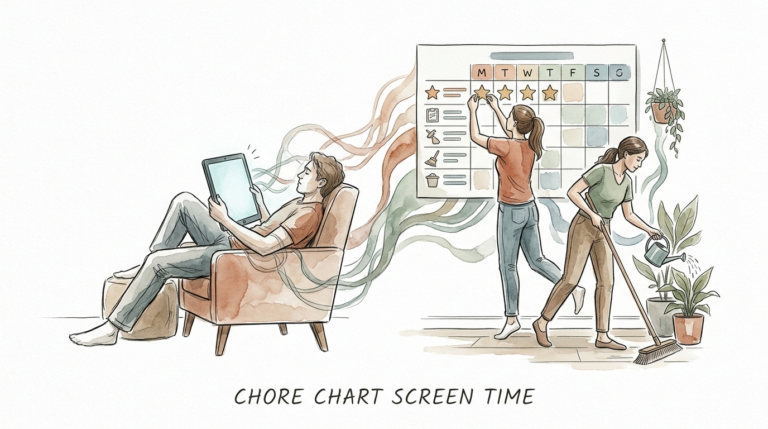
Integrate chores and responsibilities carefully. While some parents like to include chores on the “Active-to-Earn” chart, it can be more effective to keep them separate. Movement should be celebrated as a vital health requirement, while chores are a contribution to the household. Keeping them distinct prevents a child from feeling like their only value is in “working” for play.
Real-World Examples and Scenarios
Imagine a typical Saturday. Without a system, the child might stay in pajamas and play video games until noon. With the “Active-to-Earn” printable, the day starts differently. They know they want two hours of gaming later. They check their chart: 30 minutes of bike riding, 30 minutes of backyard soccer, and 60 minutes of a family hike earn them that time.
In another scenario, consider a rainy Tuesday after school. The child is restless but wants to watch a movie. They look at the “Indoor Active” section of their chart. They complete a 20-minute indoor scavenger hunt and 10 minutes of jumping jacks. They’ve earned 30 minutes of their movie. They learn that even when circumstances change, the principle of “Body First” remains the same.
These scenarios demonstrate how the system provides a framework for decision-making. The child learns to look at their afternoon and budget their energy. They might choose to move more on a Tuesday so they can “bank” extra time for a friend’s online birthday party on Friday. This is a higher-level executive function skill that will serve them well into adulthood.
Final Thoughts
The goal of an “Active-to-Earn” system is to foster a healthy, sustainable relationship with technology. We live in a world where screens are unavoidable, but sedentary lifestyles are a choice. By using a screen time rules kids free printable, you are giving your children the tools to make better choices every day.
This approach moves away from the “Parent vs. Child” dynamic and toward a “Team vs. Habit” approach. You are teaching your children that their health is a priority and that movement is the foundation upon which all other activities are built. It encourages a life of balance, vitality, and intentionality.
Start small, stay consistent, and watch as the whining about tablets is replaced by the sounds of active play. Download your printable today and turn movement into the most valuable currency in your home. You’ll find that as they move more, they’ll actually enjoy their screen time even more—because they truly earned it.
Sources
1 scrolletics.app | 2 willygoat.com | 3 ncsu.edu | 4 cacfp.org | 5 3blmedia.com | 6 avidopenaccess.org | 7 ahealthysliceoflife.com | 8 junglejumparoo.com | 9 betterscreentime.com | 10 dailymom.com | 11 childrensphysicaltherapyandwellness.com | 12 center4research.org | 13 unicef.org | 14 paperscissorscraft.com | 15 biglifejournal.com | 16 aap.org | 17 psychologytoday.com | 18 greatcaringdocs.com | 19 marleydoodledigital.com | 20 nih.gov | 21 aap.org | 22 youtube.com | 23 substack.com | 24 cmosc.org | 25 childrenandscreens.org