Painters Tape Games For Kids Indoors
Boredom is just stagnant energy; it only takes one roll of tape to unlock it. Static boredom leads to meltdowns. Dynamic play leads to development. A roll of painters tape can transform a boring hallway into a laser grid, a balance beam, or a sprawling city map. It requires zero cleanup and turns the entire house into a three-dimensional challenge.
When the weather turns sour or the screens start to overstay their welcome, you need a solution that is fast and effective. You do not need expensive plastic toys or complicated electronics. You just need a simple roll of blue or green tape. This approach bridges the gap between structured activity and wild imagination. It allows kids to own their environment without leaving a single permanent mark.
Speaking directly to the parent who is tired of the “I’m bored” chorus, this guide is your manual for household transformation. It is about reclaiming your space for growth and movement. We are moving away from the couch and toward the hallway. Let’s get to work.
Painters Tape Games For Kids Indoors
Painters tape games for kids indoors represent a category of low-prep, high-impact activities designed to stimulate gross and fine motor skills. At its core, this method uses temporary adhesive lines to define play zones on floors, walls, and furniture. It exists because children have an innate need to move and navigate physical boundaries, which are often lacking in a standard living room.
In the real world, this is effectively “low-cost environmental engineering.” You are taking a static space—a hallway or a bedroom—and adding a layer of interactive data. A single line on the floor is not just tape; it is a tightrope over a canyon. A series of zig-zags on the wall is not just a mess; it is a high-security laser grid for a secret agent.
These games are used by pediatric therapists to help with proprioception—the body’s ability to sense its location and movement. They are also used by teachers to burn off excess energy during indoor recess. Whether you are creating a simple hopscotch grid or an elaborate multi-room sensory path, the goal is to turn the home into a training ground for coordination and creative problem-solving.
How to Set Up the Most Popular Tape Games
Setting up these challenges requires more strategy than just sticking tape to the floor. You want to create a flow that keeps the energy moving. Start with these three foundational builds to get your house transformed in under ten minutes.
The Hallway Laser Maze
This is the ultimate boredom buster. Find a narrow hallway and begin taping streamers or long strips of tape from one wall to the other. Vary the heights significantly. Some should be two inches off the floor, requiring a careful step-over or a belly crawl. Others should be at chest height, forcing the child to duck and weave.
Challenge your kids to navigate the length of the hall without “tripping the alarm.” If you use streamers, use small pieces of painters tape to secure them so they break away easily if touched. This provides immediate feedback and prevents anyone from getting tangled. You can even set a timer to add a layer of competitive pressure.
The Multi-Surface Balance Beam
Standard balance beams are bulky and expensive. A tape balance beam is free and infinitely customizable. Lay down a long straight line on a hard floor or low-pile carpet. Ask your child to walk it heel-to-toe. Once they master the straight line, add zig-zags, circles, and sharp 90-degree turns.
Take it a step further by using different colors. Blue tape might mean “walk on your tiptoes,” while green tape means “hop on one foot.” This forces the brain to process color-coded instructions while maintaining physical balance. It is a dual-tasking exercise that builds incredible neural pathways.
The Sprawling Tape City
Turn your living room floor into a miniature metropolis. Use the tape to create roads, intersections, and parking lots for toy cars. This isn’t just about driving; it’s about engineering. Let the kids decide where the “grocery store” or the “fire station” goes.
Creating curved roads with straight tape requires fine motor precision. Show them how to use small, overlapping segments to create a smooth turn. This activity can occupy a child for hours as they integrate their existing toys into the new tape landscape.
Benefits of Indoor Tape Play
The advantages of this method extend far beyond simply keeping a child quiet. You are investing in their physical and cognitive development with every strip of tape you tear. The practical benefits are measurable and immediate.
Development of Gross Motor Skills: Games like the laser maze or indoor hopscotch require whole-body movements. Kids must balance, jump, and crawl, which strengthens core muscles and improves coordination. These “big muscle” activities are essential for healthy physical growth.
Refinement of Fine Motor Control: Tearing tape, sticking it down in straight lines, and eventually peeling it up are fantastic workouts for small hand muscles. This helps with the “pincer grasp,” which is a fundamental building block for writing and using scissors. Many occupational therapists use tape peeling as a primary exercise for dexterity.
Cognitive and Spatial Awareness: Navigating a three-dimensional maze teaches children about the size of their own bodies relative to their environment. They learn to judge distances and plan their movements. This “motor planning” is a sophisticated cognitive task that pays off in sports and daily life.
Zero Damage and Low Cost: Unlike many indoor toys, painters tape is designed to be removed. It leaves no residue on most surfaces and is incredibly inexpensive. You can buy a multi-pack for the price of one cheap plastic toy, yet it offers ten times the replay value.
Challenges and Common Mistakes
While tape play is simple, there are a few ways to get it wrong. Avoiding these common pitfalls will keep your house safe and your cleanup easy. The biggest mistake is using the wrong type of tape for the surface.
Surface Incompatibility: Never use duct tape or high-tack packing tape on floors or walls. These adhesives can pull up paint, finish, or carpet fibers. Stick exclusively to blue or green painters tape, or specialized delicate-surface tape. Even then, you should test a small, hidden area first.
Adhesion Build-Up: If you leave painters tape on a surface for weeks, the adhesive can cure and become difficult to remove. Most brands are rated for 14-day removal. For the best experience, set up the course in the morning and take it down within 48 hours. This prevents any sticky residue from forming.
Tripping Hazards on Rugs: Tape does not always stick well to high-pile or shaggy rugs. If the tape starts to peel up at the edges, it becomes a tripping hazard. Ensure the tape is pressed down firmly, and if it won’t stay flat, move the game to a hard floor or a low-pile area.
Limitations of Indoor Tape Play
Understanding the boundaries of this method helps maintain its effectiveness. It is a powerful tool, but it is not a universal solution for every home or every child. Environmental constraints play a major role in what you can achieve.
One primary limitation is available floor space. If you live in a very small apartment with a lot of furniture, creating a sprawling tape city might be impossible. In these cases, you must focus on vertical challenges, such as “Tape Resist Art” on a window or a tape-based target on a door.
Another factor is the age of the child. Very young toddlers may not have the impulse control to keep the tape on the floor; they might try to eat it or simply pull it all up immediately. Conversely, older teenagers might find a simple balance beam boring unless it is part of a much larger, more complex “American Ninja Warrior” style obstacle course.
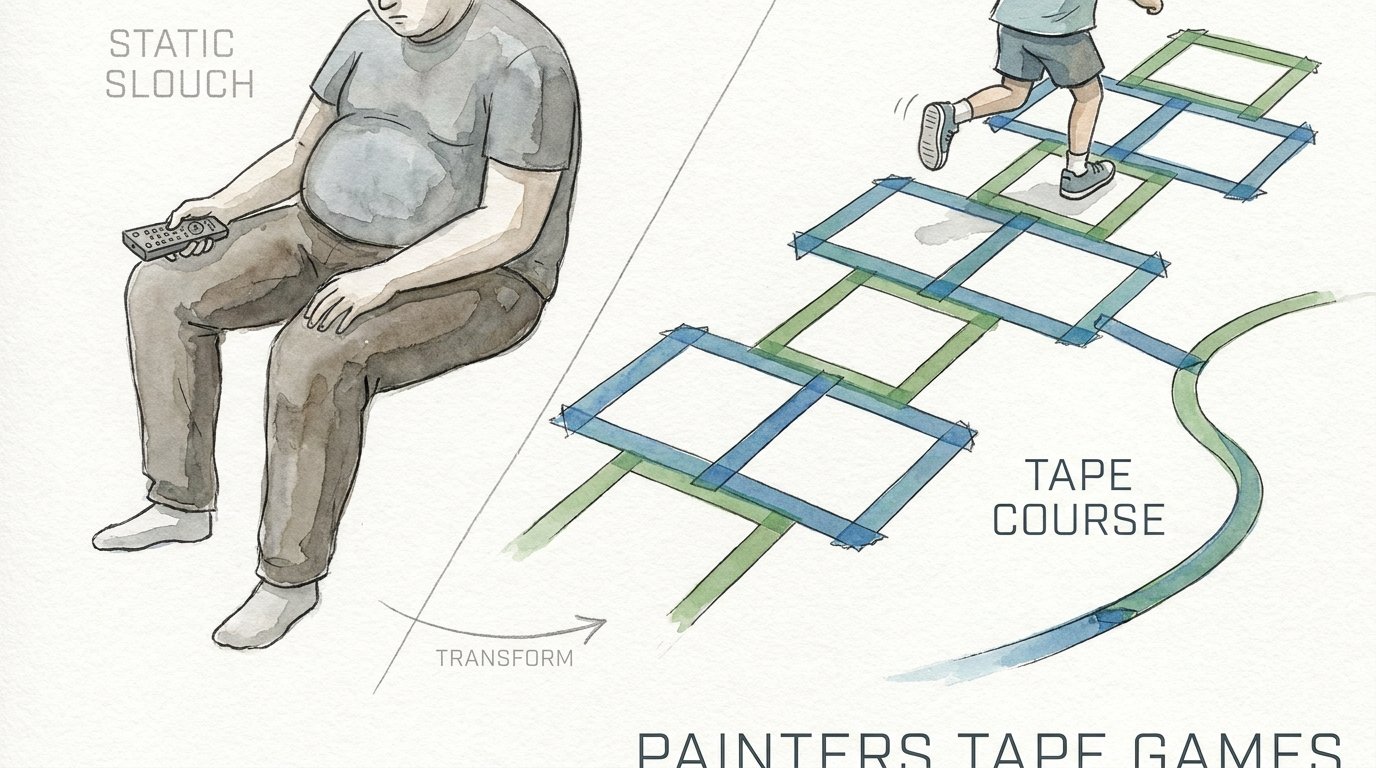
STATIC SLOUCH vs TAPE COURSE
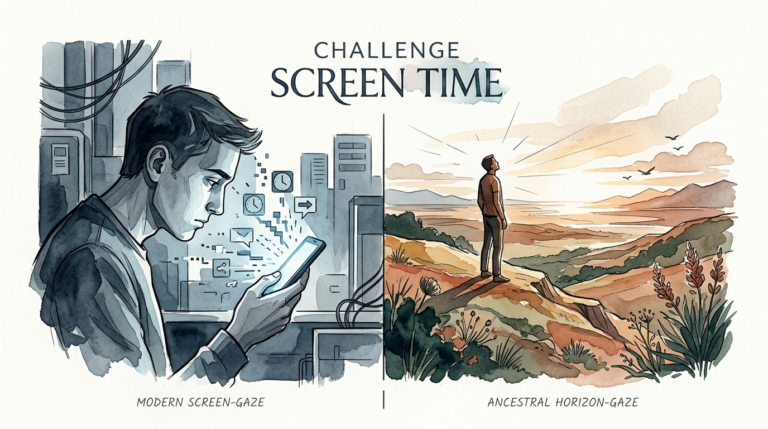
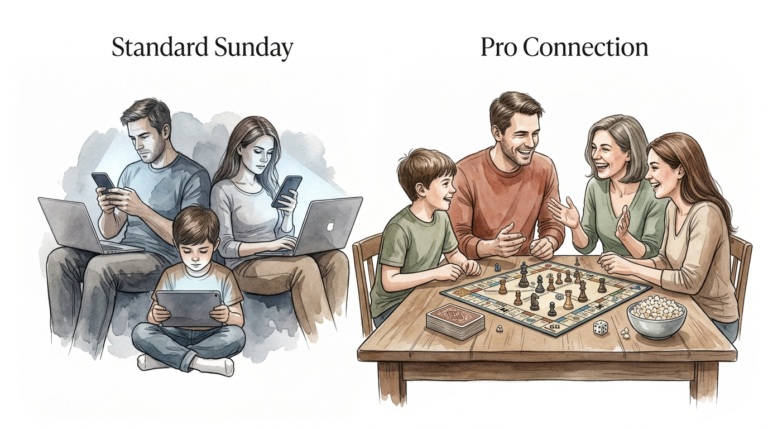
It is helpful to look at how tape play compares to the most common alternative for indoor boredom: screen time. While both keep kids occupied, the results are vastly different.
| Factor | Static Slouch (Screens) | Tape Course (Active) |
|---|---|---|
| Energy Level | Low / Sedentary | High / Dynamic |
| Muscle Engagement | Minimal | Full Body |
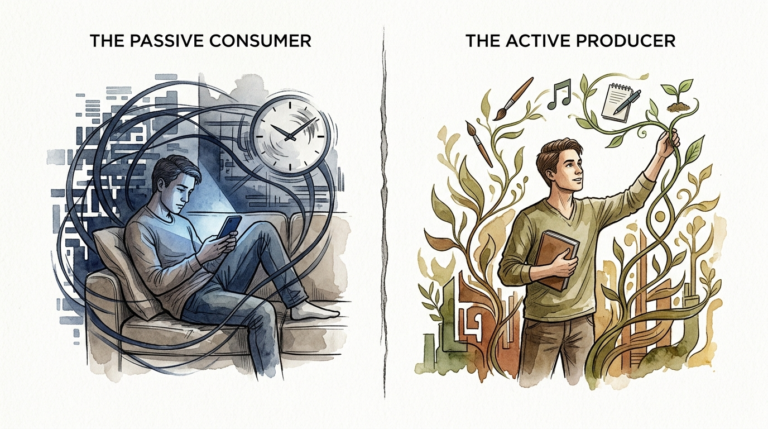
| Creativity ROI | Consumer-based | Creator-based |
| Cleanup Time | Instant | 5-10 Minutes |
| Social Interaction | Often Isolated | Collaborative |
The “Static Slouch” leads to physical stagnation and often results in a “tech tantrum” when the screen is turned off. The “Tape Course” facilitates movement and leaves the child tired but mentally stimulated. The cost of a roll of tape is a small price to pay for the developmental leap it provides.
Practical Tips and Best Practices
To maximize the fun and minimize the stress, follow these efficiency improvements for your next tape session. These tips come from parents who have turned tape play into a weekly tradition.
- Warm the Tape: If your house is cold, the tape might not stick as well. Rub the roll between your hands for a minute before you start to make the adhesive more pliable.
- Let Them Lead: For kids over five, let them help design the course. This builds engineering skills and gives them a sense of ownership over the activity.
- The “Save the Toys” Game: If you need to work on fine motor skills, tape several small plastic animals or cars to a cookie sheet or a table. Challenge the child to “rescue” them by carefully peeling back the tape.
- Use a “Start” and “Finish” Line: Creating a clear beginning and end to a course helps children focus on the task. It also makes it easier to time their “runs.”
- Remove at a 45-Degree Angle: When it’s time to clean up, pull the tape back slowly at a 45-degree angle. This is the safest way to ensure no paint is pulled from the walls.
Advanced Considerations for Serious Practitioners
If you have moved beyond basic lines and want to scale your indoor challenges, consider these advanced techniques. This is where you move from simple games to true “sensory engineering.”
Think about Proprioceptive Input. You can add “heavy work” to a tape course. For example, at certain points along a tape line, place a heavy stuffed animal or a small basket of books. The child must pick up the object and carry it to the next “station” while staying on the tape. This adds muscle resistance to the balance challenge, which is incredibly grounding for kids with high energy.
Consider Crossing the Midline. This is a vital developmental milestone where a child reaches across their body with their hand or foot. Create a tape grid on the wall where they have to touch specific letters or numbers using the hand from the opposite side of their body. This strengthens the connection between the left and right hemispheres of the brain, which is essential for reading and writing later in life.
Real-World Example: The Rainy Day Pentathlon
Imagine it is Tuesday afternoon. It has been raining for three days. The energy in the house is vibrating at a dangerous level. Instead of surrendering to another movie, you spend eight minutes setting up a “Rainy Day Pentathlon.”
Station 1: A tape balance beam through the living room with three “nodes” where they must spin in a circle three times.
Station 2: A hallway laser maze using red streamers and blue tape.
Station 3: A “Tape Shape” jump on the kitchen floor. You have taped a square, a triangle, and a circle. You call out “Square!” and they must leap into it.
Station 4: The “Crab Walk” track. A series of parallel lines in the dining room that they must navigate while in a crab-walk position.
Station 5: The “Tape Target” on the back of a door. They have three attempts to throw a rolled-up sock into a tape-defined bullseye.
By the time they finish three rounds of the pentathlon, they have worked every major muscle group, practiced color and shape recognition, and burned off the “stagnant energy” that leads to meltdowns.
Final Thoughts
Painters tape games are more than just a way to kill time. They are a masterclass in using your environment to foster growth. By providing a physical framework for play, you are giving children the tools they need to explore their own capabilities. It is a reminder that the best childhood memories don’t always come from a box; sometimes, they come from a roll.
The next time you feel the household tension rising, don’t reach for the remote. Reach for the tape. Turn your hallway into an adventure and your floors into a map. You will find that the simplest tools often yield the most profound results.
Experiment with different colors, heights, and challenges. Every house is different, and every child will find a different way to break through the boredom. Start small, stick it down, and watch the transformation begin.
Sources
1 dayswithgrey.com | 2 beyondtheclinic.com | 3 protapes.com | 4 kidsactivitiesblog.com | 5 youtube.com | 6 tapejungle.com | 7 thegeniusofplay.org | 8 busytoddler.com | 9 frogtape.com | 10 farmerswiferambles.com | 11 dcmoms.com | 12 silverhawkconstructionlv.com | 13 kidskubby.com | 14 passionhomedesign.com | 15 kidsandcompany.com | 16 itsalwaysautumn.com | 17 kidsintransitiontoschool.org | 18 cuanschutz.edu