Physical Effects Of Screen Time On Kids
A growing brain requires a moving body, yet the screen demands total stillness. Stillness is often mistaken for good behavior, but in the digital age, it’s often a sign of physical stagnation. If your child has forgotten how to move their body because they are too busy moving their thumb, the screen has crossed the line.
The modern childhood landscape has shifted from the playground to the palm of the hand. While technology offers a window to the world, it often closes the door on essential physical development. This shift isn’t just about “lazy” habits. It is a biological transformation driven by the lure of high-definition light and algorithmic feedback loops.
Parents today face a unique battle. We are raising the first generation of true digital natives. This means we are also the first generation of parents witnessing the long-term physical fallout of a sedentary, screen-first lifestyle. Understanding these risks is the first step toward reclaiming your child’s health.
This guide explores the physiological impact of digital saturation. We will look at how light, posture, and inactivity reshape a child’s body. Most importantly, we will discuss how to reintroduce the dynamic movement that every growing human needs to thrive.
Physical Effects Of Screen Time On Kids
Physical health in children is built on a foundation of movement, varied sensory input, and restorative rest. Excessive screen time directly competes with these pillars. Research consistently shows that the longer a child remains tethered to a device, the more their physical development begins to lag or deviate from healthy norms.
Digital eye strain is one of the most immediate effects. Children often hold devices much closer to their eyes than they would a book or a toy. This prolonged “near-work” forces the eye muscles into a state of constant tension. Recent meta-analyses suggest that for every additional hour of daily screen time, the odds of a child developing myopia (nearsightedness) increase by approximately 21%.
Posture is the next victim of the digital age. The phenomenon known as “text neck” occurs when a child constantly tilts their head forward to look at a smartphone or tablet. This position adds up to 60 pounds of extra weight to the cervical spine. Over time, this causes chronic neck and back pain, and orthopedic specialists are now seeing these issues in patients as young as eight or nine years old.
Sleep disruption is perhaps the most insidious physical effect. The blue light emitted by screens is uniquely powerful at suppressing melatonin. In children, this suppression is twice as strong as it is in adults. Exposure to screens in the 90 minutes before bed can delay sleep onset, fragment REM cycles, and leave children in a state of chronic daytime fatigue.
Sedentary behavior is also a primary driver of metabolic issues. Excessive screen use is closely linked to higher Body Mass Index (BMI) and increased risks of childhood obesity. This isn’t just because children aren’t moving; it’s also because screen time often encourages “mindless eating.” Children watching a screen are less likely to notice their body’s fullness cues, leading to a higher intake of calorie-dense, nutrient-poor snacks.
Motor skill development is also under threat. Gross motor skills like balance and coordination require full-body movement. Fine motor skills, traditionally developed through play with blocks or drawing, are being replaced by repetitive swiping and tapping. Studies indicate that children with high screen usage often struggle with manual dexterity and hand-eye coordination in real-world tasks.
How the Digital Trap Works on the Body
The impact of screens isn’t just a matter of choice; it’s a matter of biology. To change habits, you must understand the underlying principles of how devices interact with the human nervous system and physical frame.
The “Dopamine Loop” is the engine of screen addiction. Every swipe, like, or level-up triggers a small release of dopamine in the brain’s reward center. For a child’s developing brain, these hits are incredibly potent. This neurochemical reward makes the “static” activity of sitting still feel more satisfying than the “dynamic” effort of physical play.
Circadian rhythm disruption is another mechanical process. Our bodies use light as a primary signal to regulate the sleep-wake cycle. Blue light, with its short wavelength, mimics the frequency of midday sunlight. When a child looks at a screen at 8:00 PM, their pineal gland “thinks” it is noon and halts the production of melatonin. This effectively resets their internal clock to a later time every single day.
Metabolic slowing happens during prolonged sitting. When a body remains still for hours, the production of enzymes that break down fats, such as lipoprotein lipase, drops significantly. This means that even if a child is active for an hour later in the day, the metabolic “shutdown” during five hours of gaming has already done its damage.
The “Video Deficit Effect” explains why screens are poor teachers of physical movement. Research shows that toddlers take twice as long to learn a physical action from a video as they do from a live person. The 2D nature of screens lacks the depth and sensory richness required for the brain to map physical movements accurately.
The Role of Sensory Integration
Children learn about their bodies through sensory feedback. This includes proprioception (knowing where your limbs are) and vestibular input (balance). Screens provide high visual and auditory input but zero proprioceptive or vestibular input. This creates a “sensory mismatch” that can lead to clumsiness and poor spatial awareness.
The Benefits of Reclaiming Movement
Prioritizing physical activity over screen time yields measurable, observable benefits that extend far beyond weight management. When you swap the screen for a moving body, you are upgrading your child’s hardware.
Neuroplasticity is fueled by movement. Physical activity triggers the release of Brain-Derived Neurotrophic Factor (BDNF). Scientists often call this “Miracle-Gro for the brain.” BDNF supports the survival of existing neurons and encourages the growth of new ones. A child who moves is literally building a more robust brain.
Cardiovascular health is another major win. Regular movement strengthens the heart and improves circulation. This ensures that the brain and muscles receive a steady supply of oxygen and nutrients. Children who stay active have lower resting heart rates and better blood pressure profiles than their sedentary peers.
Better sleep quality is a direct result of physical exertion. A body that has been physically challenged during the day is primed for deep, restorative sleep. Furthermore, avoiding screens in the evening allows melatonin to rise naturally. This leads to faster sleep onset and longer periods of REM sleep, which is critical for memory consolidation and emotional regulation.
Improved focus and academic performance are often linked to “dynamic” play. Physical activity increases blood flow to the prefrontal cortex, the area of the brain responsible for executive function, impulse control, and attention. Many teachers report that children who have a morning “burst” of activity are more settled and capable of learning throughout the day.
Common Challenges in Reducing Screen Time
Transitioning away from a screen-heavy lifestyle isn’t easy. Parents often face significant hurdles that can make the process feel like an uphill battle.
The “Digital Pacifier” trap is the most common pitfall. Screens are incredibly effective at keeping children quiet and “behaved” in public or during high-stress moments. Using technology as a primary tool for emotional regulation prevents children from learning how to soothe themselves or navigate boredom through physical exploration.
Peer pressure and social FOMO (Fear Of Missing Out) are real challenges for older children and teens. Much of their social world exists inside the screen. Restricting access can feel like social isolation. This emotional weight often leads to conflict when parents try to set boundaries.
Academic reliance on technology is a modern reality. Many schools now require the use of tablets or laptops for homework and research. This blurs the line between “productive” and “unproductive” screen time. It becomes difficult to monitor total daily exposure when the school day itself is digitized.
Addictive app design is a deliberate obstacle. Developers use “persuasive design” techniques, such as infinite scrolls and autoplay, to keep users engaged for as long as possible. These features are designed to override the user’s willpower, which is particularly effective against children whose prefrontal cortex is not yet fully developed.
Limitations of Universal Guidelines
While general recommendations exist, it is important to recognize that a “one size fits all” approach has limitations. Environmental and practical boundaries must be considered to maintain credibility and effectiveness.
The American Academy of Pediatrics (AAP) suggests no screen time for children under 18 months and limited high-quality programming for ages two to five. However, these guidelines don’t always account for the reality of modern working families. In many households, some level of screen use is inevitable.
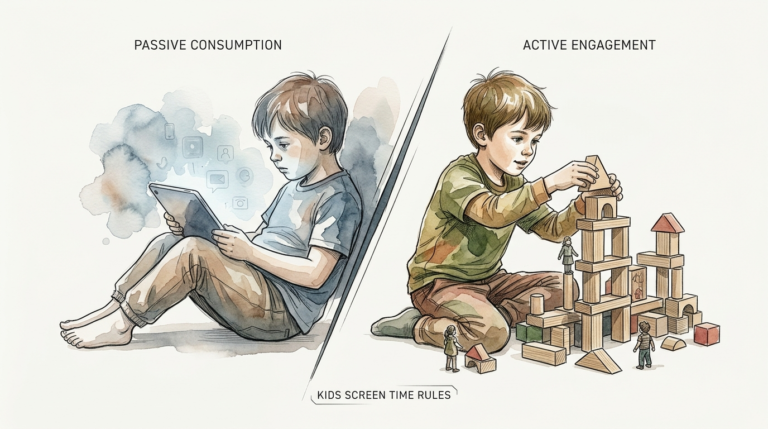
The distinction between “passive” and “active” screen time is also critical. Watching a mindless cartoon is different from using a tablet to compose music or learn a new language. Treating all screen time as equally “bad” can lead to unnecessary guilt and missed opportunities for genuine digital literacy.
Socioeconomic factors often limit physical alternatives. Not every family has access to a safe park, a backyard, or organized sports. In high-traffic urban areas or neighborhoods with safety concerns, the screen might be the only “safe” way to keep a child occupied. Recognizing these constraints is essential for finding realistic solutions.
Weather and seasonal changes also play a role. In extreme climates, outdoor play may not be an option for months at a time. This requires parents to find creative indoor movement solutions, which can be space-prohibitive in smaller homes or apartments.
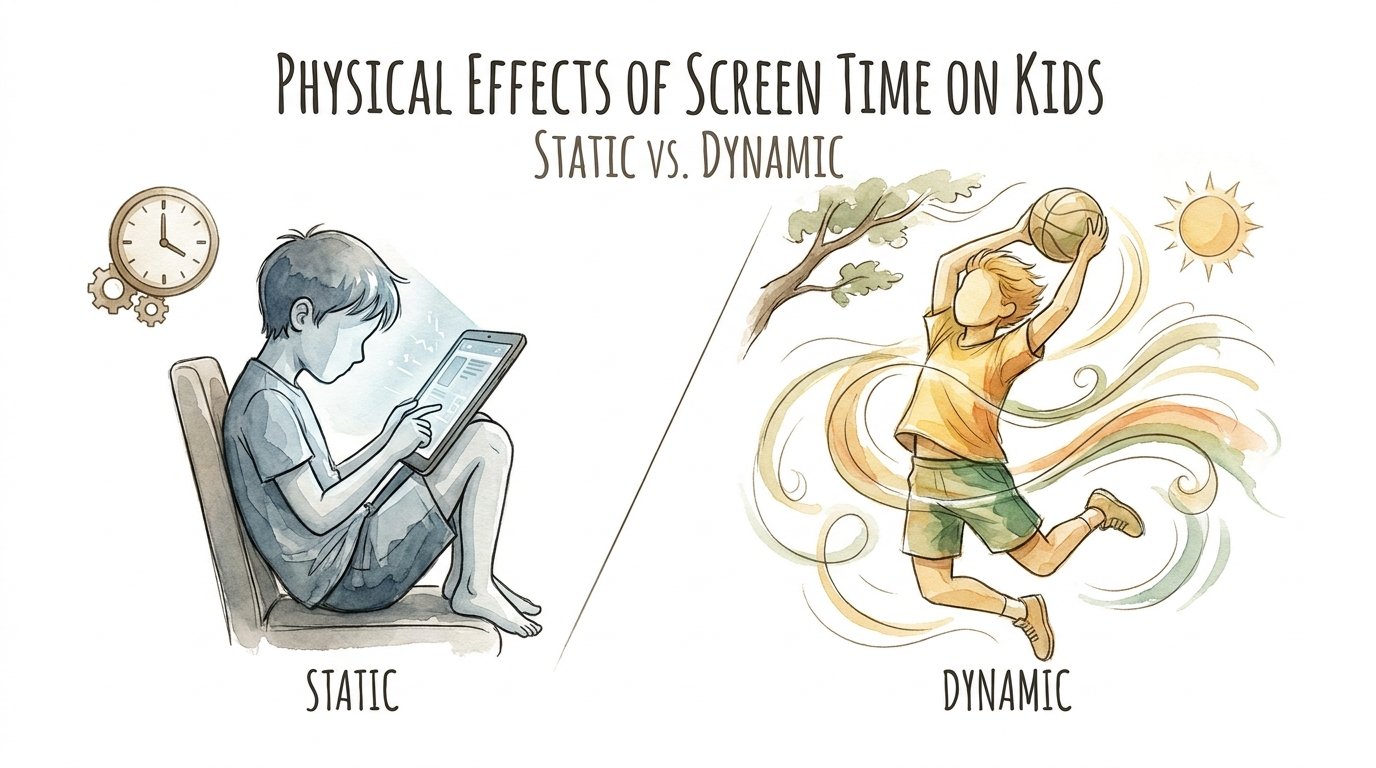
Static vs. Dynamic Behavior: A Comparison
Understanding the trade-offs between screen use and physical play is easier when you compare the two directly. This table highlights the measurable differences in how each state affects the child’s body.
| Feature | Static (Screen Time) | Dynamic (Physical Play) |
|---|---|---|
| Metabolic Rate | Basal levels; fat burning slows. | Elevated; improves insulin sensitivity. |
| Cervical Strain | High (Forward head posture). | Low; promotes upright alignment. |
| Visual Focal Point | Fixed, near-distance. | Variable, promotes depth perception. |
| Dopamine Source | Artificial, rapid-fire pixels. | Natural, achievement-based. |
| Sleep Impact | Suppresses melatonin; delays REM. | Regulates rhythm; deepens sleep. |
Practical Tips for a Healthier Balance
Implementing changes doesn’t require a total tech ban. Success lies in creating a sustainable environment where movement is the path of least resistance.
Follow the 20-20-20 rule to protect your child’s vision. Every 20 minutes of screen use, have them look at something 20 feet away for at least 20 seconds. This simple habit allows the eye muscles to relax and resets the focal point, significantly reducing the risk of digital eye strain.
Establish “Screen-Free Zones” in the house. The dining table and the bedroom should be strictly off-limits for devices. Keeping screens out of the bedroom is the most effective way to ensure they don’t interfere with the child’s sleep-wake cycle.
Use “Physical Cues” to end screen sessions. Instead of just saying “time’s up,” give a five-minute warning and then follow the screen time with a physical transition, like a quick walk or a game of catch. This helps bridge the gap between the high-dopamine screen world and the slower-paced physical world.
Invest in “Active Tech” where possible. If your child loves gaming, consider consoles that require body movement, such as VR or motion-controlled sports games. While not as beneficial as outdoor play, this is a significant step up from static sitting.
Model healthy behavior yourself. Children are much more likely to follow screen limits if they see their parents putting their phones away during family time. Your physical habits set the “default” for the entire household.
Advanced Considerations: The Neurobiology of Play
For those who want to go deeper, the connection between physical movement and cognitive architecture is a fascinating field of study. Serious practitioners of healthy parenting should understand how specific types of movement influence the brain.
Proprioceptive input is essential for emotional regulation. Activities like climbing, “rough and tumble” play, or even carrying heavy groceries provide deep pressure to the joints and muscles. This type of input is calming to the nervous system and helps children who feel overstimulated by the high-frequency input of digital media.
Vestibular stimulation through spinning, swinging, or jumping helps develop the inner ear’s balance system. This system is closely linked to the brain’s ability to track text across a page. Many “learning disabilities” are actually rooted in poorly developed vestibular and oculomotor systems—systems that are only built through vigorous, multi-directional movement.
The “Boredom Threshold” is something that must be managed. Constant screen use “up-regulates” the brain’s dopamine receptors. This makes the real world seem boring by comparison. Reducing screen time allows these receptors to “down-regulate,” making simple physical tasks and creative play feel rewarding again.
Executive function is trained through unstructured play. When children play outside, they have to negotiate rules, solve physical problems, and manage risks. These are real-world simulations of complex cognitive tasks. A screen provides the solution for you; the physical world forces you to find it.
A Weekend Digital Reset: In Practice
Imagine a Saturday where the usual tablet routine is replaced by a structured “Physical Reset.” This isn’t about punishment; it’s about re-syncing the body.
The day starts without a screen. Instead of the morning “scroll,” the family goes for a 20-minute walk before breakfast. This morning light exposure helps set the circadian rhythm for the day. Breakfast is eaten with zero devices, encouraging conversation and mindful eating.
The afternoon is dedicated to a “High-Input” activity. This could be a trip to a local climbing gym, a bike ride, or even an obstacle course built in the living room. The goal is to provide the vestibular and proprioceptive input that the child has been missing during the school week.
As the sun sets, the “Blue Light Curfew” begins. All devices are placed in a central charging station two hours before bed. The evening is spent on “Static-Dynamic” activities, like reading physical books, doing a puzzle, or simple stretching. By 9:00 PM, the child’s melatonin levels are rising naturally, leading to a deep, uninterrupted sleep.
Monday morning arrives, and the child is more alert, less irritable, and physically “loose.” This scenario demonstrates that even a short break from the digital grind can have immediate physical and emotional benefits.
Final Thoughts
Modern technology is a tool, but it should never be a replacement for the biological requirements of a growing human. A child’s body is designed for exploration, exertion, and expansion. When we allow the screen to dictate their physical state, we are essentially asking a high-performance engine to idle in a garage for years.
Reclaiming your child’s health doesn’t mean deleting every app or throwing the TV out the window. It means becoming an intentional gatekeeper of their physical environment. It means prioritizing the 20-20-20 rule, honoring the blue light curfew, and making space for the “messy” movement that builds strong bones and sharp minds.
Start with small, consistent changes. Watch how their posture improves, their eyes brighten, and their energy levels stabilize. Movement is the natural state of childhood. By reducing the magnetic pull of the screen, you are simply giving your child the freedom to be exactly what they were meant to be: a body in motion.
Sources
1 hopkinsmedicine.org | 2 byu.edu | 3 theguardian.com | 4 capitalareapediatrics.com | 5 sleepfoundation.org | 6 ubiehealth.com | 7 choc.org | 8 northfloridasleepsolutions.com | 9 uconn.edu | 10 researchgate.net | 11 nih.gov | 12 childrensphysicaltherapyandwellness.com | 13 cdc.gov | 14 researchgate.net | 15 copakids.com