How To Make A Handmade Book With Kids
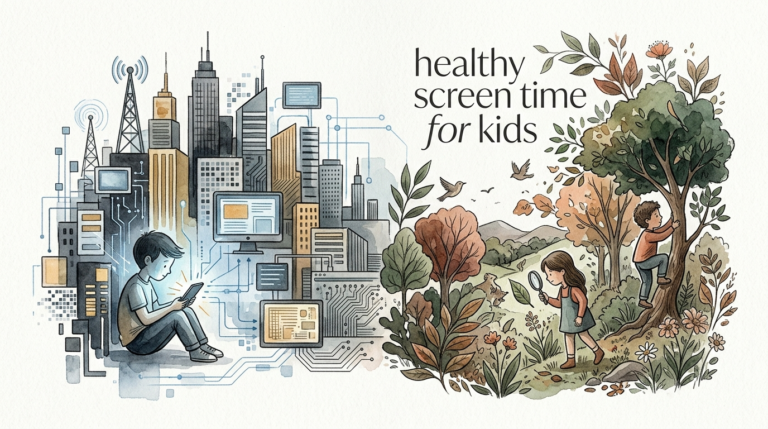
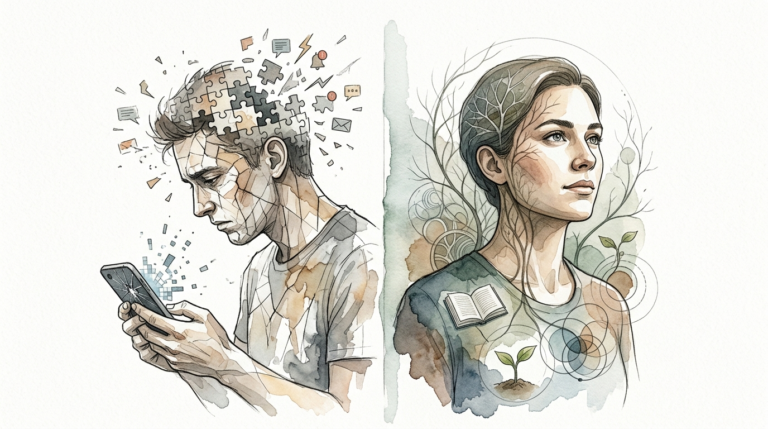
Is your child merely consuming stories written by others, or are they learning to bind their own legacy? The digital world turns our children into customers of other people’s imaginations. Teaching them the ancient craft of bookbinding shifts their identity. They stop being someone who “looks at” content and start being someone who “produces” history. It starts with paper and thread; it ends with a creator’s mindset.
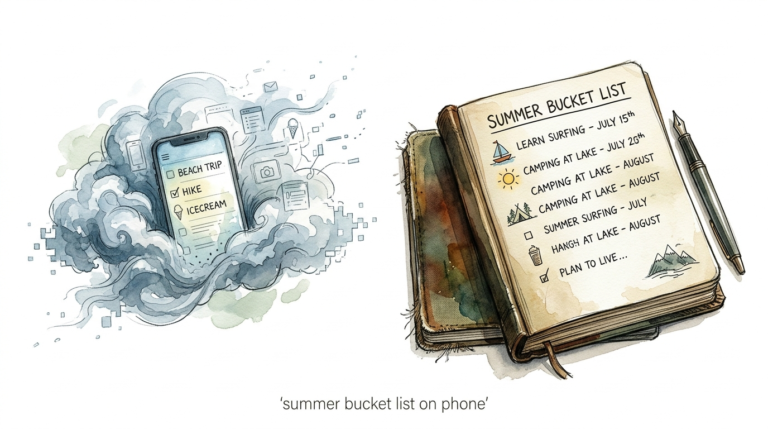
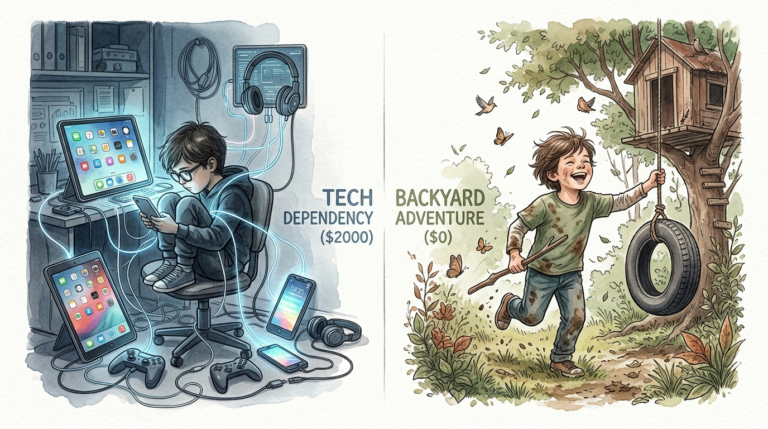
Digital devices offer endless input. Physical bookmaking offers a tangible output. Your child can hold their thoughts in their hands. This process builds confidence that no tablet can replicate. You are not just making a notebook; you are building a bridge between their mind and the physical world.
This guide will walk you through the process. We will explore simple folds and complex stitches. Whether you have a toddler or a teen, there is a method for them. Let’s turn your kitchen table into a workshop.
How To Make A Handmade Book With Kids
Bookbinding for children is the art of assembling physical pages into a permanent volume. It involves folding paper, selecting cover materials, and securing everything together using glue, staples, or thread. This craft exists at the intersection of literacy and engineering. It allows a child to understand the anatomy of a book.
Handmade books serve many real-world purposes. They become nature journals, family cookbooks, or sketchpads for original comics. In a school setting, they help students organize their research. At home, they become treasured keepsakes. A child who binds their own book views every other book on the shelf with a new sense of respect.
Visualizing the concept is easy. Imagine a stack of loose drawings. Alone, they are scattered ideas. Bound together, they become a narrative. This transition from “loose” to “bound” represents a transition in how a child perceives their own work. It moves from temporary to permanent.
How to Do It: Three Kid-Friendly Methods
Different ages require different techniques. You should match the complexity to your child’s manual dexterity. Start simple to build confidence before moving to needles and thread.
The Accordion Book (Ages 4+)
This is the simplest method. Use a long, narrow strip of paper. Fold it back and forth like a fan. Each panel becomes a page.
- Fold the paper in half, then fold those halves back on themselves.
- Glue two pieces of cardstock or cereal box cardboard to the first and last panels for covers.
- Decorate the “spine” with a ribbon to keep it closed.
The Popsicle Stick & Rubber Band Book (Ages 6+)
This method uses household items to create a sturdy spine without sewing.
- Stack several sheets of paper and two cardstock covers.
- Punch two holes along the left edge.
- Thread a rubber band through the back of one hole, over a popsicle stick on the front, and into the second hole.
- Loop the rubber band back over the bottom of the popsicle stick to secure it.
The Saddle Stitch (Ages 9+)
This introduces basic sewing. It creates a professional-looking notebook.
- Stack five to ten sheets of paper and fold them in half.
- Use an awl or a large needle to punch three holes along the crease.
- Thread a needle with embroidery floss.
- Start in the middle hole, go out the top, back in the bottom, and tie a knot in the middle.
Benefits of Making Books with Kids
Active authoring develops skills that go far beyond the page. The practical benefits are measurable and immediate. Fine motor skills improve as children handle thin paper and guide needles. This strengthens the pincer grasp, which is essential for handwriting and future technical tasks.
Cognitive development also takes a leap. Designing a book requires planning. A child must decide how many pages they need and what order they go in. This practices executive function and sequencing. They learn that big projects are just a series of small, manageable steps.
Emotional processing is a hidden advantage. Children often use handmade books to document big life events. Books about moving to a new house or getting a puppy help them process transitions. The book becomes a safe space for their thoughts and feelings. It also fosters a deep bond between you and your child as you collaborate on a shared goal.
Challenges and Common Mistakes
Precision can be frustrating for young creators. Crooked cuts and uneven folds are the most frequent errors. These mistakes happen because children often rush to the “fun” part of decorating. Remind them that careful preparation makes the final product look better.
Glue overkill is another common pitfall. Children tend to think more glue means a stronger bond. In reality, too much glue warps the paper and makes pages stick together. Use a small brush to apply a thin, even layer. Tacky glue or a standard glue stick is usually safer and easier to manage than liquid school glue.
Safety is the primary concern with older kids. Using an awl or a needle requires supervision. Many beginners try to push the needle through too many layers of paper at once. This leads to slipped fingers and small pricks. Show them how to punch holes one signature at a time to reduce the force needed.
Limitations of Handmade Bookmaking
Safety constraints are the biggest limitation for the youngest children. Toddlers lack the motor control for most binding tools. For children under four, stick to folding and stickers. Avoid any project involving small beads or sharp needles that could become a choking or injury hazard.
Time is another practical boundary. A high-quality handmade book cannot be finished in ten minutes. It requires drying time for glue and patience for sewing. This may not be ideal for a quick afternoon activity if your child has a very short attention span.
Materials also have limits. Standard printer paper is easy to find but can be fragile. If you want a book to last for years, you will need to invest in acid-free paper and heavy-weight cardstock. Real-world archival quality requires specialized supplies that may not be readily available in a typical household.
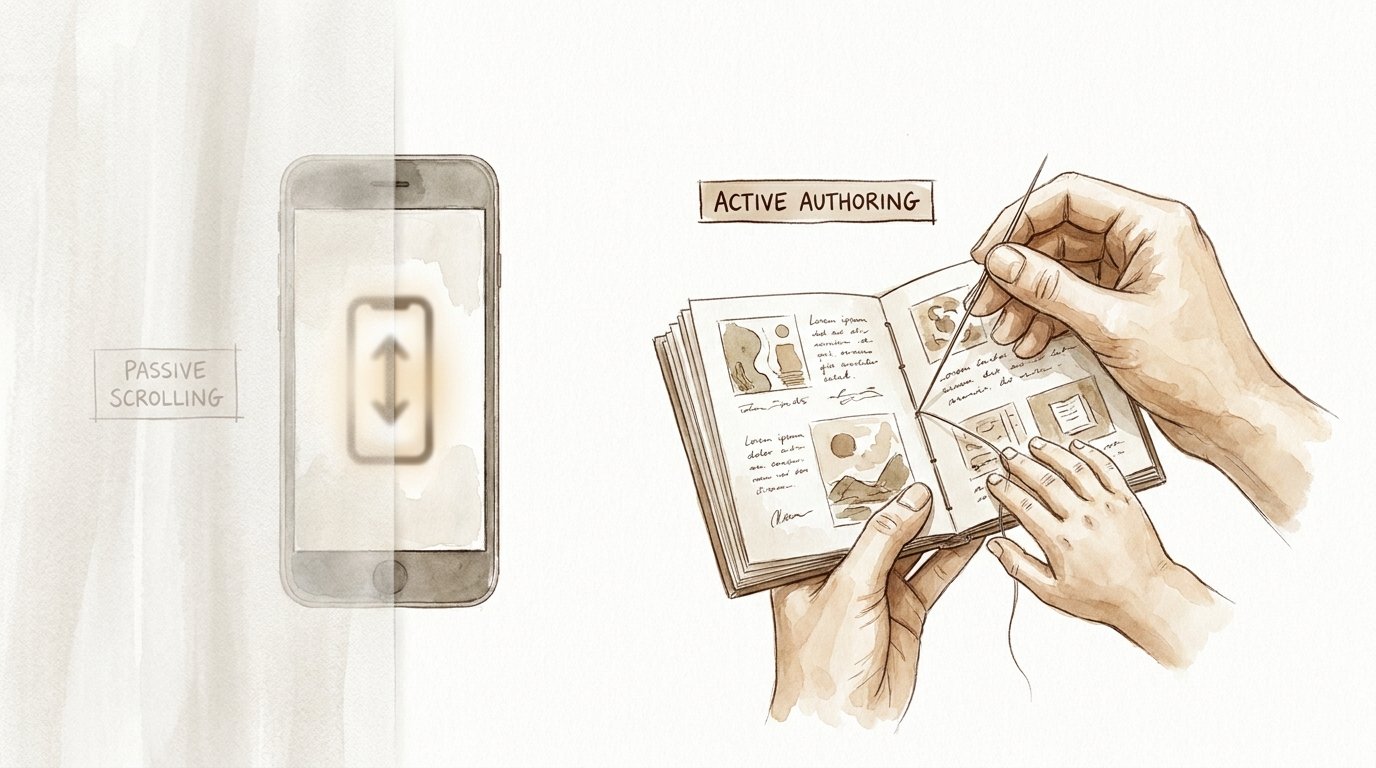
Active Authoring vs. Passive Scrolling
The difference between these two activities is profound. Research shows that passive consumption is linked to higher stress and lower self-esteem. Active creation builds a sense of agency and connection.
| Feature | Passive Scrolling | Active Authoring |
|---|---|---|
| Mental State | Mindless consumption | Focused intention |
| Physical Goal | Screen time | Tactile creation |
| Result | Temporary dopamine | Permanent legacy |
| Skill Level | Zero skill required | Builds craftsmanship |
Practical Tips for Success
Preparation is your best friend. Gather all your supplies before you call the kids to the table. This prevents accidents that happen when you leave the room to find a pair of scissors. Use a wide, clear workspace to give everyone plenty of room to move.
Recycled materials add character and save money. Cereal boxes make excellent hardcovers. Old wrapping paper or even brown paper bags can be used for decorative endpapers. Encouraging children to “upcycle” teaches them about sustainability while they create.
Understanding paper grain is a professional secret. Paper folds more easily in one direction than the other. Try folding a sheet both ways. One way will be smooth; the other will resist or crack. Always fold “with the grain” for a cleaner spine. This small adjustment makes the book feel much more professional.
Advanced Considerations for Serious Practitioners
Older children can graduate to advanced techniques like the Japanese Stab Binding or Coptic Stitch. The Japanese method allows you to bind loose sheets of paper rather than folded ones. It creates beautiful geometric patterns on the spine. This is a great history lesson as it has been used for centuries in Eastern bookmaking.
Coptic binding is the gold standard for handmade journals. It allows the book to lay completely flat when opened. This is perfect for young artists who want to draw across two pages. It requires more patience and multiple needles, but the result is a functional piece of art.
Scaling up means thinking about longevity. Use PVA (Polyvinyl Acetate) glue instead of standard craft glue for long-term projects. PVA remains flexible when dry, which prevents the spine from cracking over time. If you are serious about the craft, consider buying a bone folder. This simple tool creates bone-deep creases that make every fold look sharp.
A Practical Scenario: The Family Nature Journal
Imagine a weekend hiking trip. Instead of taking photos on a phone, your child brings a handmade nature journal. They used the “Saddle Stitch” method with heavy watercolor paper inside. The cover is a piece of sturdy cardboard decorated with pressed leaves.
During the hike, they stop to sketch a beetle or rub the texture of tree bark onto a page. Because they bound the book themselves, they feel a sense of ownership over every entry. When they get home, the book isn’t just a collection of drawings. It is a physical record of their experience.
This project turns a simple walk into a scientific expedition. It requires 20 minutes of binding at home and results in hours of engagement outdoors. Years from now, that book will hold more value than a folder of digital photos. It is a time capsule of their curiosity.
Final Thoughts
Bookbinding is more than a rainy-day craft. It is a way to reclaim your child’s attention from the digital void. Every page they fold and every knot they tie reinforces the idea that they are creators. They learn that the world is something they can shape, not just something they watch.
Start with a simple accordion fold today. See how your child reacts to holding a book they made. The pride in their eyes when they finish their first volume is worth every scrap of paper on the floor. Experiment with different materials and don’t worry about perfection.
Progress is the goal. Each book will be better than the last. As their skills grow, so will their stories. Encourage them to keep going until their shelf is full of their own bound history. This is how you raise a generation of authors, not just audiences.
Sources
1 skillshare.com | 2 vintagepagedesigns.com | 3 papercraftpanda.com | 4 blogspot.com | 5 nofussnatural.com | 6 instructables.com | 7 helpmegrowkenosha.org | 8 papercraftpanda.com | 9 sonalimangal.me | 10 betterreading.com.au | 11 familyeducation.com | 12 experteditor.com.au | 13 holisticbehavioralsolutions.com | 14 fuhrmancreative.com | 15 kawisniewski.com