no phone summer tips
We’ve lost the art of being ‘bored.’ Here is how to get the magic of ‘Then’ back into your ‘Now.’ and Remember when the only rule was ‘be home when the streetlights come on’? We’re bringing that energy back. No apps, just vibes. #90sSummer #Unplugged.
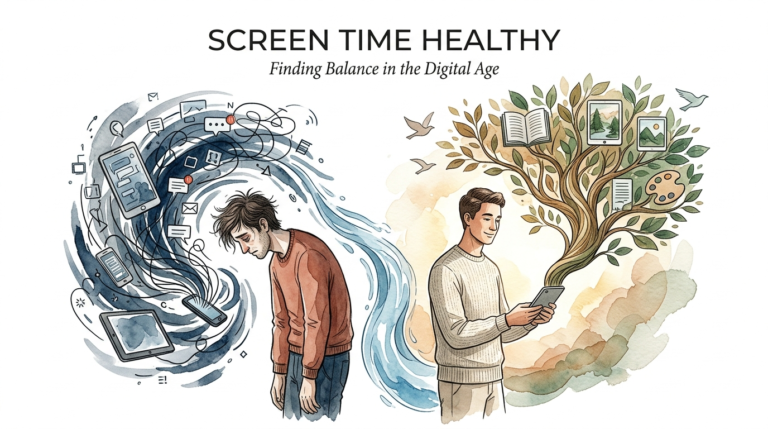
Modern life is a series of pings and scrolls. We wake up to an alarm on a glowing rectangle. We check emails before our feet hit the floor. We document our breakfast for people we barely know. Somewhere along the way, we traded presence for digital performance. This summer, we are taking it back.
The concept of an “unplugged summer” isn’t about being anti-technology. It’s about being pro-reality. We want to feel the sun without wondering if the lighting is right for a selfie. We want to ride bikes until our legs ache and our skin smells like SPF 30 and grass. This is a guide to reclaiming your attention span and your joy.
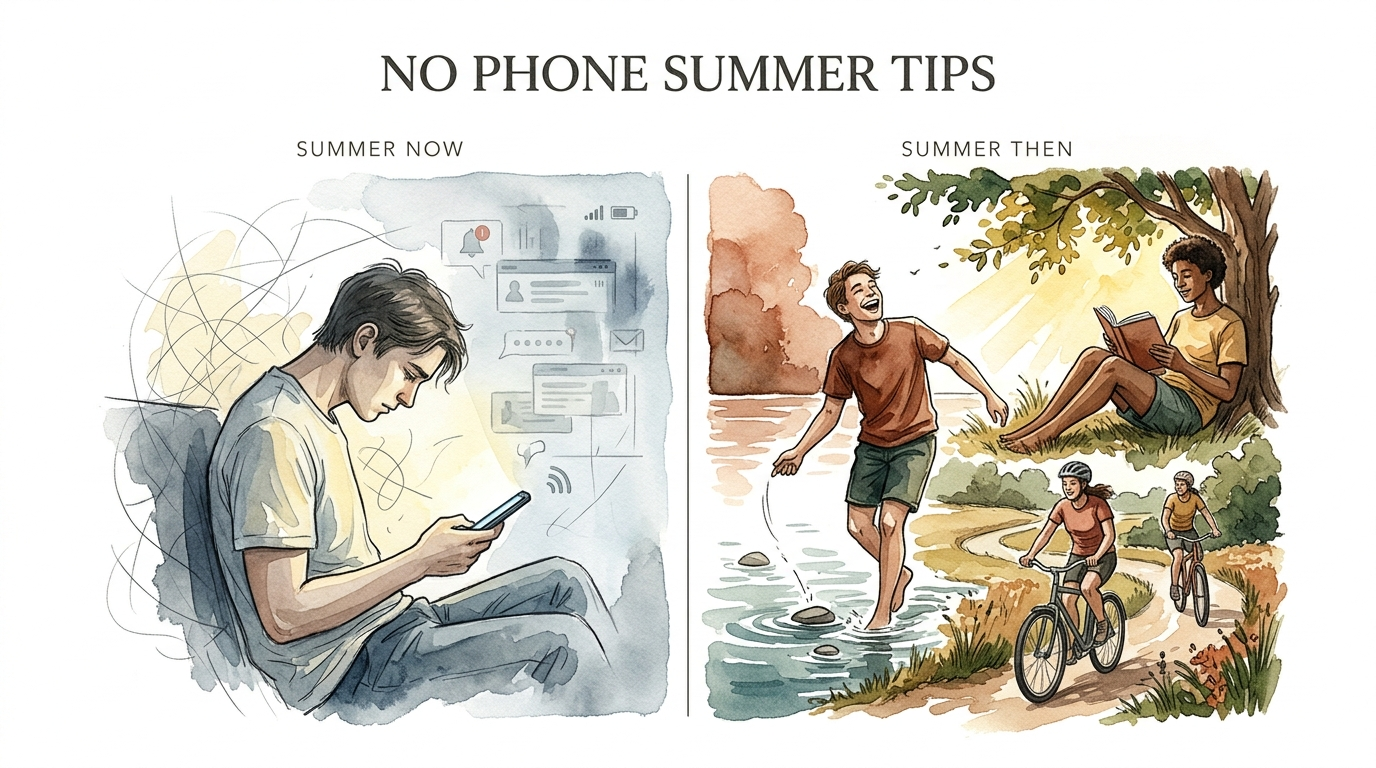
Summer Now often feels like a scheduled race to the next photo-op. Summer Then was a sprawling, unstructured adventure. It was the season of melting popsicles and the rhythmic sound of a sprinkler hitting the driveway. This article will show you how to bridge that gap. You don’t need to move to a cabin in the woods to find peace. You just need to leave the phone at home.
no phone summer tips
A “no phone summer” is a deliberate lifestyle shift where you reduce or eliminate smartphone usage to prioritize real-world experiences. It is a form of digital detox designed to break the dopamine loops created by social media and constant connectivity. In 2025, the average adult spends over 10 hours a day on digital devices. Reclaiming that time is a radical act of self-care.
This movement exists because our brains are reaching a breaking point. Studies show that the average human attention span has dropped from 12 seconds in 2000 to just 8 seconds today. Constant notifications hijack our nervous systems, keeping us in a state of high-cortisol “alertness.” By stepping away, we allow our brains to return to a baseline of calm and focus.
In real-world terms, this looks like choosing a paper map over GPS or a physical book over a Kindle. It means sitting on a porch and watching the clouds instead of doomscrolling through global news. It is used by families wanting to reconnect, creators looking to boost their neuroplasticity, and individuals suffering from “nomophobia”—the fear of being without a mobile phone.
Visualize a Saturday afternoon in the 90s. You didn’t know where your friends were every second. You had to go to their house and knock on the door. If they weren’t there, you found something else to do. That space—that “nothingness”—is where creativity is born. A no-phone summer brings that space back into your daily life.
How to Transition to an Analog Summer
Moving from a hyper-connected state to an unplugged one requires a strategic approach. You cannot simply throw your phone in a drawer and expect to be fine. Your brain is conditioned to crave the dopamine hits from apps. You need a transition plan that replaces digital habits with analog systems.
Start by auditing your phone usage. Use the built-in screen time features to see which apps are stealing your hours. Most people find that social media and news are the primary culprits. Identify the “essential” functions your phone provides, such as maps, banking, and emergency calls. Your goal is to move these functions to single-purpose devices or set strict boundaries for their use.
Invest in a “dumbphone” or a minimalist device. These phones, like the Light Phone III or the Wisephone II, offer calls and texts without the addictive interface of a smartphone. They allow you to stay reachable for emergencies without the temptation of an infinite scroll. If you prefer to keep your current phone, use a “Faraday sleeve” or a lockbox during peak summer hours to create a physical barrier between you and the screen.
Switch your digital tools for analog counterparts. Buy a physical alarm clock so your phone isn’t the first thing you touch in the morning. Get a paper planner to manage your schedule. Use a dedicated film or digital camera for photos. This separation of concerns helps you stay present. When you have a camera in your hand instead of a phone, you are a photographer, not a social media user.
Create an “Analog Go-Bag.” This is a backpack or tote filled with everything you need for a phone-free outing. Include a paper map of your city, a book, a notebook and pen, a deck of cards, and a portable radio. Having these items ready makes it easier to choose the analog path when you head out the door. It turns a “lack” of a phone into a “surplus” of opportunity.
Benefits of the Unplugged Approach
The rewards of an unplugged summer are measurable and profound. Within just 48 hours of a digital reset, many people report improved sleep quality and a significant reduction in anxiety. When you stop staring at a blue-light-emitting screen before bed, your body naturally produces more melatonin, leading to deeper, more restorative rest.
Mental clarity is perhaps the greatest benefit. Without the constant barrage of notifications, your brain can enter a “flow state” more easily. You will find that you can read a book for an hour without the urge to check your pocket. This regained focus isn’t just about productivity; it’s about the ability to enjoy a conversation or a sunset without distraction.
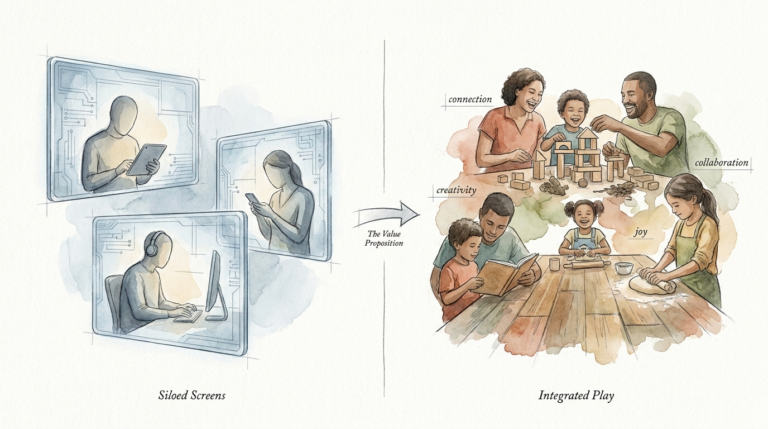
Social connections become deeper and more authentic. When you aren’t checking your phone at the dinner table, you are fully present for the people across from you. You notice their tone of voice, their body language, and the nuances of the conversation. Researchers have found that even having a phone sitting on the table—even if it’s face down—reduces the quality of the interaction. Removing it entirely changes the energy of the room.
Creativity flourishes in the absence of digital noise. Boredom is the precursor to imagination. When you are bored, your mind begins to wander, making connections it wouldn’t otherwise make. You might find yourself wanting to paint, garden, or build something. These activities provide a “slow dopamine” reward that is far more satisfying than the quick hits of a “like” button.
Challenges and Common Mistakes
The biggest challenge you will face is the “digital default.” Our modern world is built on the assumption that everyone has a smartphone. You might find that some restaurants only have QR code menus or that parking meters require an app. These logistical hurdles can cause frustration and lead to a total relapse into phone usage.
Social pressure is another major hurdle. Your friends and family might feel ignored if you don’t respond to their texts immediately. They might think you are being “pretentious” or “difficult” for choosing to be unplugged. It is important to communicate your goals clearly to your inner circle before you start. Let them know you aren’t ignoring them; you are just changing how you communicate.
Many people make the mistake of trying to go “cold turkey” without a plan. They delete all their apps but don’t provide themselves with any alternatives. This leads to a feeling of deprivation rather than liberation. If you don’t have a book to read or a hobby to pursue, you will inevitably end up back on your phone out of sheer boredom.
Another common pitfall is the “performance” of the detox. If you spend your time thinking about how you are going to tell everyone about your no-phone summer once you get back online, you haven’t actually unplugged. You are still viewing your life through the lens of digital validation. The goal is to live for the experience itself, not for the report of the experience.
Limitations and Realistic Constraints
While a phone-free summer is an admirable goal, it is not always practical for everyone. Those who work in industries requiring constant availability—such as emergency services or high-level IT support—may find it impossible to disconnect entirely. In these cases, the “unplugged” energy must be focused on personal hours and weekends.
Safety is a valid concern, especially for solo travelers or parents. In the 90s, we relied on payphones and the kindness of strangers, but that infrastructure has largely vanished. Carrying a basic “brick phone” is often a necessary compromise. It provides the security of a lifeline without the distractions of a smartphone.
Financial barriers can also exist. Analog hobbies like film photography or building a physical library can be more expensive than their digital counterparts. Furthermore, navigating a world that increasingly requires apps for banking and transportation can be time-consuming. You must be willing to trade convenience for presence.
It is also important to recognize that technology is not the enemy; our relationship with it is the issue. For some, a “no phone summer” might be an extreme reaction to a problem that could be solved with better boundaries. If you find that the stress of being disconnected outweighs the benefits, it may be better to aim for “digital minimalism” rather than a total blackout.
Analog vs. Digital: Summer Comparison
To understand the impact of this shift, consider how common summer activities change when you remove the smartphone. The following table illustrates the difference in experience and required tools.
| Activity | Digital Experience (Summer Now) | Analog Experience (Summer Then) | Primary Benefit |
|---|---|---|---|
| Navigation | GPS with voice prompts; constant rerouting. | Paper maps; asking for directions at a gas station. | Improved spatial awareness and sense of adventure. |
| Photography | Thousands of photos; instant editing and posting. | Film camera; 24 exposures; waiting for development. | Intentionality; living the moment instead of capturing it. |
| Music | Streaming apps with endless skips and ads. | FM/AM radio; mixtapes; listening to an entire album. | Discovery of local culture and deeper focus. |
| Communication | Instant texts; group chats; blue checkmark anxiety. | Landlines; physical letters; scheduled meetups. | Higher quality interactions and reduced urgency. |
Practical Tips for a Screen-Free Summer
Success in a no-phone summer comes down to preparation. You are fighting against billion-dollar algorithms designed to keep you hooked. Use these best practices to level the playing field and make your unplugged experience sustainable.
Set clear “Screen-Free Zones” in your home. The bedroom and the dining table should be sacred spaces where technology never enters. If you use your phone as an alarm, buy a dedicated clock and charge your phone in the kitchen. This simple change can improve your sleep and your relationships overnight.
Create an “Analog Resource Center.” Dedicate a shelf or a small table to your non-digital tools. Stock it with a dictionary, a world atlas, a deck of cards, a sketchbook, and a radio. When you feel the itch to check your phone, go to this center instead. It gives your hands and mind something productive to do.
Use the “Postcard Method” for social updates. Instead of posting a vacation photo to Instagram, buy a postcard and mail it to a friend. The process of choosing the card, writing a thoughtful message, and finding a stamp is far more meaningful than a digital “like.” It also creates a physical memento for the recipient.
Practice “Scheduled Connectivity.” If you cannot go completely phone-free, set specific times when you will check your device. For example, you might check it for 15 minutes at 10:00 AM and 15 minutes at 4:00 PM. Outside of those windows, the phone stays in a drawer. This puts you in control of the technology rather than the other way around.
Advanced Strategies for Long-Term Change
For those who want to go beyond a temporary detox, consider a “Family Unplugged Agreement.” This is a shared set of rules that everyone in the household follows. It might include “No-Tech Tuesdays” or a total phone ban for the month of July. When the whole family participates, the social barrier disappears, and the group dynamic shifts toward deeper connection.
Explore the world of “Dumbphone Modifications.” Serious practitioners often use apps to “strip down” their existing smartphones. You can use launchers that turn your screen into a simple list of text or use grayscale mode to make the interface less appealing. These techniques reduce the “stickiness” of the device without requiring you to buy new hardware.
Engage in “Deep Work” sessions. Use your newly reclaimed time to master a skill that requires intense focus. This could be learning a musical instrument, woodworking, or intensive gardening. The absence of digital distractions allows you to reach a level of mastery that is nearly impossible in a hyper-connected environment.
Adopt a “Legacy Mindset.” Ask yourself: what do I want my memories of this summer to be? Do I want to remember the memes I saw, or the way the lake felt at 6:00 AM? Reminding yourself of the value of your time is the best way to stay motivated when the temptation to scroll becomes overwhelming.
Example Scenario: The Phone-Free Weekend
To see how this works in practice, let’s look at a typical Saturday for Sarah, who decided to try a phone-free weekend. Sarah spent Friday night putting her phone in a timed lockbox set to open on Monday morning.
Sarah wakes up at 7:30 AM to the sound of a mechanical alarm clock. Instead of checking emails, she spends 20 minutes drinking coffee on her balcony, watching the neighborhood wake up. She notices a bird’s nest in a nearby tree that she had never seen before.
At 10:00 AM, she decides to go to a farmer’s market across town. She pulls out a paper map to plan her route. On the bus, instead of scrolling through TikTok, she reads three chapters of a novel. She finds herself more aware of the people around her and strikes up a brief conversation with a neighbor.
She spends the afternoon at a local park. She has no way to check the time other than her wristwatch. She stays until the sun starts to set, guided only by her internal clock and the fading light. She returns home feeling tired but deeply satisfied. Her brain feels “quiet” for the first time in years.
On Sunday night, Sarah writes in her journal. She realizes she hasn’t felt “FOMO” (fear of missing out) once. By removing the window into everyone else’s curated lives, she was able to fully inhabit her own. This is the magic of “Then” becoming her “Now.”
Final Thoughts
A no-phone summer is not a punishment; it is a gift. It is an invitation to inhabit your life fully, without the mediation of a screen. By choosing to be “bored,” you are actually choosing to be creative, present, and connected. You are reclaiming the most valuable resource you have: your attention.
The shift toward an unplugged lifestyle requires effort, but the rewards are life-changing. You will sleep better, think more clearly, and build stronger relationships with the people who matter most. You will find that the world is a much larger and more interesting place when you aren’t looking at it through a five-inch piece of glass.
Take the leap this summer. Start small if you have to, but start. Leave the phone at home when you go for a walk. Buy a physical map. Sit in silence for ten minutes. You might be surprised at the magic that happens when you finally stop scrolling and start living. The streetlights are coming on—it’s time to come home to yourself.
Sources
1 sallymatheny.com | 2 webmd.com | 3 aao.org | 4 freedom.to | 5 ceceliahealth.com | 6 bioneurix.com | 7 acon24.com | 8 routledge.com | 9 arizona.edu | 10 thecandidly.com | 11 wileyphone.com | 12 slnt.com | 13 digitaldetoxapp.com