Rainy Day Activities For Bored Kids
That ‘annoying’ fog on your windows isn’t a cleaning chore; it’s the world’s most temporary and magical art gallery. On the next rainy day, don’t reach for the Windex. The natural temperature difference between your home and the wild world has just handed your child a high-contrast canvas that requires zero setup and leaves zero permanent mess. It’s the ultimate lesson in ephemeral art and basic thermodynamics.
Most parents see a steamed-up window and think about the smudge marks they will have to wipe away later. But for a child, that misty pane is an invitation to a secret world of creativity that only appears when the weather is at its worst. This is the “Steam Canvas,” a low-pressure, high-reward activity that blends science with spontaneous design.
You don’t need a drawer full of expensive craft supplies or a dedicated playroom. You just need a little bit of physics and a curious set of fingers. Transforming a foggy window into an art piece is more than just a way to kill time; it is a gateway into understanding the invisible forces of the atmosphere and the joy of creating something that isn’t meant to last forever.
Rainy Day Activities For Bored Kids
Rainy day activities for bored kids usually involve messy paints, loud toys, or the inevitable pull of a glowing screen. Window art using condensation is the antidote to the “digital drain.” It is a tactile, sensory experience that encourages children to look out at the world while interacting with the barrier that keeps them safe and dry. In the real world, this phenomenon is called condensation, and it occurs every time warm, moist air hits a cold surface.
Whether it is the bathroom mirror after a hot shower or the kitchen window during a heavy downpour, these misty surfaces are everywhere. They exist because air acts like a sponge, holding onto water vapor until it simply can’t hold anymore. When that air cools down quickly—like when it touches a window chilled by rain—it drops its water cargo, creating a fine mist of tiny droplets that cling to the glass.
To a bored child, this isn’t just “water cycle” theory; it’s a disappearing ink pad. They can draw a face, write their name, or sketch a complex landscape, knowing that within minutes, the art will vanish as the temperatures equalize. This temporary nature is exactly what makes it so appealing. There is no fear of making a mistake because every mistake is destined to evaporate.
The Magic of the Vertical Surface
Drawing on a vertical surface like a window provides a unique physical challenge that standard tabletop coloring cannot match. It requires a different set of muscle movements and a higher level of hand-eye coordination. For a toddler, reaching up to the middle of a window helps build core strength and shoulder stability, which are foundational for future writing skills.
A Screen-Free Sanctuary
In a world dominated by rapid-fire digital content, the Steam Canvas offers a slow, meditative alternative. There are no pings, no notifications, and no bright blue light. There is only the cool sensation of the glass and the satisfying contrast of the clear line emerging from the fog. It forces a child to slow down and focus on the immediate sensation of touch and sight.
How the Steam Canvas Works: The Step-By-Step Guide
Understanding how to create the perfect foggy canvas is the first step toward a successful rainy day session. You can wait for nature to provide the conditions, or you can take matters into your own hands to ensure the art gallery is open for business whenever boredom strikes. The process is a live experiment in “dew point” and saturation.
Step 1: Creating the Conditions
Condensation forms when the temperature of a surface drops below the “dew point” of the surrounding air. On a rainy day, the outdoor air cools the glass significantly. Inside, your home is likely warmer and holds more humidity from cooking, breathing, or running a humidifier. This difference is the “engine” of your art canvas. If the windows aren’t foggy enough, you can “supercharge” the humidity by boiling a kettle nearby or letting the steam from a hot bath drift into the room.
Step 2: Testing the Surface
Gently press a finger against the glass. If a clear, dark line remains, the canvas is ready. If the line fills back in with fog immediately, the window is “too wet” and might need a quick, light wipe with a dry cloth to stabilize the mist. You want a fine, even layer of tiny droplets rather than heavy drips that will run down the pane and ruin the design.
Step 3: The Drawing Technique
Encourage your child to use different parts of their hand for different effects. The tip of the pinky finger creates a fine, precise line for details. The side of the thumb can create broader strokes or “shading.” For a truly high-contrast look, using a cotton swab (Q-tip) can help absorb the moisture more cleanly, leaving behind a “pro-level” clear line that stands out against the white mist.
Step 4: The Ephemeral Exit
The final step is simply watching the art disappear. As the humidity in the room drops or the glass warms up, the droplets will evaporate back into the air. This is the moment to talk about the water cycle. Where did the drawing go? It didn’t disappear; it just changed its state from a liquid back into an invisible gas.
The Hidden Benefits of Condensation Art
The Steam Canvas isn’t just a way to pass the time; it is a developmental powerhouse disguised as a simple game. From physical growth to emotional regulation, the benefits of this activity reach far beyond the window pane. It turns a boring afternoon into a multi-sensory therapy session.
Fine Motor Skill Mastery: Drawing on glass requires a delicate touch. Too much pressure and the finger slips; too little and the line doesn’t clear. Children learn to modulate their “grip” and pressure, refining the small muscles in their hands and wrists. This precision is exactly what they will need later for holding a pencil or tying shoelaces.
STEM Learning in Action: This is a hands-on physics lab. You can explain concepts like evaporation, condensation, and temperature gradients in real-time. When a child sees the fog vanish after you turn on a fan or open the door, they are witnessing the laws of thermodynamics at work. It makes abstract science concepts feel tangible and exciting.
Mindfulness and Presence: Because the art is temporary, children learn to value the process over the product. There is no “fridge-worthy” masterpiece to save. They must be present in the moment to enjoy what they are making. This fosters a sense of “flow,” where the child becomes fully absorbed in the activity, reducing anxiety and restlessness.
Visual Perception and Contrast: Drawing on a window forces the eyes to track lines against a translucent background. This is much harder than drawing on white paper with a black marker. It improves “figure-ground” perception—the ability to distinguish an object from its background—which is a critical skill for reading and identifying shapes in the environment.
Common Challenges and How to Solve Them
Even the simplest activities have their pitfalls. If you find your window art sessions are ending in frustration, it’s usually due to a few common environmental factors. Most of these can be fixed with a quick adjustment to the room’s “micro-climate.”
The “Drip” Factor: If the condensation is too heavy, the drawing will quickly turn into a series of vertical streaks. This happens when the humidity is so high that the droplets merge and succumb to gravity. To fix this, use a dry towel to wipe the window completely clean, then wait 60 seconds for a fresh, thinner layer of “new” fog to form. This second layer is often more stable for drawing.
Finger Oil Smudges: Our fingers naturally produce oils that can leave permanent marks on the glass even after the fog is gone. If you want to keep your windows looking clean, encourage the use of “art tools” like a clean eraser, a silicone spatula, or a cotton swab. If they must use fingers, a quick hand wash with grease-cutting soap beforehand will minimize the residue left behind.
Lighting Issues: Sometimes the art is hard to see because of the glare from outside. To make the drawings “pop,” turn off the overhead lights in the room and use a flashlight or a desk lamp pointed at an angle toward the window. This side-lighting creates shadows in the clear lines, making the artwork look 3D and far more dramatic.
Limitations: When the Steam Canvas Stays Blank
Not every window is a candidate for condensation art. Modern technology and specific climates can sometimes make this activity impossible to achieve without a little extra help. Understanding these constraints will help you manage expectations when the rain starts to fall.
High-Efficiency Windows: If you have brand-new, triple-pane, gas-filled windows, you might find they never fog up. These windows are designed to be so well-insulated that the inner pane never gets cold enough to reach the dew point. If your windows are “too good,” you may have to move the activity to the bathroom mirror or a simple glass baking dish that has been chilled in the freezer for a few minutes.
Low Indoor Humidity: In very dry climates or homes with powerful HVAC systems that dehumidify the air, there may not be enough moisture to form fog. In these cases, you’ll need to introduce steam manually. A cool-mist humidifier running near the window for ten minutes can usually provide enough moisture to get the “gallery” ready for visitors.
The “Permanent Smudge” Fear: For some parents, the thought of any marks on the glass is a deal-breaker. If you are worried about the cleanup, remember that condensation art is just water. It leaves significantly less residue than markers, crayons, or even “window-safe” paints. A quick wipe with a microfiber cloth after the session is all it takes to restore the glass to its original state.
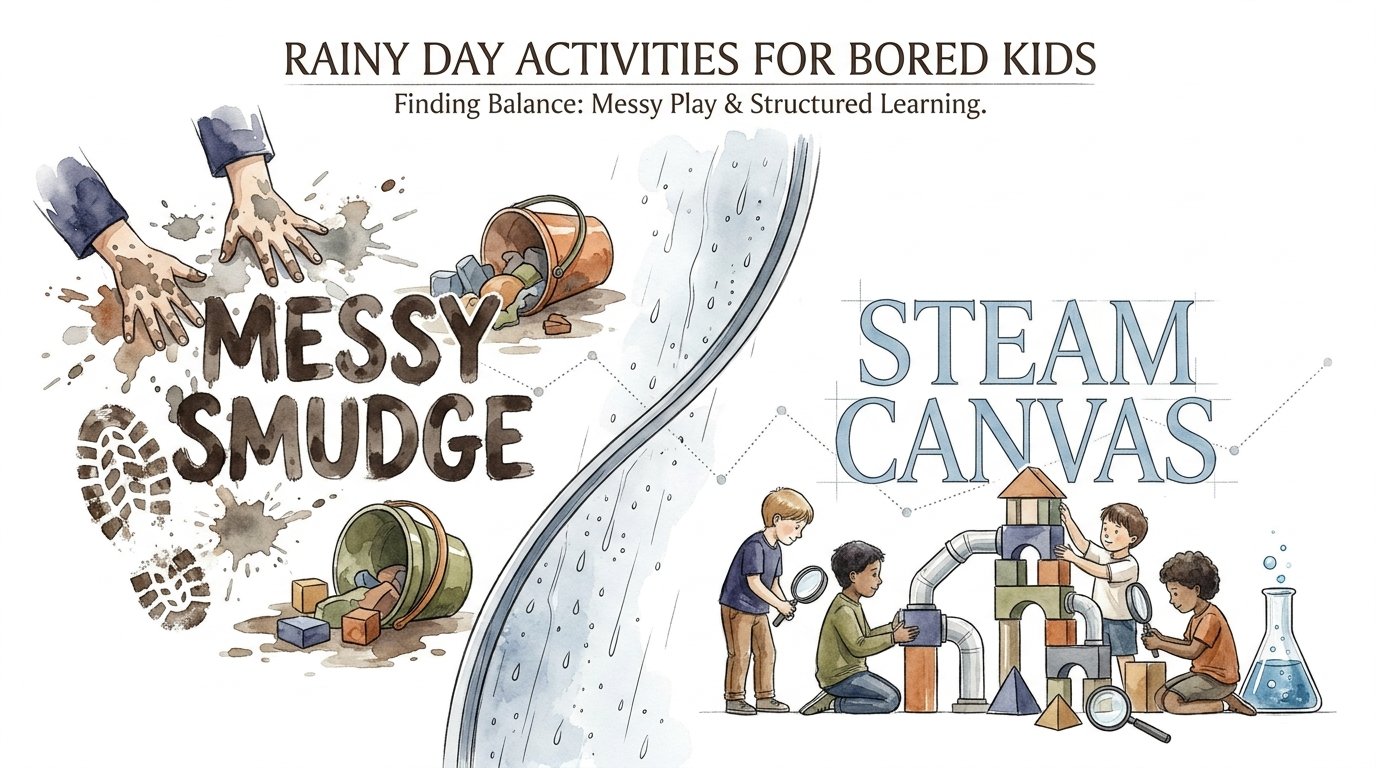
Comparison: Messy Smudge vs. Steam Canvas
When deciding on an indoor activity, it helps to look at the “Messy Smudge” (traditional art) versus the “Steam Canvas” (condensation art). While both have their place, they offer very different experiences for both the parent and the child.
| Feature | Messy Smudge (Paint/Markers) | Steam Canvas (Condensation) |
|---|---|---|
| Setup Time | High (Finding paper, brushes, protection) | Zero (Nature provides it) |
| Cleanup Effort | High (Washing brushes, cleaning spills) | Minimal (One quick wipe with a cloth) |
| Cost | Ongoing (Buying supplies) | Free (Physics is the provider) |
| Pressure to Perform | High (It’s permanent; don’t mess up) | Low (It vanishes; mistakes don’t matter) |
| Sensory Input | Standard (Smell of paint, texture) | High (Temperature, moisture, translucency) |
The Steam Canvas wins on efficiency and stress reduction, while the Messy Smudge is better for creating long-term keepsakes. For a quick, spontaneous burst of creativity on a grey afternoon, the window is almost always the superior choice.
Practical Tips for the Perfect Steam Session
Ready to turn your living room into a studio? These pro-tips will help you maximize the “fog factor” and keep the kids engaged for longer. It’s all about controlling the environment and adding a few creative twists to the basic concept.
- The “Magic Breath” Trick: If a specific spot isn’t foggy enough, teach your child to “huff” a deep breath of warm air directly onto the glass. This localized burst of moisture creates a temporary, high-density fog cloud that is perfect for writing small words or drawing intricate eyes.
- Reverse Art: Instead of drawing with a finger, try drawing the *background*. Use a damp cloth to clear large sections of the window, leaving only a small “island” of fog in the center. Then, use a finger to draw into that island. This “negative space” technique is a great way to teach basic art composition.
- Flashlight Shadows: Once the drawing is finished, give your child a flashlight. Have them stand back and shine the light through their drawing. If it’s dark outside, the light will project their artwork onto the floor or the opposite wall, creating a “magic lantern” effect that kids find hypnotic.
- The Timer Challenge: Since the art is ephemeral, turn it into a game. Set a timer for 60 seconds and see if they can draw a whole animal before the fog starts to lift. This builds speed and confidence, teaching them to work with the natural rhythm of the environment.
Advanced Considerations for Junior Scientists
If you have older children who are starting to outgrow simple finger painting, you can use the Steam Canvas as a jumping-off point for more complex scientific discussions. This shifts the focus from “playing” to “observing,” turning the window into a data-gathering tool.
The Role of Surface Tension: Why does the fog look like a solid white sheet from a distance but like tiny individual circles up close? Use a magnifying glass to look at the condensation. You can explain how water molecules like to stick together, forming perfect little spheres. When you drag a finger through them, you are breaking that surface tension and creating a “river” where the water can run together.
Hygrometers and Data: If you have a home weather station or a simple hygrometer, have your child record the humidity levels in different rooms. Does the window in the kitchen fog up faster than the one in the bedroom? Why? This teaches them to look for variables like stove heat, plant respiration, and airflow, turning the entire house into a living laboratory.
Refraction and Light: Talk about why the clear lines look dark and the foggy parts look white. The tiny water droplets in the fog scatter light in every direction (diffusion), while the clear glass allows light to pass through in a straight line. This is the same reason why clouds are white and the sky is blue. It’s a masterclass in optics happening right in your living room.
Examples and Scenarios to Try Today
Sometimes kids need a “prompt” to get started. If they are staring blankly at the misty window, try one of these specific scenarios to spark their imagination. These games provide structure while still allowing for total creative freedom.
Scenario 1: The Window Detective. Tell the child that there is a “secret message” hidden in the fog. Have them “clear” a small circle (their magnifying glass) and look through it to see what’s happening outside. What do they see? A bird? A car? Have them draw what they see *around* the circle, effectively “framing” the real world with their imagination.
Scenario 2: Steamy Math. Use the window as a chalkboard for math problems. There is something about the “forbidden” nature of writing on a window that makes multiplication tables feel like a thrilling secret mission. Write a problem in the fog and have them “wipe” the answer. If they get it right, they get to huff a new cloud of fog and write the next one.
Scenario 3: The Weather Map. If it’s a particularly stormy day, have them draw a map of the clouds and rain they see outside. They can use the fog to create “storm clouds” and clear lines to represent lightning bolts. This connects the internal activity of drawing with the external reality of the weather, fostering a deeper connection to nature.
Final Thoughts
The Steam Canvas is a reminder that the best childhood memories don’t require a credit card or a trip to the store. They require attention, a bit of curiosity, and the willingness to see beauty in the mundane. A foggy window is a gift from the atmosphere, a temporary reprieve from the “permanence” of modern life, and a perfect way to bond with a child over the simple wonder of the physical world.
Next time the clouds roll in and the “I’m bored” chorus begins, don’t look for something to do. Look for something that is already happening. The fog is waiting. The canvas is prepped. All you need is a finger and a little bit of imagination to turn a rainy afternoon into a masterpiece that—while it won’t last until tomorrow—will leave a lasting impression on a curious mind.
Go ahead, let them draw on the windows. The smudges can wait, but the magic of a rainy day won’t. Embrace the ephemeral, enjoy the science, and celebrate the fact that sometimes, the best art is the kind that just disappears into thin air.
Sources
1 dristeem.com | 2 allinonehomeschool.com | 3 stadlerform.com | 4 kidsatartnyc.com | 5 atelierschoolofart.com | 6 illinois.edu | 7 provia.com | 8 goldenroadarts.org | 9 miriambeloglovsky.com | 10 youtube.com | 11 photofocus.com | 12 pathwaycfc.org | 13 earlysciencematters.org | 14 miriambeloglovsky.com | 15 kriegler-education.com | 16 artwithflo.com | 17 playteachrepeat.com