no phone summer devices
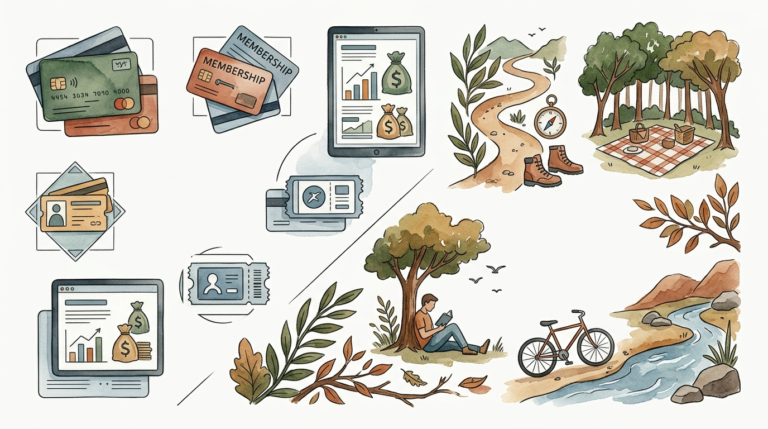
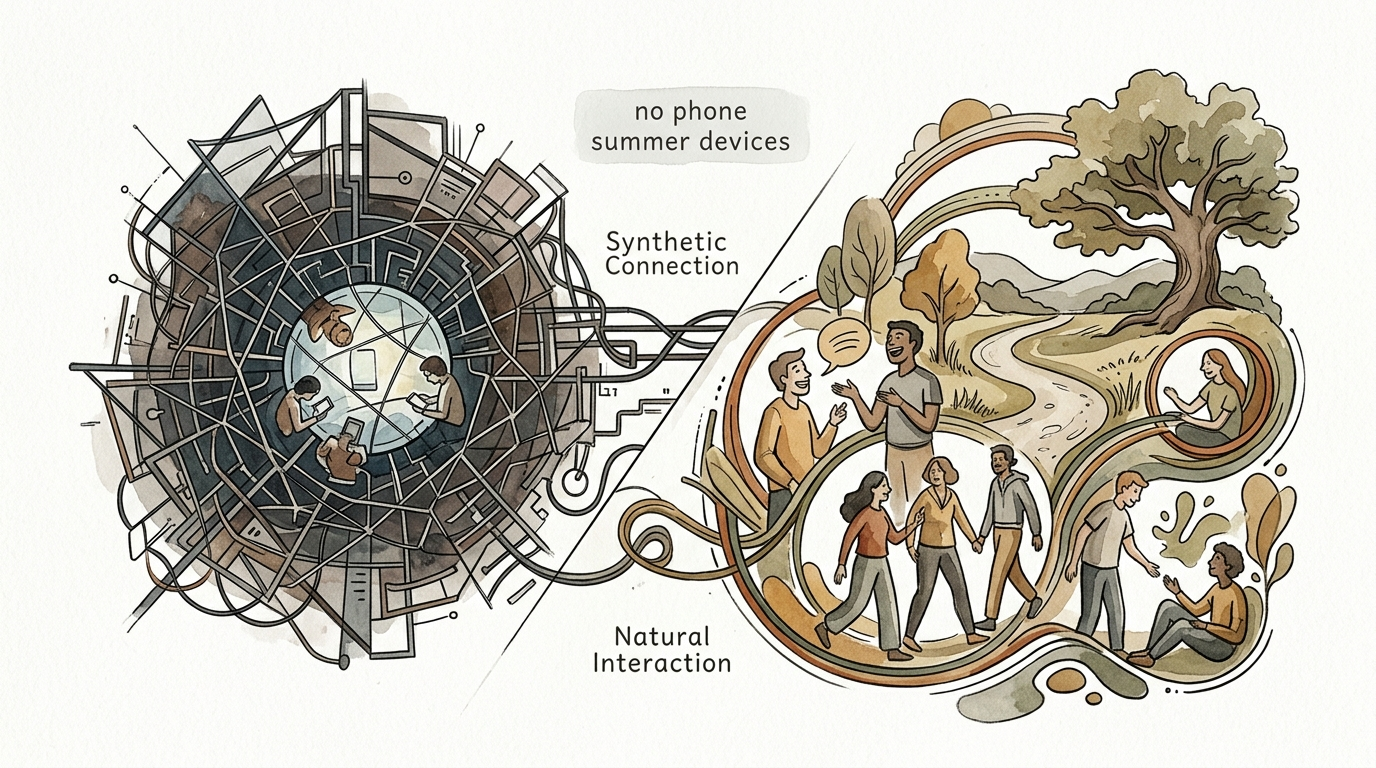
Why settle for synthetic ‘likes’ when you can have natural, soul-deep connections? We don’t need synthetic interaction to feel connected. These analog ‘devices’ facilitate real human harmony. Trade the screen for a guitar. #AnalogConnection #NoPhone
The digital age promised us the world at our fingertips. Instead, it gave us a thumb-scrolling addiction and a persistent feeling of being “alone together.” We trade our focus for notifications and our presence for pixels. But there is a better way to spend the warmest months of the year.
A “No Phone Summer” isn’t about moving into a cave or hating technology. It is about reclaiming your attention from the algorithms. It is a deliberate choice to swap the “synthetic connection” of social media for the “natural interaction” of a physical hobby or a face-to-face conversation. This guide will show you how to swap your glass slab for tools that actually make you feel alive.
no phone summer devices
No phone summer devices are single-purpose tools designed to replace the distracting functions of a smartphone. Think of them as “friction-rich” alternatives. While a smartphone tries to be everything at once—a camera, a map, a social club, and a TV—these devices do exactly one thing well. This lack of versatility is actually their greatest strength.
When you carry a dedicated film camera, you are a photographer. When you carry a paperback book, you are a reader. When you carry a smartphone, you are a target for every advertiser on the planet. The movement toward these devices exploded in 2026 as people reached a breaking point with “AI slop” and the constant noise of generative content. People are hungry for things they can touch, smell, and hold.
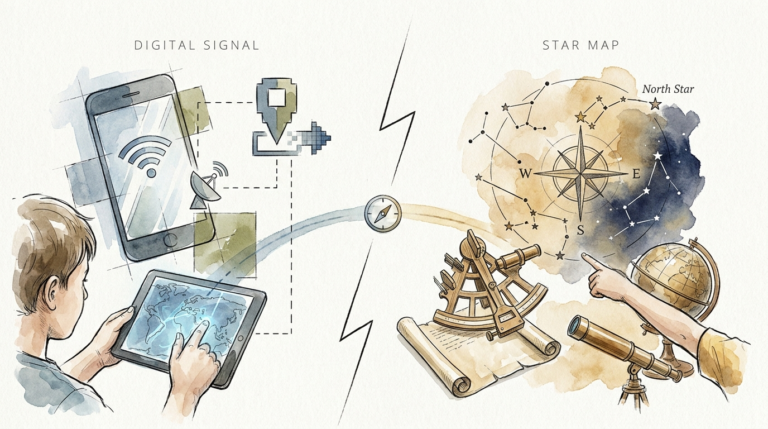
Examples of these devices include minimalist “dumbphones” like the Light Phone III or the Mudita Kompakt. They also include purely analog tools like journals, physical maps, and musical instruments. By separating your needs into individual tools, you break the “habit loop” that pulls your eyes back to a screen every four minutes.
The Rise of Single-Purpose Tech
Why are we seeing a surge in sales for yarn kits and film cameras? It is a reaction to the “black hole of distractions” created by the modern smartphone. Research shows that having a device that can do everything at once prevents you from fully focusing on any specific task. Single-purpose devices restore your agency. They allow you to decide when the task begins and when it ends, without a notification interrupting the flow.
How to Transition to an Analog Setup
Switching to a no-phone lifestyle for the summer requires a strategy. You can’t just throw your iPhone in a drawer and hope for the best. You need to replace the essential “utilities” of your smartphone so you don’t find yourself stranded or frustrated. This process is about “unbundling” your life from the screen.
Start by identifying your non-negotiables. Most people need a way to make calls, send texts, and occasionally find their way home. A high-quality dumbphone is the perfect bridge. Devices like the Nokia 2780 Flip or the Punkt MP02 offer 4G connectivity and basic SMS without the lure of an app store. This keeps you reachable without keeping you tethered.
Next, replace your entertainment. Instead of Spotify’s algorithmic shuffle, consider a dedicated MP3 player or a portable CD player. This forces you to be intentional about what you listen to. Instead of Kindle, use physical books. The tactile sensation of turning a page creates a different cognitive experience than swiping a screen. You aren’t just consuming content; you are engaging in a ritual.
Building Your Analog Bag
The “Analog Bag” trend on social media is a great practical framework. It involves a canvas tote packed with everything you need for a day out without a phone. This usually includes a journal, a pen, a film camera, a physical map of your city, and a book. Having these items physically present makes it easier to choose them over the phantom itch of reaching for a pocketed device.
- The Communicator: A basic feature phone for emergencies and coordination.
- The Capturer: A film or basic digital camera to document memories without the urge to edit and post immediately.
- The Navigator: A paper map or a dedicated GPS unit for the car.
- The Entertainer: A deck of cards, a sketchbook, or a musical instrument.
The Practical Benefits of Going Analog
The benefits of a No Phone Summer are measurable and immediate. When you remove the screen, you invite the world back in. The first thing you will notice is a significant drop in cortisol levels. Notifications trigger a “fight or flight” response in the brain. Removing them allows your nervous system to return to a state of baseline calm.
Real human connection is the most profound advantage. When you are face-to-face with someone, your brain releases oxytocin—the “bonding hormone.” This doesn’t happen during a Zoom call or a Slack thread. Eye contact and shared physical space are essential for deep empathy and trust. You start to pick up on the 70% of communication that is non-verbal, which is entirely lost in text-based synthetic interaction.
Your cognitive function also gets a massive boost. Without the constant task-switching of a smartphone, your attention span begins to heal. You find yourself able to read for longer periods and think more deeply about complex problems. This “deep work” capability is a competitive advantage in a world where everyone else is distracted.
Challenges and Common Pitfalls
The biggest challenge is the “Withdrawal Phase.” Your brain is used to the high-dopamine hits of social media likes and infinite scrolls. When you take that away, the first 72 hours will feel boring, itchy, and uncomfortable. Many people quit here because they mistake boredom for a lack of productivity. In reality, boredom is the space where creativity is born.
Logistical hurdles are another trap. We have outsourced our memory to the cloud. Without a smartphone, you might forget an address or a phone number. You might miss a last-minute change to a dinner plan. To avoid this, you must revert to “old school” planning. Write down your schedule in a physical planner. Call people to confirm plans before you leave the house. Friction is the price of freedom.
Social pressure can also be a barrier. Your friends might get annoyed if you don’t reply to the group chat instantly. You have to set expectations early. Tell your inner circle: “I’m doing an analog summer. If it’s urgent, call me. Otherwise, I’ll see you in person.” Most people will actually be inspired by your boundaries rather than offended by them.
Limitations and Realistic Constraints
An analog lifestyle has boundaries. It is not ideal for everyone in every situation. If your job requires you to be “on-call” with access to specific apps like Slack or Microsoft Teams, a total phone ban might be impossible. In these cases, a “hybrid” approach—using a “distraction-free” launcher on your smartphone—is a more realistic trade-off.
Safety is a valid concern. If you are traveling alone in an unfamiliar city, a physical map might not be enough if you need to call an Uber or check a train schedule that changes in real-time. In high-stakes environments, the convenience of a smartphone can be a literal lifesaver. It is important to distinguish between “addictive tech” and “utility tech.”
Environmental factors also play a role. Analog tools are physical. They can be lost, broken, or water-damaged. A film camera is much more fragile than a rugged smartphone. You have to be prepared to carry more weight and take better care of your gear. If you aren’t willing to manage the physical maintenance of analog tools, you will likely return to the screen out of convenience.
Comparison: Dumbphones vs. Pure Analog vs. Smartphones
Choosing your path depends on your goals. Some people want a “Digital Detox” while others want a full “Lifestyle Pivot.” Here is how the different approaches stack up for a No Phone Summer.
| Factor | Smartphone | Dumbphone | Pure Analog |
|---|---|---|---|
| Connectivity | Infinite / Always on | Voice & Text Only | None |
| Friction | Zero (Dangerous) | Medium | High (Intentional) |
| Focus Level | Very Low | High | Maximum |
| Ease of Use | High | Medium | Low (Steep Curve) |
| Human Connection | Synthetic | Functional | Soul-Deep |
Practical Tips for a Successful Analog Summer
Success is all about preparation and environment design. If your phone is the first thing you see when you wake up, you will check it. If it’s charging in another room, you won’t. Small shifts in your physical space lead to massive changes in your digital behavior.
Create a “Phone Parking” station near your front door. The moment you walk in, the phone goes into a box. It stays there until you leave. This creates a hard boundary between the “connected” world and your private life. Use a physical alarm clock so your phone doesn’t have an excuse to be on your nightstand.
Invest in high-quality analog gear. If you buy a cheap, frustrating film camera, you won’t use it. If you buy a beautiful, used 35mm SLR, you will fall in love with the process of photography. The same goes for pens, notebooks, and instruments. The tactile quality of your tools should provide enough pleasure to rival the dopamine of a screen.
- Master the map: Practice navigating your neighborhood with a paper map before you go on a big trip.
- Batch your communication: Check your emails or messages once a day on a laptop instead of constantly on a handheld device.
- Embrace the “iPod”: Load a dedicated music player with your favorite albums to avoid the data-tracking of streaming services.
Advanced Considerations: The Ethics of Attention
For those looking to go deeper, understand that this movement is a form of resistance. Big Tech companies employ “attention engineers” to keep you scrolling. By opting out, you are reclaiming your most valuable resource: your time. This is a political and ethical choice to value human experience over data points.
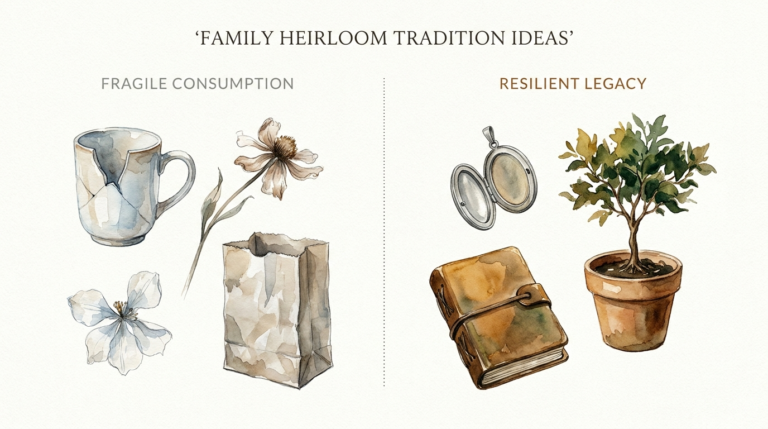
Consider the “Buy It For Life” (BIFL) mentality. Most smartphones are designed with planned obsolescence—they are meant to be thrown away in three years. A mechanical watch, a fountain pen, or an acoustic guitar can last a lifetime. Transitioning to analog tools is also a move toward sustainability and a rejection of the “disposable” culture of the digital age.
Scaling this beyond the summer involves building “friction” into your year-round habits. This means choosing the slower way of doing things because the process itself has value. It’s about recognizing that the “efficiency” of a smartphone often strips the meaning out of our daily rituals. Natural interaction requires time, and time is exactly what the analog life gives back to you.
Examples of a No Phone Summer in Action
Imagine a Saturday morning. Instead of waking up to a news feed and feeling immediate stress, you wake up to the sound of a mechanical bell. You spend twenty minutes journaling with a fountain pen, feeling the ink dry on the page. There are no notifications to pull you away from your thoughts.
You head to the park to meet a friend. Because you don’t have a phone to hide behind while you wait, you notice the way the light hits the trees. You strike up a brief conversation with a stranger about their dog. When your friend arrives, you are fully present. You don’t take a photo of your lunch; you just eat it. The memory stays in your mind, not in a cloud server.
In another scenario, a family goes camping. The parents leave their smartphones in the glove box. Without the option to “just check one work email,” they actually play with their kids. They build a fire, they tell stories, and they look at the stars. The kids see their parents’ eyes instead of the back of their phones. This is where real human harmony is built.
Final Thoughts
Trading your screen for a guitar or a journal is a radical act of self-care. It is a declaration that your life is more than a series of data points for an algorithm to harvest. By choosing natural interaction over synthetic connection, you are choosing to live a fuller, more vivid version of your own story.
This summer, experiment with the friction of the physical world. Let yourself be bored. Let yourself get lost. Let yourself feel the weight of a book and the texture of a conversation. You will find that the world hasn’t gone anywhere; it’s just been waiting for you to look up.
The “No Phone Summer” isn’t a temporary break; it’s a doorway to a more intentional way of being. Once you experience the depth of a soul-deep connection without the interference of a screen, you might find it hard to ever go back to the shallow waters of the digital world. Start small, gear up, and see where the analog road takes you.
Sources
1 thehumanist.com | 2 kansascity.com | 3 miamiherald.com | 4 elle.com | 5 avclub.com | 6 womansworld.com | 7 the-gadgeteer.com | 8 easymommylife.com | 9 overlandsummers.com | 10 communityminds.com | 11 medium.com | 12 derse.com | 13 vice.com | 14 bloom-path.app