
kids screen time
Not all screen time is created equal. Is your child consuming junk food or brain fuel? Some content drains our kids, while other content inspires them to create. Learn how to filter the waste and find the fuel.
The modern home is filled with glowing rectangles that compete for our attention every single minute. Parents often feel like they are losing a silent war against the algorithm. We worry about “the zombie stare” and the inevitable meltdown when the tablet finally goes away.
Managing digital consumption is no longer about just counting minutes on a clock. It is about understanding the neurological impact of what happens behind the glass. This guide will show you how to move from a place of guilt to a place of intentional, high-energy digital parenting.
kids screen time
The term kids screen time once referred simply to the total number of minutes a child spent in front of a television or computer. Today, the definition has evolved into a complex “digital diet” that includes everything from interactive learning apps to passive social media scrolling. In 2026, experts have shifted the focus away from strict timers and toward the quality, context, and conversation surrounding media use.
Screens are now woven into the fabric of childhood. They are used in classrooms for interactive lessons, in living rooms for family gaming, and in the backseat of cars for long-distance entertainment. Research from the American Academy of Pediatrics (AAP) and other health organizations suggests that the impact of technology depends heavily on whether the child is an active participant or a passive observer.
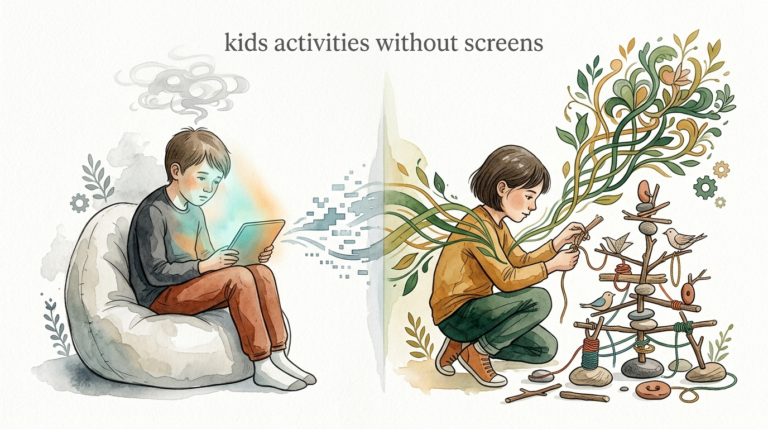
Think of digital content like food. High-quality educational programming is like a nutritious meal that helps a child grow. Fast-paced, repetitive, “toy unboxing” videos or endless scrolling loops act like digital junk food. They provide a quick hit of energy but leave the child feeling irritable and mentally depleted.
Understanding this distinction is the first step toward a healthier home. We are moving away from the era of “screens are bad” and into the era of “let us use screens as tools for imagination.” When used correctly, technology can foster creativity, problem-solving, and global connection.
How the Digital Diet Works
Transitioning your child from junk content to brain fuel requires a systematic approach. You must first identify the type of engagement happening during their digital sessions. Scientists often categorize screen use into two distinct buckets: passive consumption and active engagement.
Passive consumption occurs when a child sits still and absorbs content without having to think or react. Watching cartoons or scrolling through short-form video feeds are classic examples. These activities often trigger a “dopamine loop,” where the brain receives a tiny reward for every new video or image, encouraging the child to stay on the device for hours without ever feeling satisfied.
Active engagement involves cognitive effort. This includes playing a game that requires strategy, coding a simple program, drawing on a tablet, or video-calling a relative. In these scenarios, the child is using the technology to achieve a goal or create something new. This type of “fuel” builds neural pathways instead of just occupying time.
To implement a better digital diet, you should audit your child’s current apps. Look for “open-ended” platforms where the child makes choices. Avoid apps that use “dark patterns,” such as loud noises, flashing lights, or constant prompts to buy virtual currency. These features are designed to bypass a child’s impulse control and keep them hooked.
Benefits of Choosing Brain Fuel
Choosing high-quality digital content offers measurable advantages for a child’s development. When kids engage with “brain fuel,” they are often practicing life skills that translate directly to the real world. Research has shown that active screen time—such as playing educational games that require problem-solving—has no negative association with academic performance.
Cognitive Development
Interactive apps can sharpen a child’s logic and spatial reasoning. Games that require building structures or managing resources teach planning and foresight. These digital environments provide a safe space to fail and try again, which builds a “growth mindset.”
Digital Literacy
By guiding your child toward creative tools, you are teaching them how to be producers rather than just consumers. Learning how to edit a video, record a podcast, or design a digital character prepares them for a future where technology is a core part of every career.
Social Connection
Technology can be a bridge to others. Multiplayer games that require teamwork or video calls with distant family members foster social-emotional growth. When parents “co-view” or “co-play” with their children, the screen becomes a shared experience that strengthens the parent-child bond through shared jokes and collaborative challenges.
Challenges and Common Mistakes
The road to a balanced digital diet is often paved with power struggles and technical hurdles. One of the most common pitfalls is using screens as a primary tool for emotional regulation. While a tablet can stop a public tantrum quickly, relying on it too often prevents the child from learning how to self-soothe naturally.
The Autoplay Trap
Many platforms are designed with “autoplay” features that move to the next video automatically. This removes the natural stopping point for a child. When the brain is in a constant state of “waiting for the next hit,” it becomes very difficult to transition to a screen-free activity. This is why meltdowns often happen the moment the device is turned off.
The “Total Ban” Strategy
Many parents respond to screen-time battles by banning devices entirely. This often backfires. In a world where digital skills are essential, a total ban can leave a child feeling isolated and behind their peers. It also prevents them from learning “digital self-regulation”—the ability to put the device down on their own.
Inconsistent Boundaries
Setting a rule one day and ignoring it the next creates confusion. Children thrive on predictability. If the “brain fuel” rules are only enforced when the parent is not busy, the child will continue to lobby for “junk food” content because they know the boundary is flexible.
Limitations of Screen Time Guidelines
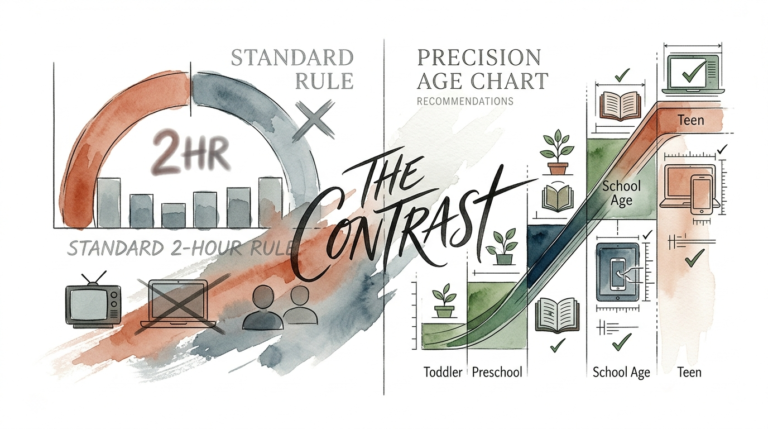
While guidelines from organizations like the WHO provide a helpful baseline, they often have practical limitations. A one-size-fits-all approach does not account for the nuances of modern life or the specific needs of different children. Strict time limits do not differentiate between a child spending an hour learning Spanish and a child spending an hour watching mindless “reaction” videos.
Environmental factors also play a huge role. A family living in a small apartment during a rainy week may rely on screens more than a family with a large backyard. Furthermore, schools now require significant screen use for homework, which can make “home limits” feel restrictive or impossible to manage.
It is also important to recognize that technology is not a substitute for physical movement or sleep. No amount of “educational” content can replace the benefits of running outside or getting ten hours of rest. The limitation of any digital diet is that it must exist within a larger framework of physical health and real-world interaction.
Comparing Junk Content vs. Brain Fuel
Understanding the difference between these two categories helps you make better decisions during the next app store download.
| Feature | Digital Junk Food (Waste) | Digital Brain Fuel (Imagination) |
|---|---|---|
| User Role | Passive Viewer | Active Creator/Problem Solver |
| Pacing | Rapid-fire, overstimulating | Intentional, allows for thought |
| Goal | Engagement for ad revenue | Skill building or storytelling |
| After-Effect | Irritability, “brain fog” | Inspiration, desire to try in real life |
| Examples | Infinite scroll, unboxing videos | Coding games, drawing, strategy puzzles |
Practical Tips for a Healthier Digital Home
Implementing a new strategy does not have to be an overnight revolution. Small, high-energy shifts can change the atmosphere of your home quickly. Start by designating “Screen-Free Zones,” such as the dining table and the bedroom. This ensures that the most important social and restorative times of the day remain uninterrupted.
Use a “Bridge” Activity
Transitions are the hardest part of kids screen time. Instead of just saying “time is up,” offer a bridge activity. This could be five minutes of Lego building or a quick snack. This helps the brain transition from the high-dopamine state of the screen back to the lower-stimulation real world.
Model the Behavior
Children are digital mimics. If they see you constantly scrolling through your phone while talking to them, they will view that as the norm. Set “device-free” hours for the entire family, including parents. Showing that you can put your phone away communicates that the people in the room are more important than the pixels on the screen.
Curate the Home Screen
Move “junk food” apps into folders or off the main home screen of the tablet. Place “brain fuel” apps—like drawing programs or music makers—front and center. This makes the high-quality choices the easiest ones for the child to find when they first pick up the device.
Advanced Considerations for Neurodiverse Kids
For children with ADHD or Autism Spectrum Disorder, the relationship with screens is often different. Technology can provide a predictable, safe environment that feels less overwhelming than the real world. In many cases, screens act as essential tools for communication through AAC (Augmentative and Alternative Communication) apps.
However, neurodivergent children may be more susceptible to the “dopamine loop.” Their brains often crave the immediate feedback and clear rules found in video games. For these families, a digital diet must be even more intentional. Visual timers and “first/then” schedules (e.g., “First 20 minutes of math app, then 10 minutes of Minecraft”) can be incredibly effective.
Instead of fighting the screen, try to find games that lean into your child’s “special interests.” If they love trains, find a complex train-simulator that requires logic and physics. This turns a potential obsession into a deep learning opportunity. Always monitor for overstimulation, as some high-energy games can lead to sensory overload.
A Realistic Scenario: The Saturday Audit
Imagine a typical Saturday morning. Your child has been on the tablet for an hour. You notice they are “vegging out,” staring blankly at a video of someone playing with slime. This is your cue to audit the digital diet.
You sit down next to them and ask, “What are they doing in this video? Could we try to make that ourselves in the kitchen?” If they are uninterested, you might suggest switching to a creative game like a digital sandbox or a music-making app. By moving from a passive viewer to an active participant, the energy in the room shifts.
Later that afternoon, you notice they are building a complex fort in a virtual world. They are talking to a friend through a headset, coordinating who will gather wood and who will build the roof. This is brain fuel in action. Even though they are on a screen, they are practicing leadership, communication, and architectural planning. You decide to let them finish their “build” because the quality of the engagement is high.
Final Thoughts
Rethinking kids screen time is one of the most powerful moves a modern parent can make. By shifting our focus from the clock to the content, we stop being the “screen police” and start being digital mentors. Not all minutes are spent the same way, and a child who spends an hour creating is in a much better place than a child who spends an hour consuming.
Remember that balance is a moving target. Some days will involve more “junk food” content than others, and that is okay. The goal is to ensure that over the course of a week, your child is getting plenty of “brain fuel” that inspires them to turn off the screen and go create something in the real world.
Take a moment today to look at what is on your child’s devices. Delete the waste, highlight the fuel, and start a conversation about what they are learning. Your child’s imagination is the most valuable resource in your home—make sure the digital world is feeding it, not draining it.
Sources
1 avidopenaccess.org | 2 reddit.com | 3 nyp.org | 4 childrenandscreens.org | 5 mayoclinic.org | 6 mother.ly | 7 choc.org | 8 edsurge.com | 9 mayoclinichealthsystem.org | 10 sf-stemful.com | 11 luriechildrens.org | 12 oneeducation.co.uk | 13 thevoiceofearlychildhood.com | 14 edsurge.com | 15 techhealthyfamilies.com | 16 internetmatters.org | 17 peaceathomeparenting.com | 18 chadd.org | 19 childmind.org | 20 parentclub.scot | 21 corticacare.com